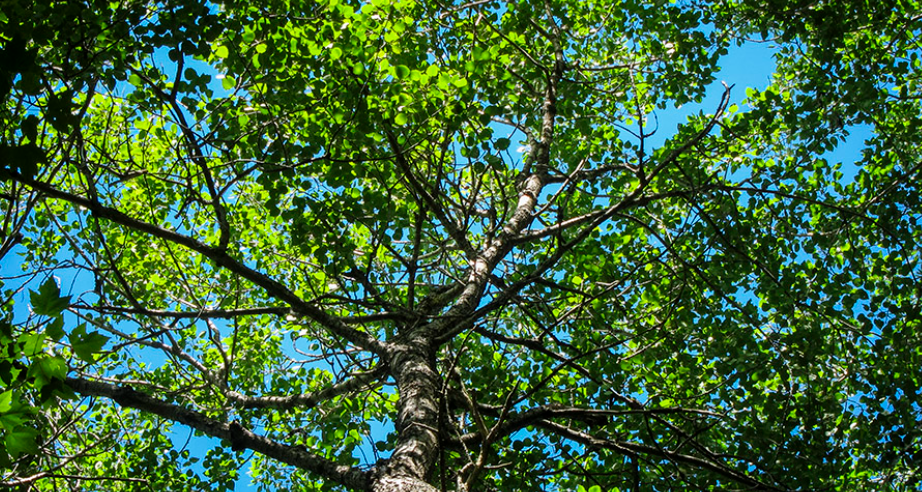
The bigtooth aspen tree is a fast-growing pioneer hardwood native to the forests of northeastern and north-central North America, easily recognized by the large, blunt teeth lining the edges of its leaves and the way those same leaves flutter constantly in even the lightest breeze. Playing a critical role in wildlife habitat and early forest succession, this short-lived but ecologically valuable tree remains one of the most important species for game animals across its range.
This article covers everything to know about the bigtooth aspen, from its botanical background to its identifying traits, growing needs, and landscape applications.
Botanical Classification
The bigtooth aspen belongs to the willow family, placing it alongside willows, cottonwoods, and other poplars within one of the most widespread plant families found across temperate climates. Within that family, it sits in the poplar genus, a group of roughly 25 to 35 recognized species distributed throughout the Northern Hemisphere, with aspens forming one of the genus’s most cold-hardy and widely recognized subgroups. The bigtooth aspen is a deciduous broadleaf tree and, like its poplar relatives, is dioecious, meaning individual trees are either male or female, with large catkins of each type appearing on separate trees each spring.
The species is closely related to quaking aspen, and the two are frequently found growing together across shared portions of their range, sometimes leading to confusion in identification, though the bigtooth aspen is generally considered less adaptable to a wide range of sites than its more widely distributed relative.
Brief History
The bigtooth aspen has grown across the forests of northeastern North America for thousands of years, with its ecological role as an early colonizer of disturbed ground, burned areas, and abandoned fields making it one of the defining pioneer species of the region’s post-glacial forest recovery. Indigenous peoples throughout its range made practical use of the tree, and historical accounts describe various uses of aspen wood and inner bark, reflecting the tree’s long-standing presence in the daily life of forest communities.
As European settlement expanded across the northeastern and Great Lakes regions during the 18th and 19th centuries, extensive logging and land clearing created ideal conditions for bigtooth aspen to spread rapidly across newly disturbed ground, since the species is one of the first trees to establish itself following fire, logging, or agricultural abandonment. This pioneering behavior meant that aspen populations often expanded significantly in the decades following major land-use changes, even as the older forests they colonized were altered.
By the 20th century, the species had become commercially significant for pulpwood production, valued for its light-colored, soft wood that proved well suited to papermaking. Forestry and wildlife management programs throughout the Great Lakes states and New England increasingly recognized the tree’s value not just for timber but for the game habitat it provided, leading to management practices specifically aimed at maintaining aspen stands for wildlife purposes throughout the latter half of the century.
Identifying Characteristics
The most distinctive identifying feature of the bigtooth aspen, and the source of both its common and scientific names, is the leaf margin, lined with large, blunt, irregular teeth that are noticeably bigger and more pronounced than those found on quaking aspen or most other poplar relatives. The leaves themselves are broadly ovate with a sharp-pointed tip and a flattened base, typically emerging a dull green through summer before transitioning to yellow, chartreuse, and gold tones in autumn, with color development typically occurring later in the season than most surrounding hardwoods.
A key identification trick involves the leaf stalk, which is notably flattened rather than round, a trait that makes the leaves difficult to twirl between two fingers and is directly responsible for the constant fluttering motion the foliage displays in even the slightest wind, a characteristic shared with several other poplar relatives.
Bark on young bigtooth aspens starts out smooth and greenish-gray, often marked with dark longitudinal fissures, before gradually turning a whitish or creamy color marked with distinctive black horizontal bands as the tree matures. On older trees, the bark near the base becomes darker, furrowed, and scaly, while the upper trunk and branches typically retain smoother, lighter-colored bark, creating a visually layered appearance across a single mature specimen.
Mature bigtooth aspens typically reach 50 to 80 feet in height, with documented specimens capable of reaching 60 feet tall and 30 feet wide within roughly 30 years under favorable growing conditions, reflecting the species’ characteristically fast early growth rate. Flowers appear as large, pendulous catkins in early spring, with male and female catkins occurring on separate trees, and female catkins releasing pear-shaped seeds equipped with tufts of silky hair that carry them substantial distances on the wind following capsule dehiscence roughly four weeks after flowering.
Habitat and Distribution
The bigtooth aspen is native to a broad range spanning the northeastern United States, the Great Lakes region, and southeastern Canada, with its distribution extending from Cape Breton Island in Nova Scotia west to southeastern Manitoba, south through Minnesota and Iowa to extreme northeastern Missouri, and east through Illinois, Indiana, Ohio, and into Virginia, with additional localized populations found in western North Carolina and northwestern Tennessee. In Canada, the species reaches its greatest abundance in southwestern Quebec and southeastern Ontario.
The species favors upland woods and moist to dry sites, showing considerable adaptability across soil types, from rich, well-drained soils to gravelly, sandy, or even nearly sterile clay soils, though it generally proves less flexible in extreme conditions than quaking aspen. As an early successional species, it is frequently among the first trees to establish itself in disturbed areas, including sites recovering from fire, logging, or agricultural abandonment, taking full advantage of its fast growth and wind-dispersed seed to colonize open ground before slower-growing hardwoods move in.
The ecological importance of bigtooth aspen extends well beyond its own presence in the landscape, with more than 500 species of animals and plants documented as utilizing aspen stands across their combined range in some capacity. The tree serves as a critical food source for ruffed grouse, which feed on its leaves, flower buds, and catkins throughout the year, while moose and deer rely heavily on aspen suckers as a major winter food source, and beavers consume the bark, branches, and leaves as part of their regular diet.
USDA Hardiness Zone and Growing Needs
The bigtooth aspen grows reliably across USDA hardiness zones 3 through 6, reflecting its adaptation to the cold winters and moderate summers characteristic of its native northeastern and Great Lakes range.
For those planting or managing the species, several growing considerations are especially relevant.
Full sun to partial sun exposure is necessary for healthy growth, consistent with the species’ role as an early colonizer of open, disturbed ground rather than a shade-tolerant forest understory tree. Soil adaptability is considerable, with the species capable of growing in moist, deep, rich soils as well as gravelly, sandy, or clay soils of variable pH, though consistently moist, well-drained conditions produce the strongest growth.
Growth rate is notably fast, particularly in youth, with the species capable of reaching significant height within just a few decades, though this rapid early growth comes paired with a relatively short overall lifespan typical of pioneer tree species. Root suckering behavior is a defining management consideration, since the species spreads readily through root sprouts, a trait that discourages its use as a single specimen shade tree but makes it well suited to naturalized groves where multiple stems are welcome.
Pest and disease vulnerability increases with age, and the species can become subject to cankers, leaf spots, borers, and caterpillars later in life, though these problems tend to be minimal during the vigorous growth of youth. Fall color timing is distinctive, with the species typically developing its gold and yellow autumn color later in the season than many surrounding hardwoods, extending seasonal interest into late fall. Drought sensitivity should be noted, since premature leaf drop can occur in mid to late summer during periods of significant drought stress.
Pruning needs are generally minimal beyond removing dead or damaged wood, best performed during dormancy in late winter. Wildlife management value is a major consideration for rural and forested property owners, since maintaining aspen stands specifically supports ruffed grouse, deer, and moose populations that depend on the species for food and habitat throughout the year. Seed production follows a cyclical pattern, with good seed crops typically produced every two to three years, alongside lighter seed crops in intervening years.
Landscape Uses
The bigtooth aspen’s primary landscape value lies less in traditional shade tree planting and more in naturalized grove settings, where its tendency to spread through root suckering can be embraced rather than managed against, creating a dynamic, multi-stemmed stand that develops naturally over time.
Its light-colored, smooth bark and brilliant late-season fall color make it a worthwhile addition to woodland edges and restoration plantings, particularly in projects aimed at recreating early successional habitat for wildlife rather than a polished ornamental appearance. The species pairs well with other partial-shade-tolerant trees and shrubs, and groundcover plantings such as native sedges are often used to complement the open, straight-stemmed aesthetic of an aspen grove.
The tree’s most significant landscape and land management application remains wildlife habitat creation, and property owners managing rural acreage for game species frequently maintain or establish bigtooth aspen stands specifically to support ruffed grouse, deer, and moose populations, given the tree’s outsized role as a food and cover source across its native range.
Because of its root sprouting habit and relatively short lifespan, the species is generally not recommended as a standalone specimen tree near homes, driveways, or manicured landscaping, making it far better suited to naturalized areas, wildlife plantings, and reforestation projects on properties with adequate space for its spreading growth habit.
Fun Facts and Additional Notes
More than 500 species of animals and plants have been documented making use of aspen stands across their range, a remarkable figure that underscores the outsized ecological importance of a tree often overshadowed by longer-lived hardwood species in the same forests.
The bigtooth aspen’s flattened leaf stalks, responsible for the tree’s characteristic fluttering foliage, represent a trait shared with several other poplar relatives, though the effect is particularly pronounced in aspens due to the combination of the flattened petiole and the leaf’s broad, teeth-lined shape.
Following forest fires, bigtooth aspen is frequently among the very first tree species to reestablish itself on the burned landscape, thanks to its ability to rapidly resprout from surviving root systems even when the above-ground portion of the tree has been destroyed.
The species flowers, leafs out, and disperses its seeds roughly 10 days later in the season than quaking aspen, a subtle but consistent timing difference that has been documented across multiple studies of the two closely related species growing in shared habitat.
The bigtooth aspen stands as one of the most ecologically significant pioneer trees of the northeastern forest, valued less for polished landscape appeal and far more for its outsized contribution to wildlife habitat and early forest recovery. For anyone managing rural or forested property with wildlife in mind, the species offers exceptional value, provided its fast growth, suckering habit, and relatively short lifespan are understood and planned for from the outset.