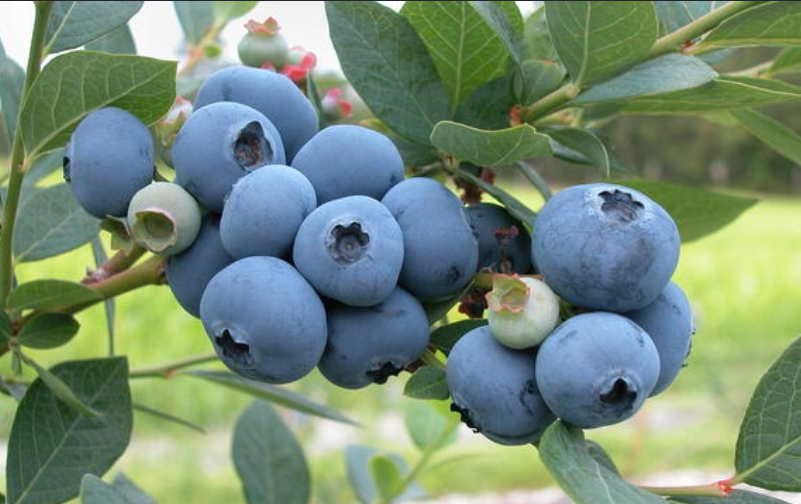
USDA Zone 7 offers gardeners a particularly favorable climate for growing berry bushes. Winters are generally milder than in Zones 5 and 6, while summers are warm enough to support a wide selection of fruiting shrubs. Depending on the specific location, Zone 7 includes areas where average annual minimum temperatures fall between approximately 0°F and 10°F (-17.8°C to -12.2°C). This gives gardeners considerably more choices than colder growing zones.
One of the biggest advantages of growing berries is that many bushes require less space than traditional fruit trees. A well-planned berry garden can fit along a fence, beside a vegetable garden, around the edge of a property, or even into a small suburban yard. Several species also provide attractive flowers, colorful fruit, autumn foliage, or wildlife habitat, allowing them to serve both edible and ornamental purposes.
However, choosing berry bushes for Zone 7 should involve more than simply checking a hardiness map. Summer heat, winter chilling, soil pH, drainage, humidity, disease pressure, and pollination can all influence how well a particular plant performs. Some berries, such as blueberries, have very specific soil requirements, while others, such as elderberries and aronia, are much more adaptable.
The 16 berry bushes below include reliable favorites and unusual choices that can thrive in many Zone 7 gardens. The list includes blueberries, raspberries, blackberries, currants, gooseberries, elderberries, aronia, honeyberries, serviceberries, and several other fruiting shrubs. Individual cultivar performance varies, so gardeners should always check whether a particular variety is recommended for their local conditions.
1. Rabbiteye Blueberry (Vaccinium virgatum)
Rabbiteye blueberry is one of the best blueberry groups for the warmer parts of Zone 7. It is particularly valuable in regions with hot summers and relatively mild winters.
Rabbiteye blueberries can become substantial shrubs, sometimes reaching 6–10 feet tall or more. They produce attractive white or pinkish flowers in spring followed by clusters of blue berries during summer.
Popular cultivars include ‘Brightwell,’ ‘Tifblue,’ ‘Premier,’ ‘Powderblue,’ and ‘Climax’.
One important characteristic is that rabbiteye blueberries generally benefit from cross-pollination. Planting two or more compatible cultivars that bloom at the same time can significantly improve fruit production.
Like other blueberries, they require acidic soil, typically around pH 4.5–5.5.
2. Highbush Blueberry (Vaccinium corymbosum)
Highbush blueberries are another excellent choice, particularly in the cooler portions of Zone 7.
Northern highbush cultivars can produce excellent crops in suitable conditions, while southern highbush hybrids may be better adapted to warmer Zone 7 climates.
Cultivars such as ‘Bluecrop,’ ‘Duke,’ ‘Legacy,’ ‘Jersey,’ and ‘Patriot’ are commonly grown in home gardens, although local recommendations should guide the final selection.
Blueberries need acidic, organically rich soil and consistent moisture. A soil test before planting is highly recommended.
3. Blackberry (Rubus hybrids)
Blackberries are among the most productive fruiting plants for Zone 7.
The relatively mild winters allow many blackberry cultivars to survive without the severe winter protection required farther north.
Blackberries can be divided broadly into erect, semi-erect, and trailing types. Erect varieties are often easier for home gardeners because they require less elaborate support.
Popular cultivars include ‘Ouachita,’ ‘Chester,’ ‘Natchez,’ and ‘Prime-Ark’.
Blackberries need full sun and well-drained soil. Because their canes can become long and tangled, a trellis or other support system makes harvesting and pruning easier.
4. Raspberry (Rubus idaeus)
Raspberries can grow well in Zone 7, although choosing a cultivar adapted to warmer summers is important.
Some traditional northern raspberry varieties struggle with heat, while certain everbearing or fall-bearing cultivars can perform better in transitional climates.
Examples include ‘Heritage,’ ‘Caroline,’ ‘Joan J,’ and ‘Anne’.
Raspberries prefer full sun, fertile soil, good drainage, and consistent moisture.
In humid Zone 7 regions, adequate air circulation is especially important because crowded foliage can encourage fungal diseases.
5. Muscadine (Vitis rotundifolia)
Muscadines are not technically bushes—they are woody vines—but they are such an important berry-like fruit for warm climates that they deserve consideration in a Zone 7 edible landscape.
Native to the southeastern United States, muscadines are extremely well adapted to hot summers and can thrive in many Zone 7 locations.
They produce round berries with thick skins and a distinctive sweet flavor.
Cultivars include ‘Carlos,’ ‘Noble,’ ‘Scuppernong,’ and ‘Fry’.
Muscadines require strong support because they are vigorous vines. They also need full sun for good fruit production.
6. Gooseberry (Ribes uva-crispa)
Gooseberries can grow in Zone 7, although hot, humid summers may make them more challenging than in cooler climates.
They produce tart berries that can be green, yellow, red, or purple depending on the cultivar.
Gooseberries are excellent for pies, jams, jellies, sauces, and preserves.
A location with morning sun and some afternoon protection can be useful in the warmer portions of Zone 7.
Good air circulation is important because humid weather can encourage fungal diseases.
7. American Gooseberry (Ribes hirtellum)
American gooseberry is a North American species that produces smaller fruits than many European gooseberries.
It is relatively cold hardy and can adapt to a variety of growing conditions.
The fruit can be eaten fresh or used in pies, jams, jellies, and sauces.
The shrub is generally compact, making it useful in gardens where space is limited.
In hot Zone 7 locations, providing some afternoon shade can help reduce heat stress.
8. Red Currant (Ribes rubrum)
Red currants produce attractive strings of translucent red berries.
The fruit has a tart flavor and is particularly useful for jellies, sauces, desserts, syrups, and baked goods.
Red currants prefer cooler conditions and can struggle with excessive summer heat. In the warmer parts of Zone 7, planting them where they receive morning sun and afternoon shade may improve performance.
The shrubs usually remain relatively compact and can also be incorporated into ornamental borders.
9. Black Currant (Ribes nigrum)
Black currants are valued for their intensely flavored dark berries.
They are especially useful for making jams, jellies, syrups, desserts, and other processed foods.
Black currants generally prefer moist, fertile soil and partial shade in warmer climates.
Because Zone 7 summers can be considerably warmer than the plant’s preferred conditions, site selection is particularly important.
Look for cultivars that have demonstrated good heat tolerance in your region.
10. Elderberry (Sambucus canadensis)
American elderberry is a vigorous native shrub that can be extremely productive in Zone 7.
It can reach approximately 6–12 feet tall, sometimes becoming wider as it spreads.
Large clusters of white flowers appear in late spring or early summer, followed by clusters of dark purple-black berries.
Elderberries are generally processed before consumption and can be used for syrups, jams, jellies, pies, and other foods.
The flowers are also attractive to pollinators, while the berries are valuable to birds.
Give elderberry plenty of room because it can spread vigorously.
11. Aronia or Black Chokeberry (Aronia melanocarpa)
Black chokeberry is a hardy native shrub that provides both edible and ornamental value.
It generally reaches about 3–8 feet tall and produces white flowers in spring followed by dark berries in late summer and fall.
Fresh berries are notably astringent, but they can be processed into juices, jams, jellies, and other products.
The foliage often turns brilliant red in autumn, making aronia useful even when it is not producing fruit.
Its tolerance of different soil conditions makes it easier to grow than many specialized berry crops.
12. Honeyberry or Haskap (Lonicera caerulea)
Honeyberry is better known as a cold-climate berry, but selected cultivars can be grown in cooler parts of Zone 7.
The elongated blue fruits ripen extremely early, often before many other berries.
The flavor varies between cultivars, ranging from pleasantly sweet to somewhat tart.
Honeyberries generally perform best in regions with adequate winter chilling. In warmer portions of Zone 7, insufficient winter chill can become a concern.
Planting at least two compatible cultivars is generally recommended for cross-pollination.
13. Serviceberry (Amelanchier spp.)
Serviceberries are native North American shrubs or small trees that can work beautifully in Zone 7 landscapes.
They produce white flowers in spring, followed by small purple-blue fruits that resemble blueberries.
The fruits are sweet when fully ripe and can be eaten fresh or used in pies, jams, and baked goods.
Serviceberries also provide attractive autumn foliage and wildlife habitat.
Different species vary considerably in size, so gardeners should check the mature dimensions before planting.
14. Nanking Cherry (Prunus tomentosa)
Nanking cherry is a compact fruiting shrub that produces masses of pale flowers in spring followed by small red cherries.
It is very cold hardy and can tolerate a wide range of conditions.
The plant often reaches approximately 6–10 feet tall, although size varies.
Its cherries are useful for jams, jellies, pies, and other preparations.
Because it also makes an attractive flowering hedge, Nanking cherry can serve both an edible and ornamental purpose.
15. Sea Buckthorn (Hippophae rhamnoides)
Sea buckthorn is an unusual shrub valued for its bright orange berries and exceptional toughness.
It can tolerate drought, wind, cold, and relatively poor soils once established.
The fruits are highly acidic and are generally processed into juices, sauces, jams, and other products.
Sea buckthorn is dioecious, meaning male and female plants are separate. A male plant is therefore necessary if fruit is desired from female plants.
The branches are thorny, so the shrub should be planted away from frequently used pathways.
16. Goji Berry (Lycium barbarum)
Goji berry is a deciduous shrub that can be grown in many Zone 7 gardens.
It produces small red-orange berries and has long, arching branches that can create a somewhat sprawling appearance.
Goji plants prefer full sun and well-drained soil. They can tolerate periods of drought after establishment, although consistent moisture usually improves growth and fruit production.
Because the stems can become sprawling, pruning can help maintain a more manageable shape.
How to Choose Berry Bushes for Zone 7
The wide range of possibilities in Zone 7 means gardeners should choose plants according to microclimate rather than zone number alone.
A Zone 7 garden in the Pacific Northwest can have dramatically different growing conditions from a Zone 7 garden in the southeastern United States.
Temperature, humidity, rainfall, soil type, summer heat, and winter chilling all influence berry performance.
Match the Plant to Your Soil
Soil pH is particularly important for blueberries.
Blueberries generally need soil around pH 4.5–5.5, which is substantially more acidic than the soil preferred by many other garden plants.
If your soil is naturally alkaline, growing blueberries in raised beds or containers filled with an appropriate acidic growing medium may be easier than trying to change the pH of a large planting area.
Currants, gooseberries, elderberries, raspberries, and blackberries are generally less demanding.
Give Berry Bushes Enough Sun
Most berry-producing shrubs produce their best crops in full sun.
A location receiving roughly 6–8 hours of sunlight per day is ideal for many species.
However, partial afternoon shade can be beneficial for plants that struggle with Zone 7’s summer heat.
Blueberries, blackberries, raspberries, and muscadines generally benefit from plenty of sunlight, while currants and gooseberries can tolerate more shade.
Provide Consistent Moisture
Berry bushes often have relatively shallow root systems and can suffer during prolonged drought.
This is especially important during flowering and fruit development.
Mulching with approximately 2–4 inches of organic mulch can help conserve soil moisture, suppress weeds, and moderate soil temperatures.
Avoid piling mulch directly against the stems.
Pay Attention to Humidity
Humidity is one of the biggest differences between Zone 7 regions.
In humid areas, dense foliage can remain wet for long periods, creating favorable conditions for fungal diseases.
Proper plant spacing, pruning, and good air circulation can reduce these problems.
Avoid planting bushes so close together that their mature foliage forms a solid wall.
Consider Pollination
Some berry bushes are self-fruitful, while others perform better when multiple cultivars are planted.
Honeyberries, for example, generally need compatible cultivars for effective pollination.
Many blueberry cultivars also produce larger crops when cross-pollinated.
Muscadines can have particularly specific pollination requirements depending on the cultivar, so check whether the variety is self-fertile or requires a pollinizer.
Pruning Is Important
Regular pruning can improve fruit production and make harvesting easier.
Raspberries and blackberries require pruning systems based on whether they are summer-bearing, everbearing, erect, semi-erect, or trailing.
Blueberries benefit from removing older, weak, and overcrowded wood so that productive younger stems receive adequate light.
Gooseberries and currants can also benefit from periodic renewal pruning.
Which Berry Bushes Are Best for Beginners?
If you are new to berry gardening in Zone 7, some of the easiest starting points are blackberries, elderberries, aronia, serviceberries, and appropriately selected blueberries.
Blackberries are particularly rewarding because a healthy planting can produce abundant fruit once established.
Blueberries require more attention to soil pH but can be extraordinarily productive when their requirements are met.
Elderberry and aronia are good choices for gardeners who want plants that tolerate a wider range of conditions.
For something unusual, honeyberry, sea buckthorn, and goji berry can add diversity to the garden.
Final Thoughts
USDA Zone 7 provides an excellent environment for growing a diverse collection of berry bushes. Gardeners can choose from familiar fruits such as blueberries, raspberries, blackberries, currants, and gooseberries, as well as less common choices such as aronia, honeyberry, serviceberry, sea buckthorn, and goji berry.
The most important consideration is to select cultivars that match your particular Zone 7 climate. A plant that performs beautifully in a cooler Zone 7 location may struggle in a hot, humid one.
Start with a soil test, choose a sunny location with good drainage, provide adequate irrigation during dry periods, and check pollination requirements before purchasing plants. With those basics in place, a Zone 7 berry garden can provide fresh fruit for much of the growing season while adding flowers, fall color, and wildlife value to the landscape.