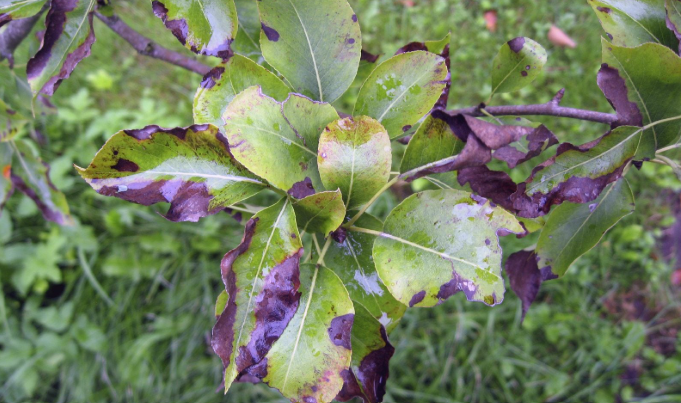
Pear trees can look remarkably healthy one season and then develop spotted leaves, blackened blossoms, distorted shoots, sticky foliage, or damaged fruit the next. Some problems begin so quietly that they are easy to overlook until they have already affected a significant part of the tree.
What makes pear-tree problems particularly confusing is that different causes can produce similar symptoms. Yellow leaves may be related to insects, root problems, drought, or disease. Blackened shoots may indicate fire blight, but environmental damage can sometimes create a similar appearance. Holes in fruit may point toward an insect, while rough patches on the skin can have several possible causes.
For that reason, good pear-tree care starts with observation. Instead of treating every unusual mark as a disease, examine where the damage occurs, how quickly it is spreading, what the weather has been like, and whether insects are present.
Pears are affected by a substantial range of insects, mites, diseases, and environmental disorders. Extension and integrated pest-management references consistently identify problems such as fire blight, pear scab, pear psylla, codling moth, aphids, mites, pear leaf spot, and several root and fruit diseases among the problems growers may encounter.
The following guide explains the most important ones and how to approach them.
1. Fire Blight
Fire blight is one of the diseases pear growers should learn to recognize early. It is caused by the bacterium Erwinia amylovora and can affect blossoms, shoots, branches, and sometimes large portions of the tree.
Pear trees can be particularly susceptible, and warm, wet conditions around flowering can favor infection.
Symptoms
Watch for:
- Blackened or water-soaked blossoms
- Wilting young shoots
- Dead leaves that remain attached
- Darkened branches
- Cankers on older wood
- A characteristic bending of infected shoot tips
- Bacterial ooze during humid or wet conditions
A useful clue is that the disease can appear to move down a young shoot from the original infection point.
How to Control Fire Blight
Inspect trees frequently during and after bloom.
Prune out infected branches promptly using appropriate pruning practices, removing the affected tissue well below visible symptoms. Sanitize pruning equipment between cuts when working on diseased wood.
Avoid encouraging excessively vigorous growth with unnecessary nitrogen fertilizer because very lush young growth can be particularly susceptible.
Where fire blight is a recurring problem, selecting cultivars with better resistance can make a substantial difference.
Chemical control is preventive rather than a way to cure already infected branches, so timing should follow local extension recommendations and product labels.
2. Pear Scab
Pear scab is a fungal disease caused by Venturia pirina. It can affect leaves, fruit, blossoms, and young twigs.
The disease is favored by periods of moisture, particularly during the early part of the growing season.
Symptoms
Look for:
- Olive or dark spots on leaves
- Dark lesions on young fruit
- Roughened fruit skin
- Distorted fruit
- Spots on young twigs in some cases
Early fruit infections can leave permanent blemishes.
How to Control Pear Scab
Remove fallen leaves and fruit from beneath the tree.
Improve air circulation by avoiding excessive crowding.
Prune appropriately so the canopy does not remain unnecessarily dense.
Choose resistant varieties where available.
Fungicides may be required where scab pressure is high, but they work best when applied preventively and timed according to local disease forecasts and label directions.
3. Pear Psylla
Pear psylla is one of the most important insect pests of pear trees. These small, aphid-like insects feed on young shoots, leaves, and developing fruit.
The nymphs produce large amounts of honeydew, which can leave foliage and fruit sticky and encourage black sooty mold. Heavy infestations can weaken trees and reduce fruit production.
Symptoms
You may notice:
- Sticky leaves
- Sticky fruit
- Small insects around young growth
- Sooty mold
- Leaf discoloration
- Reduced vigor
- Premature leaf drop during severe infestations
How to Control Pear Psylla
Begin inspecting trees early in spring.
Pay particular attention to buds and new shoots.
Encourage natural enemies rather than automatically spraying at the first sign of insects.
Dormant or delayed-dormant horticultural oil applications can be useful in some production systems, while growing-season management depends on the pest’s stage and local recommendations.
Avoid unnecessary broad-spectrum insecticide applications because they can eliminate beneficial insects and complicate long-term pest management.
4. Codling Moths
Codling moth is a major fruit pest of pears as well as apples.
The adult moths are relatively inconspicuous, while the larvae cause the recognizable damage inside developing fruit.
Symptoms
Look for:
- Small holes in fruit
- Brown material around entry points
- Frass near the fruit opening
- Larvae inside fruit
- Prematurely damaged or fallen pears
How to Control Codling Moth
Remove damaged and fallen fruit regularly.
Monitor adult moth activity using appropriate traps.
Fruit bagging can protect individual pears in small home orchards.
Where treatment is necessary, timing is critical because vulnerable stages occur during particular periods of the pest’s life cycle.
Integrated pest-management programs commonly use monitoring and, where appropriate, pheromone traps or mating disruption rather than relying solely on repeated spraying.
5. Aphids
Aphids are small sap-feeding insects that commonly gather on young shoots and leaves.
They can multiply rapidly when conditions are favorable.
Symptoms
Aphid infestations may cause:
- Curled leaves
- Distorted shoots
- Stunted growth
- Sticky honeydew
- Sooty mold
- Large clusters of small insects
How to Control Aphids
Inspect new growth frequently.
A strong stream of water can remove small populations.
Encourage ladybirds, lacewings, and other natural enemies.
Avoid excessive nitrogen fertilization.
For serious infestations, use only products registered for pears and the specific pest in your area, following the label carefully.
6. Pear Leaf Spot
Pear leaf spot, sometimes called Fabraea leaf spot, can become an important disease on susceptible pear varieties.
It produces spots on foliage and can contribute to premature defoliation when severe. Extension sources identify it as an important pear disease in some regions.
Symptoms
Look for:
- Small dark spots on leaves
- Enlarging lesions
- Yellowing around affected tissue
- Premature leaf drop
- Spots on fruit in some cases
Control
Remove fallen leaves after leaf drop.
Improve air circulation.
Avoid unnecessary overhead irrigation.
Prune to open excessively dense canopies.
Where the disease regularly causes serious damage, use resistant varieties and an appropriately timed disease-management program.
7. Spider Mites
Several mite species can attack pear foliage.
Two-spotted spider mites and other mites can become more noticeable during hot, dry conditions.
Symptoms
Affected leaves may develop:
- Fine yellow speckling
- Bronze coloration
- Dull foliage
- Premature leaf drop
- Fine webbing during heavy infestations
How to Control Spider Mites
Inspect the undersides of leaves.
Encourage predatory mites and other natural enemies.
Avoid creating unnecessary dust and plant stress.
Use water appropriately to reduce dusty conditions and support healthy foliage.
Be cautious with broad-spectrum insecticides because eliminating predatory mites can allow spider-mite populations to rebound.
8. Pearleaf Blister Mites
Pearleaf blister mites are microscopic pests that live within small pockets or blisters in pear leaves.
Because they are extremely small, the symptoms are often easier to recognize than the pest itself.
Symptoms
Look for:
- Small raised blisters
- Red, yellow, or brown patches
- Distorted leaves
- Premature leaf damage
Control
Inspect buds and young foliage early in the season.
Remove badly affected leaves when practical.
Where the pest is a recurring problem, appropriately timed dormant treatments may be considered based on local recommendations.
9. Pear Rust Mites
Pear rust mites are another microscopic pest that can affect foliage and fruit.
They are included among the pests monitored in integrated pear-management programs.
Symptoms
Possible signs include:
- Bronzed foliage
- Russeted fruit
- Rough fruit surfaces
- Reduced leaf quality
How to Control Them
Monitor leaves and fruit during the growing season.
Avoid unnecessary pesticide applications that eliminate predatory organisms.
Where treatment is necessary, use a product specifically labeled for the pest and crop.
10. Pear Sawfly
Pear sawfly larvae, sometimes called pear slugs, can skeletonize leaves.
They are not true slugs despite their appearance.
Symptoms
Leaves may develop:
- Transparent patches
- Skeletonized areas
- Irregular holes
- Brown damaged sections
Severe infestations can remove a considerable amount of leaf tissue.
Control
Inspect leaves regularly.
Remove larvae manually when populations are small.
Encourage natural enemies.
Use an appropriate labeled treatment only when the infestation warrants intervention.
11. Scale Insects
Scale insects attach themselves to stems, branches, and sometimes leaves.
Because they can resemble natural bumps on the bark, small infestations are easy to miss.
Symptoms
Look for:
- Small bumps on branches
- Weak shoots
- Yellowing leaves
- Reduced vigor
- Honeydew
- Sooty mold
How to Control Scale
Inspect branches during winter and early spring.
Prune heavily infested branches where appropriate.
Encourage beneficial insects.
Horticultural oils can be useful against susceptible stages when correctly timed and used according to the label.
12. Pear Decline
Pear decline is a serious disorder associated with a phytoplasma, with pear psylla implicated in its spread.
Symptoms can develop gradually rather than appearing as sudden leaf spots or fruit damage. Pear psylla can also contribute to the problem as a vector.
Symptoms
Trees may show:
- Reduced growth
- Small leaves
- Premature leaf coloration
- Poor fruit production
- Gradual branch decline
- Overall weakening
Management
There is no simple treatment that reverses advanced decline.
Use healthy planting material.
Choose suitable rootstocks and varieties.
Manage pear psylla.
Remove severely declining trees where necessary to reduce sources of infection.
13. Black Rot
Black rot can affect fruit, leaves, and woody portions of pear trees.
Symptoms
Look for:
- Dark leaf spots
- Fruit decay
- Darkened or shriveled fruit
- Cankers on branches
Damaged fruit that remains on the tree can become a source of infection.
How to Control It
Remove mummified fruit.
Prune dead and diseased wood.
Clean up fallen plant material.
Avoid leaving damaged fruit attached to the tree.
Improve canopy ventilation.
14. Bitter Rot
Bitter rot affects fruit and can become particularly troublesome during warm, wet weather.
Symptoms
Fruit develops:
- Small sunken spots
- Expanding brown lesions
- Soft decay
- Concentric patterns of fungal growth in advanced infections
Control
Remove infected fruit promptly.
Reduce sources of inoculum around the tree.
Prune dead wood.
Improve air circulation.
Avoid unnecessary fruit injuries because wounds can provide entry points for pathogens.
15. Powdery Mildew
Powdery mildew produces a characteristic pale or white coating on plant surfaces.
It is different from diseases that require continuously wet leaves.
Symptoms
Look for:
- White powdery growth
- Distorted young leaves
- Stunted shoots
- Premature leaf damage
Control
Improve air movement.
Avoid excessive crowding.
Remove badly affected shoots where appropriate.
Choose resistant varieties when available.
Maintain good overall tree health.
16. Bacterial Blast and Canker
Bacterial diseases caused by organisms such as Pseudomonas species can damage buds, flowers, twigs, and branches.
They can be particularly problematic during cold, wet weather.
Symptoms
Possible signs include:
- Dead flower buds
- Blackened or damaged blossoms
- Dead twigs
- Bark lesions
- Cankers
Control
Prune affected tissue when appropriate.
Avoid working on trees when foliage is wet.
Improve overall tree health.
Protect trees from unnecessary wounds.
If symptoms repeatedly return, obtain a diagnosis before applying treatments because bacterial diseases can resemble fire blight and other problems.
17. Armillaria Root Rot
Armillaria is a soilborne fungal disease that can attack roots and the base of trees.
It is sometimes associated with areas where old woody vegetation has been removed.
Symptoms
Affected trees may show:
- Poor growth
- Yellowing leaves
- Wilting
- Gradual decline
- Dead branches
- Root decay
Management
Prevention is considerably easier than treatment once a mature tree becomes severely infected.
Avoid planting pears in known infested sites.
Improve drainage.
Remove infected plant material where practical.
Because the organism can survive in soil and old roots, simply replacing the upper layer of soil may not solve the underlying problem.
18. Root and Crown Rot
Poor drainage and persistently saturated soil can create conditions that favor several root and crown diseases.
Symptoms
Look for:
- Yellow leaves
- Wilting despite wet soil
- Poor growth
- Dark or decaying roots
- Bark damage near the soil line
Control
Improve drainage.
Do not plant trees too deeply.
Avoid excessive irrigation.
Keep the trunk base from remaining constantly wet.
UC guidance specifically notes that planting pears too deeply can contribute to crown-rot problems.
19. Stink Bugs and Plant Bugs
Various stink bugs and plant bugs can feed on developing pear fruit.
Their feeding can leave damage beneath the skin that becomes more noticeable as the fruit develops.
Symptoms
Fruit may develop:
- Small depressed areas
- Hard or corky tissue
- Brown discoloration beneath the skin
- Misshapen areas
Control
Remove weeds and alternative host plants where appropriate.
Inspect developing fruit.
Use physical protection such as fruit bags in small home orchards.
Avoid broad-spectrum insecticides unless monitoring shows that intervention is necessary.
20. Leafrollers
Leafroller caterpillars fold or roll leaves and may feed on leaves and fruit.
Symptoms
You may find:
- Rolled leaves
- Webbed foliage
- Caterpillars inside folded leaves
- Chewed leaves
- Damaged fruit
Control
Inspect folded leaves.
Remove small infestations manually.
Encourage birds and beneficial insects.
Biological insecticides such as Bacillus thuringiensis can be useful for susceptible caterpillars when properly applied.
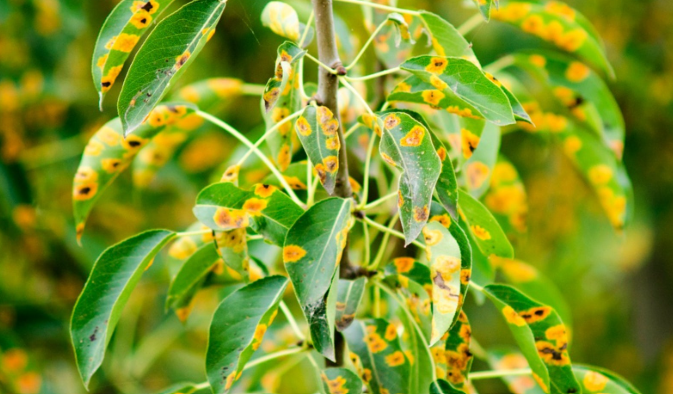
21. Pear Rust
Pear rust is a fungal disease that can affect foliage and fruit in areas where the pathogen is established.
Symptoms
Look for:
- Bright orange or yellowish spots
- Swollen areas on leaves
- Unusual growth on the underside of leaves
- Fruit deformation in some cases
The disease’s life cycle can involve alternate host plants, so local conditions matter greatly.
Control
Remove heavily infected leaves.
Improve air circulation.
Where applicable, reduce proximity to known alternate hosts.
Use resistant varieties and appropriately timed fungicide programs where recommended locally.
How to Tell What Is Wrong With a Pear Tree
One of the simplest ways to narrow down the problem is to consider where the symptoms appear first.
Problems Starting on Blossoms
Investigate:
- Fire blight
- Bacterial blast
- Frost injury
- Thrips
Problems Starting on Young Leaves
Look for:
- Aphids
- Pear psylla
- Mites
- Pear scab
- Leaf spot
- Powdery mildew
Problems Appearing Mainly on Fruit
Consider:
- Codling moth
- Stink bugs
- Pear scab
- Bitter rot
- Black rot
- Rust
- Physical injury
Problems Starting Around the Roots
Investigate:
- Root rot
- Armillaria
- Poor drainage
- Root-feeding pests
- Planting too deeply
Whole Branches Suddenly Dying
Pay particular attention to:
- Fire blight
- Cankers
- Root problems
- Severe environmental stress
This approach prevents you from treating every symptom as though it has the same cause.
A Simple Pear Tree Pest and Disease Identification Guide
| What you notice | Possible cause |
|---|---|
| Blackened blossoms and shoots | Fire blight |
| Dark scabby spots on fruit | Pear scab |
| Sticky leaves and sooty mold | Pear psylla or aphids |
| Small holes entering fruit | Codling moth |
| Curled young leaves | Aphids |
| Fine yellow speckling | Spider mites |
| Raised leaf blisters | Pearleaf blister mite |
| Bronzed or russeted foliage | Rust mites |
| Skeletonized leaves | Pear sawfly |
| Small bumps on branches | Scale insects |
| Gradual whole-tree decline | Pear decline or root disease |
| Dark fruit decay | Black rot or bitter rot |
| White coating on foliage | Powdery mildew |
| Dead buds during cold, wet weather | Bacterial blast |
| Soft or decaying roots | Root rot |
| Corky spots beneath fruit skin | Stink bugs or plant bugs |
| Rolled leaves with webbing | Leafrollers |
| Orange spots on leaves | Pear rust |
How to Prevent Pear Tree Pests and Diseases
The healthiest pear trees are not necessarily those that receive the most treatments. They are usually the ones growing under conditions that make pest and disease problems easier to detect and manage.
Start With a Healthy Tree
Buy healthy, disease-free planting material from a reputable source.
Inspect young trees before planting.
Avoid bringing obviously diseased plants into an established orchard.
Choose the Site Carefully
Good air circulation and appropriate drainage can make a major difference.
Avoid locations where water remains around the roots for long periods.
Keep the Canopy Open
Pruning can improve sunlight penetration and airflow.
A dense canopy dries more slowly after rain and can create favorable conditions for certain diseases.
Remove Diseased Material
Do not allow dead fruit, infected branches, and heavily diseased leaves to accumulate beneath the tree.
Sanitation reduces sources of infection.
Monitor Before Treating
Regular inspection is one of the most valuable tools available to a home grower.
During the growing season, check:
- Young shoots
- Flower clusters
- Leaf undersides
- Developing fruit
- Branches
- Trunk
- Soil around the root zone
Integrated pest-management programs similarly emphasize regular monitoring of pear leaves, fruit, flower clusters, traps, and weather conditions rather than relying on a fixed treatment schedule.
Avoid Excessive Fertilizer
Very vigorous growth can sometimes make trees more attractive or susceptible to certain pests and diseases.
Fertilize according to the tree’s actual needs rather than assuming more fertilizer means more fruit.
Remove Fallen Fruit
Fallen or damaged fruit can harbor pests and disease organisms.
Cleaning up fruit throughout the season is particularly useful when codling moth or fruit rots are recurring problems.
What to Do When a Pear Tree Has a Pest or Disease
When you discover a problem, resist the temptation to immediately spray.
Start with four questions:
Where did the damage begin?
What does the damage actually look like?
Are insects present?
What has the weather and watering pattern been like recently?
Those questions can eliminate many incorrect diagnoses.
For example, sticky leaves accompanied by small insects suggest a very different problem from leaves covered with dry, olive-colored lesions. A tree wilting while its soil remains saturated requires a different response from one wilting during prolonged drought.
Once the likely cause has been identified, choose the least disruptive effective management method.
For edible fruit trees, always use pesticides and fungicides only when necessary and only products labeled for pears and the specific pest or disease. Follow the label’s application instructions, protective measures, and harvest restrictions.
When Should You Remove a Pear Tree?
Removing an entire pear tree should usually be a last resort.
However, it can sometimes make sense when:
- The tree has advanced, irreversible decline.
- A serious disease repeatedly spreads through the tree.
- The trunk or major limbs are structurally compromised.
- Root disease has severely damaged the tree.
- The tree is no longer capable of productive growth.
Before removing a valuable or mature tree, obtaining a professional diagnosis can prevent an unnecessary removal.
What You’ll Eventually Learn From Growing Pear Trees
Growing pear trees teaches a lesson that is easy to miss when looking at a single damaged leaf: the tree is an entire system.
A pest on the leaves can affect fruit production. A disease beginning in the blossoms can move into young shoots. Poor drainage around the roots can eventually show up as yellow leaves high in the canopy. An insect such as pear psylla can create honeydew that encourages another problem, such as sooty mold.
You eventually stop looking at individual symptoms in isolation.
Instead, you begin looking for connections.
You learn to inspect the tree when it is dormant, examine the buds before flowering, watch the blossoms during bloom, check young leaves after they emerge, and inspect developing fruit throughout the season. This kind of routine observation is at the heart of effective integrated pest management.
You also learn that prevention is rarely one dramatic action. It is the combination of healthy planting material, appropriate pruning, good drainage, sanitation, sensible watering, regular inspection, and timely intervention.
Perhaps the biggest lesson is that not every unusual mark means the tree is in serious trouble. Pear trees naturally experience weather stress, minor insect activity, and occasional leaf damage. The goal is not to create a completely pest-free tree.
The goal is to recognize when a problem is becoming important before it has the opportunity to overwhelm the tree.
Once you develop that habit, managing pear-tree pests and diseases becomes less about reacting to every symptom and more about understanding what the tree is telling you.