Houseplants can look perfectly healthy one week and then suddenly develop yellow leaves, sticky stems, white patches, brown spots, or distorted new growth. Because most indoor plants live in a relatively controlled environment, it can be surprising to discover that they are still vulnerable to pests and diseases.
The difference is that indoor growing conditions can sometimes make certain problems easier to overlook. A plant may sit undisturbed for weeks, allowing a small pest population to multiply before the damage becomes obvious. Poor air circulation, overwatering, low light, crowded pots, and contaminated soil can also create conditions that favor certain diseases.
Another complication is that a symptom does not always tell you the cause. Yellow leaves may indicate overwatering, underwatering, root problems, nutrient issues, or pests. Brown tips may be caused by dry air, salt buildup, inconsistent watering, or root damage. White material may be mealybugs, mineral residue, or fungal growth.
For that reason, successful houseplant pest and disease management begins with identification rather than immediate treatment.
Below are some of the most common pests and diseases found on indoor plants, how to recognize them, and practical ways to manage them.
1. Fungus Gnats
Fungus gnats are among the most recognizable indoor plant pests. The adults are tiny, dark-colored flies that are often seen flying around pots or resting on nearby surfaces.
The larvae live in the growing medium and feed on organic material, fungi, and, in some circumstances, plant roots.
Symptoms
You may notice:
- Tiny black flies around pots
- Larvae in consistently damp soil
- Weak seedlings
- Poor root development
- Wilting despite moist soil
Heavy infestations can be more damaging to young plants than established houseplants.
How to Control Fungus Gnats
The first step is to address excessive moisture.
Allow the appropriate portion of the growing medium to dry between waterings according to the plant’s requirements.
Avoid leaving pots sitting in water.
Yellow sticky traps can help monitor and reduce adult populations, while biological controls such as Bacillus thuringiensis subspecies israelensis may be used where appropriate.
2. Spider Mites
Spider mites are extremely small pests that can be difficult to notice until their feeding damage becomes obvious.
They are particularly troublesome in warm, dry indoor environments.
Symptoms
Look for:
- Tiny pale dots on leaves
- Yellow or bronze discoloration
- Dull-looking foliage
- Fine webbing during heavier infestations
- Premature leaf drop
Check the undersides of leaves carefully.
How to Control Spider Mites
Isolate affected plants from other houseplants.
Wash the foliage thoroughly, paying attention to leaf undersides.
Increase humidity when appropriate for the plant, but do not create persistently wet conditions.
Predatory mites can provide biological control in suitable indoor growing situations.
Avoid repeatedly using broad-spectrum insecticides because they can kill natural enemies and sometimes make mite problems harder to manage.
3. Aphids
Aphids are small, soft-bodied insects that commonly gather on young shoots and new leaves.
They reproduce rapidly when conditions are favorable.
Symptoms
Aphids may cause:
- Curled leaves
- Distorted new growth
- Stunted shoots
- Sticky honeydew
- Sooty mold
- Visible clusters of insects
They can be green, black, brown, yellow, or other colors depending on the species.
How to Control Aphids
For small infestations, physically remove them or wash them from the plant with water.
Prune severely infested shoots when appropriate.
Natural predators such as ladybirds and lacewings can help outdoors, although they may be difficult to maintain indoors.
If an insecticide is necessary, choose one labeled for the plant and pest and follow the directions carefully.
4. Mealybugs
Mealybugs are among the easiest houseplant pests to recognize once you know what to look for.
They appear as small insects covered with a white, waxy material.
Symptoms
Look around:
- Leaf joints
- Stem junctions
- Leaf undersides
- New growth
- Roots in severe cases
Heavy infestations can result in:
- Yellowing leaves
- Stunted growth
- Leaf drop
- Sticky honeydew
- Sooty mold
How to Control Mealybugs
Isolate the affected plant.
Small infestations can often be removed manually with a cotton swab or by carefully washing the plant.
Check nearby plants because mealybugs can spread.
Root mealybugs are more difficult to detect because they live around the roots and growing medium.
5. Scale Insects
Scale insects can be mistaken for natural bumps on stems because many species remain attached to the plant for long periods.
They may be soft-bodied or protected by harder coverings.
Symptoms
Heavy infestations can cause:
- Yellowing leaves
- Weak growth
- Branch or stem decline
- Honeydew
- Sooty mold
How to Control Scale
Inspect stems and leaf veins regularly.
Remove small infestations manually where practical.
Prune heavily infested portions.
Because scale insects are protected during much of their life cycle, treatment is often most effective against vulnerable young stages.
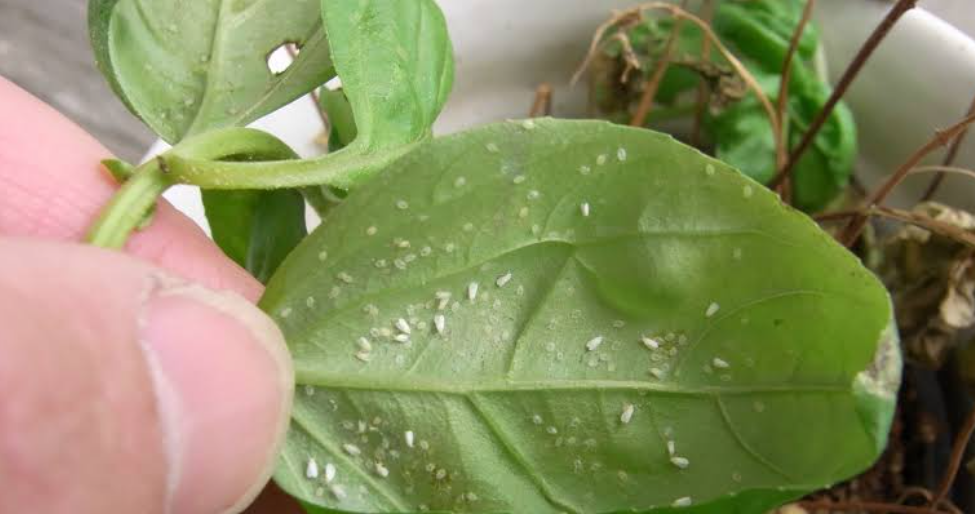
6. Whiteflies
Whiteflies are tiny flying insects that commonly gather underneath leaves.
When an affected plant is disturbed, adults may fly into the air.
Symptoms
They can cause:
- Yellowing leaves
- Weak growth
- Honeydew
- Sooty mold
- Premature leaf drop during heavy infestations
How to Control Whiteflies
Isolate affected plants.
Use yellow sticky traps to monitor adults.
Wash leaves regularly and encourage natural enemies where practical.
Treat significant infestations with a product labeled for indoor plants and whiteflies.
7. Thrips
Thrips are tiny insects that can cause surprisingly extensive damage despite their size.
They feed on plant tissue, particularly young leaves and flowers.
Symptoms
Look for:
- Silvery streaks
- Pale scars
- Distorted leaves
- Black specks of insect waste
- Damaged flowers
- Stunted new growth
Thrips can be particularly frustrating because they may hide inside flowers or tightly folded new leaves.
How to Control Thrips
Isolate affected plants immediately.
Remove severely damaged flowers or foliage.
Use sticky traps for monitoring.
Inspect new growth frequently.
Because thrips can hide in protected areas, repeated monitoring is often more useful than a single treatment.
8. Broad Mites
Broad mites are microscopic pests that can cause severe distortion of young plant tissue.
They are particularly difficult to identify without magnification.
Symptoms
Affected plants may develop:
- Twisted young leaves
- Thickened foliage
- Distorted growth
- Stunted shoots
- Brown or damaged growing points
How to Control Them
Because broad mites are difficult to see, diagnosis is important.
Isolate suspicious plants and remove severely affected growth.
Where infestation is confirmed, use a treatment specifically appropriate for mites and the particular houseplant.
9. Root Aphids
Root aphids live around the roots rather than primarily on the leaves.
They can therefore remain unnoticed for a considerable period.
Symptoms
Plants may show:
- Poor growth
- Yellowing
- Wilting
- Weak roots
- General decline despite reasonable care
When the root ball is inspected, white insects or waxy material may be visible around the roots.
Control
Remove the plant from its pot and inspect the roots.
Severely infested plants may need to be repotted into clean growing medium.
Clean the container before reusing it.
Isolate affected plants from the rest of your collection.
10. Root Mealybugs
Root mealybugs are similar to ordinary mealybugs but live in the root zone.
They are particularly troublesome because the infestation can remain hidden.
Symptoms
The plant may experience:
- Stunted growth
- Yellow leaves
- Wilting
- Poor response to watering
- Gradual decline
White waxy insects may be found around roots or inside the growing medium.
How to Control Them
Inspect the roots carefully.
Remove contaminated growing medium and repot where appropriate.
Wash the container before reusing it.
Keep the affected plant separated while monitoring for recurrence.
11. Powdery Mildew
Powdery mildew is a fungal disease recognizable by its white, flour-like appearance.
Unlike many fungal diseases, it does not require leaves to remain continuously wet.
Symptoms
Look for:
- White powdery patches
- Distorted leaves
- Yellowing
- Premature leaf drop
- Reduced vigor
How to Control Powdery Mildew
Improve air circulation.
Avoid overcrowding plants.
Remove severely infected leaves.
Keep foliage reasonably dry when watering.
Reduce environmental conditions that favor persistent humidity around leaves.
If necessary, use an appropriate fungicide labeled for the specific plant.
12. Gray Mold or Botrytis
Botrytis is particularly common when plant material remains damp and air circulation is poor.
It can affect leaves, flowers, stems, and other soft tissues.
Symptoms
Affected areas may develop:
- Brown spots
- Soft decay
- Gray fuzzy growth
- Rapid deterioration of flowers
How to Control Botrytis
Remove infected plant material promptly.
Increase air movement.
Avoid unnecessary misting.
Do not allow dead flowers or leaves to remain on the growing medium.
Reduce prolonged leaf wetness.
13. Root Rot
Root rot is one of the most common reasons indoor plants decline after being watered frequently.
Several fungi and fungus-like organisms can be involved, but the underlying environmental problem is often excessive moisture combined with poor drainage.
Symptoms
An affected plant may have:
- Yellow leaves
- Wilting despite wet soil
- Soft or dark roots
- Stunted growth
- Leaf drop
- A sour-smelling growing medium
How to Control Root Rot
Remove the plant from its container and inspect the roots.
Cut away severely damaged roots with clean tools where appropriate.
Repot into fresh, suitable growing medium.
Use a container with adequate drainage.
Most importantly, adjust the watering routine.
Simply replacing the soil without changing the moisture problem often allows the condition to return.
14. Pythium Root Rot
Pythium is a group of soil- and water-associated organisms that can cause root and stem problems in plants.
It is particularly associated with excessively wet growing conditions.
Symptoms
Plants may exhibit:
- Root decay
- Wilting
- Yellowing
- Stunted growth
- Sudden decline
Seedlings can be especially vulnerable.
Control
Improve drainage.
Avoid keeping the growing medium constantly saturated.
Use clean containers and growing media.
Avoid moving contaminated water or soil between plants.
15. Rhizoctonia Root and Stem Rot
Rhizoctonia can cause root and stem diseases in many plants.
The symptoms vary according to the plant and growing conditions.
Symptoms
Possible signs include:
- Brown lesions near the soil line
- Stem collapse
- Root damage
- Wilting
- Stunted growth
How to Control It
Avoid excessive moisture.
Improve airflow around crowded plants.
Remove severely infected plant material.
Use clean pots and fresh growing medium when repotting.
16. Fusarium Wilt
Fusarium species can cause vascular diseases in various houseplants.
Because the pathogen can affect the plant internally, symptoms may resemble ordinary stress at first.
Symptoms
Look for:
- Yellowing leaves
- Wilting
- Stunted growth
- One-sided decline
- Brown discoloration within stems in some cases
How to Control It
Remove heavily infected plants to reduce the possibility of spreading the pathogen.
Avoid propagating from suspicious plants.
Use clean containers and sterile or clean growing media.
Do not overwater.
Because some Fusarium diseases can persist in soil, sanitation is particularly important.
17. Bacterial Leaf Spot
Bacterial leaf spot can occur when susceptible foliage experiences favorable conditions for bacterial infection.
Symptoms
You may notice:
- Small water-soaked spots
- Brown or black lesions
- Yellow halos
- Rapidly enlarging spots
- Leaf drop
How to Control It
Remove severely affected leaves.
Avoid splashing water between plants.
Improve air circulation.
Disinfect tools used to remove diseased tissue.
Do not routinely mist plants that are susceptible to bacterial leaf problems.
18. Bacterial Soft Rot
Bacterial soft rot causes plant tissue to become soft and break down.
It is often associated with excessive moisture and damaged plant tissue.
Symptoms
Affected tissue may become:
- Soft
- Watery
- Brown
- Collapsed
- Unpleasant-smelling
Control
Remove infected tissue immediately.
Avoid excessive watering.
Keep wounds clean and dry.
Discard severely affected plants when recovery is unlikely.
Clean the container and surrounding area before using them again.
19. Sooty Mold
Sooty mold is interesting because it is often not the primary problem.
The black coating usually develops on honeydew produced by insects such as aphids, scale, mealybugs, and whiteflies.
Symptoms
Leaves become covered with a black, soot-like film.
How to Control It
Do not concentrate only on removing the black coating.
Find and control the insect producing the honeydew.
Once the insect infestation is reduced, the sooty mold will generally stop developing, and existing deposits can gradually disappear.
20. Algae and Moss on Soil
A green layer developing on the surface of houseplant soil is not necessarily a disease.
It may indicate algae or moss growing because the surface remains consistently moist and receives sufficient light.
Why It Matters
The growth itself may not seriously damage an established plant, but it can indicate:
- Excessive moisture
- Poor airflow
- Slow drainage
- An overly wet growing medium
What to Do
Allow the appropriate portion of the growing medium to dry between waterings.
Improve drainage and airflow.
Remove excessive growth from the soil surface if necessary.
21. Damping-Off
Damping-off primarily affects seedlings and very young plants.
It can be caused by several soil-associated pathogens.
Symptoms
Seedlings may:
- Fail to emerge
- Collapse at the soil line
- Develop thin stems
- Die suddenly
Prevention
Use clean containers.
Start seeds in fresh growing medium.
Avoid excessive watering.
Provide sufficient air circulation.
Do not overcrowd seedlings.
Once damping-off has severely affected a group of seedlings, prevention and sanitation are generally more useful than trying to rescue every affected plant.
22. Plant Viruses
Viruses can affect a wide range of houseplants and are particularly concerning because there is usually no simple treatment that eliminates the virus from an infected plant.
Symptoms
Possible signs include:
- Mosaic patterns
- Irregular yellowing
- Distorted leaves
- Stunted growth
- Ring patterns
- Unusual color changes
However, these symptoms can also be caused by other factors.
How to Control Viruses
Start with accurate identification.
Isolate suspicious plants.
Control insect vectors such as aphids and thrips.
Clean pruning tools between plants.
Avoid propagating from plants showing unexplained persistent symptoms.
When a valuable plant is confirmed to have a serious virus, discarding it may be the safest way to protect a collection.
23. Edema
Edema is not an insect or infectious disease.
It is a physiological disorder that occurs when roots absorb water faster than the leaves can release it.
Symptoms
Leaves may develop:
- Tiny raised spots
- Corky patches
- Blister-like areas
- Brown scars
It can easily be mistaken for a disease.
How to Prevent Edema
Avoid keeping the growing medium constantly wet.
Provide appropriate light and airflow.
Water according to the plant’s needs rather than following a rigid daily schedule.
24. Nutrient Deficiencies That Look Like Disease
Not every sick-looking houseplant has a pest or pathogen.
Nutrient deficiencies can produce symptoms that resemble disease.
For example:
- Nitrogen deficiency may cause general yellowing.
- Iron deficiency can produce pale new leaves with greener veins.
- Magnesium deficiency can cause yellowing between veins on older foliage.
However, nutrient symptoms vary among plant species.
Before adding fertilizer, consider the entire situation.
A plant with damaged roots may show nutrient deficiency symptoms even when nutrients are present in the soil because the roots can no longer absorb them properly.
Why Houseplant Leaves Turn Yellow
Yellow leaves are probably the most misunderstood houseplant symptom.
Possible causes include:
- Overwatering
- Underwatering
- Poor drainage
- Root rot
- Insufficient light
- Nutrient deficiency
- Pests
- Disease
- Natural aging
- Environmental changes
The location of the yellowing matters.
If one or two of the oldest leaves turn yellow while the plant continues producing healthy new growth, natural aging may be occurring.
If many leaves suddenly turn yellow while the soil remains wet, investigate the roots.
If young leaves become distorted and yellow, inspect them closely for insects.
Do not automatically fertilize a yellow houseplant.
Sometimes the real problem is too much water.
Why Houseplant Leaves Develop Brown Tips
Brown leaf tips are also common.
Possible causes include:
- Dry growing conditions
- Irregular watering
- Salt accumulation
- Root problems
- Excessive fertilizer
- Low humidity for humidity-sensitive plants
- Environmental stress
The correct solution depends on the cause.
Increasing humidity will not fix root rot, and adding more water will not solve fertilizer salt accumulation.
Why Houseplant Leaves Curl
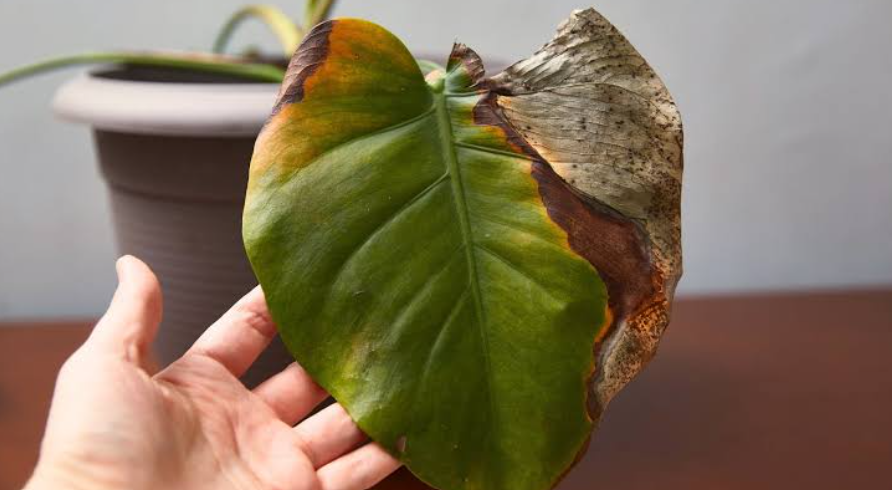
Curling can result from several unrelated problems.
Check for:
- Aphids
- Thrips
- Spider mites
- Leafminers
- Root stress
- Excessive heat
- Drought
- Sudden environmental changes
Turn the leaf over.
Many pests are easier to identify underneath foliage than from above.
Why There Are Tiny Flies Around Your Houseplants
If tiny black flies are repeatedly appearing around your pots, fungus gnats are a likely possibility.
The key clue is their association with damp growing medium.
They are different from fruit flies, which are generally associated with fermenting food and organic waste rather than houseplant soil.
The most useful first step is therefore to examine the growing medium and watering habits.
A Simple Houseplant Pest and Disease Identification Chart
| What you notice | Possible cause |
|---|---|
| Tiny black flies around soil | Fungus gnats |
| Fine webbing and stippled leaves | Spider mites |
| Small insects on young shoots | Aphids |
| White cottony clusters | Mealybugs |
| Small bumps on stems | Scale |
| Tiny white flies | Whiteflies |
| Silvery streaks on leaves | Thrips |
| Twisted new growth | Broad mites or other pests |
| White powder on leaves | Powdery mildew |
| Gray fuzzy growth | Botrytis |
| Soft, dark roots | Root rot |
| Brown stem lesions near soil | Rhizoctonia |
| Sudden seedling collapse | Damping-off |
| Black coating on leaves | Sooty mold |
| Green layer on soil | Algae or moss |
| Mosaic or unusual leaf patterns | Possible virus |
| Raised corky spots | Edema |
| General yellowing | Water, nutrition, roots, pests, or disease |
This table is useful for narrowing down possibilities, but symptoms can overlap considerably.
How to Prevent Houseplant Pests and Diseases
Prevention is much easier than trying to rescue an entire collection after an infestation has spread.
1. Inspect New Plants
Before bringing a new plant into your home, inspect:
- Leaf undersides
- Stems
- Leaf joints
- Growing medium
- Drainage holes
- New growth
Look for insects, eggs, webbing, mold, unusual spots, and distorted leaves.
2. Quarantine New Plants
Keep newly acquired plants separate from established plants for a period of observation.
This gives you an opportunity to detect pests before they spread throughout your collection.
3. Avoid Overwatering
Overwatering is one of the biggest contributors to indoor plant problems.
Water according to the plant, pot, growing medium, temperature, and light conditions.
There is no universal watering schedule that works for every houseplant.
4. Use Pots With Drainage
A decorative container without adequate drainage can trap water around the roots.
Use a suitable nursery pot or container with drainage where appropriate.
5. Give Plants Appropriate Light
Insufficient light can weaken growth and make plants more susceptible to stress.
However, sudden movement from low light to intense direct sunlight can also damage foliage.
Change light conditions gradually when possible.
6. Maintain Air Circulation
Crowded plants create stagnant pockets of humid air.
Give foliage enough space to dry and breathe.
This is especially important for plants susceptible to fungal and bacterial leaf diseases.
7. Remove Dead Leaves
Dead leaves lying on the soil surface can harbor fungi, insects, and other organisms.
Remove them regularly.
8. Clean Your Tools
If you prune several plants, clean your tools between plants, particularly when working with plants showing signs of disease.
9. Don’t Fertilize a Stressed Plant Automatically
Fertilizer is not a cure for pests or root rot.
If roots are damaged, adding more fertilizer can make the situation worse.
First determine why the plant is declining.
What to Do When One Houseplant Has Pests
When you discover pests, avoid immediately treating every plant in the house.
Instead:
1. Isolate the affected plant.
2. Identify the pest.
3. Inspect neighboring plants.
4. Remove heavily infested leaves or stems where practical.
5. Wash the plant if appropriate.
6. Monitor repeatedly.
7. Use targeted treatment if necessary.
This is often much more effective than applying a random pesticide and hoping the problem disappears.
When Should You Use Insecticides or Fungicides?
Not every pest requires chemical control.
A small aphid colony on one leaf may be manageable without an insecticide.
A few fungus gnats may respond to improved watering practices.
A minor scale infestation may be removed manually.
Chemical treatment becomes more reasonable when the pest population is increasing, the plant is suffering significant damage, or nonchemical measures are not sufficient.
When using a pesticide or fungicide, make sure it is specifically labeled for indoor use and for the particular plant and pest, and follow the label directions. Never mix products unless the label specifically permits it.
What You’ll Eventually Learn From Growing Houseplants
The longer you grow houseplants, the more you realize that plant problems rarely exist in isolation.
A plant may develop fungus gnats because its soil stays wet. The soil may stay wet because the plant receives little light. The roots may then become stressed, causing yellow leaves. You might initially mistake those yellow leaves for a nutrient deficiency and add fertilizer, when the real problem began with the growing conditions.
That is why experienced plant growers tend to investigate the whole environment, not just the damaged leaf.
You eventually learn to inspect the underside of leaves before reaching for a treatment. You learn that sticky leaves often point toward sap-feeding insects, that black mold can be a consequence of honeydew, and that a plant wilting in wet soil may have a root problem rather than a need for more water.
Perhaps the most valuable lesson is that healthy houseplants are built through consistency rather than constant intervention.
Good light, appropriate watering, suitable drainage, reasonable airflow, clean tools, careful inspection, and sensible quarantine will prevent many problems before they become serious.
And when a pest or disease does appear, accurate identification becomes your greatest advantage. Instead of treating every symptom as a crisis, you learn to ask a much better question:
What is this plant actually telling me?
Once you can answer that question, controlling houseplant pests and diseases becomes considerably easier.