A Practical Guide to Getting More Blooms
Lisianthus is one of those flowers that can fool you into thinking you are doing something wrong.
The seeds are tiny. Germination can be slow. Young plants seem to grow almost painfully slowly, and months may pass before the first flower appears. Then, seemingly all at once, the plant develops tall stems covered with elegant, rose-like blooms.
This slow beginning is one reason lisianthus has developed a reputation for being difficult to grow.
The reality is a little different.
Lisianthus (Eustoma grandiflorum), sometimes called Texas bluebell or prairie gentian, is not necessarily difficult because it has complicated needs. It is difficult because its growth cycle is much slower than what gardeners expect from an annual flower.
Once you understand that, growing it becomes much more predictable.
The plant rewards good timing, bright light, well-drained soil, moderate fertility, and consistent moisture. It also rewards something that cannot be purchased at a garden center: patience.
Here is how to grow and care for lisianthus successfully, from seed to flowering plant.
Understanding Lisianthus Before You Plant
Lisianthus is native to parts of the southern United States, Mexico, and northern regions of Central America. It belongs to the gentian family and naturally grows in areas where conditions can be warm and relatively dry.
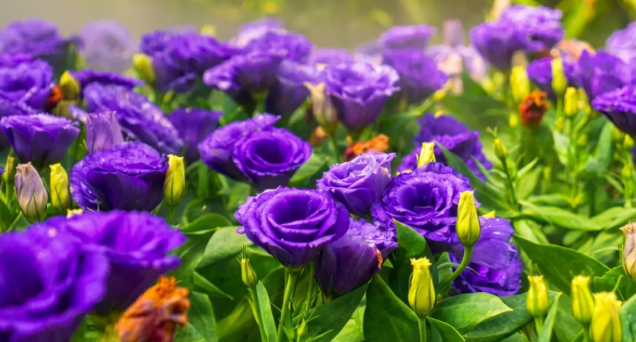
Modern garden varieties are prized for their exceptionally attractive flowers.
Depending on the variety, blooms may be:
- White
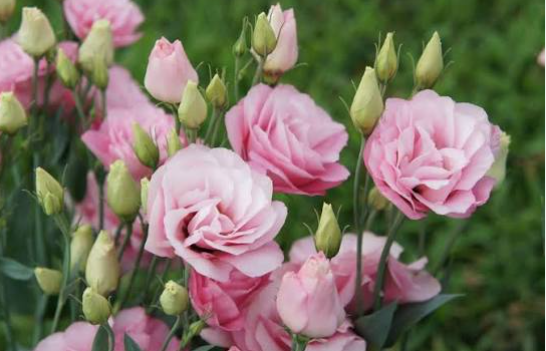
- Pink
- Purple
- Blue
- Lavender
- Rose
- Bicolored
Some varieties have single flowers, while others produce double blooms that can easily be mistaken for roses.
The resemblance to roses is one reason lisianthus is so popular as a cut flower.
But unlike roses, lisianthus can be grown as an annual in many gardens and doesn’t require a permanent woody structure.
Its combination of elegant flowers and relatively long vase life makes it particularly valuable in cutting gardens.
The Biggest Lisianthus Mistake: Starting Too Late
If there is one thing to understand before growing lisianthus, it is this:
It takes a long time to go from seed to flower.
Depending on the variety and growing conditions, plants can require several months before they produce their first blooms.
This means that gardeners who wait until warm weather arrives before sowing seed may discover that the growing season is nearly over by the time the plants begin flowering.
Start with the expected flowering date and work backward.
In many climates, lisianthus seeds need to be started indoors during winter or several months before the desired flowering period.
The exact timing depends on your climate and variety, but early preparation is usually more important than trying to accelerate the plant later.
Lisianthus cannot simply be rushed with extra fertilizer.
The solution to slow growth is generally earlier sowing, not more feeding.
Why Lisianthus Seeds Are So Small
Lisianthus seeds are remarkably tiny.
Many commercially available seeds are sold as pelleted seeds, which are coated to make them easier to handle and sow.
If you are working with unpelleted seed, handle it carefully.
Sow the seed on the surface of a fine, moist seed-starting medium rather than burying it deeply.
Lisianthus seeds require light to germinate, so covering them with a thick layer of soil can interfere with germination.
Keep the growing medium consistently moist but not waterlogged.
A humidity dome or clear cover can help prevent the surface from drying during germination.
Once seedlings emerge, remove the cover gradually and provide plenty of light.
Don’t Give Seedlings Too Much Heat
Warmth is useful for germination, but young lisianthus plants benefit from conditions that are not excessively hot.
A common mistake is to treat lisianthus seedlings like tropical plants.
They don’t need extreme heat to grow quickly.
During their early development, moderate temperatures and strong light help produce compact, sturdy plants.
Insufficient light is a bigger problem than slightly cooler conditions.
If seedlings receive weak indoor light, they can become thin and elongated.
A bright growing area or suitable grow light can make a dramatic difference.
The goal is to produce sturdy seedlings before they are moved outdoors.
Also Read: Types of Lisianthus Flowers
Be Patient With the Seedlings
This is where many gardeners give up.
Lisianthus seedlings can remain small for quite some time.
They may appear to be doing almost nothing while developing their root systems and establishing their first true leaves.
Don’t assume that slow visible growth means the plants need more fertilizer.
Young seedlings have very limited nutrient requirements.
Overfeeding them can damage delicate roots and create weak, overly lush growth.
Instead, focus on:
- Bright light
- Good drainage
- Consistent moisture
- Appropriate temperature
- Patience
Once the plants establish themselves, growth gradually accelerates.
Harden Plants Before Moving Them Outdoors
Lisianthus seedlings grown indoors need time to adapt to outdoor conditions.
Moving them directly from a protected indoor environment into strong sunlight and wind can cause stress.
Harden plants gradually.
Begin by placing them outdoors in a sheltered location for a short period, preferably during mild weather.
Increase their outdoor exposure over several days.
Gradually introduce stronger sunlight and normal wind conditions.
This process allows the leaves and stems to adjust before permanent planting.
Skipping this step can cause unnecessary leaf damage even when the plants are otherwise healthy.
Choose a Sunny Planting Location
Lisianthus performs best in bright sunlight.
Aim for at least six hours of direct sunlight daily, with more light often producing stronger plants and better flowering.
In very hot climates, some protection from intense afternoon heat can be beneficial.
The ideal location therefore depends on your climate.
In cooler regions, full sun can be excellent.
In areas with extremely hot summers, morning sun followed by light afternoon shade may help prevent excessive heat stress.
Good air circulation is also important.
Avoid planting lisianthus in a cramped corner surrounded by dense vegetation.
The plant needs sunlight and airflow around its foliage.
Prepare Well-Drained Soil
Lisianthus dislikes sitting in saturated soil.
This is one of the most important soil considerations.
The roots need moisture, but they also need oxygen.
Heavy clay soil that remains wet for long periods can create an unfavorable root environment.
If your soil drains poorly, improve its structure before planting.
Adding organic matter can help, although the appropriate amendment depends on the existing soil.
Raised beds are another useful solution where drainage is consistently problematic.
Aim for soil that holds enough moisture to support steady growth while allowing excess water to drain away.
Don’t Plant Lisianthus Too Deeply
When transplanting, handle the root system carefully.
Lisianthus can be sensitive to root disturbance, particularly when young.
Plant seedlings at approximately the same depth at which they were growing in their containers.
Avoid burying the crown deeply.
Once planted, water thoroughly to settle the soil around the roots.
Then allow the plant to establish rather than repeatedly disturbing it.
The less you interfere with the root system after planting, the better.
Water Consistently, But Avoid Constant Wetness
Lisianthus performs best when soil moisture remains reasonably consistent.
Large swings between very dry and very wet conditions can stress the plant.
Water deeply when the upper layer of soil begins to dry rather than applying tiny amounts repeatedly.
During hot weather, check plants more frequently.
Container-grown lisianthus may require watering more often than plants growing in the ground because containers lose moisture faster.
Whenever possible, water near the base of the plant.
Keeping foliage dry can help reduce the risk of fungal disease, particularly where humidity is high.
Mulching Can Make Lisianthus Easier to Manage
A thin layer of organic mulch can help stabilize soil moisture.
Suitable materials include:
- Shredded leaves
- Fine compost
- Straw
- Small amounts of bark mulch
Mulch reduces evaporation and helps keep the root zone from experiencing rapid temperature and moisture fluctuations.
However, avoid placing a thick, wet layer directly against the stems.
Good drainage remains essential.
Fertilizing Lisianthus
Lisianthus needs nutrients to produce vigorous stems and flowers, but more fertilizer does not necessarily mean more flowers.
A moderately fertile soil is generally sufficient.
Once plants are established, a balanced fertilizer or a fertilizer formulated for flowering plants can be used according to the product’s instructions.
Avoid excessive nitrogen.
Too much nitrogen may encourage soft vegetative growth at the expense of the strong stems and flowering performance you want.
If plants are already growing vigorously and have healthy green foliage, additional fertilizer may not be necessary.
Think of fertilizer as a way to correct or supplement nutrition rather than as a shortcut to faster growth.
Pinching Can Create More Flowering Stems
Lisianthus can produce attractive branching stems, and pinching young plants can sometimes encourage additional branching.
This is particularly useful when growing lisianthus as a cut flower.
When plants are established and actively growing, removing the growing tip can encourage lateral shoots to develop.
However, timing matters.
Do not pinch weak or stressed plants simply because they are small.
The plant needs enough established growth to recover and produce new branches.
For growers primarily interested in long, elegant stems, excessive pinching may not be desirable.
As with many flowers, the best pruning strategy depends on what you want the plant to produce.
Support Tall Lisianthus Plants
Some lisianthus varieties develop tall stems, particularly when grown under good conditions.
Heavy flowers can cause stems to lean or bend, especially after rain or strong winds.
Support is easier to install before the plants become large.
Garden netting, discreet stakes, or flower-support rings can prevent stems from falling over.
For a cutting garden, support is particularly valuable because straight stems are one of the plant’s most desirable characteristics.
Planting lisianthus in blocks rather than as isolated plants can also provide some mutual support.
Deadheading Lisianthus
Removing spent flowers can improve the appearance of garden plants and may encourage additional flowering, depending on the variety and growing conditions.
When a flower fades, cut the stem back to an appropriate branching point.
Don’t simply remove the flower head while leaving a long, bare stem unless you have a specific reason to do so.
Regular harvesting accomplishes much the same thing as deadheading in a cutting garden.
If your goal is to produce flowers for arrangements, cut stems regularly rather than waiting for every bloom to mature.
Harvesting Lisianthus for Cut Flowers
This is where lisianthus really shines.
The flowers are highly valued for arrangements because the stems are elegant and the blooms have a long vase life when harvested and handled properly.
Cut stems when the first flowers on a stem have opened and additional buds are showing color.
Use clean, sharp scissors or pruning shears.
Remove foliage that would otherwise sit below the water line in the vase.
Place stems into clean water as soon as possible after cutting.
Regular harvesting encourages the plant to continue producing flowering stems in varieties capable of reblooming.
Instead of viewing harvesting as reducing the plant’s beauty, think of it as part of the growing process.
Common Lisianthus Problems
Lisianthus is not particularly difficult once established, but several problems deserve attention.
Root rot
Constantly wet soil is one of the biggest threats.
Symptoms may include:
- Yellowing leaves
- Weak growth
- Wilting despite wet soil
- General decline
The best solution is prevention.
Improve drainage and avoid excessive watering.
Botrytis and other fungal problems
Cool, damp, poorly ventilated conditions can encourage fungal disease.
Give plants sufficient spacing and avoid repeatedly wetting the foliage.
Remove badly affected plant material and dispose of it appropriately.
Aphids
Aphids may attack young growth and flower stems.
Inspect plants regularly.
Small populations can often be controlled naturally by beneficial insects.
Avoid indiscriminate insecticide use because it can eliminate predatory insects along with the pests.
Thrips
Thrips can damage flowers and developing buds, sometimes causing distorted or discolored blooms.
Regular inspection is particularly important when growing lisianthus commercially or for high-quality cut flowers.
Growing Lisianthus in Containers
Lisianthus can be grown in containers, provided the container has adequate drainage.
Use a quality potting mix rather than heavy garden soil.
Choose a pot large enough to support the mature plant and provide enough root volume for consistent growth.
Container-grown plants require closer monitoring because their growing medium can dry rapidly during hot weather.
At the same time, avoid allowing water to accumulate at the bottom of the container.
A sunny patio or balcony can provide an excellent location if temperatures are not excessively extreme.
Can You Grow Lisianthus From Your Own Seeds?
Yes, but there is a catch.
Some modern hybrid varieties may not produce offspring identical to the parent plant.
If you save seed from a hybrid, the resulting plants may vary in:
- Flower color
- Flower form
- Plant height
- Blooming time
This isn’t necessarily a disadvantage.
For gardeners who enjoy experimentation, saving seed can be interesting.
But if you want exactly the same characteristics as a particular named variety, purchasing fresh seed or nursery plants is generally more reliable.
Why Lisianthus Sometimes Fails Despite Good Care
One of the frustrating things about lisianthus is that a gardener can appear to do everything correctly and still experience poor results.
Often the problem began months earlier.
Possible causes include:
Seeds were started too late.
The plant simply didn’t have enough time to complete its long development cycle.
Seedlings received insufficient light.
This can produce weak plants before they are even planted outdoors.
Roots were disturbed excessively.
Young lisianthus doesn’t appreciate repeated transplanting.
The soil remained too wet.
Good intentions can easily turn into overwatering.
Plants were exposed to extreme heat.
Hot conditions can stress plants, particularly where moisture is inconsistent.
Plants were overfertilized.
More nutrients don’t necessarily compensate for poor growing conditions.
This is why successful lisianthus cultivation begins long before the first flower opens.
A Better Way to Think About Lisianthus
Many flower-growing guides are organized around tasks:
Plant.
Water.
Fertilize.
Prune.
Harvest.
With lisianthus, it is more useful to think in terms of stages.
Stage 1: Germination
Provide light, moisture, and patience.
Stage 2: Seedling development
Prioritize strong light and healthy roots rather than rapid growth.
Stage 3: Transplanting
Move plants carefully and minimize root disturbance.
Stage 4: Vegetative growth
Provide sunlight, moderate fertility, consistent moisture, and support.
Stage 5: Flowering
Harvest or deadhead regularly and protect the stems from excessive wind and rain.
Understanding these stages prevents you from applying the same treatment to the plant throughout its entire life.
The Simplest Lisianthus Care Routine
If you want to reduce the entire process to a practical routine, concentrate on these fundamentals:
Start early.
Lisianthus takes a long time to mature from seed.
Provide strong light.
Weak light produces weak plants.
Keep the soil well drained.
Moist roots are good; permanently saturated roots are not.
Maintain consistent moisture.
Avoid repeated cycles of severe drying followed by heavy watering.
Don’t overfertilize.
Healthy, moderate growth is more useful than excessive foliage.
Support tall plants.
Install support before stems begin bending.
Harvest regularly.
Cut flowers encourage you to manage the plant as a productive cutting crop.
Be patient.
Slow early growth is part of the plant’s normal development.
The Reward Comes Late—but It Is Worth It
Lisianthus isn’t the flower to grow when you want instant results.
A packet of tiny seeds can demand months of patience before it produces the flowers you imagined when you bought it.
But that long wait is also part of its appeal.
Once mature, lisianthus produces flowers that look remarkably sophisticated compared with the amount of space the plant occupies. The blooms can resemble roses, while the slender stems make them exceptionally useful for bouquets and arrangements.
And because the plant’s most important requirements are relatively straightforward—good light, suitable temperatures, well-drained soil, consistent moisture, and careful timing—the challenge is mostly one of management rather than complicated horticulture.
The most successful lisianthus growers understand that the plant cannot be bullied into growing faster.
You cannot make up for a late start with extra fertilizer.
You cannot compensate for poor drainage by watering more carefully.
You cannot turn a weak, light-starved seedling into a strong plant simply by giving it more food.
Instead, success comes from getting the conditions right early and then allowing the plant to follow its natural rhythm.
That is perhaps the most useful lesson lisianthus offers gardeners.
Don’t try to make the plant grow faster. Create the conditions that allow it to grow well.
Give it enough time, and the reward can be one of the most elegant flower displays in the garden—delicate-looking blooms carried on surprisingly strong stems, arriving after months of quiet preparation.
For a cutting garden, cottage garden, container display, or simply a gardener who enjoys growing something a little more challenging, lisianthus is well worth the effort.