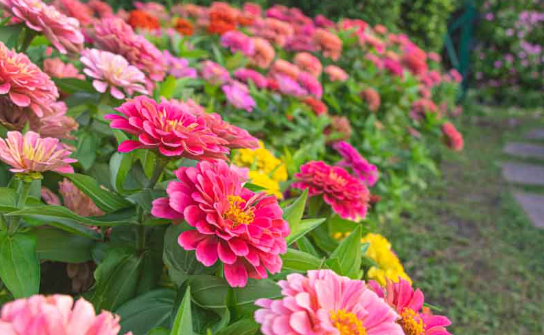
A Practical Guide to Bigger Blooms and Healthier Plants
Zinnias are the kind of flowers that make a garden look productive even when you have done very little to it. Give them sunlight, reasonable soil, enough space, and occasional water, and they can produce flowers for months.
But there is an important distinction between simply growing zinnias and growing good zinnias.
A plant may survive while producing small flowers, weak stems, or sparse foliage. Another plant grown only a few feet away can become a dense, branching mass covered with blooms. The difference often comes down to a handful of decisions made before and during the growing season.
Zinnias are particularly forgiving flowers, which makes them excellent for beginners. They are also rewarding for experienced gardeners because their response to sunlight, spacing, watering, and harvesting is easy to observe.
Here’s how to grow zinnias successfully—and how to get more from them once they are established.
Start With the Right Zinnia
Before planting, consider the amount of space available and how you want to use the flowers.
Garden zinnias (Zinnia elegans) are available in a remarkable range of flower forms, sizes, and colors. Some varieties produce compact plants suitable for containers, while others become tall enough to form a colorful background in a flower border.
There are also other species, including Zinnia angustifolia, which tends to be more compact and is particularly useful for hot, dry locations.
For a small garden, choose compact varieties. For cutting gardens, look for varieties bred for long stems and large flowers.
This decision matters because trying to control a naturally tall variety in a tiny space often leads to unnecessary pruning and staking.
Give Zinnias as Much Sun as Possible
If there is one growing condition zinnias consistently appreciate, it is sunlight.
Choose a location receiving at least six hours of direct sunlight each day. More sunlight is generally beneficial, particularly in regions with humid weather.
Plants grown in insufficient light tend to become:
- Tall and thin
- Less branched
- More likely to flop
- Less productive
- More susceptible to prolonged leaf moisture
Morning and afternoon sun are especially valuable because they help foliage dry quickly after dew or rain.
If you have several possible planting locations, choose the one with the longest uninterrupted period of direct sunlight.
Also Read: Different Types of Zinnia Flowers
Don’t Overfeed the Soil
Zinnias don’t need exceptionally rich soil to produce impressive flowers.
In fact, heavily fertilized soil can sometimes produce the opposite of what you want: enormous plants covered in leaves but relatively few flowers.
A moderately fertile, well-drained soil is usually sufficient.
Before planting, incorporate a reasonable amount of mature compost if the soil is poor or compacted. Compost improves soil structure while supplying nutrients gradually.
There is rarely a need to repeatedly add high-nitrogen fertilizer to established zinnias.
If the foliage is already dark green and vigorous, additional nitrogen is unlikely to solve a flowering problem.
Instead, look first at sunlight, spacing, watering, and harvesting.
Direct-Sow Zinnias Whenever Possible
Zinnias are particularly easy to grow from seed, and direct sowing is often the simplest approach.
Wait until the danger of frost has passed and the soil has warmed. Sow seeds directly into prepared soil and cover them lightly.
Avoid planting the seeds too deeply.
Under warm conditions, seedlings can emerge surprisingly quickly.
One advantage of direct sowing is that the plants immediately establish themselves in the location where they will grow. There is no transplant shock and no need to maintain seedlings indoors.
However, starting seeds indoors can be useful when you want earlier flowers or need to get a head start on a short growing season.
Thin Seedlings Instead of Feeling Sorry for Them
This is one of the hardest things for new gardeners to do.
When dozens of zinnia seedlings emerge together, it is tempting to leave them because every seedling looks healthy.
Don’t.
Crowded seedlings compete for light, water, nutrients, and air circulation. Eventually, the strongest plants may still survive, but they will not have the space necessary to develop their best form.
Thin young plants according to the mature size of the variety.
Adequate spacing gives each plant room to branch and allows air to move through the foliage.
That second benefit is particularly important in humid climates.
Pinching Produces Bushier Plants
Young zinnias can be pinched when they have developed several sets of true leaves.
Remove the growing tip just above a set of leaves.
This encourages the plant to produce side branches rather than continuing upward on a single stem.
The result can be a shorter, bushier plant with more flowering stems.
However, pinching isn’t mandatory.
If you are growing zinnias primarily for cut flowers, you may prefer taller plants with long, straight stems. In that situation, allowing the plants to grow upward can be advantageous.
Think of pinching as a design tool rather than a requirement.
Water the Roots, Not the Flowers
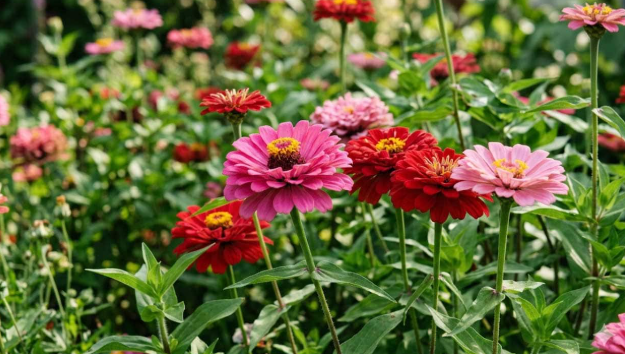
Zinnias tolerate short periods of dry weather once established, but consistent moisture produces better growth and flowering.
Water deeply enough to moisten the root zone rather than applying small amounts frequently.
Whenever possible, direct water toward the soil around the base of the plant.
Keeping the foliage and flowers dry reduces the amount of time leaves remain wet, which can help limit fungal problems.
Morning watering is particularly useful because any moisture that reaches the foliage has time to evaporate during the day.
During prolonged hot and dry periods, monitor plants closely. Wilting in the afternoon can occur during extreme heat, but persistent wilting is a sign that the plants need more water.
Also Read: How To Grow Zinnia From Seeds
Mulch Helps—If You Use It Correctly
A layer of organic mulch can make zinnia care easier.
Use materials such as:
- Shredded leaves
- Straw
- Compost
- Fine bark
- Untreated grass clippings
Mulch slows evaporation, suppresses weeds, and reduces soil splashing onto the lower foliage during rain.
Keep the mulch slightly away from the base of the stems rather than piling it directly against them.
The goal is to protect the soil, not create a constantly wet environment around the plant’s crown.
Deadheading Is the Secret to a Longer Display
Zinnias are naturally prolific flowering plants, but you can encourage them to keep producing by removing spent flowers.
When a flower begins to fade, cut the stem back to a healthy set of leaves or branching point.
This prevents the plant from putting all of its energy into developing seeds.
Regular deadheading is particularly valuable when your goal is a continuous display of flowers.
You don’t have to remove every faded flower immediately. A weekly inspection is usually enough.
And if you want to collect seeds, simply leave selected flowers on the plant until they mature.
Harvest Zinnias Like a Gardener, Not a Collector
One of the most useful things about zinnias is that harvesting flowers can actually encourage more flowers.
For a cutting garden, harvest stems when the flowers are beginning to open fully.
A simple test is to gently wiggle the stem. If it feels soft and bends easily, the flower may not be ready. A firm stem is more desirable for cutting.
Cutting long stems also encourages the plant to branch and produce additional flowering shoots.
This creates a useful cycle:
More harvesting → more branching → more flowering stems.
Instead of thinking of cutting flowers as taking something away from the plant, think of it as pruning with a purpose.
Don’t Plant Zinnias Too Closely
A dense planting may look impressive initially, but overcrowding can become a problem as the plants mature.
Good airflow helps foliage dry after rain, dew, and irrigation.
This becomes particularly important when summer weather is warm and humid.
Spacing recommendations vary by cultivar, so check the mature size of the variety you’re growing. Compact zinnias naturally require less room than large varieties.
If you’re uncertain, giving plants slightly more space is usually safer than creating an overcrowded bed.
Common Zinnia Problems
Zinnias are relatively trouble-free, but they can encounter several common problems.
Powdery mildew
Powdery mildew appears as a white, dusty coating on leaves.
It becomes more likely when plants are crowded and airflow is poor.
The best defense begins before the disease appears:
- Provide adequate spacing.
- Grow plants in full sun.
- Water the soil rather than repeatedly wetting foliage.
- Remove severely affected leaves.
Choosing disease-resistant varieties can also make a significant difference.
Aphids
Aphids may gather around tender shoots and flower stems.
Small populations often don’t justify treatment. Beneficial insects such as lady beetles, lacewings, and hoverfly larvae can help keep them under control.
Avoid spraying broad-spectrum insecticides unnecessarily because they can eliminate the insects that naturally control aphids.
Spider mites
Hot, dry conditions can sometimes encourage spider mites.
Look for stippled or bronzed leaves and fine webbing.
Keeping plants adequately hydrated and avoiding unnecessary pesticide applications can help preserve beneficial predators.
Growing Zinnias in Containers
Zinnias can perform very well in containers, particularly compact varieties.
Choose a container with drainage holes and use a quality potting mix rather than heavy garden soil.
Containers dry out faster than garden beds, so check moisture regularly during hot weather.
However, don’t compensate by keeping the soil permanently saturated.
Place the container where it receives abundant sunlight and rotate it occasionally if growth becomes uneven.
One advantage of container-grown zinnias is that you can position them where their colors complement patios, balconies, entrances, and other outdoor spaces.
Save Seeds From Your Best Plants
If you want to grow zinnias again next year, save seeds from healthy plants that performed particularly well.
Allow selected flowers to remain on the plant until they become dry and mature.
Remove the dried flower head and separate the seeds.
Store them in a labeled paper envelope in a cool, dry location.
When selecting seed, consider more than flower color. Choose plants that demonstrated desirable characteristics such as:
- Strong stems
- Abundant flowering
- Good disease tolerance
- Long-lasting blooms
- Attractive plant shape
Over several seasons, seed saving can turn an ordinary flower bed into a collection of plants adapted to the conditions in your own garden.
Let Some Flowers Stay
Deadheading encourages more flowers, but don’t deadhead everything.
Leaving several flowers to mature provides seeds for future planting and allows birds and other wildlife to interact with the garden.
This also creates a more natural appearance late in the season.
A productive garden doesn’t have to be perfectly tidy all the time.
The Zinnia Growing Formula
If you want to simplify everything in this guide, remember five things:
Sun + space + moderate soil + consistent moisture + regular harvesting.
That’s the basic formula for growing impressive zinnias.
You don’t need expensive fertilizers, elaborate irrigation systems, or complicated pruning schedules.
Give the plants enough sunlight to grow strongly. Give their roots room to explore. Keep moisture reasonably consistent. Keep competing weeds under control. Then harvest or deadhead regularly.
Zinnias will do much of the rest.
Perhaps that’s why they remain such popular garden flowers. They are forgiving enough for beginners but responsive enough that experienced gardeners can manipulate their growth to create better cut flowers, fuller plants, longer flowering displays, and more interesting garden designs.
The most successful zinnia garden isn’t necessarily the one receiving the most attention. It is the one where the basic conditions are right from the beginning.
Once those conditions are established, zinnias reward you with what they do best: producing an almost continuous succession of colorful flowers when much of the garden is beginning to slow down.