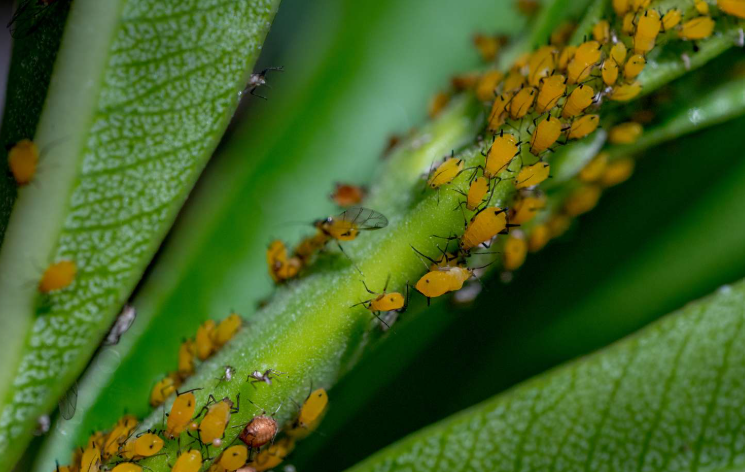
Thrips are among the most frustrating plant pests because they are tiny, fast-moving, and often hide where gardeners do not immediately look. A plant can appear healthy from a distance while thrips are feeding inside flower buds, along new growth, or in folds on the undersides of leaves.
The first clue is often not the insect itself but the damage it leaves behind. Silvery patches, pale streaks, distorted young leaves, damaged flowers, and tiny dark specks can all point toward a thrips infestation. Because several other plant problems can produce similar symptoms, confirming that thrips are actually present is an important first step.
Thrips are extremely small, slender insects. Adults commonly measure only about 0.5–1.5 mm, while immature thrips are generally wingless. Their small size allows them to hide in protected parts of plants, making a single treatment or a quick spray surprisingly unreliable.
The good news is that you do not have to rely on one control method. The most dependable approach combines inspection, sanitation, physical removal, monitoring, environmental management, biological controls, and—when necessary—a properly labeled pesticide. This article explains 21 practical techniques for identifying and getting rid of thrips on plants while also helping prevent them from returning.
What Are Thrips?
Thrips are tiny insects belonging to the order Thysanoptera. Numerous species exist, and not all thrips are harmful to plants. Some species are predators that feed on other small insects and mites.
Plant-feeding thrips damage plants primarily by scraping and puncturing plant tissues and feeding on the contents. Their feeding can produce silvery or brown scars, distorted growth, discoloration, and damaged flowers. Some species can also transmit important plant viruses.
This distinction matters because seeing a tiny insect on a plant does not automatically mean you have a pest problem. Identification and evidence of plant damage should guide your response.
How to Identify Thrips on Plants
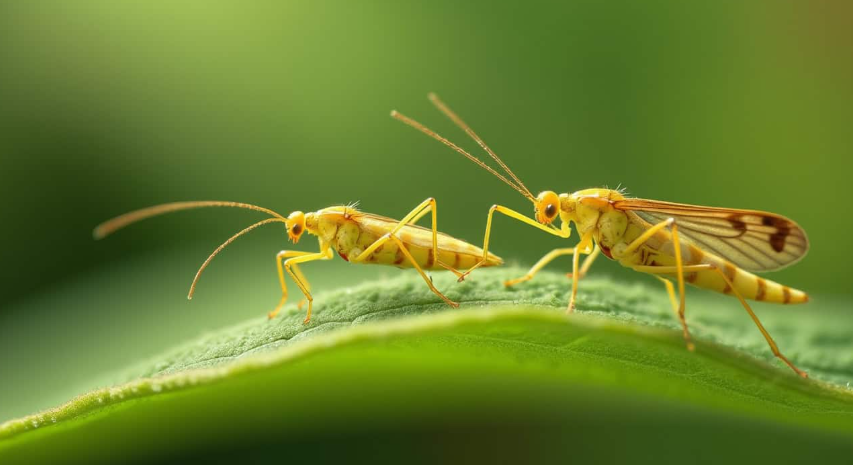
Before trying to eliminate thrips, make sure thrips are actually responsible for the problem.
1. Look for Silvery or Bronze Leaf Damage
One of the classic signs of thrips is irregular silvery discoloration on leaves.
The damaged areas may initially look like pale scratches or streaks. As the injury develops, affected tissue can become brown or bronze. This happens because thrips damage plant cells while feeding.
Look particularly closely at:
- New leaves
- Young shoots
- Leaf folds
- Flower buds
- Flowers
- The undersides of leaves
- Areas around leaf veins
Thrips damage can sometimes resemble wind injury, sun damage, or other insect problems, so look for additional evidence before deciding on treatment.
2. Check for Tiny Black Specks
Another useful clue is the presence of small dark spots around damaged areas.
These specks can be thrips’ fecal deposits and are particularly helpful when the insects themselves are difficult to find.
If you see:
silvery damage + distorted growth + tiny black specks
thrips should be high on your list of possible causes.
3. Inspect New Growth and Flower Buds
Do not concentrate only on large, mature leaves.
Thrips frequently hide in young growth, flower buds, and other protected locations. Because the insects can remain concealed, visible damage may appear before you notice the insects themselves.
Gently open flower buds and inspect the base of young leaves. A magnifying glass can make the inspection much easier.
4. Shake the Plant Over White Paper
This is one of the simplest ways to confirm thrips.
Hold a sheet of white paper beneath a branch, flower, or group of leaves. Gently tap or shake the plant.
Look carefully at the paper.
Thrips that were hiding on the plant may fall onto the surface, where their movement is much easier to notice.
UC IPM recommends shaking foliage or flowers over light-colored paper as a monitoring technique.
5. Use a Magnifying Glass
Because thrips are so small, examining a suspicious plant with the naked eye can be difficult.
A basic hand lens can help you distinguish:
- Thrips
- Aphids
- Spider mites
- Whiteflies
- Other small insects
Adult thrips are slender and elongated, while immature thrips are generally smaller and wingless. Adult wings can have a characteristic fringed appearance.
21 Simple Techniques for Getting Rid of Thrips
Once you have reasonable evidence that thrips are responsible, use several compatible techniques rather than depending on one solution.
6. Isolate Infested Houseplants
If you discover thrips on an indoor plant, move it away from your other plants.
Do not place an infested plant next to healthy plants while deciding what to do. Thrips can move between plants, and adults can fly.
Isolation gives you an opportunity to inspect nearby plants and monitor the affected plant without immediately spreading the problem throughout your collection.
7. Remove Badly Damaged Leaves
Pruning can immediately reduce the number of places where thrips are feeding or hiding.
Remove heavily damaged leaves and shoots using clean pruning tools. Place the removed material in a sealed bag rather than leaving it beside the plant.
Do not remove large amounts of healthy foliage unnecessarily. Excessive pruning can stress a plant, particularly if it is already weakened.
For some thrips problems, pruning and disposing of infested plant parts is specifically recommended as part of management.
8. Wash the Plant With Water
A firm stream of water can dislodge exposed thrips from foliage.
For suitable outdoor plants, gently spray leaves, stems, and other accessible plant surfaces. For houseplants, a shower or sink can sometimes make this easier.
Pay special attention to:
- Leaf undersides
- New shoots
- Leaf joints
- Flower stems
Washing is not necessarily a complete solution because eggs and protected immature stages may escape the treatment, but it can reduce exposed insects and form part of an integrated approach.
9. Use Sticky Traps for Monitoring
Yellow and blue sticky traps can help detect adult thrips.
Place traps near plants and check them regularly. They are particularly useful for determining whether adult thrips are still active.
However, sticky traps should not be treated as a complete solution. They mainly help monitor and capture flying adults, while other life stages may remain on the plant or in the growing medium.
Best use: monitoring + reducing flying adults.
10. Remove Weeds Around Outdoor Plants
Weeds can provide alternative hosts for thrips.
If weeds are growing immediately around susceptible plants, remove them where appropriate and keep the growing area reasonably clean.
This is particularly useful in vegetable gardens and ornamental beds because thrips can move between different plant hosts. UC IPM notes that weeds can serve as reservoirs for some thrips populations.
11. Inspect New Plants Before Bringing Them Home
Prevention is often easier than treating an established infestation.
Before buying or introducing a new plant, inspect:
- New leaves
- Leaf undersides
- Flower buds
- Flowers
- Stems
- Areas where leaves meet stems
Look for insects, silvery scars, black specks, distorted growth, or other suspicious symptoms.
Quarantining new plants for a period of observation can provide an additional layer of protection for an indoor plant collection.
12. Keep Plants Growing Strongly
Healthy plants can generally tolerate pest pressure better than severely stressed plants.
Provide appropriate:
- Light
- Water
- Drainage
- Nutrients
- Air circulation
- Growing temperatures
This does not mean that good plant care eliminates thrips. Rather, it helps the plant recover from feeding damage and reduces additional stress.
Avoid both chronic underwatering and excessive watering.
13. Encourage Beneficial Insects
Nature already provides predators of thrips.
Beneficial organisms that may feed on plant-feeding thrips include:
- Minute pirate bugs
- Predatory mites
- Green lacewings
- Predatory thrips
- Certain parasitic wasps
These natural enemies can become an important component of an integrated pest-management strategy.
Avoid unnecessarily using broad-spectrum pesticides because they can kill beneficial organisms along with pests.
14. Reduce Dust Around Plants
Dusty growing environments can interfere with beneficial organisms and contribute to generally poor growing conditions.
For indoor plants, periodically cleaning dusty leaves can improve the plant’s overall growing environment while allowing you to inspect foliage more closely.
This is especially useful because regular inspection can reveal new thrips damage before an infestation becomes widespread.
15. Use Insecticidal Soap Carefully
Insecticidal soap can help control exposed thrips when the product is specifically labeled for that use.
Because soaps primarily affect insects that are contacted by the spray, coverage is important.
Thoroughly cover appropriate plant surfaces while following the product label. Avoid assuming that a stronger mixture will work better.
Important: Homemade detergent mixtures are not automatically equivalent to commercial insecticidal soap and can damage foliage.
Always follow the label directions for the particular product and plant.
16. Consider Horticultural Oil
Horticultural oils can be useful against certain exposed insect stages.
As with insecticidal soap, coverage matters because protected insects may escape contact.
Before applying oil:
- Read the product label.
- Confirm that it is labeled for your plant.
- Follow the specified dilution.
- Test a small area if the label permits.
- Avoid spraying under conditions that increase the risk of leaf injury.
Different plants have different sensitivities, so never assume that an oil product is universally safe.
17. Use Neem-Based Products Only According to the Label
Neem-derived products are sometimes used in gardening as part of pest management.
However, “natural” does not automatically mean risk-free for plants, people, or beneficial insects.
If you use a neem product, choose one legally labeled for the intended plant and pest, and follow its directions exactly.
Do not improvise concentrations or combine products unless the label specifically permits it.
18. Consider a Labeled Spinosad Product Where Appropriate
Some spinosad-containing products are labeled for thrips and can be useful against certain species and situations.
However, effectiveness varies with the thrips species, life stage, application method, and local product labeling. Some thrips populations also have significant insecticide resistance.
If using a pesticide, the label is the final authority for:
- Which plants can be treated
- Which pests are listed
- Application rate
- Application frequency
- Harvest intervals
- Safety precautions
Never use a pesticide on a crop or ornamental plant unless the product is labeled for that use.
19. Treat the Growing Medium When the Pest’s Life Cycle Requires It
One reason thrips can be difficult to eliminate is that not every life stage remains exposed on the leaves.
Some thrips species have nonfeeding stages that occur in the growing medium or soil. Those stages can escape treatments directed only at foliage.
This is why repeatedly spraying visible adults without addressing the rest of the life cycle can produce disappointing results.
For persistent infestations, consider an integrated approach that targets both plant-associated and soil-associated stages where appropriate.
20. Repeat Monitoring Instead of Expecting One Treatment to Work
One of the biggest mistakes gardeners make is treating once and assuming the problem has disappeared.
Thrips have multiple developmental stages, and some stages are protected from contact treatments.
After treatment, continue checking:
- New leaves
- Flower buds
- Leaf undersides
- Sticky traps
- Previously damaged areas
The goal is not simply to kill the insects you can see today. It is to reduce the population over time.
21. Combine Several Methods Into an Integrated Thrips Plan
For a persistent infestation, the strongest strategy is usually a combination of methods.
A practical sequence is:
Identify → Isolate → Inspect → Remove damaged material → Wash exposed insects → Monitor with traps → Improve sanitation → Protect beneficial insects → Use a suitable labeled treatment if necessary → Recheck regularly.
This approach is more reliable than repeatedly reaching for the same pesticide.
Thrips can be difficult to control because of their hiding behavior, multiple life stages, and, in some populations, insecticide resistance. Integrated management is therefore particularly important.
Thrips vs. Spider Mites: How to Tell the Difference
Thrips and spider mites are frequently confused because both can cause pale or stippled foliage.
| Feature | Thrips | Spider mites |
|---|---|---|
| Body shape | Slender and elongated | Tiny, rounded/oval mites |
| Typical damage | Silvery streaks, scars and distortion | Fine stippling and yellowing |
| Dark specks | Often visible around feeding damage | May be less characteristic |
| Webbing | Usually not a major sign | Common with heavier infestations |
| Flowers affected | Frequently | Less characteristic |
| Movement | Can move quickly and some adults fly | Usually crawl |
| Detection | Shake plant over white paper | Magnification is often useful |
Spider mites can also produce pale stippling, so diagnosis should be based on several clues rather than a single symptom.
Why Are Thrips So Difficult to Get Rid Of?
Thrips have several characteristics that make them challenging pests.
They are extremely small
Their tiny bodies allow them to hide in places that are difficult to reach.
They hide in flowers and new growth
A spray that covers exposed leaves may not reach insects deep inside buds or folded plant tissue.
Different life stages occupy different locations
Some stages feed on plants while other stages can occur in the growing medium, reducing the effectiveness of a single control method.
Some populations have insecticide resistance
Western flower thrips in particular are associated with resistance problems, which is one reason repeatedly applying the same pesticide can fail.
They can move between plants
Adult thrips can fly, while their small size also makes movement between nearby plants easy.
How to Prevent Thrips From Coming Back
Getting rid of an existing infestation is only half the job. Prevention can make future problems much easier to manage.
Inspect plants regularly
Do not wait until leaves are severely damaged. Check young growth and flowers regularly.
Quarantine new plants
Keep newly purchased plants separate from established plants while you inspect them for pests.
Keep the garden clean
Remove badly infested plant material and manage weeds that may harbor pests.
Monitor with sticky traps
Traps can help reveal when flying adults are present.
Avoid unnecessary broad-spectrum pesticides
Protecting beneficial insects can strengthen biological control within the garden.
Check plants before moving them indoors
Outdoor plants brought inside can introduce pests to an entire houseplant collection.
Frequently Asked Questions About Thrips
What do thrips look like?
Thrips are tiny, slender insects. Adults can have narrow wings with fringed edges, while immature thrips are generally smaller and wingless. Their color varies among species and life stages.
What is the first sign of thrips?
The first noticeable sign is often plant damage rather than the insect itself. Silvery patches, streaks, distorted new growth, damaged flowers, and tiny dark fecal spots are common clues.
Can thrips kill plants?
A mild infestation may mainly cause cosmetic damage, but severe infestations can stunt growth and seriously damage young plants. Some thrips species can also transmit plant viruses.
Do thrips live in soil?
Some stages of certain thrips species develop in soil or growing media. This is one reason treating only the visible adults on leaves may not completely eliminate an infestation.
Will sticky traps get rid of thrips?
Sticky traps can capture adult thrips and are excellent monitoring tools, but they generally should not be considered a complete control program because other life stages remain on or around the plant.
What is the fastest way to reduce thrips?
Physically removing heavily infested plant material, washing exposed insects from suitable plants, isolating affected houseplants, and monitoring adults with sticky traps can quickly reduce visible pest pressure. Persistent infestations usually require several methods used together.
Why do thrips keep coming back?
They may return because eggs and immature stages were missed, adults are arriving from nearby plants, weeds are acting as reservoirs, or the chosen treatment does not affect the particular life stage or species involved.
Final Thoughts
Thrips are difficult pests, but identifying them early makes management much easier. Instead of waiting for severe leaf damage, learn to recognize the combination of silvery scars, distorted growth, damaged flowers, and tiny dark specks.
The most effective approach is not a single “magic” spray. Start by confirming the pest, isolate affected houseplants, remove heavily damaged material, wash exposed insects away, monitor adults with sticky traps, maintain good sanitation, protect beneficial insects, and use appropriate labeled treatments when necessary.
Most importantly, keep monitoring after treatment. Because thrips can hide in plant tissue and pass through several developmental stages, controlling an infestation is better viewed as a process rather than a one-day job.
When these 21 techniques are combined thoughtfully, gardeners have a much better chance of reducing thrips populations while protecting the health of their plants and the beneficial organisms living in the garden.