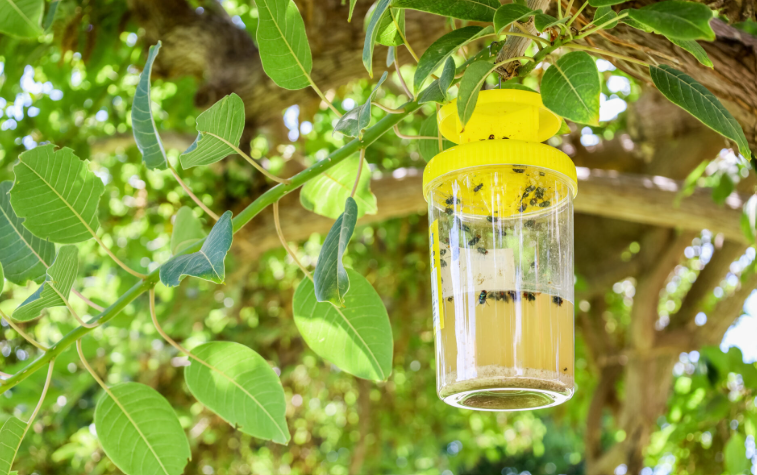
Fruit flies are among the most persistent little pests that can appear in a kitchen. You may notice only two or three hovering around a fruit bowl, but their numbers can increase surprisingly quickly when they find suitable food and breeding conditions. Ripe fruit, vegetable scraps, spilled drinks, garbage, recycling containers, and damp organic residue can all attract them.
The common fruit fly, Drosophila melanogaster, has a remarkably short life cycle. Under favorable conditions, it can progress from egg to adult in approximately 8–10 days. A female can lay hundreds of eggs during her lifetime, which helps explain why an apparently minor problem can become noticeable within a short period.
Fruit flies are especially associated with fermenting or decomposing plant material. They are attracted to the odors produced as sugars and other organic materials break down. Consequently, simply killing the adult flies you can see may not solve the problem if their breeding source remains somewhere in the kitchen.
The good news is that many small infestations can be managed with straightforward, non-chemical measures. The most useful strategy is to combine source removal, cleanliness, food storage, moisture control, and simple homemade traps. Here are 21 natural approaches you can use.
1. Remove Overripe Fruit
Start with the fruit bowl.
Inspect bananas, peaches, pears, melons, tomatoes, berries, and other produce for bruised, leaking, or fermenting pieces. Discard anything that is beginning to rot.
Even one forgotten piece of fruit can continue attracting flies after the rest of the kitchen has been cleaned.
Also Read: Simple Homemade Fruit Fly Traps That Really Work
2. Refrigerate Suitable Fruits
Keeping ripe fruit refrigerated can make your kitchen less attractive to fruit flies.
Store fruits that tolerate refrigeration in the refrigerator rather than leaving everything exposed on the counter. For fruits that need to remain at room temperature, keep them covered or inspect them frequently.
This is particularly useful during warm weather when fruit flies can reproduce rapidly.
3. Make an Apple Cider Vinegar Trap
Apple cider vinegar is a popular natural attractant for fruit flies.
Pour a small amount into a glass or shallow bowl and add a few drops of liquid dish soap. Place the container near the area with the most fly activity.
The vinegar provides an attractive fermented odor, while the soap makes the liquid surface less suitable for flies to escape from.
4. Cover a Vinegar Trap With Plastic Wrap
You can modify the vinegar trap by covering the container with plastic wrap.
Secure the wrap over the top and make several tiny holes with a toothpick.
The smell can attract fruit flies into the container while the small openings make it more difficult for them to find their way back out.
5. Create a Paper Funnel Trap
A paper funnel is another simple option.
Roll paper into a cone with a small opening at the bottom and place it over a jar containing a small amount of apple cider vinegar or ripe fruit.
The funnel directs flies toward the attractant and makes the exit less obvious.
6. Remove Food Scraps Quickly
Do not allow food scraps to sit on kitchen counters or tables.
Fruit peels, vegetable pieces, pulp, and leftover food can become attractive to fruit flies as they begin to break down.
Place food waste into a suitable covered container and dispose of it regularly.
7. Empty the Kitchen Garbage
A garbage bin can become an unnoticed fruit-fly breeding area.
Empty it frequently, especially when it contains fruit or vegetable waste. Wash the inside of the bin periodically to remove sticky residue and food particles.
Keeping the lid closed can also reduce access to the contents.
8. Clean the Recycling Bin
Recycling containers are easy to overlook.
Empty beverage bottles, cans, and food containers can retain traces of sugary or fermented liquids. These residues may attract fruit flies.
Rinse containers before placing them into recycling and clean the recycling bin periodically.
9. Clean Kitchen Drains
Fruit flies may be attracted to organic material accumulating around drains.
Clean the sink and drain area regularly to reduce food residue and buildup.
If you use any commercial drain-cleaning product, follow its label directions carefully and never mix different chemical cleaners.
10. Keep the Sink Dry
After washing dishes or preparing food, wipe excess water from the sink and surrounding surfaces.
Also clean food particles from the drain strainer.
Reducing moisture and organic residue makes the area less attractive to insects.
11. Check for Forgotten Vegetables
Fruit flies are not attracted exclusively to fruit.
A forgotten potato, onion, tomato, squash, or other vegetable can begin decomposing unnoticed inside a cupboard or pantry.
Inspect stored produce regularly and remove anything that is leaking, soft, or visibly deteriorating.
Also Read: How to Get Rid of Fruit Flies
12. Clean Under Appliances
Food and drink spills can disappear underneath refrigerators, ovens, dishwashers, and other appliances.
Check these hidden spaces if fruit flies continue appearing despite cleaning the obvious areas.
Remove food debris and wipe up sticky residue where accessible and safe to do so.
13. Wash the Fruit Bowl
Simply removing the fruit may not be enough.
Juice and soft pieces of fruit can remain stuck to the bottom or sides of a fruit bowl. Wash the bowl with warm soapy water and dry it before replacing the fruit.
This removes odors and residues that may continue attracting flies.
14. Use Leftover Wine as a Trap
Fruit flies are attracted to fermented odors, so a small amount of leftover wine can be used as a lure.
Put a little wine into a small container and add a few drops of dish soap.
Place the container near the area where fruit flies are active and replace the contents when necessary.
15. Try a Ripe Banana Trap
A piece of very ripe banana can provide a strong attractant.
Put a small piece into a jar and cover the opening with plastic wrap. Make several tiny holes in the wrap.
The banana’s aroma attracts flies while the covering limits their ability to escape.
Do not leave the banana in the trap indefinitely. Replace it and clean the container regularly.
16. Use Fruit Juice
A small amount of fruit juice can also serve as an attractant.
Pour some juice into a shallow container and add a few drops of dish soap.
Juice with a strong fruity or sugary aroma can attract adult fruit flies, particularly if it has begun to ferment.
17. Keep Food Covered
Leaving prepared food, cut fruit, or sweet drinks uncovered gives fruit flies easy access.
Use lids, food containers, or other appropriate coverings to protect food.
This is especially important while you are trying to eliminate an infestation.
18. Wash Kitchen Towels and Sponges
Kitchen cloths, towels, and sponges can collect food particles and organic residue.
Wash reusable cloths regularly and allow them to dry between uses.
Replace items that remain dirty or develop persistent odors despite cleaning.
19. Clean Sticky Spills Immediately
Do not ignore small spills.
Juice, soda, syrups, smoothies, and other sugary liquids can leave behind residues that attract insects.
Wipe counters, floors, cabinet surfaces, and areas around appliances whenever something spills.
20. Keep Compost Containers Clean
If you compost kitchen scraps, inspect the compost container when fruit flies appear.
Use a container with a secure lid and empty it regularly. Wash the container after removing the contents.
You can also keep suitable food scraps refrigerated or frozen temporarily if that helps reduce odors and insect activity.
21. Find and Eliminate the Breeding Source
This is the most important step of all.
If traps catch flies but new ones continue appearing, search for the place where they are reproducing.
Check:
- Fruit bowls
- Vegetable storage
- Garbage bins
- Recycling containers
- Compost containers
- Sink drains
- Under appliances
- Sticky spills
- Forgotten food
- Damp organic material
Once the source has been removed, continue using traps and maintaining good sanitation until the remaining adult flies disappear.
Do Natural Fruit Fly Methods Really Work?
Natural methods can be effective for managing small fruit-fly infestations, particularly when several approaches are combined.
However, a homemade trap by itself may not eliminate the problem. It primarily targets adult flies. If eggs or developing larvae are present somewhere nearby, additional adults may continue emerging.
For this reason, source removal is usually more important than simply catching individual flies.
How Long Does It Take to Get Rid of Fruit Flies Naturally?
The time varies depending on the size of the infestation and whether the breeding source has been removed.
You may notice fewer adult flies within several days after removing food sources and using traps. However, it can take longer for the population to disappear completely if flies have already reproduced.
Continue cleaning and monitoring the area even after the infestation appears to be gone.
How to Prevent Fruit Flies From Returning
Once you have eliminated the immediate problem, prevention becomes much easier.
Keep ripe produce under control, clean spills quickly, empty food waste regularly, rinse recyclable containers, inspect vegetables stored in cupboards, and keep kitchen surfaces clean.
It is also useful to develop a habit of checking fruit and vegetables every few days. Removing one damaged piece early can prevent it from becoming a much larger attraction.
Final Thoughts
Getting rid of fruit flies naturally is mostly about removing what attracts them rather than simply trying to kill the insects. Their short reproductive cycle means that ignoring a small food source can allow the population to increase quickly.
Start with the basics: remove damaged produce, clean garbage and recycling containers, inspect drains and hidden areas, and keep food covered. Then add a simple vinegar, fruit, or wine trap to reduce the remaining adult flies.
When these measures are combined consistently, a troublesome fruit-fly infestation can often be brought under control without relying on chemical insecticides.