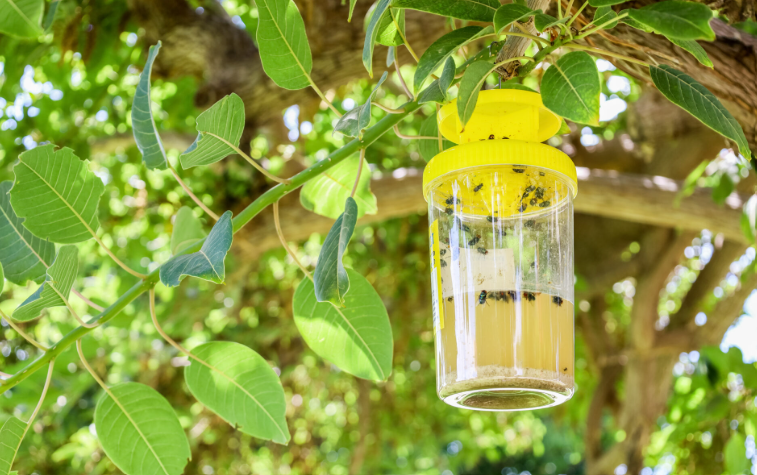
Fruit flies are tiny, but a few of them can quickly become a frustrating kitchen problem. They are especially common around ripe fruit, spilled juice, garbage, recycling containers, drains, and other places where small amounts of organic material are available.
The reason fruit flies can seem to appear out of nowhere is their rapid reproductive cycle. Under suitable warm conditions, the common fruit fly (Drosophila melanogaster) can develop from egg to adult in roughly 8–10 days. Females can also lay hundreds of eggs during their lifetime, allowing a small population to increase quickly when food and breeding sites are available.
Fortunately, you do not always need a commercial insecticide to deal with a small fruit-fly infestation. Homemade traps can help reduce the adult population, particularly when combined with removing the food or breeding source. Below are 10 simple fruit-fly traps made from inexpensive household ingredients.
1. Apple Cider Vinegar and Dish Soap Trap
This is one of the most popular homemade fruit-fly traps because it requires only two common ingredients.
What You Need
- Apple cider vinegar
- A few drops of liquid dish soap
- A small bowl, cup, or jar
How to Make It
Pour a small amount of apple cider vinegar into the container and add a few drops of dish soap. Gently mix without creating excessive foam.
Place the container near the area where fruit flies are most active.
The fermented smell of the vinegar attracts the flies. The dish soap reduces the surface tension of the liquid, making it harder for flies that land on the surface to escape.
Tip: Use several small traps rather than one large trap if flies are spread throughout the kitchen.
Also Read: How to Get Rid of Fruit Flies
2. Vinegar and Plastic Wrap Trap
If you want a trap that prevents flies from simply flying away, try covering the vinegar with plastic wrap.
What You Need
- Apple cider vinegar
- Small glass or bowl
- Plastic wrap
- Toothpick
- Rubber band
How to Make It
Pour a little apple cider vinegar into the container. Cover the opening tightly with plastic wrap and secure it with a rubber band.
Use a toothpick to make several small holes in the plastic.
Fruit flies can follow the smell through the holes and enter the container, but the small openings make it more difficult for them to leave.
3. Paper Funnel Fruit Fly Trap
A paper funnel creates a simple one-way entrance for fruit flies.
What You Need
- A sheet of paper
- Tape
- A jar
- Apple cider vinegar or overripe fruit
How to Make It
Roll the paper into a cone-shaped funnel with a small opening at its narrow end. Secure the paper with tape so that it maintains its shape.
Place the funnel inside or over a jar containing a small amount of vinegar or a piece of very ripe fruit.
Position the narrow end close to the attractant without allowing it to touch the liquid.
The flies can follow the odor into the jar but may have difficulty locating the small exit.
4. Red Wine Trap
Fruit flies are attracted to fermented odors, which makes leftover wine useful as a homemade lure.
What You Need
- A small amount of red wine
- A glass or small container
- A few drops of dish soap
How to Make It
Pour a small amount of wine into a container and add a couple of drops of dish soap.
Place the trap near the fruit bowl, garbage area, or another location where you have noticed fruit flies.
You do not need much wine. A small quantity is sufficient to provide the fermented scent that attracts the insects.
5. Overripe Fruit Trap
You can also use the very food attracting the flies to create a simple trap.
What You Need
- A small piece of overripe banana, peach, melon, or other soft fruit
- A jar
- Plastic wrap
- Toothpick
How to Make It
Place the fruit inside a jar and cover the opening with plastic wrap.
Make several tiny holes in the covering.
The ripe fruit releases odors that attract fruit flies. Once the flies enter through the holes, the plastic covering makes escape more difficult.
Replace the fruit regularly and clean the container afterward.
6. Banana Peel Trap
A banana peel can work as a convenient attractant because its odor becomes stronger as it ripens.
How to Make It
Place a small piece of banana peel inside a jar or container. Cover the opening with plastic wrap and make several small holes.
Set the trap near an area with fruit-fly activity.
Do not leave the peel indefinitely. Once it becomes excessively decomposed, discard it and wash the container.
This method works best as a temporary trap rather than as a long-term solution.
7. Fruit Juice Trap
Sweet fruit juice can provide another simple lure.
What You Need
- A small amount of fruit juice
- A container
- Dish soap
- Optional plastic wrap
How to Make It
Pour a small amount of fruit juice into a shallow container and add a few drops of dish soap.
You can leave the container uncovered or use plastic wrap with small holes.
Juices containing natural sugars and fruit aromas can attract fruit flies, particularly when the juice has started to ferment.
8. Balsamic Vinegar Trap
Apple cider vinegar is not the only vinegar that can attract fruit flies. Balsamic vinegar can also provide a strong food-related aroma.
What You Need
- Balsamic vinegar
- Small bowl
- A few drops of dish soap
How to Make It
Place a small amount of balsamic vinegar in a container and add a few drops of dish soap.
Put it near the area where the flies are concentrated.
Because vinegar-based traps work primarily by attracting adult flies, they should be used alongside cleaning and removal of breeding sources.
9. Fermented Fruit and Jar Trap
For a stronger homemade lure, you can combine a small piece of ripe fruit with a fermented liquid.
What You Need
- Small piece of ripe fruit
- A little apple cider vinegar
- Small jar
- Plastic wrap
- Toothpick
How to Make It
Put the fruit inside the jar and add a small amount of vinegar.
Cover the opening with plastic wrap and make several small holes.
The combination of fruit and vinegar provides multiple odor cues that can attract fruit flies.
Check the trap daily and replace the contents when necessary.
10. Funnel-and-Vinegar Combination Trap
This combines two useful homemade trapping techniques: an attractive liquid and a paper funnel.
What You Need
- Small jar
- Apple cider vinegar
- Piece of paper
- Tape
How to Make It
Add a small amount of apple cider vinegar to the bottom of the jar.
Make a paper funnel and place it over the jar opening, leaving a narrow entrance at the bottom of the funnel.
Secure the funnel so that there are no large gaps around the edges.
Place the trap close to where you see the most fruit flies.
How to Make Homemade Fruit Fly Traps More Effective
A trap alone may not solve a serious infestation. If new flies continue emerging, there is probably a food or breeding source nearby.
For better results, combine your trap with these simple steps:
Remove Overripe Fruit
Inspect fruit bowls, refrigerators, cupboards, and counters. Throw away fruit that is leaking, fermenting, or badly damaged.
Empty Food Waste
Fruit peels and vegetable scraps can attract fruit flies. Empty food-waste containers regularly and clean them when necessary.
Rinse Recycling Containers
Bottles and cans can retain small amounts of sugary or fermented beverages. Rinse them before placing them in a recycling container.
Clean the Sink and Drain
Food residue around sinks and drains can provide an overlooked source of attraction. Clean these areas thoroughly.
Clean Hidden Spills
Check underneath appliances, around garbage bins, beneath fruit bowls, and inside cabinets for old food or drink spills.
How Long Should You Leave a Fruit Fly Trap Out?
Leave a homemade trap in place for several days and monitor whether the number of flies decreases.
If you continue seeing large numbers of flies, do not simply keep adding traps. Search for the source of the infestation.
A trap removes adult flies, but it does not necessarily eliminate eggs or larvae that may already be developing elsewhere.
Also Read: Ways of Getting Rid of Fruit Flies Naturally
Which Homemade Fruit Fly Trap Works Best?
For most small kitchen infestations, apple cider vinegar combined with a few drops of dish soap is a good place to start because it is inexpensive and easy to prepare.
A plastic-wrap trap can be useful when you want to restrict the flies’ escape routes, while a paper-funnel trap provides another simple way of directing flies into a container.
The most effective strategy, however, is not just catching flies. Remove the source that attracted them in the first place.
Final Thoughts
Homemade fruit fly traps can be surprisingly useful when you are dealing with a small infestation. Vinegar, fruit, juice, wine, and simple containers can all be used to create inexpensive traps without buying specialized equipment.
For the best results, use traps alongside good kitchen hygiene. Remove overripe produce, clean spills, empty food waste, rinse recyclable containers, and check drains and hidden areas for organic residue. Once the breeding source is gone, the remaining adult fruit flies become much easier to control.