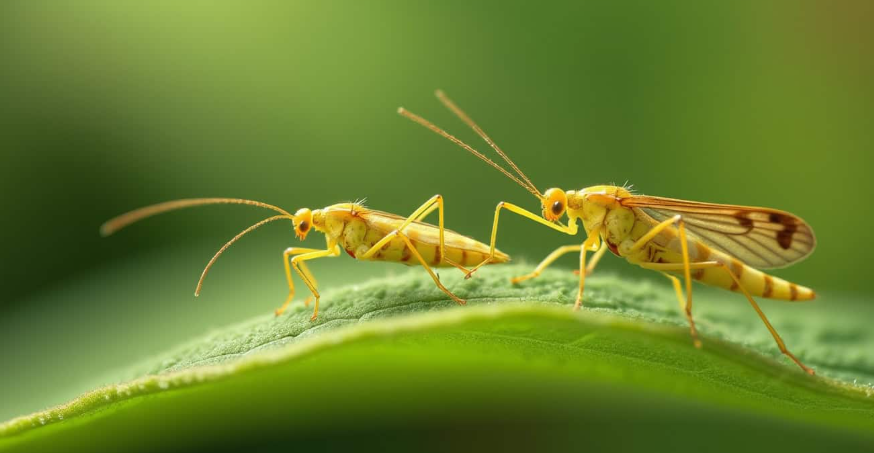
Thrips are tiny, slender insects that measure only about 1 to 2 millimeters in length, yet they can cause outsized damage to gardens, greenhouses, and commercial crops around the world. There are more than 6,000 known species of thrips worldwide, and understanding the different types of thrips is essential for gardeners trying to identify and manage infestations before they spread. Despite their small size, thrips can multiply rapidly, with some species completing an entire life cycle from egg to adult in as little as 10 to 14 days under warm conditions.
Most thrips feed by piercing plant cells and sucking out the contents, leaving behind a telltale silvery or bronzed stippling on leaves, petals, and fruit. A single female thrips can lay between 40 and 300 eggs over her lifetime depending on the species, which explains how populations can explode so quickly once conditions become favorable. Many thrips species are also capable of transmitting plant viruses, with some responsible for spreading diseases that can devastate entire fields of tomatoes, peppers, or ornamental flowers.
Not all thrips are harmful, however, and a smaller number of predatory species actually help control other pest populations by feeding on mites and smaller insects. Thrips are found on nearly every continent and can survive in climates ranging from tropical greenhouses to temperate outdoor gardens, with many species overwintering in leaf litter or soil during colder months. The following 40 types of thrips represent some of the most commonly encountered species, ranging from major agricultural pests to lesser-known predatory varieties.
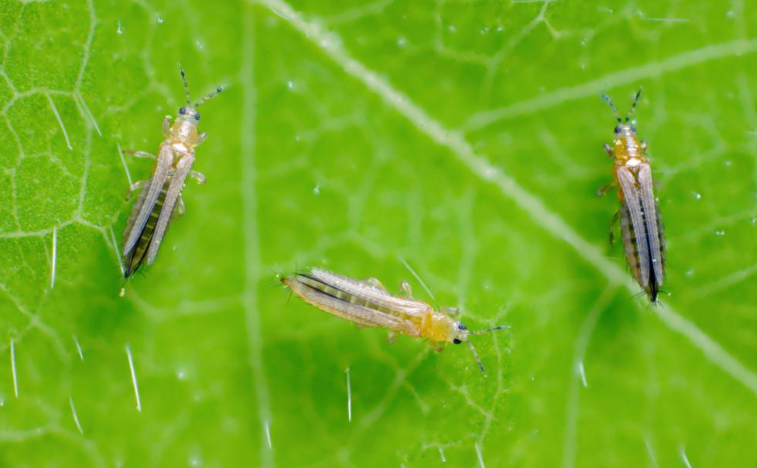
Different Types of Thrips
Western Flower Thrips
Western flower thrips are among the most economically damaging thrips species worldwide, known for feeding on a wide range of over 500 host plants. They are particularly notorious for transmitting tomato spotted wilt virus, a disease capable of causing significant crop losses in greenhouse and field settings. Adults typically measure around 1.5 millimeters long and have a pale yellow to brown coloring depending on temperature and season. Their populations can increase dramatically in warm greenhouse conditions, with a full generation completing in as little as 2 weeks.
Onion Thrips
Onion thrips are one of the most widespread pest species, affecting not only onions but also garlic, cabbage, and a wide range of vegetable crops. A single onion thrips female can produce up to 80 eggs during her lifespan, contributing to rapid population growth in warm, dry conditions. These thrips are pale yellow to light brown and often cluster deep within onion leaf folds, making them difficult to spot without close inspection. Heavy infestations can reduce onion bulb size by as much as 30 percent in severely affected fields.
Melon Thrips
Melon thrips are a significant pest of cucurbit crops, including melons, cucumbers, and squash, and are known for causing severe leaf curling and scarring on fruit. Originally native to Southeast Asia, this species has spread to warmer growing regions across the globe over the past several decades. Melon thrips are extremely small, typically under 1 millimeter, and their pale yellow coloring makes them easy to overlook on light-colored plant tissue. Infestations can reduce marketable fruit yield by more than 20 percent in severe cases.
Chili Thrips
Chili thrips are considered one of the most invasive thrips species due to their unusually broad host range, which includes peppers, roses, strawberries, and many ornamental plants. This species causes distinctive bronzing and curling on new growth, often making young leaves appear scorched. Chili thrips populations can double in size within a week under optimal warm, humid conditions. Their extremely small size, often under 1 millimeter, makes early detection especially challenging for gardeners.
Citrus Thrips
Citrus thrips primarily target citrus trees, feeding on young leaves and developing fruit and causing a distinctive ring-shaped scarring pattern around the stem end of oranges and lemons. This scarring, while cosmetic, can reduce the market value of affected fruit by a significant margin in commercial orchards. Citrus thrips are most active during the spring flush of new growth, when soft young tissue is most vulnerable to feeding damage. A single orchard can host thousands of citrus thrips during peak population periods in early summer.
Greenhouse Thrips
Greenhouse thrips are slow-moving compared to many other species, but they make up for it with persistent feeding that causes silvery stippling and dark fecal spotting on leaves. This species thrives in the humid, stable temperatures of greenhouse environments, where a full life cycle can be completed in roughly 30 days. Greenhouse thrips have a dark brown to black body with pale legs, making them somewhat easier to identify than many pale-colored species. They are known to infest over 100 different ornamental and fruiting plant species.
Cuban Laurel Thrips
Cuban laurel thrips are named for their strong association with laurel fig trees, where their feeding causes distinctive leaf curling that creates protective galls for the insects to live inside. This species is dark brown to black and measures approximately 1.5 to 2 millimeters as an adult. Cuban laurel thrips populations can persist within a single curled leaf gall for several generations before dispersing. This species is most commonly found in warmer climates where laurel fig trees are grown as ornamental landscaping.
Bean Thrips
Bean thrips primarily target legume crops, including beans and peas, and can cause significant scarring on both foliage and developing pods. Adults are dark brown with distinctively fringed wings that aid in short-distance dispersal between plants. A single bean thrips infestation can reduce pod quality enough to affect marketability by up to 15 percent in commercial settings. This species tends to be most active during the warmer months, with populations declining significantly once temperatures drop below 50 degrees Fahrenheit.
Gladiolus Thrips
Gladiolus thrips are a major pest of gladiolus and related flowering bulbs, known for causing silvery streaking on leaves and distorted, discolored flowers. This species can survive within stored bulbs over winter, allowing infestations to persist from one growing season to the next if bulbs are not properly treated. Gladiolus thrips populations can reach several hundred individuals per flower spike under severe infestation conditions. Their feeding damage can reduce flower quality enough to make blooms unsellable in commercial cut flower operations.
Tobacco Thrips
Tobacco thrips are a key vector of tomato spotted wilt virus in the southeastern growing regions, making them a serious concern for both tobacco and vegetable producers. This species is pale yellow to brown and measures approximately 1.3 millimeters as an adult. Tobacco thrips populations tend to peak in early spring, coinciding with the emergence of many seedling crops that are especially vulnerable to feeding damage. Fields with untreated tobacco thrips infestations have reported virus transmission rates affecting more than 25 percent of plants.
Eastern Flower Thrips
Eastern flower thrips are common across grasslands and agricultural fields in North America, frequently found in the flowers of daisies, grasses, and cereal crops. This species is closely related to western flower thrips but tends to favor slightly cooler climates and different host plant preferences. Eastern flower thrips can produce several generations per growing season, with population peaks typically occurring in early summer. Their feeding on wheat and other grain crops can cause a condition known as silver top, where the grain head turns prematurely white.
Rice Thrips
Rice thrips are a significant pest in rice-growing regions, particularly affecting young seedlings during the early stages of transplanting. This species causes leaf rolling and a silvery discoloration that can stunt seedling growth if infestations are severe. Rice thrips populations can be especially damaging in nursery beds, where seedling density creates favorable conditions for rapid spread. Severe infestations have been documented to reduce seedling survival rates by as much as 20 percent in affected paddies.
Avocado Thrips
Avocado thrips are a major pest of avocado orchards, particularly in California, where their feeding causes distinctive brown scarring on the surface of developing fruit. This scarring is purely cosmetic but can significantly reduce the market value of affected avocados. Avocado thrips are most active during the cooler months of spring, unlike many other thrips species that favor summer heat. A single avocado tree can host thousands of thrips during peak infestation periods, particularly on new flush growth.
Redbanded Thrips
Redbanded thrips are easily identified by the distinctive reddish band visible through their translucent abdomen, particularly noticeable in mature nymphs. This species is a significant pest of tropical and subtropical crops, including mango, avocado, and various ornamental plants. Redbanded thrips feeding causes a distinctive silvering and browning pattern on leaf undersides that can lead to premature leaf drop in severe infestations. This species can complete a generation in as little as 16 days under warm tropical conditions.
Pea Thrips
Pea thrips are a specialized pest of pea crops, causing silvering and distortion on both leaves and developing pods. Adults are dark brown and measure roughly 1.5 to 2 millimeters in length. Pea thrips populations tend to build up gradually through the growing season, with the most significant damage occurring during flowering and early pod development. Infestations left unmanaged can reduce pea pod quality enough to impact yield by 10 to 15 percent in affected fields.
Cotton Thrips
Cotton thrips are a persistent early-season pest of cotton seedlings, often causing significant damage to young plants before they have a chance to establish strong root systems. Feeding damage typically appears as silvering and curling of the first true leaves, which can slow overall seedling development. Cotton thrips populations are usually highest in the first few weeks after planting, tapering off as plants mature and develop thicker leaf tissue. Severe early infestations have been shown to delay cotton maturity by up to 10 days in affected fields.
Soybean Thrips
Soybean thrips are commonly found across soybean-growing regions, where their feeding causes a stippled, silvery appearance on leaf surfaces. This species is pale yellow and quite small, typically under 1.2 millimeters, making visual identification in the field challenging without magnification. Soybean thrips populations tend to peak during hot, dry periods in mid-summer, when plant stress makes soybean foliage more susceptible to damage. While rarely causing severe yield loss on their own, heavy infestations can compound stress from other environmental factors.
Palm Thrips
Palm thrips primarily target ornamental palms, causing a distinctive silvery stippling and scarring along the fronds. This species is pale in color and tends to favor the protected, humid environment found within unopened palm fronds as they emerge. Palm thrips populations can be particularly persistent in greenhouse and nursery settings, where consistent warmth allows for continuous breeding throughout the year. Infestations are most noticeable on new growth, where feeding damage becomes permanently visible as the frond matures and unfurls.
Banded Greenhouse Thrips
Banded greenhouse thrips are named for the distinctive dark bands visible across their wings, setting them apart from many similarly sized species. This thrips species favors warm, humid greenhouse environments and is commonly found on a wide range of ornamental foliage plants. Banded greenhouse thrips populations can persist year-round indoors, with a complete life cycle taking approximately 3 to 4 weeks under favorable conditions. Their feeding typically causes a fine stippling pattern that can reduce the ornamental value of affected plants.
Predatory Thrips
Predatory thrips are a beneficial group that feeds primarily on spider mites, other small insects, and thrips eggs rather than plant tissue. These thrips are considered valuable allies in integrated pest management programs, with a single predatory thrips capable of consuming dozens of mite eggs over its lifetime. Predatory thrips tend to be slightly larger and more active than many plant-feeding species, often appearing black or dark brown in color. Their presence in a garden is generally seen as a positive indicator of natural pest control activity.
Cereal Thrips
Cereal thrips are a common pest of wheat, barley, and other grain crops, often causing a condition known as silver top where the developing grain head turns prematurely pale. This species tends to build up large populations in cereal fields during the flowering stage, when the protected environment within the grain head offers shelter from predators. Cereal thrips are dark brown and relatively small, typically under 2 millimeters in length. Severe infestations have been documented to reduce grain yield by up to 10 percent in heavily affected fields.
Grain Thrips
Grain thrips are closely associated with stored grain products, where they can continue to feed and reproduce even after harvest if storage conditions are not properly managed. This species is capable of surviving in relatively low-moisture environments, unlike many thrips that require higher humidity to thrive. Grain thrips populations in poorly ventilated storage facilities can reach several thousand individuals within a matter of weeks. Proper drying and storage practices are considered the most effective way to prevent grain thrips infestations from taking hold.
Poplar Thrips
Poplar thrips are specifically associated with poplar and related tree species, where their feeding causes leaf curling and a silvery discoloration along the leaf margins. This species tends to be most active in spring, coinciding with the emergence of new leaf growth on host trees. Poplar thrips populations are generally kept in check by natural predators, though ornamental plantings in urban areas sometimes see more noticeable infestations. Affected leaves often curl tightly enough to provide shelter for multiple generations of thrips within a single leaf fold.
Privet Thrips
Privet thrips are a common pest of ornamental privet hedges, causing a distinctive silvery mottling across the upper leaf surface. This species is pale yellow as a nymph, darkening to brown as it matures into adulthood. Privet thrips populations tend to be highest in late spring and early summer, when new hedge growth provides the most tender feeding tissue. Heavily infested hedges can take on a grayish, unhealthy appearance that persists until new growth replaces the damaged foliage.
Pear Thrips
Pear thrips are a significant early-season pest of pear, cherry, and other stone fruit trees, with adults emerging from the soil just as buds begin to break in early spring. This species can cause severe damage to blossoms and young fruit, sometimes resulting in complete crop loss in heavily infested orchards. Pear thrips adults are dark brown and measure approximately 1.5 millimeters, while their nymphs remain in the soil for much of the year. Historical outbreaks of pear thrips have caused orchard-wide fruit losses exceeding 50 percent in severe years.
Grass Thrips
Grass thrips are commonly found in lawns, pastures, and grassy meadows, where they feed on grass blades without typically causing significant visible damage. This species plays a role in the broader grassland ecosystem, sometimes serving as a food source for larger predatory insects and birds. Grass thrips populations can fluctuate significantly with rainfall and temperature, often peaking during warm, dry periods in late summer. While rarely a major agricultural concern, extremely dense populations can occasionally cause a bronzed appearance in affected turf.
Black Hunter Thrips
Black hunter thrips are a predatory species valued for their appetite for spider mites and other small pest insects found on a wide range of ornamental and fruit crops. A single black hunter thrips can consume dozens of spider mite eggs and juveniles during its development, making it a useful natural control agent. This species is dark, almost black in color, and noticeably more active and mobile than many plant-feeding thrips species. Black hunter thrips are increasingly used in commercial biological control programs for greenhouse crops.
Six-Spotted Thrips
Six-spotted thrips are named for the six distinctive dark spots visible on their wings, a feature that makes them relatively easy to identify compared to many other species. Like black hunter thrips, this species is predatory, feeding primarily on spider mites rather than plant tissue. A single six-spotted thrips can consume as many as 20 to 30 spider mite eggs per day during peak feeding activity. This species is commonly found in orchards and vineyards, where it plays a valuable role in natural mite control.
Composite Thrips
Composite thrips are frequently found on flowers in the daisy and sunflower family, where they feed on pollen and developing floral tissue. This species is pale yellow and quite small, often going unnoticed until flower quality begins to visibly decline. Composite thrips populations tend to build up during peak flowering season, when abundant pollen provides an ideal food source. While generally not a major agricultural pest, heavy infestations can reduce the visual appeal of ornamental flower displays.
Bamboo Thrips
Bamboo thrips are specifically associated with bamboo species, where their feeding causes a distinctive silvery streaking along the length of the leaves. This species tends to favor the humid, sheltered microclimate found within dense bamboo groves. Bamboo thrips populations are generally more of a cosmetic concern than a serious threat to plant health, though severe infestations can slow new shoot development. This species is most commonly reported in regions where ornamental or timber bamboo is cultivated at scale.
Orchid Thrips
Orchid thrips are a persistent pest in greenhouse orchid collections, where their feeding causes discoloration and scarring on both leaves and delicate flower petals. This species is particularly problematic because orchid blooms can take many months to develop, making any feeding damage highly visible and costly to growers. Orchid thrips are pale to light brown and measure approximately 1 to 1.5 millimeters as adults. A single infested orchid can host multiple generations of thrips within the protected folds of its flower buds.
Iris Thrips
Iris thrips specifically target iris plants, feeding within the tightly wrapped leaf bases where they are well protected from predators and pesticide applications. This species causes a silvery streaking along iris leaves and can lead to bud distortion if populations build up during the flowering period. Iris thrips are known to overwinter within iris rhizomes, allowing infestations to persist from one growing season into the next. Growers often report needing multiple treatment applications to fully manage established iris thrips populations.
Grapevine Thrips
Grapevine thrips are a notable pest in vineyards, where their feeding on developing grape berries can cause a scarring pattern known as thrips scarring that reduces fruit market value. This species is most active during the bloom and early fruit-set period, when grape tissue is particularly tender and vulnerable. Grapevine thrips populations can be especially problematic in dry, warm growing seasons, when reproduction rates increase significantly. Severe infestations have been documented to affect the appearance of up to 20 percent of berries in an affected cluster.
Tomato Thrips
Tomato thrips are a widespread pest of tomato crops, capable of transmitting several damaging plant viruses in addition to causing direct feeding damage to leaves and fruit. This species measures approximately 1.3 millimeters and ranges in color from pale yellow to darker brown depending on temperature. Tomato thrips populations can increase rapidly in warm greenhouse conditions, with a full life cycle sometimes completing in under 3 weeks. Infested tomato plants often show a distinctive silvery scarring on fruit skin that can significantly reduce marketability.
Wheat Thrips
Wheat thrips are a common pest of cereal grain crops, with feeding damage most noticeable on the developing grain head during the flowering stage. This species tends to build large populations within the protected environment of the wheat spike, where natural predators have limited access. Wheat thrips are small and dark brown, typically under 2 millimeters, making field identification difficult without close inspection. Severe infestations have been associated with reduced grain fill and yield losses reaching up to 10 percent in affected fields.
Mulberry Thrips
Mulberry thrips are specifically associated with mulberry trees, where their feeding causes a distinctive silvery discoloration along the leaf veins. This species has historically been of particular concern in regions where mulberry leaves are cultivated for silkworm feed, since damaged leaves are less suitable for that purpose. Mulberry thrips populations tend to peak during the warmer months, coinciding with the most active period of new leaf growth. This species is pale yellow as a nymph, gradually darkening as it matures into adulthood.
Date Thrips
Date thrips are a significant pest of date palm plantations, where their feeding on developing fruit clusters can cause scarring and reduced fruit quality. This species tends to favor the humid microclimate found within tightly clustered date bunches as they develop. Date thrips populations can be particularly damaging during the early fruit-set period, when fruit skin is most tender and susceptible to feeding injury. Severe infestations in commercial date orchards have been reported to reduce the marketable yield of a bunch by up to 15 percent.
Corn Thrips
Corn thrips are commonly found on young corn seedlings, where their feeding causes a silvery streaking and occasional leaf curling during the early growth stages. This species tends to be most damaging when seedlings are under additional stress from drought or poor soil conditions. Corn thrips populations typically decline as plants mature and leaf tissue becomes tougher and less palatable. Severe early-season infestations have occasionally been linked to stunted growth in the most heavily affected seedlings.
Strawberry Thrips
Strawberry thrips are a notable pest of strawberry crops, feeding on flowers and developing fruit in a way that can cause a bronzed, rough texture known as strawberry bronzing. This species is pale yellow and quite small, often requiring magnification to spot within the tightly folded strawberry blossom. Strawberry thrips populations tend to increase significantly during warm, dry weather, when reproduction rates accelerate. Severe infestations have been shown to reduce marketable fruit quality by a noticeable margin in commercial strawberry operations.
Rubber Thrips
Rubber thrips are associated with rubber trees and related tropical plant species, where their feeding causes a fine silvery stippling across the leaf surface. This species thrives in the humid, warm conditions typical of tropical plantations, allowing for continuous breeding throughout the year. Rubber thrips populations are generally considered a minor cosmetic concern rather than a major threat to overall tree health. This species is most frequently reported in regions where rubber cultivation is a significant agricultural activity.