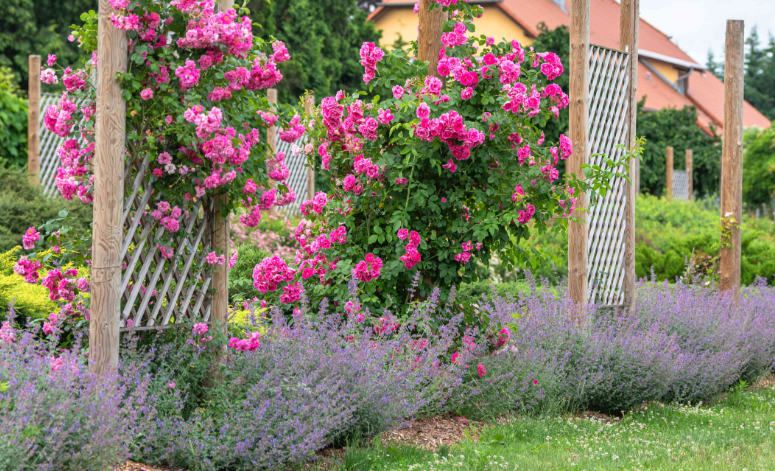
Few plants carry the cultural and horticultural weight that roses do. Grown across nearly every temperate and subtropical region of the world, they have earned a place in gardens not only for their flowers but for the sheer range of forms they take, from compact miniature shrubs tucked into container gardens to sprawling climbers that can cover an entire wall or archway in a single season. Their popularity spans centuries, and their breeding history is one of the richest of any ornamental plant group, with thousands of named varieties bred for color, fragrance, disease resistance, bloom repeat, and growth habit.
Roses are technically classified into several broad groups, including hybrid teas, floribundas, grandifloras, climbers, shrub roses, and old garden roses, each with distinct growth patterns and care requirements. Despite this diversity, most roses share a preference for full sun, at least six hours a day, and well-draining, fertile soil that is kept consistently moist without becoming waterlogged. Good air circulation around the base and canopy of the plant is essential, as roses are prone to fungal issues such as black spot and powdery mildew when air is stagnant or foliage stays wet for extended periods.
Feeding and pruning are two of the most important ongoing tasks in rose care. Roses are generally heavy feeders, benefiting from a balanced fertilizer applied in early spring and again after the first flush of blooms, along with organic matter worked into the soil to support long-term soil health. Pruning, typically done in late winter or early spring before new growth emerges, encourages strong cane structure, removes dead or diseased wood, and shapes the plant for better airflow and bloom production throughout the season.
One of the more overlooked aspects of successful rose gardening is companion planting. Roses can be somewhat demanding neighbors in a garden bed, since their root systems compete for nutrients and moisture, and their canes can shade out low-growing plants if left unpruned. However, thoughtfully chosen companions can do a great deal of work for the rose grower: some plants repel common pests like aphids and Japanese beetles, others attract pollinators and beneficial predatory insects, some suppress weeds and retain soil moisture around the rose’s shallow feeder roots, and many simply provide a visual complement that softens the sometimes stiff, upright form of a rose bush.
The plants profiled below represent a wide cross-section of companions that gardeners have long paired with roses, ranging from classic cottage garden perennials to herbs, bulbs, and groundcovers. Each has its own reason for earning a place at the base of a rose bed, whether that reason is pest deterrence, soil improvement, extended seasonal interest, or simply a pleasing contrast in color and texture. Used well, these companions can transform a simple rose bed into a fuller, more resilient, and more beautiful planting.
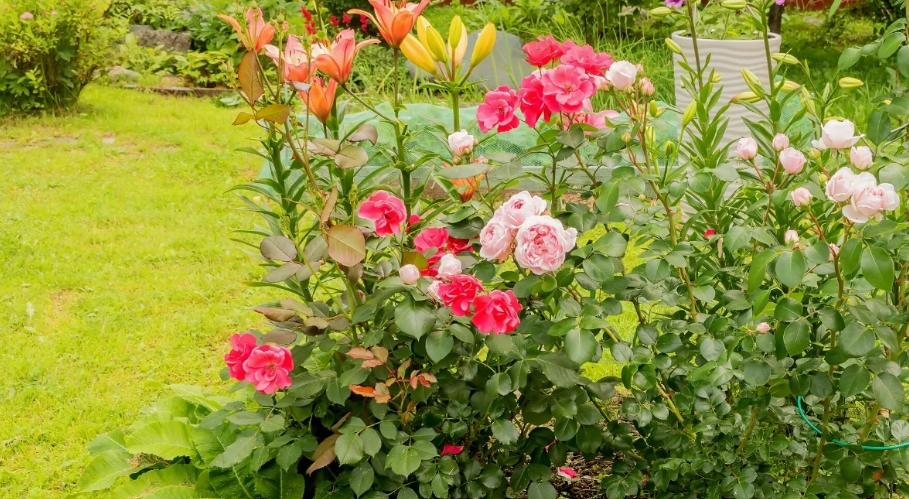
Best Companion Plants For Roses
Lavender
Lavender is one of the most classic rose companions, prized for its silvery foliage and spikes of purple-blue flowers that bloom right alongside many rose varieties. Its strong fragrance is thought to help mask the scent that attracts aphids to rose buds, and its compact, mounding habit fills in the lower portion of a rose bed nicely. Lavender also thrives in the same well-draining, sunny conditions roses prefer, making it an easy match in terms of care requirements.
Catmint
Catmint offers a long season of soft lavender-blue blooms and aromatic gray-green foliage that spills gracefully around the base of rose bushes. It is highly attractive to pollinators and beneficial insects, and its scent is disliked by many common garden pests. Because it blooms in flushes from late spring through fall, it helps keep color present in the bed even between rose bloom cycles.
Salvia
Ornamental salvias, particularly the perennial types, produce tall spikes of blue, purple, or red flowers that contrast beautifully with the rounded form of rose blooms. They are drought-tolerant once established and draw in bees and hummingbirds, which supports overall pollination in the garden. Their upright habit adds structural variety without competing heavily for the same root space as roses.
Geranium (Hardy Cranesbill)
Hardy geraniums form low, spreading mounds of lobed foliage topped with simple five-petaled flowers in shades of pink, purple, and blue. They make an excellent living mulch at the feet of roses, helping to shade the soil and reduce moisture loss while suppressing weeds. Their sprawling habit softens the sometimes bare, leggy lower stems of rose bushes.
Catnip
Related to catmint but slightly more vigorous, catnip is valued in rose beds for its pest-deterrent properties, particularly against aphids and certain beetles. Its clusters of small white to lavender flowers are also a strong draw for pollinators. Gardeners often place it at bed edges since it can spread more assertively than its ornamental cousin.
Alliums
Ornamental alliums send up tall, leafless stems topped with striking spherical flower heads in shades of purple, white, or pink, creating a dramatic vertical accent among roses. Their oniony scent is believed to help deter aphids and other rose pests. Because they grow from bulbs, they take up little space at the soil surface and can be tucked between established rose plants with minimal disruption.
Garlic
Garlic is a favorite companion for practical rather than ornamental reasons, as its strong sulfur compounds are widely believed to repel aphids and other soft-bodied pests that target rose buds and new growth. It is typically planted in the fall around the base of rose bushes and harvested the following summer. Its narrow, upright leaves take up little visual or root space, making it easy to tuck between rose canes.
Chives
Chives produce grass-like foliage and rounded lavender-pink flower clusters that are both edible and ornamental. Like garlic, their pungent scent is thought to discourage aphids and can help protect nearby rose buds. Their compact clumping habit makes them a tidy, low-maintenance edging plant for the front of a rose border.
Marigolds
Marigolds are a long-standing companion planting staple, valued for compounds in their roots that are believed to deter nematodes in the surrounding soil. Their bright orange and yellow flowers bloom continuously through the warm season, providing color even during lulls in a rose’s bloom cycle. They are easy to grow from seed and require little more than sun and average soil.
Nasturtiums
Nasturtiums are often used as a trap crop near roses, luring aphids toward themselves and away from rose buds and new shoots. Their rounded leaves and bright red, orange, and yellow flowers spread in a loose, informal mound that contrasts nicely with the more structured form of a rose bush. They thrive in poorer soil, which makes them an easy, low-fuss addition to a rose bed.
Foxglove
Foxglove’s tall spires of tubular, spotted flowers add strong vertical interest behind or among rose plantings, echoing the classic English cottage garden look. It tends to bloom in late spring and early summer, overlapping with the first flush of rose blooms for a layered display. Bees are strongly drawn to its flowers, which helps support pollination throughout the bed.
Delphinium
Delphiniums produce some of the tallest, most dramatic flower spikes available to home gardeners, typically in shades of blue and purple that read as a striking contrast to warm-toned roses. They share roses’ preference for rich, well-draining soil and full sun, making them compatible in terms of growing conditions. Their height makes them a natural choice for the back of a mixed rose border.
Peony
Peonies and roses share a long history as garden companions, both prized for large, romantic blooms and a preference for similar soil and sun conditions. Peonies typically bloom slightly earlier than most roses, extending the overall flowering season of the bed. Their sturdy, shrubby form also provides a textural counterpoint to the more open, arching habit of many rose varieties.
Clematis
Clematis vines are frequently trained to climb alongside climbing roses, their contrasting flower shapes and colors creating a layered, tapestry-like effect on trellises and arches. The two plants generally share similar watering and feeding needs, though clematis prefers its roots kept cool and shaded, often by low companion plants at its base. This pairing is a classic technique in cottage and formal gardens alike.
Clary Sage
Clary sage produces tall, branching spikes of pastel pink and lilac bracts that bloom over a long period in summer. Its aromatic foliage is thought to help confuse pests seeking out roses by scent. As a biennial or short-lived perennial, it often self-seeds modestly, providing a soft, informal presence around more structured rose plantings.
Yarrow
Yarrow’s flat-topped clusters of tiny flowers, available in white, yellow, pink, and red, attract a wide range of beneficial insects, including ladybugs and lacewings that prey on aphids. Its ferny, drought-tolerant foliage requires little supplemental water once established, matching well with a rose bed’s watering schedule. Yarrow also tolerates poor soil, making it useful for filling in less fertile spots near roses.
Coreopsis
Coreopsis brings a long season of cheerful yellow, gold, or bicolor daisy-like flowers that bloom steadily from early summer into fall. Its fine, airy foliage takes up little visual space, allowing it to be tucked in front of roses without competing for attention. It is also quite drought-tolerant, thriving in the same well-draining soil roses need.
Verbena
Verbena’s clusters of small, vividly colored flowers create a low, spreading carpet of color that works well as a groundcover beneath taller rose bushes. It blooms nearly continuously through the warm months and is a strong pollinator attractant. Its trailing habit helps soften the transition between rose stems and garden pathways or edging.
Sweet Alyssum
Sweet alyssum forms a dense, low mat of tiny white, pink, or purple flowers with a honey-like fragrance that draws in pollinators and beneficial insects. Its shallow root system makes it an ideal underplanting for roses, since it does not compete significantly for water or nutrients at deeper soil levels. It also helps suppress weeds by covering bare soil around the base of rose canes.
Lamb’s Ear
Lamb’s ear is grown primarily for its soft, silvery, felted foliage, which provides a striking textural and color contrast to the typically deep green leaves of rose bushes. Its low, spreading habit works well as a border or edging plant along the front of a rose bed. Deer and rabbits tend to avoid it due to its fuzzy texture, offering some indirect protection to nearby roses.
Artemisia
Artemisia varieties are grown for their finely cut, silver-gray foliage, which brings a soft, hazy texture that offsets the boldness of rose flowers and foliage. Many types are highly drought-tolerant and thrive in poor, well-draining soil, conditions roses can also tolerate once established. Its aromatic leaves are thought to help deter certain pests when planted in proximity to roses.
Baptisia
Baptisia, also known as false indigo, produces tall spikes of pea-like flowers in shades of blue, purple, white, or yellow atop sturdy, shrub-like foliage. Once established, it is remarkably low-maintenance and drought-tolerant, requiring little attention beyond an annual trim. Its substantial, upright form makes a good structural anchor at the back of a rose border.
Russian Sage
Russian sage offers airy spikes of small lavender-blue flowers atop silvery, aromatic stems, blooming over a long stretch of summer into fall. Its billowy, see-through habit allows it to be planted close to roses without visually crowding them. Like lavender, its strong scent may help deter some pests while its flowers draw in pollinators.
Baby’s Breath
Baby’s breath is best known for its cloud-like sprays of tiny white or pale pink flowers, a texture that pairs beautifully with the larger, more structured blooms of roses in both garden beds and cut flower arrangements. It thrives in similar well-draining, slightly alkaline soil conditions that many roses prefer. Its airy form fills gaps between rose bushes without overwhelming them visually.
Iris
Bearded and Siberian irises bring bold, sword-like foliage and striking flowers in a huge range of colors that bloom in late spring, often just ahead of the first rose flush. Their upright, linear leaves contrast well with the rounder form of rose foliage, adding structural variety to a mixed bed. Irises are also relatively low-maintenance once established, needing only occasional dividing every few years.
Daylily
Daylilies contribute months of continuous color thanks to their habit of producing new blooms daily throughout the summer, complementing the repeat-blooming nature of many modern rose varieties. Their strappy, arching foliage provides a textural contrast to rose bushes and helps mask bare lower stems. They are also highly adaptable, tolerating a range of soil types with minimal care.
Hosta
While typically grown in shade, hostas can be used along the shadier edges of a rose bed, where their broad, textured leaves in shades of green, blue-green, and variegated cream provide a strong foliage contrast to roses. They require consistent moisture, so they work best in spots where roses receive full sun but the ground beneath stays slightly cooler and shaded later in the day. Their mounding form is especially useful for filling awkward corners near larger rose shrubs.
Astilbe
Astilbe produces feathery plumes of pink, red, or white flowers above finely divided, fern-like foliage, offering a soft textural contrast to the more rigid form of roses. It prefers slightly more consistent moisture than most roses, so it works best at the edges of a bed where soil stays a touch more evenly moist. Its plume-like blooms add a different flower shape that breaks up the visual repetition of rounded rose blossoms.
Coral Bells (Heuchera)
Coral bells are grown chiefly for their richly colored foliage, available in shades of purple, amber, lime, and near-black, which provides year-round textural interest at the base of rose bushes. Delicate, airy flower spikes appear in late spring and attract hummingbirds. Their compact, mounding form makes them well-suited for edging along the front of a rose border.
Lady’s Mantle
Lady’s mantle features scalloped, water-repellent leaves that hold droplets of dew or rain in a way that adds subtle visual interest to a rose bed each morning. Its chartreuse-green flower sprays in early summer provide a soft color that complements nearly any rose hue. As a low, spreading perennial, it also helps shade and cool the soil around a rose’s root zone.
Dianthus
Dianthus, commonly known as pinks, offers a spicy, clove-like fragrance and delicate, fringed flowers in shades of pink, white, and red that bloom over a long season. Its low, mounding, often evergreen foliage makes a neat edging plant for the front of a rose bed. Many varieties are quite drought-tolerant and prefer the same well-draining soil conditions roses need.
Peony Poppy
Peony poppies, a form of opium poppy grown for ornamental use, produce large, ruffled, tissue-paper-like blooms that echo the fullness of many old garden rose varieties. They bloom in late spring, often overlapping with the earliest roses, and self-seed readily to return year after year. Their airy, upright stems weave nicely among rose canes without competing heavily for space.
Columbine
Columbine’s delicate, spurred flowers in shades of purple, pink, yellow, and bicolor combinations bloom in mid to late spring, bridging the gap before roses reach their first major flush. Its ferny, mounding foliage stays attractive even after flowering has finished. Columbine tolerates part shade, making it useful for the cooler edges of a rose bed.
Bellflower (Campanula)
Bellflower produces cup- or star-shaped blue, purple, or white blooms on plants that range from low, spreading groundcovers to taller upright forms, offering flexibility depending on where it’s placed in a rose bed. Its cool-toned flowers provide a calming contrast to the warmer colors common in many rose varieties. Most types are easy to grow and tolerate a range of soil conditions.
Thyme
Creeping thyme forms a low, fragrant mat that can be used to underplant roses, helping to suppress weeds and retain soil moisture while releasing a pleasant scent when brushed against. Its tiny flowers, typically pink or purple, are highly attractive to bees and other pollinators. Because it stays low to the ground, it never competes with roses for light.
Oregano
Ornamental and culinary oregano varieties form spreading, aromatic mats topped with clusters of small pink or purple flowers in summer. Like other pungent herbs, its scent is thought to help mask roses from pest insects that locate host plants by smell. Its low, sprawling habit makes it a practical living mulch around the base of rose bushes.
Rosemary
Rosemary’s woody, upright form and needle-like evergreen foliage provide structure and year-round green even when roses are dormant in winter. Its pale blue flowers appear in late winter or early spring, offering early-season interest before roses leaf out. Both plants share a preference for full sun and well-draining soil, making them compatible in mixed beds.
Boxwood
Though not a flowering companion, boxwood is frequently used to create structured, formal edging around rose beds, its dense evergreen foliage providing a tidy, year-round frame that contrasts with the more seasonal display of roses. It can be clipped into low hedges that define the shape of a rose garden even in winter when roses are bare. Its slow growth and tolerance for shaping make it a low-maintenance structural partner.
Sedum (Stonecrop)
Sedum’s fleshy, succulent foliage and late-season flower clusters, often in shades of pink, red, or rust, provide interest into fall when many roses are winding down their bloom cycle. It is extremely drought-tolerant, requiring little water once established, and tolerates the well-draining soil roses also need. Its low, spreading form works well as a groundcover companion at the front of a rose bed.
Sweet Woodruff
Sweet woodruff forms a delicate, low mat of whorled leaves topped with tiny white star-shaped flowers in spring, making it a useful groundcover for the shadier or cooler edges of a rose planting. It helps retain soil moisture and suppress weeds around the base of roses without competing aggressively for nutrients. Its fine texture offers a gentle contrast to the coarser foliage of rose bushes.
Sea Holly
Sea holly brings an unusual, spiky texture to a rose bed, with its metallic blue-gray flower heads and stiff, thistle-like bracts standing out sharply against the softer forms of most roses. It is highly drought-tolerant and thrives in lean, well-draining soil, tolerating the same sunny conditions roses require. Its architectural form makes a striking accent when placed among more traditional rose companions.