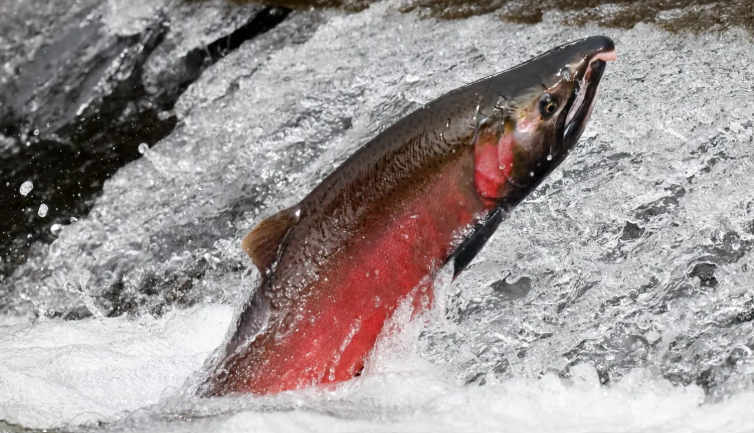
Salmon are a group of anadromous fish belonging primarily to the genera Salmo (Atlantic salmon) and Oncorhynchus (Pacific salmon), along with a few related species in genera like Hucho. Anadromous means these fish are born in freshwater rivers and streams, migrate out to the ocean to grow and mature, and then return to freshwater to spawn, often navigating back to the very stream where they hatched using a combination of magnetic field sensing, scent memory, and other navigational cues that scientists still don’t fully understand. This life cycle makes salmon one of the more biologically fascinating fish groups, as their bodies undergo dramatic physiological changes to transition between saltwater and freshwater environments, including shifts in coloration, body shape, and internal osmoregulation.
Physically, salmon are streamlined, torpedo-shaped fish built for efficient swimming over long migratory distances, with a small fleshy adipose fin located between the dorsal fin and tail that helps distinguish them from many other fish families. Their coloration typically shifts dramatically depending on their life stage: ocean-phase salmon tend to have silvery, chrome-like bodies for camouflage in open water, while spawning-phase salmon in freshwater often develop vivid reds, greens, or even hooked jaws (in males) as part of their breeding transformation. Salmon flesh itself ranges from pale pink to deep red-orange, a coloration derived largely from astaxanthin, a carotenoid pigment they accumulate from eating krill, shrimp, and other small crustaceans in the ocean.
Nutritionally, salmon is widely regarded as one of the healthiest fish choices available, prized for its high concentration of omega-3 fatty acids, particularly EPA and DHA, which are linked to cardiovascular and cognitive health benefits. It’s also a rich source of high-quality protein, vitamin D, vitamin B12, and selenium, making it a nutritional powerhouse compared to many other common food fish. This nutritional profile, combined with its rich flavor and versatile texture, has driven enormous global demand, with salmon now ranking among the most consumed seafood species worldwide, whether wild-caught from the Pacific and Atlantic or raised through large-scale aquaculture operations in countries like Norway, Chile, Scotland, and Canada.
Ecologically, salmon play an outsized role in the health of the freshwater and coastal ecosystems they inhabit, functioning as what biologists call a keystone species. When salmon return upriver to spawn and die, their decomposing bodies deliver massive amounts of marine-derived nutrients, like nitrogen and phosphorus, into freshwater and forest ecosystems that would otherwise be nutrient-poor, supporting everything from insect larvae to riverside vegetation. They’re also a critical food source for a wide range of predators, including bears, eagles, orcas, and seals, many of which time their own feeding and reproductive cycles around salmon migration runs. This deep ecological interconnection means that declines in salmon populations, whether from habitat loss, dam construction, overfishing, or climate change, tend to ripple outward and affect dozens of other species that depend on them directly or indirectly.
Types of Salmon
1. Atlantic Salmon (Salmo salar)
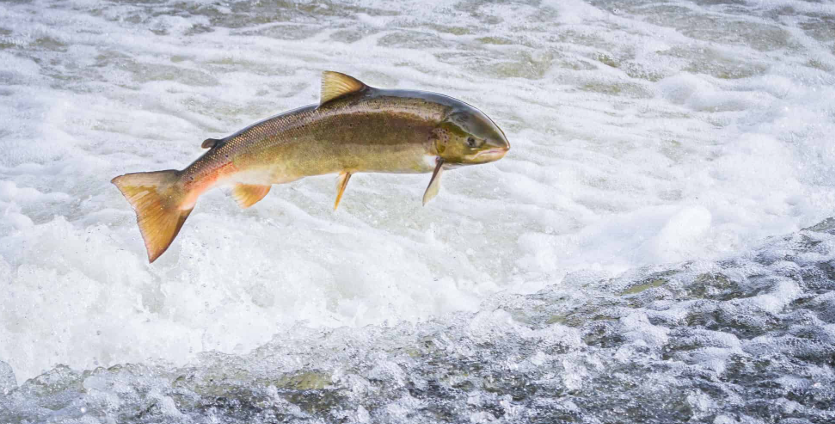
The Atlantic salmon is the only salmon species native to the Atlantic Ocean basin and is biologically distinct enough from Pacific salmon that it belongs to an entirely different genus, Salmo, which it shares with brown trout. Wild Atlantic salmon populations historically ranged from rivers in eastern North America to Western Europe and Scandinavia, but wild stocks have declined sharply due to overfishing, habitat degradation, and dam construction, making most Atlantic salmon consumed today farmed rather than wild-caught.
This species has silvery flanks with dark spots above the lateral line and can grow quite large, with some individuals exceeding 30 pounds, though farmed fish are typically harvested much smaller. Atlantic salmon is the dominant species in global aquaculture, forming the backbone of massive farming operations in Norway, Scotland, Chile, and Canada, and its comparatively mild flavor and high fat content make it a favorite for sushi, grilling, and smoking.
2. Chinook Salmon / King Salmon (Oncorhynchus tshawytscha)
Chinook salmon, commonly marketed as king salmon, is the largest of all Pacific salmon species, with some individuals historically weighing over 100 pounds, though most commercially caught fish range between 10 and 50 pounds. Native to river systems along the Pacific coast of North America and Asia, from California up through Alaska and into Russia, Chinook are prized above nearly all other salmon for their exceptionally high fat content, which gives the flesh a rich, buttery texture and deep flavor.
Their coloration ranges from deep red to nearly white depending on the population, with white-fleshed Chinook being a genetic variant found in certain river systems, particularly in parts of Alaska and British Columbia. Because of their size, flavor, and relative scarcity compared to other Pacific species, Chinook typically command the highest prices in commercial and recreational salmon markets.
3. Sockeye Salmon / Red Salmon (Oncorhynchus nerka)
Sockeye salmon, often called red salmon in commercial markets, is renowned for having the deepest, most vibrant red-orange flesh of any salmon species, a result of its diet being especially rich in zooplankton and krill during its ocean phase. This species undergoes one of the most dramatic spawning transformations in the salmon world, with its body turning bright red and its head turning olive-green as it returns to freshwater to breed, a striking visual change that draws tourists to rivers in Alaska and British Columbia during spawning season.
Sockeye are heavily associated with Alaska’s Bristol Bay region, which hosts the largest sockeye runs on Earth and supports one of the most valuable wild salmon fisheries in the world. Their firm texture and rich flavor make them especially popular for grilling and canning, and unlike some salmon species, sockeye are almost never successfully farmed commercially due to their specific dietary and habitat requirements.
4. Coho Salmon / Silver Salmon (Oncorhynchus kisutch)
Coho salmon, marketed commonly as silver salmon, are known for their bright silvery skin during their ocean phase and a milder, more delicate flavor compared to the richer Chinook or sockeye. Native to coastal rivers from California through Alaska and into parts of Russia and Japan, coho are moderately sized fish, typically ranging from 6 to 12 pounds, making them a manageable and popular target for recreational anglers.
During spawning, males develop a hooked jaw and vivid maroon-red coloration along their flanks, contrasting with a greenish head, a transformation similar to but generally less extreme than that of sockeye. Coho salmon has also become an important aquaculture species, particularly in Chile, where farmed coho supplements wild Pacific harvests to meet global demand for a lighter-flavored salmon option.
5. Pink Salmon / Humpback Salmon (Oncorhynchus gorbuscha)
Pink salmon, sometimes called humpback salmon or simply “humpies,” are the smallest and most abundant of all Pacific salmon species, typically weighing between 3 and 5 pounds at maturity. Their common name derives from the pronounced hump that develops on the backs of spawning males, along with dramatically hooked jaws lined with large teeth, features that make breeding males look strikingly different from their sleek ocean-phase appearance.
Pink salmon have a strict two-year life cycle, meaning populations in odd and even years are genetically distinct and don’t interbreed, leading to alternating boom-and-bust harvest patterns in many fisheries. Because of their light flavor, softer flesh, and lower fat content compared to other salmon, pink salmon are most commonly used in canned salmon products rather than sold fresh or as premium fillets.
6. Chum Salmon / Dog Salmon (Oncorhynchus keta)
Chum salmon, historically nicknamed dog salmon because sled dogs in Alaska and northern Canada were traditionally fed dried or frozen chum, are among the most widely distributed Pacific salmon, found from California all the way up through Alaska, across Russia, and down into Japan and Korea. Chum have relatively pale, lighter-colored flesh and lower fat content compared to Chinook or sockeye, making them less prized for fresh fillets but valued for their large, flavorful roe, which is a delicacy in Japanese cuisine known as ikura.
During spawning, chum salmon develop distinctive calico-like patterns of purple, green, and black blotches along their flanks, along with the pronounced hooked jaw and canine-like teeth typical of spawning male Pacific salmon. Despite being less glamorous than other species in Western markets, chum salmon represents a substantial portion of the total commercial Pacific salmon catch by volume.
7. Masu Salmon / Cherry Salmon (Oncorhynchus masou)
Masu salmon, also known as cherry salmon due to its coloring and the fact that its spawning run in Japan coincides with cherry blossom season, is unique among Pacific salmon in that its range is largely confined to the western Pacific, particularly Japan, Korea, and parts of the Russian Far East. Unlike other Pacific salmon species, masu salmon exhibit unusually flexible life history strategies, with some populations remaining entirely landlocked in freshwater their whole lives while others migrate to sea and back like typical anadromous salmon.
This species holds significant cultural and culinary importance in Japan, where it’s featured in regional cuisine and has been the subject of extensive aquaculture research aimed at supporting Japan’s declining wild salmon fisheries. Masu salmon are generally smaller than Chinook or coho, and their populations have faced considerable pressure from habitat loss and river damming throughout their limited native range.
8. Amago Salmon (Oncorhynchus masou ishikawae)
Amago salmon is a subspecies of masu salmon found specifically in certain river systems on Japan’s main island of Honshu and parts of Shikoku and Kyushu, distinguished from typical masu salmon by the presence of small red or orange spots along its flanks in addition to the dark parr marks common to young salmon. Like its masu relatives, amago salmon can exist in both landlocked freshwater forms and anadromous sea-run forms, a flexibility that has made it an interesting subject for Japanese fisheries research studying environmental triggers for migration behavior.
This subspecies holds regional culinary significance in Japan, often prepared in traditional dishes in areas where it’s still caught, though wild populations have diminished due to habitat degradation and competition with introduced fish species. Amago salmon is also occasionally raised in Japanese aquaculture operations targeting niche domestic markets that value its delicate flavor and cultural association with specific regional cuisines.
9. Biwa Salmon (Oncorhynchus masou subspecies, Lake Biwa)
Biwa salmon refers to a landlocked population of masu salmon endemic to Lake Biwa, Japan’s largest freshwater lake, located near Kyoto, where this population has adapted to complete its entire life cycle without ever reaching the ocean. This isolation has led to unique physical and behavioral adaptations compared to sea-run masu salmon, including differences in size, coloration, and spawning behavior suited to the lake’s specific freshwater ecosystem.
Biwa salmon holds ecological and scientific importance as an example of how salmon species can evolve distinct freshwater-adapted forms when cut off from ocean access over long periods of time. The population has faced conservation challenges due to water pollution, changes in lake ecology, and competition from introduced fish species, prompting some Japanese conservation efforts aimed at protecting this genetically unique lake-dwelling salmon population.
10. Formosan Landlocked Salmon (Oncorhynchus masou formosanus)
The Formosan landlocked salmon, also called the Taiwan salmon, is an extremely rare subspecies of masu salmon found only in the cold headwaters of the Chichiawan Stream in Taiwan’s Shei-Pa National Park, representing one of the southernmost salmon populations in the world. This population became landlocked and geographically isolated from the ocean thousands of years ago due to geological changes, and it has since evolved to survive in a much warmer climate than most other salmon populations typically tolerate.
Because of its extremely limited range and small population size, the Formosan landlocked salmon is classified as critically endangered, and Taiwan has invested heavily in conservation efforts, including captive breeding programs and stream habitat restoration, to prevent its extinction. This subspecies holds significant symbolic and scientific value in Taiwan as a living relic of ice age fish distributions and a flagship species for Taiwanese freshwater conservation efforts.
11. Kokanee Salmon (Landlocked Oncorhynchus nerka)
Kokanee salmon are a landlocked, non-migratory form of sockeye salmon that spend their entire lives in freshwater lakes rather than migrating to the ocean, having become isolated from marine access either naturally or through introduction into inland lake systems across North America. Physically smaller than their ocean-going sockeye relatives, kokanee typically weigh under a couple of pounds, but they undergo the same dramatic spawning transformation, turning brilliant red with olive-green heads as they move into tributary streams to spawn each fall.
Kokanee have been widely introduced into lakes throughout the western United States and Canada, including in states like Idaho, Montana, and Colorado, where they support popular recreational fisheries and serve as an important forage base for larger predatory fish like lake trout and kamloops rainbow trout. Their landlocked lifestyle makes kokanee a fascinating example of how salmon species can adapt to entirely freshwater existences when given the right lake habitat conditions.
12. Ouananiche (Landlocked Salmo salar)
Ouananiche, a name derived from the Innu-aimun language of Indigenous peoples in eastern Canada, refers to landlocked populations of Atlantic salmon found in freshwater lakes and rivers in regions like Quebec, Newfoundland, and parts of the northeastern United States, where access to the ocean has been naturally or artificially blocked. These landlocked Atlantic salmon are generally smaller than their sea-run counterparts, but they’re renowned among freshwater anglers for their aggressive strikes and acrobatic fighting ability when hooked, often leaping repeatedly out of the water.
Ouananiche populations have adapted their life cycle entirely to freshwater lake and river systems, feeding on smaller fish, insects, and crustaceans rather than the marine diet available to migratory Atlantic salmon. This landlocked form holds particular cultural significance in Quebec and Newfoundland, where it has long been considered a prized game fish and a symbol of the region’s freshwater sport fishing heritage.
13. Danube Salmon / Huchen (Hucho hucho)
The Danube salmon, more commonly known as huchen, is a large freshwater salmonid native to the Danube River basin in Central and Eastern Europe, and while it’s not a true anadromous salmon like Atlantic or Pacific species, it belongs to the broader salmon family and has historically been referred to as a type of salmon due to its size and predatory nature. Huchen are among the largest freshwater salmonids in Europe, with mature individuals capable of reaching lengths of over five feet and weights exceeding 100 pounds in exceptional cases, making them apex predators within their river ecosystems.
This species spends its entire life in freshwater rivers rather than migrating to the sea, feeding primarily on other fish, and it has become increasingly rare due to river damming, pollution, and habitat fragmentation throughout its native range. Conservation efforts across countries like Austria, Slovenia, and Slovakia have focused on restoring free-flowing river sections and reducing barriers to movement in hopes of stabilizing huchen populations, which are now considered endangered in much of their historic range.
14. Sakhalin Taimen (Parahucho perryi)
Sakhalin taimen, sometimes grouped colloquially with salmon due to its salmonid family membership and large predatory size, is native to river systems around the Sea of Japan and Sea of Okhotsk, including Sakhalin Island, Hokkaido, and parts of the Russian Far East and Korean peninsula. This species can grow to enormous sizes, with historical records suggesting lengths exceeding six feet, making it one of the largest salmonids in the world and a legendary target among extreme sport-fishing enthusiasts. Unlike typical Pacific salmon, Sakhalin taimen can be either resident in freshwater or partially migratory into brackish coastal waters, and unlike most true salmon species, it does not necessarily die after spawning, allowing individuals to potentially spawn multiple times over their lifespan. Habitat destruction, overfishing, and river development throughout its range have made the Sakhalin taimen critically endangered, prompting international conservation attention and catch-and-release-only fishing regulations in areas where recreational angling for the species is still permitted.
15. Steelhead (Anadromous Oncorhynchus mykiss)
Steelhead are the anadromous, sea-run form of rainbow trout, and while technically classified as trout rather than true salmon, they’re so closely related genetically and behaviorally to Pacific salmon that they’re frequently grouped and marketed alongside salmon species in both commercial and recreational fishing contexts. Native to Pacific coastal rivers from California through Alaska and into eastern Russia, steelhead undergo the same ocean migration and freshwater return pattern as true salmon, though unlike most Pacific salmon, steelhead don’t necessarily die after spawning and can potentially spawn in multiple seasons.
Their flesh closely resembles salmon in both color and rich flavor, and steelhead are prized by anglers for their powerful fighting ability, often putting up more resistance per pound than many true salmon species. Steelhead farming has also grown in significance within the aquaculture industry, particularly in freshwater net-pen and land-based systems, as an alternative product line to traditional farmed Atlantic salmon.
16. Baltic Wild Salmon (Salmo salar, Baltic Sea populations)
Baltic wild salmon refers to genetically distinct populations of Atlantic salmon native to rivers draining into the Baltic Sea, spanning countries including Sweden, Finland, Estonia, Latvia, Lithuania, and Poland, representing some of the last significant wild Atlantic salmon runs remaining in continental Europe. These populations have faced dramatic historical declines due to extensive hydroelectric dam construction throughout the 20th century, which blocked access to traditional spawning rivers, though restoration efforts including fish ladders and habitat rehabilitation have helped some rivers see partial recoveries in recent decades.
Baltic salmon are managed under specific international fisheries agreements involving multiple Baltic Sea nations, reflecting the transboundary nature of their migratory routes between spawning rivers and Baltic Sea feeding grounds. Conservation status varies significantly by river system, with some Baltic rivers hosting robust, protected wild salmon runs while others remain severely depleted or functionally extinct as wild salmon habitat.
17. Norwegian Farmed Atlantic Salmon
Norwegian farmed Atlantic salmon represents the single largest source of farmed salmon in the world, with Norway’s extensive network of coastal fjords providing ideal conditions of cold, clean, well-circulated seawater for large-scale net-pen aquaculture operations. Norway’s salmon farming industry has developed sophisticated selective breeding programs over decades to produce fish with faster growth rates, improved disease resistance, and consistent fat content and flavor profiles suited to global export markets.
This industry has become a cornerstone of the Norwegian economy, exporting farmed salmon to markets across Europe, Asia, and North America, and Norwegian salmon has become something of a global benchmark for quality and consistency in the farmed salmon trade. However, the scale of Norwegian salmon farming has also drawn scrutiny over issues like sea lice infestations, escapees interbreeding with wild Atlantic salmon populations, and the environmental impact of concentrated fish waste in fjord ecosystems.
18. Scottish Farmed Salmon
Scottish farmed salmon, often marketed under protected regional branding similar to how Champagne or Parma ham are regionally protected, is raised in the cold, nutrient-rich sea lochs along Scotland’s western coast and northern islands, conditions that Scottish producers argue impart a distinctive flavor and texture to the fish. Scotland’s salmon farming industry represents one of the country’s largest food exports, with significant international demand particularly from markets in the United States, the European Union, and parts of Asia.
Scottish salmon farms have increasingly emphasized sustainability certifications and higher welfare standards in response to consumer and environmental group pressure, including reduced stocking densities and improved sea lice management practices. Like other major farming regions, Scottish aquaculture continues to navigate tension between industry growth and concerns from conservation groups about impacts on wild Atlantic salmon populations and sensitive marine ecosystems along Scotland’s coastline.
19. Faroese Salmon
Faroese salmon comes from farming operations in the Faroe Islands, a self-governing Danish territory situated in the North Atlantic between Norway and Iceland, where cold, fast-flowing ocean currents create conditions considered particularly well-suited to salmon aquaculture. The Faroe Islands’ salmon industry, while smaller in scale than Norway’s, has built a reputation for premium quality product, benefiting from strict biosecurity measures enabled by the islands’ relative geographic isolation, which helps limit disease transmission between farm sites.
Salmon farming represents an outsized portion of the Faroese economy given the islands’ small population, making it one of the territory’s most significant export industries alongside traditional fishing. Faroese producers have increasingly marketed their salmon as a premium, high-welfare alternative within the crowded global farmed salmon market, emphasizing lower stocking density and the islands’ pristine marine environment.
20. Chilean Farmed Atlantic Salmon
Chile emerged over the past several decades as one of the world’s largest salmon farming nations, primarily raising Atlantic salmon (along with some coho) in the sheltered fjords and channels of its southern Patagonian coastline, a region with cold-water conditions somewhat analogous to Norway’s fjords. Chilean salmon farming has grown into a massive export industry, supplying significant volumes of salmon to markets across North America and Asia, and it represents one of Chile’s most economically important food export sectors.
The industry has faced significant environmental controversy, however, including major disease outbreaks like infectious salmon anemia that devastated production in the late 2000s, along with ongoing concerns about antibiotic use, sea lice, and the ecological impact of farm waste on Patagonia’s sensitive marine ecosystems. Despite these challenges, Chile has continued to expand and modernize its salmon farming infrastructure, investing in improved biosecurity and disease management technology to maintain its position as a major global salmon supplier.
21. Tasmanian Atlantic Salmon
Tasmanian Atlantic salmon farming, centered in the cool coastal waters surrounding the Australian island state of Tasmania, represents the primary hub of salmon aquaculture in the Southern Hemisphere outside of Chile, taking advantage of Tasmania’s relatively cold ocean temperatures compared to mainland Australia. This industry has grown into one of Tasmania’s most significant economic sectors and export products, supplying both domestic Australian markets and international customers seeking Southern Hemisphere-sourced salmon.
Tasmanian salmon farms have faced increasing scrutiny in recent years over environmental concerns, including impacts on sensitive marine habitats in areas like Macquarie Harbour, where farming operations have been linked to declining oxygen levels and stress on endangered local species like the Maugean skate. The industry continues to navigate a complex balance between economic importance to the Tasmanian economy and growing public and environmental pressure for stricter regulation of farming practices and expansion plans.
22. Icelandic Salmon
Icelandic salmon farming and wild salmon fishing both draw on Iceland’s exceptionally clean, cold, glacially-fed river and coastal water systems, which many in the industry argue produce salmon of particularly high purity and quality compared to more industrially developed farming regions. Iceland has traditionally been known more for its pristine wild Atlantic salmon rivers, which attract high-end sport fishing tourism from anglers willing to pay significant fees for access to renowned rivers, but the country has also seen growing investment in both traditional sea-based and newer land-based recirculating aquaculture systems.
Land-based Icelandic salmon farming has attracted particular attention in the aquaculture industry as a potentially more environmentally controlled alternative to open-net ocean farming, since it eliminates concerns like escapees and localized water pollution. Iceland’s approach to both wild river conservation and emerging aquaculture technology reflects the country’s broader effort to position itself as a leader in sustainable and high-quality salmon production.
23. Copper River Salmon
Copper River salmon refers to Chinook, sockeye, and coho salmon caught specifically from Alaska’s Copper River, a designation that has become something of a premium branded product in American seafood markets due to the exceptionally high fat content these fish develop before their grueling 300-mile upstream spawning migration. Because the Copper River’s spawning grounds require salmon to swim such a long and physically demanding distance, these fish store unusually large fat reserves for energy, resulting in a richer flavor and higher oil content than many other regional salmon runs.
The opening of the Copper River salmon season each spring has become a notable culinary and media event in the United States, with the first catches often commanding significantly higher prices at restaurants and markets eager to feature the season’s earliest premium wild salmon. This branding phenomenon has made Copper River salmon one of the most recognized and marketed geographic salmon designations in the American seafood industry.
24. Yukon River Chinook Salmon
Yukon River Chinook salmon are caught along one of the longest salmon migration routes on Earth, as these fish travel over 1,800 miles upstream through Alaska and into Canada’s Yukon Territory to reach their spawning grounds, an extraordinary journey that similarly results in exceptionally high fat content to fuel the extended migration. This population holds deep cultural and subsistence importance for Indigenous communities along the Yukon River, including Alaska Native and First Nations peoples who have relied on Chinook runs for food security and cultural practices for countless generations.
In recent years, Yukon River Chinook populations have experienced severe declines due to a combination of climate change, ocean conditions, and other factors, leading to fishing closures and significant hardship for communities dependent on the run. The crisis facing Yukon Chinook has become a prominent example in discussions about the broader vulnerability of long-distance salmon migrations to environmental change and the cascading impacts on Indigenous food sovereignty.
25. Columbia River Chinook Salmon
Columbia River Chinook salmon historically supported one of the largest and most productive salmon fisheries in North America, with the Columbia River system spanning parts of Washington, Oregon, and Idaho, and its Chinook runs holding immense cultural, economic, and ecological significance for the Pacific Northwest region. Columbia River Chinook are typically divided into distinct seasonal runs, including spring, summer, and fall Chinook, each with slightly different migration timing, spawning locations, and physical characteristics suited to their specific tributary destinations.
This salmon population has faced substantial pressure over the past century from the construction of major hydroelectric dams along the Columbia and Snake Rivers, which have blocked or altered traditional migration routes despite the installation of fish ladders and other passage infrastructure. Restoration and recovery efforts for Columbia River Chinook remain a major ongoing focus of Pacific Northwest environmental policy, involving complex negotiations between hydropower interests, Indigenous tribal fishing rights, and conservation goals for this ecologically and culturally vital salmon population.
26. Bristol Bay Sockeye Salmon
Bristol Bay sockeye salmon come from what is widely regarded as the largest and most productive wild sockeye salmon fishery on the planet, located in a remote region of southwestern Alaska where multiple river systems feed into the bay and support enormous annual spawning runs. This fishery has become globally significant not only for its sheer scale but also for its remarkably sustainable management, with sockeye populations remaining robust even as many other salmon runs worldwide have declined due to environmental pressures.
Bristol Bay has also become the center of a major ongoing environmental and political controversy surrounding the proposed Pebble Mine project, which opponents argue could threaten the pristine watershed conditions responsible for the fishery’s exceptional productivity. The region’s sockeye run supports thousands of commercial fishing jobs each summer season and represents a critical economic and cultural pillar for both non-Indigenous fishing communities and Alaska Native populations who have depended on these salmon runs for millennia.
27. Kamchatka Sockeye Salmon
Kamchatka sockeye salmon come from the remote Kamchatka Peninsula in Russia’s Far East, a region considered one of the last strongholds of truly pristine, undammed, and lightly developed salmon river systems remaining anywhere in the world. The peninsula’s relative geographic isolation and low human population density have allowed its salmon rivers to avoid much of the dam construction, pollution, and habitat degradation that has affected salmon populations in more industrialized regions of North America, Europe, and Asia. Kamchatka has drawn significant interest from international conservation scientists studying what healthy, undisturbed salmon ecosystems look like, since the region offers a rare baseline for comparison against more heavily impacted salmon rivers elsewhere. Commercial and subsistence fishing for Kamchatka sockeye remains economically important for local communities, though the region has also seen growing interest in eco-tourism centered around its exceptional wild salmon fishing opportunities.
28. White King Salmon / Ivory Chinook
White king salmon, also called ivory Chinook, is a naturally occurring genetic color variant of Chinook salmon in which the fish lack the ability to metabolize and store the reddish-orange carotenoid pigments typically responsible for salmon’s characteristic pink to red flesh color. This variant occurs at meaningfully higher frequencies in certain river systems, particularly parts of Alaska and British Columbia, where local populations have historically carried a higher proportion of the recessive genetic trait responsible for the pale coloration.
Despite the unusual ivory-white appearance, which can initially surprise consumers expecting traditional salmon-colored flesh, white king salmon has a fat content and flavor profile essentially identical to standard red-fleshed Chinook, differing only in pigmentation. Some chefs and seafood markets have specifically sought out white king salmon as a novelty or specialty item, marketing its unique appearance as a selling point rather than a drawback.
29. Salmon Trout / Sea Trout
Salmon trout, more accurately known as sea trout, refers to the anadromous, sea-run form of brown trout (Salmo trutta), a close relative of Atlantic salmon within the same genus, and while not technically a true salmon species, it’s frequently marketed under salmon-adjacent names due to its similar pink-orange flesh and comparable migratory life cycle. Sea trout are native primarily to river systems throughout Europe and parts of North Africa and western Asia, where populations migrate between freshwater rivers and coastal or open ocean waters much like true salmon do.
Unlike most true salmon, sea trout don’t necessarily die after spawning and can survive to spawn in multiple seasons, more closely resembling steelhead in this aspect of their life history. Because of naming inconsistencies across different markets and regions, consumers sometimes unknowingly purchase sea trout believing it to be a salmon species, a labeling ambiguity that has drawn some scrutiny from seafood transparency and mislabeling watchdog organizations.
30. AquAdvantage Salmon (Genetically Modified Atlantic Salmon)
AquAdvantage salmon is a genetically modified variety of farmed Atlantic salmon, developed by the company AquaBounty Technologies, engineered with a growth hormone gene from Chinook salmon combined with a genetic promoter from ocean pout, a modification that allows the fish to reach market size roughly twice as fast as conventional farmed Atlantic salmon. This product became the first genetically modified animal approved for human consumption in the United States, following a lengthy and often contentious regulatory review process that stretched on for roughly two decades before final approval was granted.
AquAdvantage salmon is raised exclusively in land-based, contained freshwater tank facilities rather than open ocean net pens, a system specifically designed to prevent any possibility of the genetically modified fish escaping into wild salmon populations. The product has remained controversial among some consumers and environmental groups skeptical of genetically modified seafood, even as proponents argue that its faster growth rate and contained land-based farming system could offer a more efficient and lower-impact alternative to conventional ocean-based salmon aquaculture