Also Read:
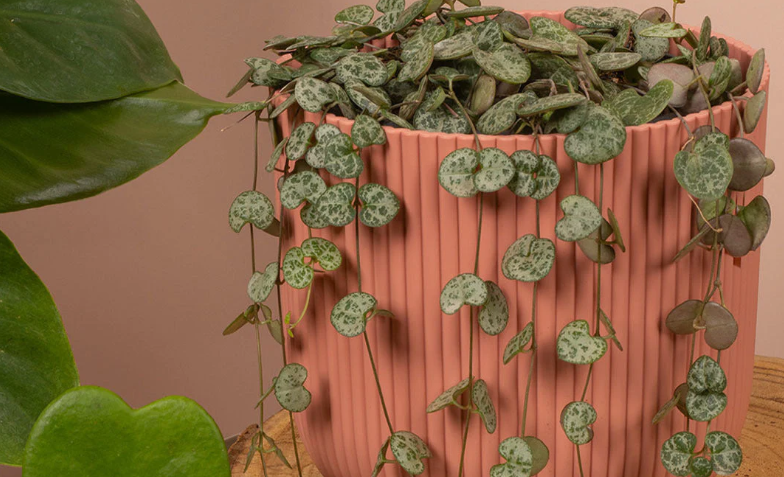
String of Hearts is one of the most charming and widely loved trailing houseplants in the world, producing long, delicate, wire-like purple stems strung with pairs of small, heart-shaped leaves that dangle elegantly from hanging baskets and shelf edges in a way that has captured the imagination of plant enthusiasts globally. Native to the rocky hillsides and scrubby woodland margins of South Africa, Zimbabwe, and Eswatini, it grows naturally as a semi-succulent trailing vine that scrambles over rocks and through low shrubs in warm, dry, seasonally arid environments. Its extraordinary combination of delicate appearance and genuine drought tolerance has made it one of the most popular houseplants of the past decade.
The leaves of String of Hearts are one of its most distinctive and appealing features, typically measuring half an inch to one inch across and displaying a beautiful two-tone pattern of silver-green marbling on the upper surface and rich purple-pink on the undersides, with the coloring most vivid in plants grown in bright light. The trailing stems can reach an impressive 3 to 9 feet in length on well-established plants given adequate space to cascade, making it one of the longest-trailing of all commonly grown succulent houseplants. Several cultivated varieties have been developed including a variegated form with cream, pink, and green leaves that is among the most sought-after of all trailing houseplant varieties currently available.
String of Hearts produces small, tubular, pink to pale purple flowers with a distinctive dark purple, lantern-like base that appear intermittently along the stems during the warmer months, and while individually tiny, they add a charming additional ornamental detail to an already beautiful plant. More interesting horticulturally are the small, round tubers called aerial corms that develop at the nodes along the stems, which can be used for propagation by simply pressing them onto moist soil where they will readily root and produce new plants. These aerial corms are a unique feature of the plant and one of the characteristics that makes it so easy and rewarding to propagate.
As a houseplant, String of Hearts has built an enormous following across social media plant communities worldwide, regularly appearing among the most shared and saved plant images on Instagram and Pinterest. The global houseplant market has seen demand for String of Hearts increase dramatically over the past five years, with the variegated form in particular commanding premium prices that can reach ten to twenty times the price of the standard green variety. It is now widely stocked in mainstream garden centers, supermarket plant sections, and online nurseries across North America, Europe, Australia, and East Asia.
String of Hearts belongs to the milkweed family and is classified as a semi-succulent rather than a true succulent, meaning it stores some water in its fleshy leaves and stems but requires more frequent watering than a true cactus or succulent. It prefers temperatures between 60°F and 80°F (16°C to 27°C) and is not frost-hardy, making it suitable for outdoor growing only in USDA zones 10 to 12 where temperatures never drop below freezing. In all other zones it is grown exclusively as a houseplant or brought indoors during cold months.
String of Hearts is listed as non-toxic to humans but is considered mildly toxic to dogs and cats if ingested in significant quantities, so careful placement in pet-owning households is advisable. It is a long-lived plant when given appropriate care, with well-established specimens becoming increasingly impressive and full over time as the trailing stems lengthen and multiply. For plant enthusiasts who want a beautiful, relatively low-maintenance, visually distinctive trailing plant that rewards patience with an increasingly spectacular display, String of Hearts is one of the very best choices available anywhere in the houseplant world.
Also Read: Houseplants That Don’t Need Sunlight
How To Grow And Care For String of Hearts
1. Provide bright, indirect light for best growth and leaf coloring.
String of Hearts performs best in bright, indirect light and will tolerate some direct morning sun, particularly from an east-facing window where the light is gentle rather than intense. In bright conditions the silver marbling on the upper leaf surface becomes more vivid, the purple underside coloring deepens, and the stems remain compact and well-spaced rather than stretching toward the light source. In lower light the leaves become smaller, paler, and more widely spaced on longer, weaker stems, and the plant produces little meaningful growth.
2. Water sparingly and always allow the soil to dry between waterings.
As a semi-succulent, String of Hearts is far more tolerant of underwatering than overwatering, and the single most common cause of death in this plant is root rot resulting from excessive watering or poorly draining soil. Allow the top half to two thirds of the potting mix to dry out completely between waterings before adding water, and during winter reduce watering to once every three to four weeks as the plant’s growth rate slows significantly. When you do water, water thoroughly until water drains freely from the bottom of the pot, then allow all excess moisture to drain away completely before replacing the pot in its position.
3. Choose a fast-draining, gritty potting mix.
The most important soil requirement for String of Hearts is excellent drainage, and standard houseplant potting compost alone retains too much moisture for the semi-succulent root system of this plant. A blend of two parts standard potting mix combined with one part perlite and one part coarse horticultural grit or fine bark chips provides the fast-draining, airy medium this plant thrives in. Cactus and succulent potting mix available from garden centers can also be used directly or amended with additional perlite for extra drainage.
4. Use a pot with excellent drainage holes.
Never plant String of Hearts in a pot without drainage holes, as trapped water at the base of the container will lead inevitably to root rot in the shallow, moisture-sensitive root system. Terracotta pots are particularly well-suited to this plant because the porous walls allow excess moisture to evaporate from the sides of the pot as well as through the drainage holes, creating the drier root environment that String of Hearts naturally prefers. If using a decorative outer pot without drainage, always remove the plant’s inner pot for watering and allow it to drain completely before replacing it in the decorative outer container.
5. Keep temperatures consistently warm.
String of Hearts prefers temperatures between 60°F and 80°F and will suffer damage if exposed to temperatures below 50°F for any extended period. Keep it away from cold windowpanes in winter, drafty doorways, and air conditioning vents that create cold air currents directly on the trailing stems and leaves. It is not frost-hardy under any circumstances and must be brought indoors or into a heated greenhouse before the first frost of autumn in all but the warmest USDA zones 10 to 12.
6. Feed lightly during the growing season.
String of Hearts benefits from occasional feeding during the active growing season from spring through early autumn to support stem elongation and healthy leaf development. Use a balanced liquid fertilizer diluted to half the recommended strength and apply once every four to six weeks during the growing season, stopping completely from late autumn through winter when the plant is largely dormant. Avoid high-nitrogen fertilizers that promote lush, soft, water-rich growth at the expense of the semi-succulent leaf texture and vivid coloring that make this plant so attractive.
Also Read: Houseplants That Like Coffee Grounds
7. Display in a hanging basket or elevated position.
String of Hearts is at its most spectacular when displayed in a hanging basket, on a high shelf, or on top of a bookcase or cabinet where the trailing stems can cascade freely downward without touching surfaces or becoming tangled. As the trailing stems lengthen — eventually reaching 3 to 9 feet on mature, well-grown plants — the cascading display becomes increasingly impressive and can create a truly dramatic curtain of delicate, heart-shaped foliage. Avoid allowing trailing stems to pool on surfaces below the pot as this causes the lower stems to deteriorate and the leaves to yellow.
8. Propagate easily from stem cuttings.
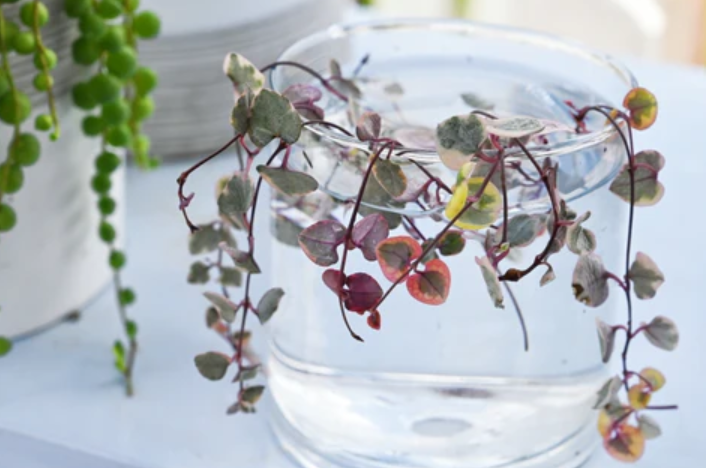
String of Hearts is one of the easiest houseplants to propagate from stem cuttings, which root readily in water, moist potting mix, or sphagnum moss under warm conditions. Take cuttings of 3 to 4 inches in length, remove the bottom one or two pairs of leaves to expose a node, and place the cut end in a small glass of water or press it into moist, well-draining potting mix. Roots typically appear within two to four weeks under warm, bright conditions, and multiple cuttings potted together in the same container will create a fuller, more lush display more quickly than a single cutting planted alone.
9. Propagate from aerial corms for an easy alternative method.
One of the most unique and fascinating propagation methods available for String of Hearts is using the small, round, pea-sized aerial corms that develop naturally at the nodes along the trailing stems. These corms can be removed from the stem and pressed gently onto the surface of moist potting mix in a small pot without burying them, then kept in a warm, bright location with the soil surface maintained consistently moist until new shoots emerge from the corm, typically within two to four weeks. This method reliably produces vigorous new plants and is an excellent way to use corms from stems that have been trimmed during maintenance pruning.
10. Prune regularly to maintain fullness and encourage branching.
String of Hearts naturally tends to produce long, sparsely leafed stems over time, and regular light pruning is the most effective way to maintain a full, lush, well-furnished display rather than a few very long but sparse trailing stems. Trim stems back by one third to one half their length in spring at the start of the growing season to encourage the plant to branch from below the cut and produce multiple new stems in place of each one removed. The trimmed sections can be used immediately for propagation, making pruning a doubly productive activity that simultaneously improves the parent plant and generates new plants at no cost.
11. Repot infrequently and only when truly necessary.
String of Hearts actually performs better when slightly pot-bound and does not need repotting as frequently as faster-growing, non-succulent houseplants. Repot only when the roots are visibly emerging from the drainage holes in large numbers or when the plant is drying out so rapidly between waterings that normal care becomes impractical, typically every two to three years. When repotting, choose a new pot only one size larger — one to two inches in diameter — and use fresh, fast-draining potting mix to refresh the growing medium without significantly increasing the volume of soil around the root ball.
12. Watch for pests, particularly mealybugs and aphids.
String of Hearts is susceptible to mealybugs, aphids, and occasionally spider mites, all of which tend to establish at the nodes along the stems and at the base of the leaves where they can be difficult to spot until an infestation is already established. Inspect the plant weekly, paying close attention to stem nodes, leaf bases, and the undersides of leaves, and treat any infestation immediately with neem oil solution, insecticidal soap spray, or by wiping individual pests away with a cotton swab dipped in rubbing alcohol. Catching pest problems early before they spread across the long, trailing stems is essential as established infestations across a large plant are much more difficult to eradicate.
13. Increase humidity modestly but avoid excessive moisture.
Unlike many tropical houseplants, String of Hearts does not require high humidity and actually prefers the drier air conditions of a typical home to the mist-laden environments suited to ferns and calatheas. Average indoor humidity levels of 40 to 60 percent are perfectly adequate, and the plant performs well in the moderately dry conditions of living rooms and bedrooms without any supplemental humidity. Avoid misting the leaves or placing the plant in a very humid bathroom where the consistently moist air can encourage fungal issues on the semi-succulent foliage and stems.
14. Understand seasonal changes in growth and adjust care accordingly.
String of Hearts is a seasonally responsive plant that grows actively during the warmer months of spring and summer and enters a period of significantly reduced growth or near-dormancy during winter, particularly in homes where temperatures drop noticeably during the colder months. During the active growing season, water more frequently, feed every four to six weeks, and expect visible new stem and leaf growth each week under good conditions. During winter, reduce watering substantially, stop feeding entirely, avoid repotting, and accept that the plant will show little visible growth — this is normal, healthy behavior and not a sign that anything is wrong.
15. Be patient for the most spectacular results.
String of Hearts is a plant that rewards patience above almost any other quality in a grower, as young plants with short, sparse stems can look underwhelming for the first several months after purchase but develop into truly spectacular trailing specimens over one to two years of good care. The trailing stems of a well-established, mature plant can reach 6 to 9 feet in length and create a genuinely breathtaking cascading display from a high shelf or hanging basket that is impossible to achieve with a newly purchased small plant regardless of how well it is treated. Resist the temptation to give up on the plant during its slow early establishment phase and the patience invested will be repaid many times over as the plant matures into one of the most beautiful trailing houseplants it is possible to grow indoors.