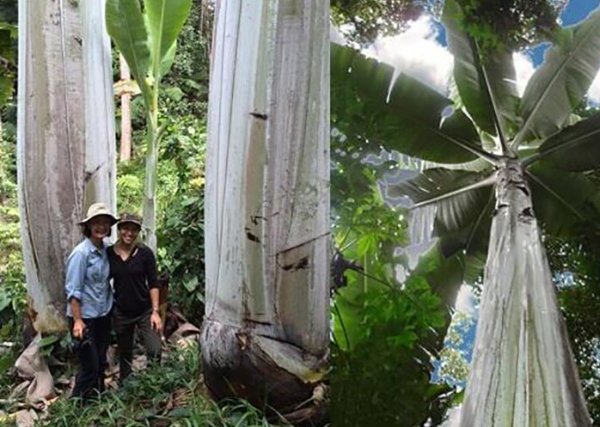
Musa ingens is the most physically imposing plant in the entire Musa genus and holds the extraordinary distinction of being the world’s largest herbaceous plant — a title that places it in a category of botanical superlatives shared by very few species on earth. Unlike the cultivated bananas that dominate global agriculture, Musa ingens is essentially a wild species, found growing in the montane rainforests of Papua New Guinea at elevations between 1,600 and 2,700 metres above sea level, where it towers above the surrounding vegetation in a display of herbaceous gigantism that astonishes botanists and naturalists who encounter it for the first time.
It belongs to the section Australimusa of the Musa genus — a distinct evolutionary lineage from the Eumusa section that contains all commonly cultivated bananas — and its genetic distance from commercial varieties like Cavendish is considerable, reflecting millions of years of separate evolution in the isolated montane ecosystems of New Guinea.
The physical dimensions of Musa ingens are genuinely difficult to appreciate without direct observation. Mature plants regularly reach 12 to 15 metres in height, with exceptional specimens documented at over 15 metres — taller than a four-story building — making them visible from considerable distances across the forest landscape.
The pseudostem, which in all bananas is not a true woody stem but a tightly packed cylinder of leaf base sheaths, reaches diameters of 1 to 2 metres at the base in mature Musa ingens specimens — a circumference comparable to a large mature tree trunk and far exceeding anything achieved by any other herbaceous plant species on earth. The leaves are correspondingly enormous, reaching 5 to 6 metres in length and over 1 metre in width, creating a canopy spread that shades a ground area of extraordinary extent beneath the plant. A single mature Musa ingens plant can weigh several tonnes — the pseudostem alone holding hundreds of litres of water in its tightly compressed leaf sheaths.
The ecological setting in which Musa ingens evolved is as remarkable as the plant itself. Papua New Guinea’s montane rainforests are among the most biodiverse and botanically rich ecosystems on earth, characterized by cool, misty conditions, extremely high rainfall — often exceeding 4,000 mm annually — rich volcanic soils, and a complex multi-layered forest structure that has evolved in relative isolation over millions of years. Within this environment, Musa ingens occupies disturbed forest margins, landslide clearings, stream banks, and secondary growth areas where the opening of the forest canopy allows sufficient light to penetrate for the plant’s enormous photosynthetic machinery to operate at full capacity.
The plant’s gigantism is thought to be an evolutionary adaptation to competition for light in a forest environment where reaching above surrounding vegetation quickly — before competitors can establish — confers a decisive reproductive advantage. Its cool-climate tolerance, at elevations where most Musa species would struggle to survive, represents another remarkable evolutionary departure from the genus’s predominantly lowland tropical distribution.
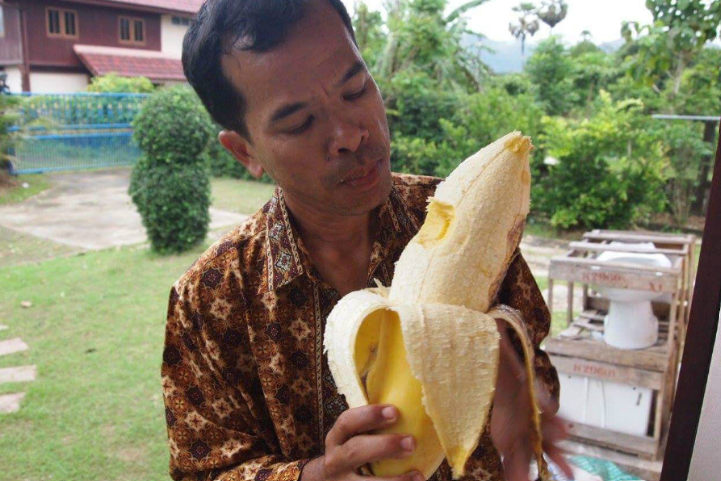
The fruit of Musa ingens is a source of both botanical interest and practical limitation. The plant produces bunches of small, seedy fruits — typically 5 to 8 cm in length — that are starchy, fibrous, and packed with large, hard black seeds that make them unpalatable and impractical as a food source by the standards of cultivated bananas. Each bunch can contain a substantial number of fruits arranged across multiple hands, but the seed-to-flesh ratio is so high that consuming the fruit fresh requires significant effort for modest nutritional reward.
Indigenous communities in the highland regions of Papua New Guinea where Musa ingens grows have traditionally consumed the starchy fruits after cooking — boiling or roasting renders the flesh more palatable and digestible — and have used the enormous leaves as shelter material, cooking wraps, and practical all-purpose coverings in a landscape where the plant’s sheer scale makes it an obvious resource. The pseudostem’s inner tissues are also edible and starchy, consumed in times of food scarcity in the manner of other banana pseudostems used across tropical subsistence cultures.
The scientific and genetic significance of Musa ingens extends far beyond its immediate utility as a food plant. As a member of the Australimusa section, it represents a distinct evolutionary branch of the Musa genus that diverged from the Eumusa ancestors of cultivated bananas hundreds of thousands or millions of years ago, accumulating genetic adaptations to cool, high-altitude conditions, extreme rainfall, and rich volcanic soils that are entirely absent from the genetic makeup of commercial cultivars.
Banana geneticists and plant breeders have long recognized the potential value of Musa ingens and other wild Musa relatives as reservoirs of stress-tolerance genes — for cold hardiness, disease resistance, and adaptation to marginal soils — that could be incorporated into breeding programs aimed at developing more resilient banana cultivars for an era of climate change and expanding TR4 disease pressure. The plant’s extraordinary biomass production rate at high altitude also interests researchers studying the physiological limits of herbaceous plant growth and the genetic basis of gigantism in the Musa genus.
Conservation of Musa ingens is a matter of genuine and growing urgency. The montane rainforests of Papua New Guinea face escalating pressure from logging, agricultural conversion, mining, and infrastructure development, and the specialized high-altitude forest habitats where Musa ingens grows are being fragmented and degraded at an accelerating rate. The species has a naturally restricted geographic range — confined to specific elevational bands in the highlands of mainland Papua New Guinea and possibly some adjacent islands — making it inherently vulnerable to habitat loss in ways that more widespread lowland species are not.
It is maintained in a small number of botanical garden collections and gene bank accessions outside Papua New Guinea, but ex-situ conservation of a plant that reaches 15 metres in height presents obvious practical challenges. Bioversity International and the global Musa germplasm network have identified Musa ingens as a priority species for conservation, recognizing that its unique genetic heritage represents an irreplaceable resource for the long-term future of banana breeding and food security.
Also Read: Different Types of Bananas
How to Grow and Care for Giant Highland Banana
Understanding Its Cultivation Context
Musa ingens is not a conventional garden or agricultural crop, and prospective growers must approach it with clear-eyed realism about what cultivating this species entails. It is grown almost exclusively by botanical gardens, specialist plant collectors, research institutions, and a small number of dedicated enthusiasts with appropriate space and conditions — not by home gardeners seeking a productive fruiting plant.
Its cultivation requirements are demanding and unusual within the Musa genus, reflecting its origins in cool, high-altitude montane rainforest rather than the warm tropical lowlands where virtually all other cultivated bananas thrive. Growing it successfully requires replicating, as closely as possible, the environmental conditions of its native Papua New Guinea highland habitat.
Climate Requirements
Unlike virtually every other banana species, Musa ingens is a cool-climate plant that actively prefers temperatures between 16°C and 26°C — conditions that would stress or kill most cultivated banana varieties — and can tolerate brief dips to around 10°C without serious damage. It struggles in the heat of tropical lowlands, where temperatures consistently above 30°C cause growth stress, leaf scorch, and eventual decline, making it unsuitable for the warm conditions where Cavendish, Lady Finger, and most cultivated bananas excel.
The ideal growing climate is a warm temperate or cool subtropical environment with high humidity, consistent rainfall, and mild temperatures year-round — conditions found in highland Papua New Guinea, parts of highland East Africa, the subtropical highlands of southeastern Australia, and select microclimates in Hawaii’s wetter upland zones.
Rainfall and Humidity
Musa ingens evolved under exceptionally high rainfall — 3,000 to 4,000 mm annually in its native habitat — and requires consistently high atmospheric humidity to thrive. In cultivation, it performs best where ambient humidity remains above 70% year-round, and in drier climates regular overhead misting or proximity to water features can partially compensate for lower natural humidity.
Consistent rainfall or irrigation that maintains permanently moist — but never waterlogged — soil is essential, and any prolonged dry period will cause rapid leaf deterioration, growth check, and stress that leaves the plant vulnerable to opportunistic pathogens.
Space Requirements
The single most important practical consideration for anyone contemplating growing Musa ingens is space — an enormous, unobstructed volume of it. A mature specimen at 12 to 15 metres height with a canopy spread of 8 to 10 metres requires a growing site completely clear of overhead structures, power lines, buildings, and other trees for a radius of at least 6 to 8 metres in all directions.
Even in botanical garden settings, finding a suitable site for Musa ingens is a significant logistical challenge, and the plant’s growth rate — faster than most people anticipate given its ultimate scale — means that space constraints become apparent relatively quickly after planting. This is emphatically not a plant for small gardens, urban lots, or confined spaces of any kind.
Soil Requirements
Plant Musa ingens in deep, exceptionally rich, well-draining volcanic or loam soil generously amended with organic matter — conditions that approximate the rich, moist, humus-laden soils of its native montane forest environment. A soil pH of 5.5 to 6.5 is optimal, and the planting site should be prepared to a depth of at least 1 metre given the plant’s enormous eventual root mass and its appetite for deep soil nutrients.
Incorporate very large quantities of well-rotted compost, leaf mold, and aged manure into the planting site — 50 to 100 kg of organic matter per planting pit is not excessive for a plant of this scale — and ensure the drainage is excellent despite the high organic content, as root rot in waterlogged conditions remains a risk even for this moisture-loving species.
Obtaining Planting Material
Sourcing Musa ingens planting material is genuinely challenging and represents one of the primary barriers to wider cultivation of the species. Seeds — when available from botanical garden collections or specialist seed suppliers — are the most practical propagation method, though germination can be slow and erratic, sometimes taking 3 to 6 months under optimal conditions of warm, moist seed compost and consistent humidity.
Suckers from established plants in botanical garden collections are occasionally available to specialist collectors through plant society exchanges and botanical garden networks, and tissue culture propagation of the species has been explored at research level though is not yet commercially available. Patience, persistence, and connection with the global Musa enthusiast and botanical garden community are the most reliable routes to obtaining planting material.
Planting
Prepare an extraordinarily generous planting pit — at least 1.5 metres wide and 1 metre deep — filled with the rich, organic, free-draining growing medium described above, and plant the young specimen at the same depth it was growing in its nursery container without burying the corm deeper than necessary. Stake young plants carefully against wind during the establishment phase, as the large leaves catch wind strongly and can rock the young plant before its root system has anchored firmly. Water thoroughly and deeply at planting and maintain consistently moist soil conditions throughout the entire establishment period, which may extend 6 to 12 months before the plant’s root system is sufficiently developed to buffer against moisture stress.
Watering
Maintain permanently moist soil conditions throughout the year, providing the equivalent of the exceptionally high rainfall of the plant’s native habitat through a combination of rainfall and supplemental irrigation. In practice, this means deep, frequent irrigation — potentially daily in warm, dry conditions — directed at the entire root zone beneath the plant’s enormous canopy spread.
Drip irrigation is impractical at the scale Musa ingens eventually reaches, and overhead irrigation systems or hand watering with large volumes are more appropriate for maintaining the soil moisture conditions this species demands throughout its growing life.
Fertilizing
Musa ingens requires prodigious quantities of nutrients to sustain its extraordinary growth rate and eventual biomass, and fertilizing generously and consistently is essential to achieving the plant’s full potential in cultivation. Apply very large quantities of organic matter — compost, well-rotted manure, and leaf mold — as a continuous soil amendment program around the base of the plant, supplemented with a balanced inorganic fertilizer applied at double or triple the rates recommended for conventional banana varieties to account for the plant’s scale.
Foliar feeding with dilute liquid fertilizer applied to the enormous leaf surface can supplement root feeding effectively, and micronutrient programs including magnesium, calcium, and iron are important in soils where the plant’s high nutrient demand risks depleting trace elements faster than they are replenished.
Mulching
Apply an exceptionally deep mulch layer — 15 to 20 cm — of coarse organic material across the entire root zone beneath the plant’s canopy, which at maturity covers a ground area of 50 to 80 square metres. Use large-volume mulch materials — wood chip, coarse straw, shredded tree prunings — that decompose slowly and maintain their insulating and moisture-retaining function over extended periods without requiring constant replenishment.
The mulch layer serves the additional function of approximating the deep leaf litter layer of the montane forest floor in which Musa ingens evolved, creating a soil surface environment closer to the plant’s native habitat conditions than bare or minimally mulched cultivated soil could provide.
Monitoring and Research Value
Growers of Musa ingens — particularly those in botanical garden or research institution settings — are encouraged to document their plants’ growth rates, flowering times, fruit characteristics, and responses to local growing conditions meticulously, as published cultivation records from outside Papua New Guinea remain sparse and every successfully grown specimen contributes valuable knowledge to the global understanding of the species.
Connect with the International Musa Germplasm Transit Centre (ITC) at Bioversity International in Leuven, Belgium, and the global network of Musa researchers and enthusiasts who are actively working to better understand, conserve, and utilize this remarkable species. In a very real sense, every successfully grown Musa ingens outside its native habitat is a contribution to the conservation and scientific understanding of one of the botanical world’s most extraordinary plants.