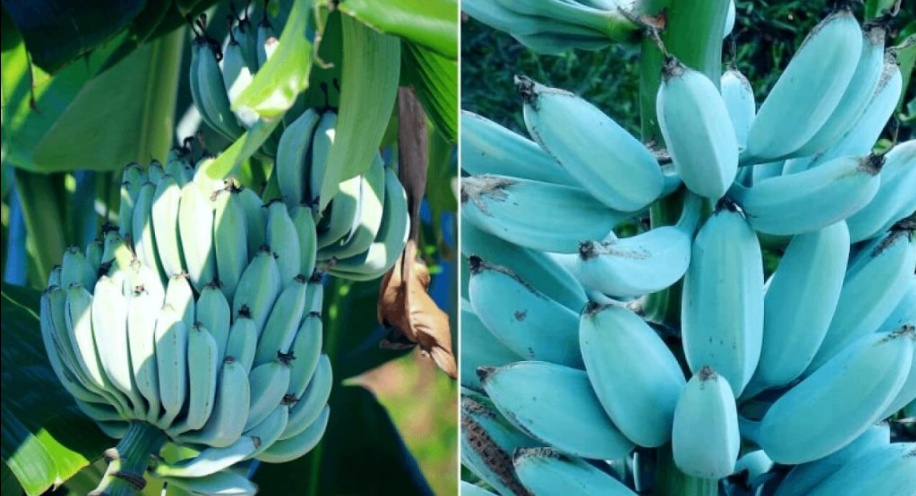
The Blue Java banana is one of the most distinctive and celebrated banana cultivars in the world, occupying a unique position in the Musa genus as both a genuinely cold-hardy fruiting banana and an exceptionally flavored dessert variety. It belongs to the ABB genomic group, inheriting one chromosome set from Musa acuminata and two from Musa balbisiana — the hardier, more stress-tolerant wild species — which explains its remarkable resilience compared to purely acuminata-derived varieties like the Cavendish. Known across different regions as the Ice Cream Banana, Hawaiian Banana, Ney Mannan, Krie, or Cenizo, it has accumulated an enthusiastic following among home growers, specialty farmers, and food enthusiasts drawn equally to its extraordinary flavor and its ability to grow where most bananas cannot.
The name “Ice Cream Banana” is not merely poetic — it is a genuinely accurate description of the fruit’s eating experience at peak ripeness. The flesh is extraordinarily creamy, smooth, and soft, with a texture that closely resembles vanilla ice cream or custard, and the flavor carries unmistakable vanilla notes layered over a rich, sweet banana base. This unique flavor profile is the result of specific volatile aromatic compounds — particularly isoamyl acetate and vanillin-adjacent esters — that develop as the ABB fruit ripens, and it has made the Blue Java something of a cult variety among banana growers who have tasted it fresh from the plant. No commercially produced banana replicates this flavor, making home-grown Blue Java a genuinely revelatory eating experience for those accustomed only to Cavendish.
The fruit’s most visually striking characteristic is its unripe coloration. Before ripening, Blue Java bananas display a distinctive silvery-blue to blue-green sheen caused by a natural wax coating on the skin — a trait inherited from its Musa balbisiana parentage, which developed this waxy bloom as an adaptation to cooler, drier conditions. As the fruit ripens, this blue coloring fades to a pale creamy yellow, often with a slightly silvery undertone remaining even at full ripeness, making it visually distinct from any other common banana variety. The individual fruits are medium to large in size — typically 18 to 23 cm long — slightly chunkier than a Cavendish, and carried in bunches of 7 to 9 hands with 6 to 8 fingers per hand.
What truly separates the Blue Java from virtually every other banana cultivar is its cold hardiness. It can tolerate temperatures as low as -7°C when mature and well-established, and its underground rhizome system can survive ground frosts that would kill the above-ground pseudostem, allowing the plant to reshoot from the base when warmer conditions return. This cold tolerance — exceptional in a genus that is overwhelmingly tropical — opens the Blue Java to cultivation across a far wider geographic range than most bananas, including parts of the Pacific Northwest of North America, the Mediterranean coast of Europe, southern Japan, highland East Africa, and New Zealand’s North Island. This adaptability has driven significant interest in the variety among gardeners in temperate and cool subtropical regions worldwide.
The Blue Java is believed to have originated in Southeast Asia — likely in the Philippines or Indonesia — where wild Musa balbisiana populations are native, before being carried by Polynesian voyagers across the Pacific to Hawaii, where it became established as a traditional cultivar long before European contact. In Hawaii it is deeply embedded in local food culture, eaten fresh, blended into smoothies, and used in traditional Hawaiian cooking, and it remains one of the most popular backyard banana varieties on the islands. From Hawaii, awareness of the variety spread to the continental United States, Australia, and beyond, aided significantly by social media attention in the 2010s that introduced the “Ice Cream Banana” name to a global audience and sparked widespread interest in growing it outside its traditional range.
Despite its remarkable qualities, the Blue Java does have meaningful limitations that prevent it from becoming a commercial export banana. Its soft, creamy flesh — the very quality that makes it so delicious — also makes it highly susceptible to bruising and rapid deterioration after harvest, with a post-harvest window of only 3 to 5 days at full ripeness before quality declines significantly. The relatively small bunch size and moderate yield compared to commercial Cavendish varieties also reduce its economic attractiveness for large-scale production. These limitations, however, matter little to the growing community of home growers and specialty farmers who grow Blue Java purely for the unmatched pleasure of eating it fresh, and for whom its brief harvest window is simply an invitation to savor the fruit at its extraordinary peak.
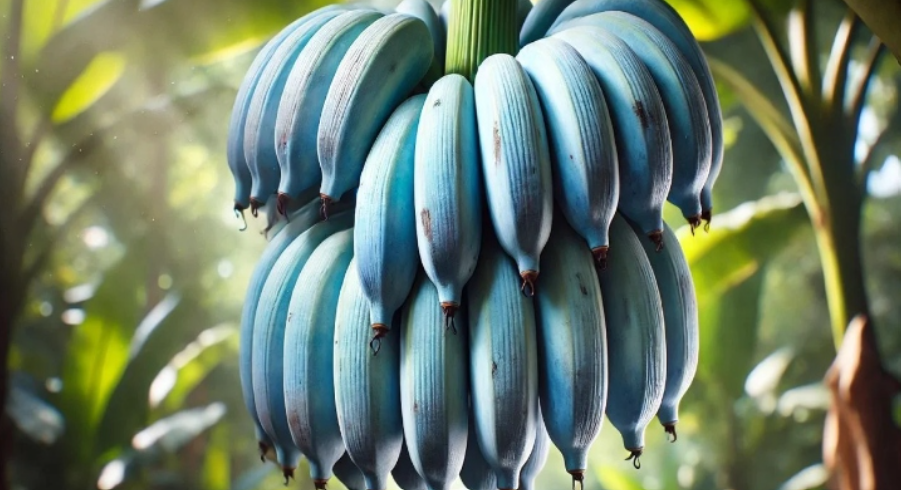
How to Grow and Care for Blue Java Banana
Climate and Site Selection
Blue Java thrives in warm tropical and subtropical climates but is uniquely tolerant of cooler conditions, surviving brief frosts down to -7°C when established. Choose a full-sun position with at least 6 to 8 hours of direct sunlight daily, sheltered from strong winds that can shred the large leaves and stress the plant. In cooler climates, planting against a sun-facing wall or fence that absorbs and radiates heat can make the difference between a thriving plant and one that merely survives.
Soil Requirements
Plant Blue Java in deep, well-draining, organically rich soil with a pH between 5.5 and 7.0. It inherits some drought tolerance from its balbisiana parent but performs best with consistently moist, fertile soil. Heavy clay soils must be amended with compost and coarse sand to prevent waterlogging, which remains the single fastest way to kill a banana plant regardless of variety.
Planting
Propagate Blue Java from healthy sword suckers taken from a disease-free mother plant, selecting shoots of at least 45 to 60 cm in height with a firm, white corm. Plant at a depth of 30 cm, firming the soil gently around the corm, and space plants 3 to 4 metres apart to allow room for the developing mat. Water thoroughly at planting and apply a generous layer of organic mulch immediately to retain moisture and moderate soil temperature around the young root system.
Watering
Water deeply and consistently, providing the equivalent of 25 to 50 mm per week during the active growing season, adjusting for rainfall. Drip irrigation directed at the root zone is ideal, keeping moisture away from the pseudostem base to reduce fungal disease risk. In cooler months or during winter dormancy, reduce watering frequency but never allow the root zone to dry out completely, particularly for young plants still establishing their corm system.
Fertilizing
Blue Java is a hungry plant that responds enthusiastically to regular feeding. Apply a balanced fertilizer high in nitrogen every 6 to 8 weeks during vegetative growth, then switch to a potassium-rich formula as flowering begins to maximize fruit development and flavor. Supplement with compost, aged manure, and periodic foliar sprays of seaweed solution to maintain trace element levels and support the plant’s overall vigour throughout the growing season.
Mulching
Apply a thick 10 to 15 cm layer of organic mulch — straw, sugarcane trash, or shredded leaves — across a wide circle around each plant, keeping it slightly back from the pseudostem to prevent rot. Mulch is especially important for Blue Java grown in cooler climates, where it insulates the corm and root zone against cold soil temperatures during winter. Replenish the mulch layer every few months as it breaks down, adding spent banana leaves back into the mulch ring to enrich the soil naturally.
Cold Protection
In cool subtropical or warm temperate climates, protect Blue Java during cold snaps by wrapping the pseudostem loosely in horticultural fleece or frost cloth when temperatures drop below 5°C. Even if frost kills the above-ground pseudostem, a well-mulched, established corm will typically reshoot vigorously from the base once warmer weather returns in spring. In climates with hard freezes, heap additional mulch around the base in autumn to insulate the crown and improve the plant’s chances of surviving and reshooting.
Desuckering
Manage the developing banana mat by retaining one strong follower sucker and one grand-follower at all times, removing all additional suckers as they appear at ground level. Use a sharp spade to sever unwanted suckers cleanly, then gouge out the growing point to prevent regrowth and reduce competition for nutrients and water. A well-managed three-generation mat — mother, follower, grand-follower — keeps the planting productive and organized, with continuous fruiting cycles extending the life of a single original planting indefinitely.
Flowering and Bunch Care
Blue Java typically flowers 15 to 24 months after planting, with cooler climates extending the time to flowering beyond what would be typical in the tropics. Once the flower bract emerges and all hands have formed, remove the spent male bud (bell) cleanly below the last hand to concentrate the plant’s energy into fruit development. Bagging the developing bunch with a perforated polyethylene bag protects the fruit from wind scarring, insect damage, and sunburn while also slightly accelerating the ripening timeline.
Pest and Disease Management
Blue Java shares common banana pest and disease vulnerabilities, including susceptibility to banana weevil borer (Cosmopolites sordidus) at the corm and Sigatoka leaf disease on the foliage. Remove and destroy lower yellowing or spotted leaves regularly to reduce Sigatoka spore load, and monitor the corm base for weevil entry holes, treating with approved biological or chemical controls if infestation is detected. Maintain good garden hygiene, rotate planting sites where possible, and always source planting material from certified disease-free nurseries to avoid introducing Panama disease into the garden.
Harvesting
Harvest Blue Java bunches when the fingers have fully rounded out and the blue-silver waxy sheen begins softening toward pale yellow-green — typically 110 to 150 days after flowering, depending on temperature. Cut the bunch from the plant carefully with a sharp, clean blade, supporting the weight to avoid bruising the soft flesh beneath the skin. Hang harvested bunches in a cool, shaded, well-ventilated spot to ripen evenly over 5 to 10 days, and plan to consume them promptly once they reach full pale yellow ripeness, as the exceptional creamy texture deteriorates quickly beyond peak ripeness.
Post-Harvest Care
After the bunch is harvested, cut the spent pseudostem to ground level in two stages, allowing the plant to redistribute stored nutrients into the successor sucker. Chop the cut pseudostem into sections and lay them around the base of the mat as moisture-retaining organic mulch, where they will decompose and return potassium and other nutrients to the soil. Sterilize cutting tools between plants, particularly in gardens where multiple banana varieties are grown, to avoid cross-contamination of any fungal or bacterial pathogens between plants in the mat.