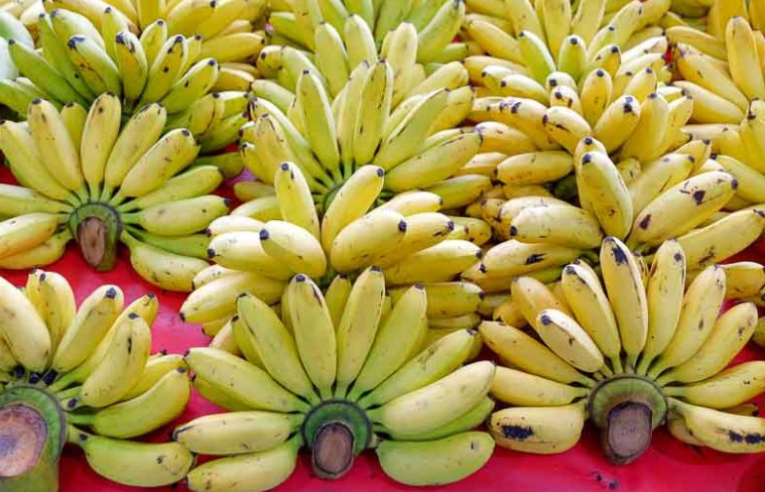
The Lady Finger banana is one of the oldest and most beloved banana cultivars in the world, with a cultivation history stretching back thousands of years across the tropical regions of Southeast Asia, where the Musa acuminata species first evolved and was domesticated. Known by many names — Sugar Banana, Sucrier, Date Banana, and Pisang Susu in Malaysia — it belongs to the AAA genomic group, meaning it carries three sets of chromosomes entirely derived from Musa acuminata, giving it its characteristic sweetness and delicate texture. While it represents only a small fraction of global banana trade, it commands a devoted following among growers and consumers who regard it as among the finest eating bananas on earth.
What sets the Lady Finger apart most immediately is its flavor. At full ripeness — when the thin skin has turned deep yellow with characteristic black speckles — the flesh delivers an intensely honeyed sweetness that is far more concentrated and complex than the mild, starchy sweetness of the Cavendish. Many describe it as carrying floral and vanilla undertones, with a soft, creamy texture that melts easily. This depth of flavor is a product of its high sugar content and low starch-to-sugar conversion rate as it ripens, a characteristic unique to AA and AAA diploid cultivars selected over millennia for eating quality rather than commercial durability.
The plant itself is notably tall, often reaching 5 to 7 metres at maturity — taller than most commercial Cavendish varieties — with large, arching, bright green leaves and a slender pseudostem that can appear almost elegant compared to the thicker trunks of starchier cooking banana varieties. Each plant produces a single bunch in its lifetime, typically carrying 12 to 20 hands with 12 to 20 individual fingers per hand, for a total bunch weight of 15 to 30 kg under good growing conditions. The fruits themselves are small and slender, typically 10 to 15 cm in length, distinctly narrower and more tapered than a Cavendish finger, which gives the variety its evocative name.
Geographically, the Lady Finger has found particular success in Queensland, Australia, where it has been grown commercially since the late nineteenth century and has become almost synonymous with Australian banana culture. Queensland produces the vast majority of Australia’s Lady Finger crop, particularly in the Tully, Innisfail, and Atherton Tablelands regions, where the warm, humid climate of Far North Queensland mirrors the banana’s native tropical conditions. While Australia’s total banana production is modest by global standards — around 400,000 tonnes annually — Lady Finger commands a premium price in domestic markets and is the variety of choice for many discerning Australian consumers.
Despite its outstanding eating quality, the Lady Finger faces significant commercial limitations that have prevented it from becoming a global export commodity on the scale of the Cavendish. Its thin skin bruises easily and offers minimal protection during handling and transport, meaning it deteriorates rapidly after harvest — typically within 5 to 7 days at ambient temperatures — making long-distance shipping economically challenging without refrigeration and careful packaging. Additionally, the plant is susceptible to Panama disease (Fusarium wilt Race 1), the same fungal pathogen that wiped out Gros Michel commercial production in the mid-twentieth century, requiring careful soil management and disease-free planting material to sustain productive plantings.
Nutritionally, the Lady Finger is a genuinely impressive fruit. It is richer in natural sugars than the Cavendish — with a higher proportion of fructose and glucose relative to starch — making it a quick-energy food particularly suited to athletes, children, and active individuals. It provides meaningful amounts of potassium (around 358 mg per 100g), vitamin B6, vitamin C, and dietary fiber, while its small size and thin skin mean there is very little waste per fruit consumed. Its softness and sweetness also make it ideal as a first food for infants and toddlers, and in Queensland and Southeast Asia it is widely recommended by nutritionists as a wholesome, minimally processed snack food.
Also Read: Different Types of Bananas
How to Grow and Care for Lady Finger Banana
Climate and Site Selection
Lady Finger bananas are tropical plants that thrive in warm, humid conditions with temperatures consistently between 18°C and 35°C and annual rainfall of 1,200 to 2,500 mm. They are sensitive to frost and will suffer leaf damage below 10°C and pseudostem death below 0°C, making site selection critical in subtropical growing regions.
Choose the warmest, most sheltered position available — ideally a north or northeast-facing slope or the warm side of a building or windbreak — where the plant receives full sun for at least 6 to 8 hours daily. In coastal subtropical regions like those of Queensland, Southeast Asia, East Africa, and Central America, Lady Finger can be grown successfully with minimal frost protection, but inland growers in cooler climates should invest in frost cloth or grow against a thermal mass wall.
Soil Preparation
Lady Finger bananas perform best in deep, well-drained, organically rich loam soils with a pH between 5.5 and 7.0. They are extremely sensitive to waterlogged conditions — standing water around the root zone for even short periods can cause rapid crown rot and plant death — so excellent drainage is non-negotiable.
Before planting, dig the bed to a depth of at least 50 cm and incorporate generous amounts of aged compost, well-rotted manure, and a balanced organic fertilizer. In clay-heavy soils, raise the planting bed by 20 to 30 cm and incorporate coarse sand or perlite to improve drainage, and avoid low-lying areas where water collects after rain.
Planting
Lady Finger bananas are propagated vegetatively through suckers — offshoots that emerge from the base of the mother plant — rather than from true seed, since the cultivar is a sterile triploid incapable of producing viable seeds. Select a healthy sword sucker (a narrow-leafed, vigorous juvenile shoot) of at least 60 cm height and 1 kg corm weight from a disease-free parent plant, removing it cleanly with a sharp spade.
Plant suckers at a depth of 30 to 40 cm, spacing individual plants 3 to 4 metres apart to allow adequate airflow and light penetration as the canopy develops. Immediately after planting, water thoroughly and apply a thick layer of organic mulch — sugarcane mulch, straw, or wood chips — to retain moisture and suppress weed competition around the base.
Watering
Consistent, deep watering is one of the most important factors in producing high-quality Lady Finger bananas. The plants require the equivalent of 25 to 50 mm of water per week during the growing season, delivered either through rainfall or supplemental irrigation. Drip irrigation is the preferred method, delivering water directly to the root zone without wetting the pseudostem, which can encourage fungal disease.
During dry seasons or drought conditions, increase irrigation frequency to maintain soil moisture without causing waterlogging, and always allow the top few centimetres of soil to dry slightly between watering cycles. Reduce watering during cooler winter months when growth slows, but never allow the root zone to dry out completely.
Fertilizing
Lady Finger bananas are heavy feeders with high demands for nitrogen, potassium, and phosphorus across their growing cycle. Apply a balanced, high-nitrogen fertilizer every 6 to 8 weeks during the vegetative growth phase, transitioning to a high-potassium formula once the plant begins to flower to support fruit development and sweetness.
Well-rotted chicken manure, compost, and banana-specific controlled-release fertilizers are all effective, and many experienced growers supplement with foliar sprays of seaweed extract or fish emulsion to boost trace element availability. In total, a productive Lady Finger plant may require up to 200 g of nitrogen, 60 g of phosphorus, and 400 g of potassium across its full growing cycle to reach peak production.
Mulching
A generous, permanent mulch layer is one of the simplest and most effective practices for growing healthy Lady Finger bananas. Apply 10 to 15 cm of organic mulch — sugarcane trash, straw, shredded leaves, or wood chips — across a wide circle extending at least 1 metre from the pseudostem in all directions, keeping the mulch clear of direct contact with the stem to prevent rot.
Mulch conserves soil moisture, regulates soil temperature, suppresses weeds that compete for nutrients, and breaks down gradually to feed soil microorganisms and enrich the root zone. Replenish mulch every 3 to 4 months as it decomposes, and add spent banana leaves from pruned or harvested plants back to the mulch ring to complete the organic cycle.
Desuckering and Plant Management
A banana mat — the cluster of mother plant and surrounding suckers — will quickly become overcrowded if not carefully managed, reducing airflow, light penetration, and overall productivity. The standard management approach is to maintain a three-generation system: the mother plant, one replacement follower sucker, and one grand-follower sucker, removing all other suckers as they emerge by cutting them at ground level and gouging out the growing point with a sharp knife to prevent regrowth.
Select followers for their vigor, upright growth, and proximity to the mother plant, and position them so the developing mat does not lean in one direction. Regular desuckering channels the plant’s energy into fruit production rather than vegetative proliferation and keeps the growing area tidy and manageable.
Flowering and Bunch Management
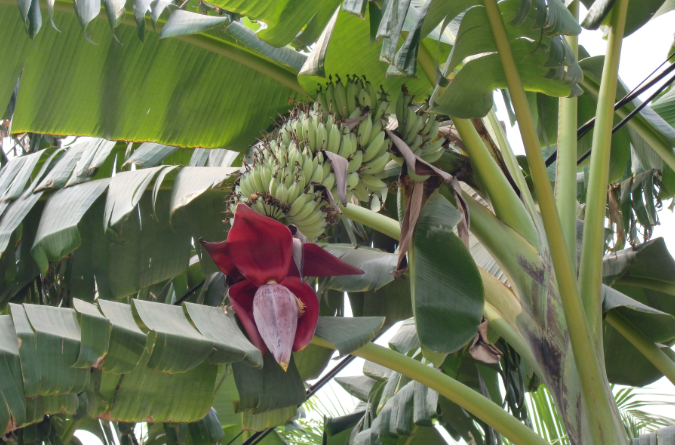
Lady Finger bananas typically flower 9 to 12 months after planting, depending on climate and soil fertility, producing a pendulous purple flower bract from which the hands of fruit emerge sequentially. Once all hands have developed and the male flower bud (bell) at the tip is no longer producing new petals, remove it by cutting the stalk cleanly about 15 cm below the last hand to redirect the plant’s energy into fruit swelling.
Many growers also bag developing bunches with perforated polyethylene or blue bags to protect fruit from sunburn, insect damage, and wind scarring, while also accelerating ripening by retaining warmth around the bunch. In cooler conditions, bagging can reduce time to harvest by 2 to 3 weeks and significantly improves the cosmetic quality of the finished fruit.
Pest and Disease Management
The most serious disease threats to Lady Finger bananas are Panama disease (Fusarium oxysporum f.sp. cubense Race 1) and Sigatoka leaf disease (Mycosphaerella musicola). Panama disease is a soil-borne fungal pathogen with no chemical cure — once it establishes in a planting site, the soil remains infested for decades — so prevention through clean planting material, good drainage, and avoiding movement of contaminated soil is essential.
Sigatoka causes progressive yellowing and necrotic streaking of leaves, reducing photosynthetic capacity and bunch size; it is managed through regular removal of infected lower leaves, good plant spacing for airflow, and in severe cases, approved fungicide applications. Common insect pests include banana weevil borer (Cosmopolites sordidus), which damages the corm, and aphids that vector Banana Bunchy Top Virus — monitor regularly, remove heavily infested plants promptly, and maintain good garden hygiene throughout the growing season.
Harvesting
Lady Finger bananas are harvested green — before they ripen on the plant — typically when the individual fingers have filled out and become noticeably more rounded in cross-section, losing the pronounced angularity of immature fruit. From flowering to harvest generally takes 12 to 16 weeks depending on temperature, with warmer conditions accelerating the timeline.
Cut the entire bunch from the plant with a clean, sharp knife or machete, leaving a short stalk for handling, and support the bunch carefully to avoid bruising the thin-skinned fingers during removal. Because Lady Finger bruises so easily, harvested bunches should be handled minimally, hung in a cool, shaded spot to ripen evenly, and consumed within 5 to 7 days of reaching full yellow ripeness.
Also Read: Types of Bananas That Taste Like Apples
Post-Harvest Plant Care
After harvest, cut the mother pseudostem down to ground level in stages — first to around 1 metre height immediately after bunch removal, then to ground level a few weeks later — allowing the plant to redirect its stored nutrients into the root system and successor suckers. Leave the cut pseudostem sections to decompose on the ground around the mat, where they will break down into moisture-retaining organic matter and return nutrients to the soil.
Clean pruning tools with a dilute bleach solution between plants to avoid inadvertently spreading fungal pathogens, particularly in regions where Panama disease is present in the surrounding landscape. With good post-harvest care, a well-managed Lady Finger mat can remain productive and disease-free for many years, with successive generations of suckers maintaining continuous fruiting cycles.