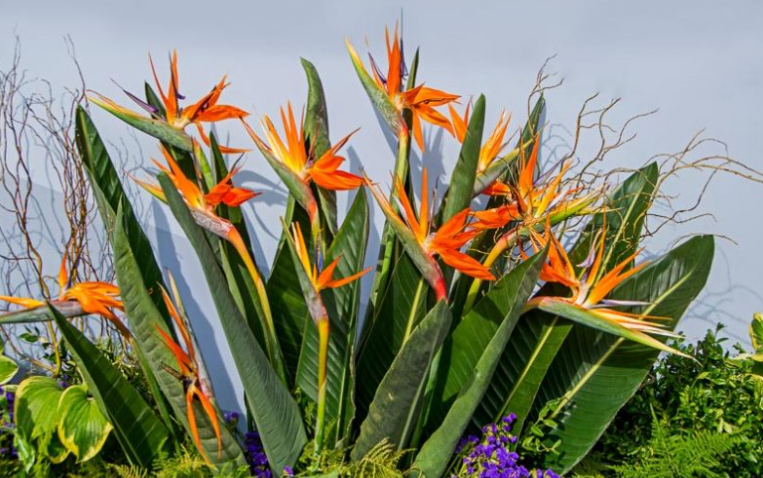
Bird of Paradise (Strelitzia reginae) is one of the most visually dramatic and instantly recognizable flowering plants in the world, belonging to the family Strelitziaceae, native to the coastal areas of eastern South Africa. Named after Queen Charlotte of Mecklenburg-Strelitz, the plant has become a global symbol of tropical elegance and exotic beauty. With millions of plants and cut flowers sold annually across more than 80 countries, Bird of Paradise ranks among the most commercially significant ornamental plants in the world.
As a plant, Bird of Paradise produces large, leathery, paddle-shaped leaves on long, sturdy petioles that emerge directly from a central clump at the base. The leaves are a deep, glossy blue-green and can measure up to 18 inches (45 centimeters) long, giving the plant a bold, architectural presence even when not in flower. The overall growth habit is clump-forming and upright, with mature plants reaching 4 to 6 feet (120 to 180 centimeters) in height and spread.
The flowers are the plant’s most extraordinary feature, consisting of a horizontal boat-shaped spathe from which vivid orange and electric blue petals emerge to resemble the head and plumage of a tropical bird in flight. Each flower head produces several individual blooms in succession, extending the overall flowering period for weeks at a time. The blooms are borne on strong, upright stems that can reach 5 feet tall, making them outstanding as both garden specimens and cut flowers.
Bird of Paradise thrives in USDA zones 10 through 12 as an outdoor perennial, where frost-free conditions allow it to grow and bloom year-round. In zones 9 and below, it is frequently grown as a container plant that can be brought indoors during winter months. With proper indoor care, Bird of Paradise can be grown successfully as a houseplant in virtually any climate, where its architectural foliage provides year-round ornamental value.
Commercially, Bird of Paradise cut flowers are among the most valuable in the global floral industry, commanding premium prices for their dramatic appearance and exceptional vase life of up to three weeks. South Africa, the Netherlands, Israel, and the United States are among the leading producers of Bird of Paradise cut flowers for international markets. The Los Angeles area of California is particularly well known for its large-scale outdoor Bird of Paradise production, benefiting from the region’s ideal Mediterranean climate.
In its native South Africa, Bird of Paradise grows in dense thickets along stream banks and forest margins, where it is pollinated naturally by sunbirds that perch on the blue petals and inadvertently collect pollen on their feet. This specialized bird pollination relationship is reflected in the flower’s sturdy structure, which is strong enough to support the weight of visiting birds. The plant also holds cultural significance in South Africa, appearing on the reverse of the 50 cent coin and serving as the official flower of the city of Los Angeles.
With its spectacular flowers, bold architectural foliage, and remarkable adaptability as both an outdoor and indoor plant, Bird of Paradise has secured a permanent place among the world’s most beloved ornamental plants. Its combination of tropical drama, low maintenance requirements once established, and outstanding cut flower qualities ensures its continued popularity among gardeners, florists, and interior designers worldwide. Few plants make such a powerful visual statement with such little effort from the gardener.
Also Read: Different Types of Bird of Paradise
How to Grow and Care for Bird of Paradise
- Choose a Sunny Location: Bird of Paradise performs best in full sun, requiring at least six hours of direct sunlight daily for strong growth and reliable flowering. In hotter inland climates, light afternoon shade can prevent leaf scorch while still supporting abundant blooms. Indoors, placing the plant near a large south-facing window provides the brightest available light.
- Select Well-Draining, Fertile Soil: This plant thrives in deep, fertile, well-draining soil enriched with organic matter. Incorporating compost into the planting area improves both soil structure and nutrient availability. Avoid waterlogged or compacted soils, as prolonged root saturation causes rhizome rot and severely limits plant performance.
- Plant in Spring After Frost Risk: Outdoor planting should be done in spring once all risk of frost has passed and soil temperatures have warmed sufficiently. Planting at this time gives the root system the longest possible establishment period before winter. Spacing plants 4 to 6 feet apart allows adequate room for the mature clump to develop without crowding.
- Water Deeply but Infrequently: Bird of Paradise prefers deep, infrequent watering rather than frequent shallow irrigation. Allowing the soil to dry moderately between waterings encourages deep root development and improves drought tolerance over time. During winter dormancy, watering should be reduced significantly to prevent root rot in cooler or wetter conditions.
- Fertilize Regularly During the Growing Season: This plant is a moderate feeder that benefits from regular fertilization throughout spring and summer. A balanced slow-release fertilizer applied in early spring, followed by monthly liquid feeding through summer, supports strong growth and flowering. Avoid overfeeding with high-nitrogen products, which encourage excessive leafy growth at the expense of blooms.
- Mulch Around the Base: Applying a 3 to 4 inch layer of organic mulch around the base helps retain soil moisture, regulate root temperature, and suppress competing weeds. Mulch is particularly valuable during hot summer months when moisture evaporation is rapid. Keep mulch a few inches away from the base of the stems to prevent rot.
- Divide Established Clumps: Bird of Paradise forms expanding clumps over time and can be divided every five to seven years to rejuvenate growth and create new plants. Division is best carried out in spring using a sharp spade to separate clumps into sections, each containing several stems and healthy roots. Divided sections should be replanted promptly and watered thoroughly to support re-establishment.
- Remove Spent Flower Stems: Once individual flower stems have finished blooming, cutting them back to the base keeps the plant tidy and directs energy toward producing new growth. Dead or damaged leaves should also be removed regularly to maintain the plant’s attractive appearance. Avoid cutting healthy foliage unnecessarily, as the leaves contribute to the plant’s overall energy production.
- Be Patient for First Flowers: Bird of Paradise is notoriously slow to reach flowering maturity, with newly planted divisions or young plants often taking three to five years to produce their first blooms. Crowding the roots slightly by allowing the clump to become somewhat pot-bound actually encourages flowering in container-grown specimens. Patience during the establishment period is rewarded with decades of spectacular blooming.
- Grow Indoors in Cooler Climates: In zones below 9, Bird of Paradise makes an outstanding indoor plant when given a large container, bright light, and proper care. Indoor plants require less frequent watering than outdoor specimens but benefit from regular fertilization during spring and summer. Moving container plants outdoors during summer significantly improves growth and flowering performance.
- Repot Container Plants Carefully: When growing in containers, repotting every two to three years into a slightly larger pot maintains healthy root development. Bird of Paradise tolerates being slightly root-bound and actually flowers more reliably under these conditions. Use a heavy, well-draining potting mix that provides stability for the plant’s large, top-heavy structure.
- Watch for Scale Insects: Scale insects can attach themselves to stems and the undersides of leaves, sucking sap and weakening the plant over time. Regular inspection and early treatment with horticultural oil or insecticidal soap prevents infestations from becoming established. Heavily infested leaves or stems should be removed and destroyed promptly.
- Monitor for Spider Mites Indoors: Spider mites are particularly common on indoor Bird of Paradise plants, especially during winter when indoor air tends to be dry. Increasing humidity around the plant through regular misting or a nearby humidifier helps deter spider mites. Neem oil or insecticidal soap applications control established infestations effectively.
- Protect from Frost: Even brief exposure to freezing temperatures can severely damage or kill Bird of Paradise foliage and flowers. In marginal zones, covering plants with frost cloth during cold snaps provides temporary protection. Container plants should be moved indoors immediately when frost is forecast, as cold damage can set plant development back significantly.
- Clean Leaves Regularly: The large, glossy leaves of Bird of Paradise accumulate dust indoors, which reduces their ability to photosynthesize efficiently. Wiping leaves with a damp cloth every few weeks keeps them clean and maintains their attractive appearance. This simple task also provides an opportunity to inspect plants closely for early signs of pest activity.
- Plant in Groups for Maximum Impact: In suitable outdoor climates, planting Bird of Paradise in groups of three or more creates a far more dramatic visual impact than single specimens. Massed plantings also provide mutual wind protection for the large leaves, which can tear in exposed positions. The combination of bold foliage and brilliant flowers in a group planting creates one of the most spectacular displays available in tropical and subtropical gardens.
Also Read: Mexican Bird of paradise