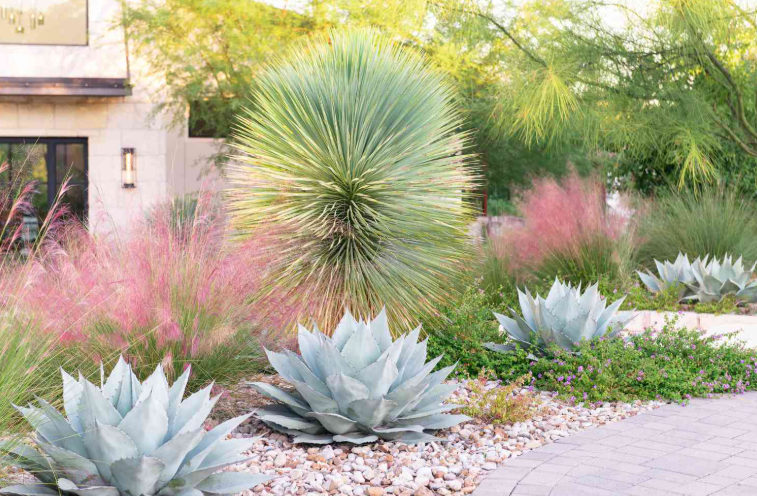
The front yard is the first impression a home makes on the world — a living canvas that speaks to the personality, taste, and values of the people who tend it. In recent years, a quiet revolution has been transforming front yards across the United States, Australia, South Africa, and Mediterranean Europe, as homeowners replace thirsty, high-maintenance lawns and traditional garden beds with stunning, water-wise succulent landscapes that are as beautiful as they are practical. The succulent front yard has moved from niche curiosity to mainstream design trend, and the results can be breathtaking.
The drivers behind this shift are both aesthetic and practical. Water scarcity is an increasingly urgent reality in many parts of the world. In California alone, outdoor watering accounts for approximately 50 percent of household water use, and the widespread adoption of drought-tolerant landscaping — commonly called xeriscaping — has been shown to reduce outdoor water consumption by 50 to 75 percent. Succulents, with their built-in water storage systems, are the cornerstone of this approach, offering lush, colorful, and architecturally compelling landscapes that thrive on minimal irrigation once established.
Beyond water conservation, succulent front yards offer significant practical advantages over conventional lawns and plantings. They require dramatically less maintenance — no weekly mowing, no seasonal replanting, minimal fertilizing, and far fewer pest and disease problems than traditional garden plants. Studies have shown that drought-tolerant landscaping can reduce garden maintenance time by up to 60 percent compared to conventional lawn-based front yards, freeing homeowners from the cycle of constant upkeep that traditional gardens demand.
The design possibilities within the succulent landscaping palette are virtually unlimited. From the bold, sculptural drama of agave and yucca plantings to the soft, romantic cascades of trailing sedums and ice plants, from the intimate jewel-box beauty of mixed echeveria container gardens to the sun-baked Mediterranean character of gravel gardens planted with aloes and euphorbias, there is a succulent front yard design to suit every architectural style, climate, and personal aesthetic. The following 40 ideas explore the full range of creative possibilities.
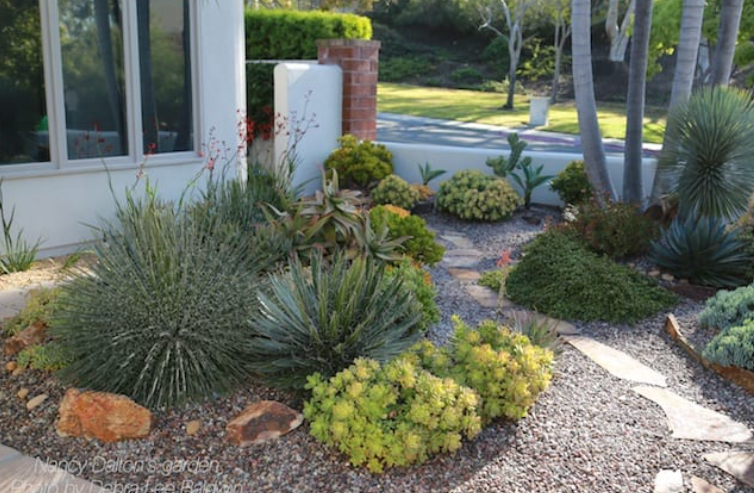
1. The Agave Focal Point Garden
Anchoring a front yard design around one or more large agave specimens is one of the most powerful and architecturally satisfying approaches to succulent landscaping. A mature agave — particularly a bold species like Agave americana, Agave ovatifolia, or Agave parryi — has an immediate presence and authority that commands attention from the street. Surrounding the main agave with layers of lower-growing succulents in complementary colors and textures — blue chalk sticks, aloes, and low sedums — creates a complete, cohesive composition with year-round structure and interest.
2. The Dry River Bed Design
A dry river bed of smooth, rounded pebbles and boulders winds through the front yard, flanked on both sides by carefully chosen succulents that thrive in the excellent drainage such a feature provides. Aloes, agaves, and tall euphorbias provide vertical accents along the banks, while low-growing delosperma, sedum, and trailing ice plants soften the edges and spill naturally over the stones. The river bed also serves a practical function, channeling rainfall away from the house during heavy downpours while appearing completely dry and decorative for the rest of the year.
3. The Gravel Garden
Replacing a conventional lawn with a beautifully raked gravel mulch planted with carefully spaced succulents is one of the most elegant and low-maintenance front yard transformations available to homeowners in dry climates. Decomposed granite in warm buff, gray, or terracotta tones makes an especially attractive mulch, setting off the colors of succulents beautifully while suppressing weeds and retaining soil moisture. Specimen aloes, agaves, and ornamental grasses can be distributed at intervals through the gravel, with smaller succulents filling the spaces between them for a naturalistic, effortlessly stylish result.
Also Read: Flowering Succulent Plants
4. The Tiered Succulent Border
Sloping front yards offer an excellent opportunity to create tiered, terraced planting beds that showcase succulents at different heights and angles. Low retaining walls of natural stone or weathered timber define each level, filled with well-drained growing medium and planted with succulents chosen to cascade over the wall edges or grow upright to fill each terrace. Tall aloes and agaves at the back, mid-height echeverias and kalanchoes in the middle tier, and trailing sedums and ice plants draping over the front walls creates a layered composition of considerable beauty and impact.
5. The Rock Garden Landscape
Incorporating large, natural-looking boulders and rocks into the front yard creates a landscape that closely mimics the natural succulent habitats of South Africa, Mexico, and the American Southwest. Boulders of varying sizes are partially buried to look as though they have always been there, with succulents planted in the pockets and crevices between them. Sempervivums, sedums, and aloes are particularly effective rock garden subjects, and the association of plants with stone creates a composed, natural beauty that improves steadily as the planting matures and the plants fill in around the rocks.
6. The Cactus and Succulent Desert Garden
For homeowners in hot, arid climates, a full desert garden aesthetic — combining columnar cacti, barrel cacti, agaves, and desert shrubs in a gravel or decomposed granite setting — creates a strikingly authentic and water-efficient landscape. Saguaro, organ pipe, and blue columnar cacti provide dramatic vertical accents, while barrel cacti and aloes add rounded, horizontal forms at a lower level. The desert garden aesthetic is increasingly fashionable in contemporary landscape design, and well-executed examples in cities like Phoenix, Tucson, and Las Vegas have become genuine neighborhood landmarks.
7. The Colorful Echeveria Mosaic
Echeverias, with their jewel-like rosettes in a staggering range of colors — from pale lavender-pink to deep burgundy, from icy blue to vivid green — lend themselves beautifully to pattern planting in the manner of a traditional carpet bedding scheme. Groups of single-color echeveria varieties are arranged in flowing, irregular patches across a planting bed or between stepping stones, creating a mosaic of color and texture that photographs magnificently and creates a uniquely artistic front yard statement. The rosette forms are naturally geometric and satisfying, and the color range available within the genus is virtually unlimited.
Also Read: Succulents With Yellow Flowers
8. The Mediterranean Courtyard Style
Drawing inspiration from the sun-drenched courtyard gardens of Spain, Greece, and southern Italy, the Mediterranean-style succulent front yard combines terracotta containers, whitewashed walls or rendered paving, and drought-tolerant plants to create a warm, characterful outdoor space with a distinctly European flavor. Large agaves and aloes in terracotta pots flank the entrance, trailing rosemary and lavender soften the wall bases, and mixed succulent plantings in raised beds provide seasonal color. Gravel mulch in warm terracotta or honey tones ties the composition together.
9. The Succulent Green Roof Over a Retaining Wall
Topping a low front yard retaining wall with a planting of sempervivums, sedums, and small aloes transforms a utilitarian structure into a living ornamental feature that softens the hard landscape and creates a beautifully textured, seasonal display along the street frontage. The wall top provides excellent drainage — critical for succulent health — and the elevated position showcases the rosette forms of sempervivums and echeverias at eye level, where their geometric beauty can be fully appreciated. This approach is particularly effective on street-facing walls where the planting is visible to passersby.
10. The Pathway Flanking Design
Lining a front path from the street or driveway to the front door with carefully chosen succulents creates an immediate sense of arrival and transforms a functional route into an ornamental experience. Low-growing, non-spiny succulents such as echeverias, sedums, and agave attenuata are ideal for path edges, providing soft, colorful borders without the hazard of sharp spines near pedestrians. Alternating clumps of different species and colors on either side of the path creates a rhythmic, corridor-like effect that draws the eye toward the entrance and makes the approach to the house feel considered and intentional.
11. The Succulent Slope Planting
Sloping front yards can be difficult to maintain as conventional lawn — mowing slopes is labor-intensive and potentially dangerous — making them ideal candidates for succulent conversion. Low-growing, spreading species such as ice plants (Delosperma, Lampranthus), trailing sedums, and ground-covering aloes establish quickly on slopes, their spreading roots stabilizing the soil against erosion while their dense foliage suppresses weeds effectively. In spring, a slope planted with ice plants erupts in a breathtaking carpet of vivid daisy flowers that creates one of the most spectacular front yard displays possible.
12. The Vertical Succulent Wall
A vertical planting panel or living wall mounted on a front boundary wall, fence, or the façade of the house itself creates an extraordinary visual impact and makes productive use of vertical space. Shallow planting pockets or specially designed felt or fabric panels are filled with small succulents — sempervivums, sedums, and echeverias are particularly effective — that root in place and gradually fill in to create a seamless, tapestry-like surface of living color and texture. Vertical succulent walls have become a popular feature in contemporary residential and commercial landscape design worldwide.
Also Read: Succulents With Orange Flowers
13. The Statement Aloe Collection
Aloes offer an extraordinary diversity of form, color, and scale, from tiny, rock-hugging species only a few inches across to tree-like giants reaching 30 feet or more. A front yard designed around a curated collection of aloe species — with careful attention to contrasting forms, leaf colors, and seasonal flowering times — can provide interest in every season of the year. Winter-flowering species like Aloe ferox and Aloe arborescens provide vivid color when most plants are dormant, while spring and summer-blooming species carry the display through the warmer months.
14. The Succulent Lawn Replacement
One of the most transformative and water-saving front yard changes a homeowner can make is the complete replacement of a conventional grass lawn with a low, ground-covering succulent planting. Low-growing sedums, delospermas, and ice plants create a dense, weed-suppressing, visually appealing surface that requires no mowing, no irrigation once established, and minimal ongoing maintenance. In California, local water authorities offer rebates of up to $2 per square foot for lawn replacement with drought-tolerant plants, making this not only environmentally responsible but financially rewarding for homeowners.
15. The Container Vignette Entrance
Flanking the front door or entrance gate with a carefully composed collection of succulents in matching or complementary containers creates an immediate visual statement that sets the tone for the entire property. Large terracotta pots containing specimen agaves or tree aloes anchor the composition, while smaller containers of mixed echeverias, haworthias, and sedums fill the spaces between them at different heights. The use of matching containers — a set of identical terracotta pots, for example, or a coordinated collection of glazed ceramic vessels — creates unity and intentionality in what might otherwise seem a random arrangement.
16. The Naturalistic Planting Style
Inspired by the naturalistic planting philosophy of designers like Piet Oudolf and practiced widely in contemporary landscape design, the naturalistic succulent front yard uses irregular, organic planting patterns — rather than formal, geometric arrangements — to create plantings that feel spontaneous, wild, and ecologically authentic. Species are intermingled rather than planted in blocks, heights are varied throughout rather than strictly tiered, and seed-spreading and self-colonizing species are encouraged to move through the planting as they would in nature. The result is a front yard that looks simultaneously designed and wild.
Also Read: Succulents With Pink Flowers
17. The Color-Themed Succulent Border
Designing a front yard succulent planting around a specific color palette — all silvers and blues, for example, or a warm scheme of reds, oranges, and golds — creates a sense of visual cohesion and sophistication that elevates the overall design significantly. A silver and blue palette might combine blue agaves, blue chalk sticks, silvery echeverias, and white-flowering aloes for a cool, refined effect. A warm palette of reds, oranges, and coppers could draw on coppertone sedums, orange-flowering aloes, red-tipped echeverias, and russet-leaved aeoniums for a rich, autumnal composition.
18. The Succulent Herb Garden
Combining culinary herbs — rosemary, thyme, lavender, and sage — with drought-tolerant succulents in a front yard planting creates a practical, fragrant, and beautiful landscape that serves double duty as both ornamental display and kitchen garden. Scented-leaf pelargoniums, which bridge the gap between succulent and herb, are particularly effective companions for more architectural succulents like agaves and aloes. The textural contrast between the fine, ferny foliage of herbs and the bold, geometric forms of succulents creates a planting of exceptional visual richness.
19. The Japanese-Inspired Zen Garden
Drawing on the austere beauty of Japanese dry garden design, a zen-inspired succulent front yard uses carefully raked gravel or decomposed granite, strategically placed rocks and boulders, and a restrained selection of architectural succulents to create a front yard of meditative calm and visual elegance. Tall, single-stemmed aloes or agaves serve as the garden’s focal plants — equivalent to the specimen stones of a traditional Japanese garden — while low gravel paths lead the eye through the composition. The emphasis on negative space and simplicity creates a front yard that feels peaceful and contemplative.
Also Read: Succulents With Rose Like Flowers
20. The Wildlife Garden Design
Designing a succulent front yard specifically to support native and migratory wildlife — hummingbirds, sunbirds, butterflies, and native bees — creates a planting of both beauty and ecological value. Winter-flowering aloes provide nectar for hummingbirds during migration, red yucca and hesperaloe attract both hummingbirds and sphinx moths, and flowering ice plants support native bee populations in spring. In the United States, pollinator garden certifications from organizations such as the National Wildlife Federation have grown by over 300 percent in the past decade, reflecting the increasing public interest in ecologically meaningful garden design.
21. The Succulent Raised Bed Garden
Constructing one or more raised beds in the front yard and filling them with well-drained succulent growing mix creates a flexible, practical, and visually appealing framework for a succulent landscape. Raised beds can be constructed from a range of materials — natural stone, weathered hardwood sleepers, Cor-Ten steel, or stacked brick — each bringing its own aesthetic character to the design. The improved drainage of a raised bed is particularly beneficial for succulents in climates with heavy or frequent rainfall, and the elevation brings smaller rosette succulents to a level where their intricate forms are more easily appreciated.
22. The Oceanfront Coastal Design
Properties near the coast face specific horticultural challenges — salt spray, strong winds, and sandy, fast-draining soils — that eliminate many conventional garden plants from consideration but suit a wide range of succulents perfectly. Ice plants, agaves, aloes, yuccas, and euphorbias are all highly salt and wind tolerant, making them natural choices for coastal front yards. The gray-green, blue-gray, and silver foliage colors of many coastal-tolerant succulents complement the light and color palette of seaside environments beautifully, creating landscapes that feel utterly at home in their setting.
23. The Monochrome Silver and Gray Garden
A front yard planted entirely in silver, gray, and white-toned succulents — with occasional white flowers as seasonal accents — creates a refined, sophisticated landscape of almost sculptural restraint. Blue agaves, silvery echeverias, chalk dudleyas, blue chalk sticks, and white-flowering aloes all contribute to this palette, and the combination of textures — smooth, rough, powdery, waxy — provides interest and depth within the limited color range. Under strong sunlight, the silver and gray foliage of these plants takes on an almost luminous quality that is particularly beautiful in coastal and desert environments.
24. The Night Garden Design
Designing a front yard succulent planting for maximum impact in evening and low-light conditions — taking advantage of outdoor lighting or the natural luminosity of pale-foliaged plants — creates a front yard that is as beautiful after dark as during the day. White and cream-flowered succulents, pale-foliaged species, and plants with reflective, waxy surfaces all show up dramatically in exterior lighting. Queen of the night cactus, with its enormous, fragrant nocturnal flowers, is the ultimate night garden specimen, and its spectacular summer blooming events can become neighborhood occasions.
25. The Succulent Edging Design
Using low-growing succulents as edging plants along the front of borders, along driveway margins, and beside paths and steps creates a cohesive, polished appearance throughout the front yard with minimal plant quantities. Echeverias are perhaps the most effective edging succulents, their neat, geometric rosettes creating a clean, regular line when planted at intervals along a border edge. Agave attenuata, sempervivums, and low sedums are also excellent choices, providing season-long color and texture along boundaries and margins where traditional edging plants often struggle in hot, dry conditions.
Also Read: Succulents With Orange Flowers
26. The Terraced Hillside Garden
Properties on steep hillsides have historically been among the most challenging to landscape attractively, but succulents transform this difficulty into an opportunity for spectacular multi-level garden making. A series of terraces retained by dry-stone walls or gabion baskets creates a series of planting levels that can be treated as individual garden rooms, each with its own planting scheme and character. The improved drainage on a hillside suits succulents perfectly, and the multiple viewpoints created by a terraced design allow different aspects of the planting to be appreciated from different angles and distances.
27. The Permaculture-Inspired Food Landscape
Combining edible and ornamental succulents in the front yard creates a productive food landscape that is simultaneously beautiful and practical. Prickly pear cacti (Opuntia ficus-indica) produce edible fruits and young pads, aloe vera provides medicinal gel, culinary herbs bridge the gap between edible and ornamental, and dragon fruit cactus adds dramatic climbing structure with delicious fruit. The concept of the edible front yard has grown substantially in popularity in recent years, with a 2023 survey finding that over 35 percent of American homeowners were growing some form of food in their front yards.
28. The Low Border With Decomposed Granite
One of the simplest and most effective front yard makeovers replaces lawn with a low planting of mixed succulents set in a deep mulch of decomposed granite. The granite mulch — available in a range of natural colors from warm buff to pale gray — provides the excellent drainage succulents need, suppresses weeds effectively, and creates an attractive visual background that complements the colors and textures of the plants. The design requires minimal preparation and can be installed relatively quickly, yet produces a front yard of professional quality and enduring beauty.
29. The Formal Symmetrical Design
For homes with a formal or traditional architectural style, a symmetrical front yard planting using matching succulent specimens on each side of the central axis creates a sense of order, balance, and classical elegance. Identical agave or aloe specimens in matching pots flank the entrance path, with mirror-image planting beds extending on either side. The geometric precision of a formal succulent design suits certain architectural styles — Georgian, Colonial, Spanish Revival — exceptionally well and creates a front yard of considerable visual authority without sacrificing the water-efficiency advantages of succulent planting.
30. The Tropical Succulent Style
In warm, humid climates such as Florida, Hawaii, and the Gulf Coast, succulent landscaping can incorporate bold, tropical-feeling plants — large-leaved aloes, dramatic agaves, tall euphorbias, and lush, colorful kalanchoes — to create a front yard that combines succulent water-efficiency with tropical exuberance. Bright-flowered adeniums, cascading hoyas, and vivid bougainvillea can be integrated with more structural succulents to create layered, colorful compositions with a distinctly tropical character. The combination of succulent resilience and tropical visual impact suits the warm, humid conditions of coastal subtropical regions perfectly.
Also Read: Succulents With White Flowers
31. The Native Plant Succulent Garden
In regions with native succulent flora — California, Arizona, Texas, South Africa, the Canary Islands — designing a front yard exclusively around locally native succulent species creates a planting of authentic ecological and aesthetic character. Native succulents are perfectly adapted to local climate, soil, and rainfall patterns, requiring virtually no supplemental irrigation or soil amendment once established. In California, designs based on native dudleyas, native cacti, and native agaves support local pollinator populations and are increasingly encouraged by local water authorities through plant subsidy programs and demonstration gardens.
32. The Sculptural Object Garden
Treating the front yard as a gallery space — in which large, architecturally dramatic succulents serve as living sculptures displayed against a carefully chosen backdrop — creates a front yard of contemporary art-garden character. A single, perfectly formed agave displayed on a raised plinth of natural stone, or a group of towering columnar cacti against a rendered white wall, can create a front yard of museum-quality visual impact. The simplicity of this approach — few plants, maximum drama — suits modernist and minimalist architecture particularly well and requires minimal ongoing maintenance.
33. The Pot and Planter Village
Arranging a large collection of succulents in pots and planters of varying sizes, shapes, and materials across the front yard creates an eclectic, collected, and highly personalized front yard display. Mismatched terracotta pots, vintage stone troughs, weathered wooden boxes, modern concrete planters, and colorful ceramic vessels can all contribute to a composition that feels personal, curated, and full of character. The advantage of a container-based front yard is its flexibility — individual plants can be rearranged, replaced, or brought indoors during extreme weather with ease.
Also Read: Types of Hanging & Trailing Succulents
34. The Succulent Firebreak Planting
In fire-prone areas of California, Australia, and southern Europe, planting fire-resistant succulents in the front yard creates a practical defensive landscape that is also beautiful. Succulents are generally among the most fire-resistant of all garden plants, as their high water content makes them extremely difficult to ignite. Ice plants (Carpobrotus, Delosperma, Lampranthus) are particularly fire-resistant and are recommended by California fire authorities as components of defensible space planting. Creating a succulent buffer zone between the house and the street reduces fire risk while creating an attractive, low-maintenance landscape.
35. The Hummingbird and Pollinator Garden
Deliberately designing a succulent front yard to maximize pollinator attraction creates a planting of exceptional ecological value and seasonal vitality. Red and orange-flowering aloes draw hummingbirds, tall kniphofia attracts both hummingbirds and bumblebees, flowering agave spikes support multiple bat and bee species, and ice plants provide early spring nectar for emerging native bee populations. A hummingbird garden certification from the Audubon Society requires documented plantings of hummingbird-attractive species — succulent-based gardens can easily meet these requirements while maintaining the aesthetic qualities of a designed landscape.
36. The Succulent and Ornamental Grass Combination
Combining the bold, geometric forms of succulents with the soft, feathery textures and movement of ornamental grasses creates front yard plantings of exceptional contrast and beauty. Blue fescue (Festuca glauca) with blue agave creates a cool, refined composition in gray and blue. The flowing, copper-toned foliage of Mexican feather grass (Nassella tenuissima) with orange-flowering aloes and red-tipped echeverias creates a warmer, more dynamic combination. Grasses add movement to what can otherwise be a relatively static planting, as their stems and seed heads sway in the breeze throughout the season.
37. The Cottage Garden Succulent Style
A relaxed, cottage garden interpretation of succulent landscaping uses a generous mix of flowering succulents — kalanchoes, echeverias, sedums, aloes, and ice plants — in an informal, loosely planted arrangement with a sense of abundance and spontaneity. Rather than the controlled precision of formal succulent design, the cottage succulent garden celebrates color, variety, and the pleasant disorder of a planting that has been allowed to develop organically over time. Soft-leaved, non-spiny species are favored in this style, creating an accessible and welcoming front yard character.
38. The Modern Minimalist Design
Clean lines, a restricted plant palette, and a strong emphasis on negative space characterize the modern minimalist succulent front yard. A single species of agave or aloe is repeated at regular intervals across a ground plane of pale gravel or poured concrete, creating a composition of elegant simplicity that suits contemporary architectural styles perfectly. The restrained palette and geometric precision of minimalist succulent design has significant appeal in urban settings where the front yard is small and the need for a polished, low-maintenance appearance is paramount.
Also Read: Succulents That Winter Over Outdoors
39. The Succulent Stumpery
Incorporating weathered logs, tree stumps, and pieces of driftwood into the front yard succulent planting creates a naturalistic, woodland-edge aesthetic that suits cottage, craftsman, and rustic architectural styles particularly well. Succulents planted in and around hollow logs and stumps create charming combinations of organic wood texture and geometric plant form. Sempervivums and sedums are particularly effective stumpery plants, as their spreading growth allows them to colonize the wood surface naturally over time, creating the impression of a planting that has been there for decades.
40. The Four-Season Succulent Garden
Designing a succulent front yard to offer interest in every season — through a carefully planned succession of flowering species, foliage color changes, and structural forms — creates a landscape that is rewarding throughout the entire year rather than spectacular for a few weeks and forgettable for the rest. Winter-flowering aloes carry the garden through the cold months, spring ice plants provide the most vivid floral display of the year, summer-blooming agave flower spikes create drama in the hottest season, and autumn-coloring sedums and aeoniums provide a final flush of warm color before winter returns. Thoughtful seasonal planning transforms a succulent planting from a collection of individual plants into a truly designed, dynamic landscape.
Also Read: Succulents That Winter Over In Zone 8