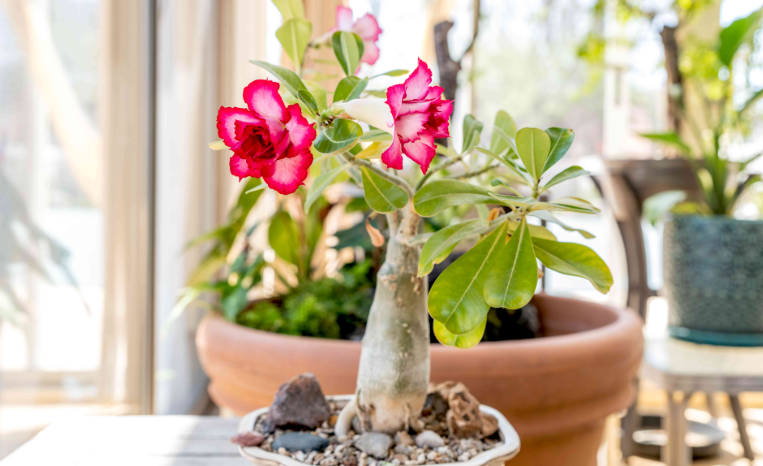
Desert Rose is a striking succulent shrub native to the arid regions of Africa and the Arabian Peninsula. Known scientifically as Adenium obesum, it belongs to the family Apocynaceae and thrives in hot, dry climates where most other plants struggle to survive.
One of its most distinctive features is its swollen, bottle-shaped base called a caudex, which stores water and nutrients to help the plant endure long periods of drought. This unique trunk gives the plant a sculptural, almost bonsai-like appearance that makes it highly prized among collectors.
Desert Rose produces stunning trumpet-shaped flowers in shades of pink, red, white, and bicolor combinations. The blooms appear mainly in spring and summer and can last for weeks, making the plant a showstopper in any garden or home setting.
Despite its beauty, all parts of the Desert Rose are toxic if ingested, containing cardiac glycosides that can be harmful to humans and animals. Historically, its sap was used by African tribes to make arrow poison, so care should always be taken when handling it.
The plant has deep cultural and ornamental significance across Asia, particularly in Thailand and China, where it is cultivated extensively as a decorative and spiritual plant. It symbolizes good luck and is often shaped into intricate bonsai forms.
Desert Rose is popular worldwide among succulent and bonsai enthusiasts because of its low maintenance requirements, dramatic appearance, and brilliant flowering habit. With the right conditions, it can live for decades and grow into a truly magnificent specimen.
Also Read: How to Grow Desert Rose from Seed
How to Grow Desert Rose in Pots & Containers
- Choose the Right Pot — Always use a pot with excellent drainage holes. Terra cotta or clay pots are ideal as they are porous, allowing excess moisture to escape and preventing root rot, which is the number one killer of Desert Rose plants.
- Select the Correct Pot Size — Desert Rose prefers to be slightly root-bound. Use a pot only slightly larger than the caudex — about 1–2 inches wider in diameter. Oversized pots retain too much moisture and encourage root rot rather than flowering.
- Use a Well-Draining Soil Mix — Plant in a cactus or succulent potting mix, or make your own by combining regular potting soil with coarse sand and perlite in a 1:1:1 ratio. The mix should be gritty, fast-draining, and low in organic matter.
- Positioning the Caudex — When potting, place the caudex slightly above the soil line. This not only prevents rot at the base but also shows off the beautiful swollen trunk, enhancing the bonsai-like aesthetic of the plant.
- Sunlight Requirements — Desert Rose demands full sun — at least 6 to 8 hours of direct sunlight daily. Place the pot on a sunny balcony, windowsill, or patio facing south or west. Insufficient light leads to leggy growth and poor flowering.
- Watering Correctly — Water deeply but infrequently. Allow the soil to dry out completely between waterings. During the growing season (spring and summer), water every 7–10 days. Always water at the base, never overhead, to avoid fungal issues.
- Reduce Watering in Dormancy — In cooler months (autumn and winter), Desert Rose enters semi-dormancy and may drop its leaves. Reduce watering drastically to once a month or even less. Overwatering during dormancy is the most common fatal mistake.
- Temperature Needs — Desert Rose thrives in temperatures between 25°C – 35°C (77°F – 95°F). It cannot tolerate frost or temperatures below 10°C (50°F). In cooler climates, bring the pot indoors during cold seasons and place it near a sunny window.
- Fertilizing for Growth and Blooms — Feed with a balanced, phosphorus-rich fertilizer (like 10-30-10) every 2 weeks during the growing season to encourage abundant blooming. Phosphorus promotes flower production while nitrogen supports foliage growth. Stop fertilizing in winter.
- Humidity & Airflow — Desert Rose prefers low to moderate humidity. Avoid placing it in damp, poorly ventilated areas. Good airflow around the plant reduces the risk of fungal infections and keeps the foliage and caudex healthy.
- Repotting — Repot every 2–3 years, preferably in spring at the start of the growing season. Gently remove the plant, trim any dead or rotting roots, let them air-dry for a day, then replant in fresh gritty mix. Repotting refreshes the soil and encourages new growth.
- Pruning for Shape and Blooms — Prune after flowering to shape the plant and encourage branching. More branches mean more flower buds. Use clean, sterilized scissors and cut just above a leaf node. Wear gloves as the milky sap is toxic and can irritate skin.
- Pest Management — Watch out for spider mites, mealybugs, and aphids, which are common on container-grown Desert Roses. Treat infestations early with neem oil spray or insecticidal soap. Inspect the undersides of leaves and the base of the caudex regularly.
- Propagation in Pots — Desert Rose can be propagated from stem cuttings or seeds. Cuttings should be allowed to dry/callous for 1–2 days before planting in a gritty mix. Note that cuttings rarely develop the dramatic swollen caudex — for a true caudex shape, grow from seed.
- Encouraging Blooming — To trigger flowering, expose the plant to a brief dry spell (withhold water for 2–3 weeks) followed by a thorough watering. This stress-and-reward cycle mimics natural dry seasons and is highly effective at inducing prolific blooms.
- Patience and Observation — Desert Rose is a slow grower, especially in pots. It may take 1–3 years to bloom from a cutting and longer from seed. Observe your plant regularly, adjust care based on seasonal changes, and avoid overwatering — patience and restraint are the keys to a thriving, flowering Desert Rose.
Also Read: How to Grow Monkshood from Seed