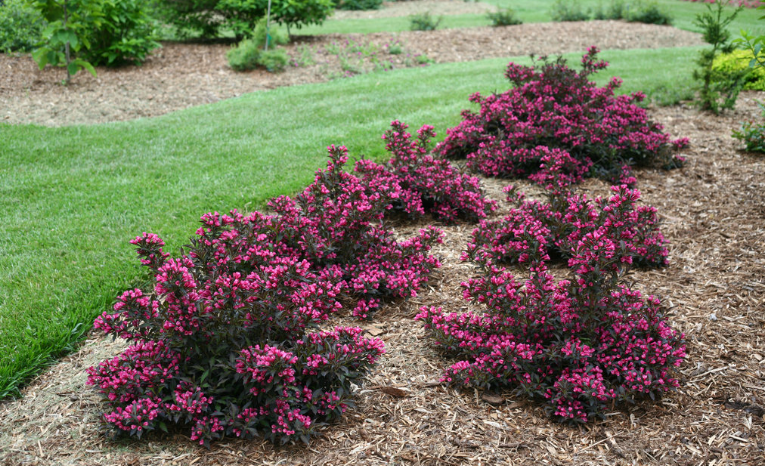
Types of weigela shrubs span a genuinely enormous range of options, and according to Arkansas Cooperative Extension Service, several hundred weigela cultivars are now listed, spanning reds like Bristol Ruby and Red Princess, pinks like Fairy and Boskoop Glory, and whites like Candida and Mont Blanc. The species itself, weigela florida, is an easy-to-grow, deciduous flowering shrub hardy from USDA zones 4 through 8, adaptable to nearly any soil type and blooming reliably even in light shade, though full sun brings out the best flower display.
North Carolina Extension Gardener Plant Toolbox, explains that modern weigela breeding has pushed well beyond simple flower color, producing cultivars with variegated, golden, chartreuse, and deep purple-black foliage in addition to the traditional pink, red, and white blooms. The same toolbox notes that weigela tolerates air pollution and clay soil reasonably well, and light salt tolerance has made several cultivars a practical choice for suburban roadside plantings.
Virginia Tech’s Cooperative Extension, says that most weigelas found in the nursery trade today are hybrids specifically developed to produce superior flowers compared to the species, and the recommended pruning approach removes about a third of the oldest wood each spring right after flowering, since the shrub blooms primarily on growth from the previous year. What follows covers 24 types of weigela shrubs, along with their appearance and the data behind their growth habits.
Wine and Roses
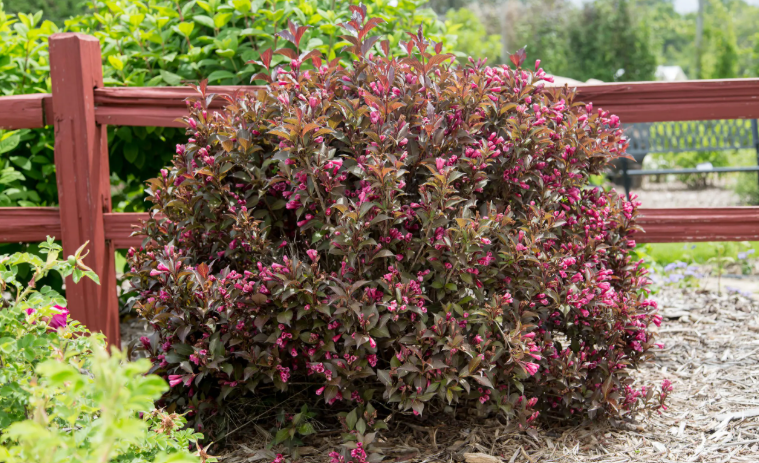
Wine and Roses, also sold under the cultivar name Alexandra in Europe, produces near-black burgundy foliage that provides dramatic season-long color contrast against its hot pink, trumpet-shaped spring flowers. It’s become one of the most photographed and widely planted weigela cultivars of the past 2 decades, reaching a compact mature size of about 5 feet tall.
It grows well throughout USDA zones 4 through 8, tolerating a range of soil conditions in full sun to light shade, and its dark foliage holds its color best with adequate sunlight exposure.
Bristol Ruby
Bristol Ruby produces true ruby-red, trumpet-shaped flowers on a vigorous, large-scale shrub developed at Bristol Nurseries in Bristol, Connecticut, and in cultivation since 1941. Its true red rather than pink-red flower color has made it one of the most effective weigela cultivars for attracting ruby-throated hummingbirds during their spring migration.
It grows well throughout USDA zones 5 through 9, reaching 5 to 7 feet tall and wide, considerably larger at maturity than many of the newer compact cultivars.
My Monet
My Monet produces tightly compact, mounded foliage variegated in cream, pink, and green, paired with pink-purple spring flowers, making it one of the most popular container weigela varieties available. Its diminutive mature size of roughly 18 inches tall and wide sets it apart from nearly every other cultivar on this list.
It grows well throughout USDA zones 4 through 6, and in warmer zones 7 and 8, afternoon shade helps prevent its variegated foliage from bleaching out in intense summer sun.
Midnight Wine
Midnight Wine produces deep purple-black foliage on a notably compact plant, essentially a dwarf counterpart to the larger Wine and Roses cultivar. Its small mature size makes it well suited to container growing in addition to smaller garden borders.
It grows well throughout USDA zones 4 through 8, performing best in full sun where its dark foliage color develops most fully.
Spilled Wine
Spilled Wine produces dark burgundy foliage on a distinctly low, spreading, groundcover-like habit rather than the more upright form typical of most other weigela cultivars. Its compact spread of 24 to 30 inches makes it a popular choice for both containers and small-space plantings.
It grows well throughout USDA zones 4 through 8, tolerating temperatures down to negative 30 degrees Fahrenheit without winter protection in the coldest zones within its range.
Variegata
Variegata is an old, well-established cultivar producing leaves edged in a creamy white margin alongside rose-pink spring flowers, reaching a compact, mounded form up to 6 feet tall. Its long history in cultivation has made it one of the most widely recognized variegated weigela types.
It grows well throughout USDA zones 4 through 8, tolerating full sun to partial shade and a wide range of soil conditions.
Variegata Nana
Variegata Nana closely resembles standard Variegata in its creamy leaf margins and pink flowers, distinguished by a smaller mature size reaching only about 4 feet tall. Its more compact form makes it a practical substitute wherever the larger Variegata would outgrow the available space.
It grows well throughout USDA zones 4 through 8, sharing the same general care requirements as its larger relative.
Rubidor
Rubidor, also known by the synonymous name Olympiade, is the standard golden-leaved weigela cultivar, producing early golden foliage that gradually shifts to chartreuse as summer progresses, paired with contrasting red flowers. This older cultivar can eventually reach over 6 feet tall.
It grows well throughout USDA zones 4 through 8, with its golden foliage color developing most vividly in full sun exposure.
Red Prince
Red Prince produces vivid red, trumpet-shaped flowers on a large-scale shrub valued for delivering bold color impact in a bigger garden border or foundation planting. Its considerable mature size makes it best suited to larger landscapes rather than compact garden beds.
It grows well throughout USDA zones 4 through 8, tolerating the same cold winters as most other cold-hardy weigela cultivars in this size class.
Ghost
Ghost produces early golden foliage that transitions to a pale, butter-cream color as summer progresses, offering a considerably more compact alternative to the older golden-leaved standard Rubidor. Its mature size of roughly 4 to 5 feet makes it easier to place in a mid-sized garden border.
It grows well throughout USDA zones 4 through 8, with its pale foliage providing a striking, almost luminous contrast against darker-leaved companion shrubs.
Polka
Polka produces abundant pink, trumpet-shaped flowers on a compact shrub known for its long, reliable bloom period extending well into summer on new growth. Its manageable size makes it a popular choice for a mid-sized garden border.
It grows well throughout USDA zones 4 through 8, tolerating full sun to light shade with reliable flowering performance.
Minuet
Minuet produces purple-pink flowers on a genuinely dwarf plant, among the smaller-statured weigela cultivars available for a compact garden space. Its diminutive mature size makes it a practical choice for foundation plantings or smaller mixed borders.
It grows well throughout USDA zones 4 through 8, tolerating a range of soil types typical of the broader weigela species.
Java Red
Java Red produces bronze-red foliage that provides season-long color alongside its pink spring flowers, offering a variation on the dark-leaved weigela trend distinct from the near-black tones of Wine and Roses or Midnight Wine. Its foliage color tends toward a warmer, more coppery tone than its darker-leaved relatives.
It grows well throughout USDA zones 4 through 8, with foliage color developing most fully in full sun conditions.
Dark Horse
Dark Horse produces deep purple foliage alongside pink spring flowers, joining Wine and Roses, Midnight Wine, and Tango among the modern generation of dark-leaved weigela cultivars bred over the past few decades. Its rich foliage color provides consistent visual interest even between bloom cycles.
It grows well throughout USDA zones 4 through 8, performing best with adequate sun exposure to maintain its deep foliage coloration.
Carnaval
Carnaval produces a genuinely unusual multicolor flower display, with white, pink, and red blooms all appearing simultaneously on the same plant rather than a single uniform color. That variable bloom color has made it a distinctive choice among gardeners seeking something visually different from a standard single-color weigela.
It grows well throughout USDA zones 4 through 8, tolerating the same general growing conditions as most other weigela florida cultivars.
Candida
Candida produces pure white, trumpet-shaped flowers on a larger-scale shrub, offering one of the more commonly available white-flowered weigela options alongside Mont Blanc. Its considerable mature size makes it well suited to a larger shrub border where its white blooms can stand out against darker foliage nearby.
It grows well throughout USDA zones 4 through 8, tolerating full sun to partial shade like most other weigela cultivars.
Eva Rathke
Eva Rathke is an older, well-established weigela cultivar producing deep red flowers, historically one of the more popular red-flowered selections before newer cultivars like Bristol Ruby became more widely available. Its long history in cultivation reflects the genus’s popularity across generations of American gardens.
It grows well throughout USDA zones 4 through 8, sharing the general hardiness and care requirements of the broader weigela florida species.
Foliis Purpureis
Foliis Purpureis is among the oldest purple-leaved weigela selections, serving as an ancestor to many of the modern dark-foliage cultivars bred in more recent decades, including Tango and Wine and Roses. Its historical significance in weigela breeding makes it a genuinely important cultivar even though flashier modern introductions have largely overtaken it in nursery availability.
It grows well throughout USDA zones 4 through 8, tolerating the same general conditions as its more modern dark-leaved descendants.
Sunset
Sunset produces unique variegated foliage with green centers surrounded by multicolored margins, offering one of the more visually complex variegation patterns available among weigela cultivars. Its distinctive leaf coloring provides ornamental interest well beyond the plant’s bloom period.
It grows well throughout USDA zones 4 through 8, and like other variegated cultivars, benefits from some afternoon shade protection in the warmer end of its hardiness range.
Pink Princess
Pink Princess produces soft pink, trumpet-shaped flowers on a reliable, classic-form weigela shrub valued for its dependable bloom performance. Its straightforward pink flower color has kept it a consistently popular choice among gardeners seeking a traditional, unfussy weigela.
It grows well throughout USDA zones 4 through 8, tolerating full sun to light shade with typical weigela care requirements.
White Knight
White Knight produces clean white, trumpet-shaped flowers on a weigela cultivar bred specifically to offer a genuinely pure white alternative among the more commonly available pink and red-flowered types. Its bright white blooms provide useful contrast in a mixed shrub border dominated by warmer flower colors.
It grows well throughout USDA zones 4 through 8, sharing the general growing requirements typical of the broader weigela florida species.
Rumba
Rumba produces distinctive bicolor flowers combining red and yellow tones on the same bloom, offering one of the more visually striking color combinations available among weigela cultivars. Its unusual 2-toned flower display sets it apart from the more common single-color cultivars.
It grows well throughout USDA zones 4 through 8, tolerating full sun to light shade like most other weigela cultivars in this genus.
Canary
Canary produces yellow-toned flowers, a genuinely uncommon color within the weigela genus given that most cultivars remain concentrated in shades of pink, red, and white. Its distinctive bloom color has made it a specialty choice among gardeners seeking something outside the typical weigela color palette.
It grows well throughout USDA zones 4 through 8, tolerating the same general care requirements as other weigela florida cultivars.
Sonic Bloom Red
Sonic Bloom Red produces vivid red, trumpet-shaped flowers on a cultivar specifically bred to rebloom throughout the growing season rather than flowering only in a single spring flush. That extended, repeated bloom period has made the broader Sonic Bloom series among the more commercially significant recent weigela introductions.
It grows well throughout USDA zones 4 through 8, and its red flowers make it, alongside Bristol Ruby and Red Prince, one of the more effective hummingbird-attracting weigela cultivars available.
Conclusion
Weigela shrubs offer a wide range of flower colors, foliage types, sizes, and growth habits, making them useful additions to many landscapes. Their attractive trumpet-shaped flowers can also bring seasonal color and interest to gardens.
Choosing the right type of weigela depends on the available space, climate, sunlight, and desired appearance. Some varieties remain compact and work well in smaller gardens, while larger types can be used as specimen shrubs, borders, or informal hedges.
With suitable growing conditions and basic care, weigela shrubs can remain attractive for many years. Understanding the differences between varieties makes it easier to select a shrub that fits both the landscape and the growing conditions.