Shrubs with red leaves earn that color through a few genuinely different biological paths, and knowing which path a particular plant takes actually changes how you should expect it to look through the seasons. Some shrubs carry red or deep purple pigment in their foliage all year long, the result of anthocyanin pigments produced continuously rather than seasonally. Others flush a brilliant red specifically in new spring growth before settling into ordinary green for the rest of summer, and still others stay green through most of the year before putting on a genuinely spectacular red display only once, in autumn, as chlorophyll breaks down and other pigments take over.
That distinction matters a great deal for garden planning, since a shrub chosen for permanent purple-red foliage will anchor a color scheme every single day of the growing season, while a fall-color specialist is really a green shrub for 10 months that happens to deliver one spectacular month of red before dropping its leaves entirely. Neither approach is better than the other, but conflating the 2 is a genuinely common way gardeners end up disappointed with a plant that isn’t doing what they expected.
Red and purple foliage also carries real functional value beyond simple decoration. The same anthocyanin pigments responsible for year-round red or purple leaf color are believed to help protect foliage from excess sunlight and may play a role in deterring certain insect pests, giving these shrubs a genuine practical edge in a sunny, exposed planting site beyond their obvious visual appeal.
Because this list spans such different biological strategies for achieving red foliage, the shrubs below are grouped into 4 categories: permanent purple-red foliage, shrubs with a dramatic red new-growth flush, shrubs grown primarily for brilliant red fall color, and warm-climate shrubs with red or coppery foliage suited to a tropical or subtropical garden.
Shrubs With Permanent Purple-Red Foliage
Japanese Barberry
Japanese barberry, particularly cultivars like ‘Atropurpurea’ and ‘Rose Glow,’ carries deep reddish-purple foliage from spring through fall, making it one of the most reliably colorful small shrubs available for a mixed border. Its dense, thorny branching also makes it a practical barrier planting.
It thrives in full sun, which brings out its deepest color, and tolerates a wide range of soil conditions once established. Some regions restrict or discourage planting it given its tendency to spread into natural areas, so checking local invasive species guidance is worth doing first.
Purple Smokebush
Purple smokebush, especially the cultivar ‘Royal Purple,’ produces rounded, deep burgundy-purple leaves topped in summer by airy, smoke-like flower plumes that give the plant its common name. Its considerable size and dramatic color have made it a popular specimen shrub in its own right.
It thrives in full sun and well-drained soil, tolerating poor, dry conditions better than many other purple-leaved shrubs. Cutting it back hard each spring produces larger, even more vividly colored leaves, though at the cost of that year’s flower display.
Ninebark ‘Diabolo’
Ninebark ‘Diabolo’ produces deep purple-black foliage on an easy-care native shrub, paired with clusters of small pink-white flowers in early summer that provide genuine contrast against the dark leaves. Its exfoliating bark adds a second season of visual interest once the leaves drop in fall.
It thrives in full sun to partial shade and adapts to a wide range of soil types, including wet or clay-heavy ground many other shrubs struggle with. Its considerable toughness has made it a popular low-maintenance choice for a native-leaning garden.
Purple-Leaf Sand Cherry
Purple-leaf sand cherry produces reddish-purple foliage throughout the growing season, accompanied by small pink spring flowers that appear before the leaves fully emerge. Its relatively compact size makes it a practical choice where a full-sized purple smokebush or barberry hedge would be too large.
It thrives in full sun and well-drained soil, though it’s genuinely susceptible to several pest and disease issues that can shorten its lifespan compared to tougher purple-leaved alternatives. Its bright color still makes it a popular, if somewhat higher-maintenance, choice for gardeners willing to watch for problems.
Red-Leaf Rose
Red-leaf rose, Rosa glauca, is grown as much for its striking blue-grey to purple-red foliage as for its simple pink flowers, a genuine departure from the usual rose grown purely for blooms. Its foliage color holds a soft, smoky purple tone distinct from the deeper burgundy of barberry or smokebush.
It thrives in full sun and tolerates poor soil, growing into a substantial, arching shrub with minimal fuss. Its small red hips in fall add a third season of color beyond the foliage and early summer flowers.
Weigela ‘Wine and Roses’
Weigela ‘Wine and Roses’ combines deep burgundy foliage with trumpet-shaped pink flowers in late spring, a genuinely striking color pairing that’s made this cultivar one of the more popular purple-leaved flowering shrubs available. Its foliage holds its color well through summer heat.
It thrives in full sun and well-drained soil, blooming most reliably with at least 6 hours of direct light. Its reliable color and flower combination have made it a frequent choice for a mixed shrub border.
Loropetalum
Loropetalum, also called Chinese fringe flower, produces burgundy to deep purple foliage year-round in warmer climates, accented by distinctive spidery, fringe-like pink to red flowers in spring. Its evergreen nature in zones warm enough to support it gives it a genuine advantage over deciduous purple-leaved shrubs that go bare in winter.
It thrives in full sun to partial shade and acidic, well-drained soil, with the deepest foliage color developing in full sun. Its considerable popularity in southern landscaping reflects both its reliable color and its evergreen structure.
Black Lace Elderberry
Black lace elderberry produces finely cut, almost fern-like foliage in a deep purple-black shade, a genuinely distinctive texture compared to the broader, simpler leaves of most other purple shrubs on this list. Its pink, lemon-scented flowers in early summer stand out dramatically against the dark foliage.
It thrives in full sun to partial shade and moist, well-drained soil, rewarding a hard spring pruning with larger leaves and more intense color. Its unusual foliage texture has made it a favorite for gardeners wanting something visually distinct from the more common barberry or smokebush look.
Crimson Pygmy Barberry
Crimson pygmy barberry is a genuinely dwarf form of Japanese barberry, offering the same deep red-purple foliage in a considerably more compact package, typically reaching just 2 feet tall and wide. Its small size makes it practical for edging a path or filling a tight spot where a full-sized barberry would quickly overwhelm the space.
It thrives in full sun and well-drained soil, holding its color and compact shape with minimal pruning required. Its manageable scale has made it one of the more popular dwarf purple shrub choices for foundation planting.
Forest Pansy Redbud
Forest Pansy redbud, often grown and maintained as a large multi-stemmed shrub rather than a single-trunk tree, produces heart-shaped leaves in a rich reddish-purple that holds its color well into summer before gradually shifting toward green. Its spring flowers emerge in a vivid magenta-pink directly on bare branches before the colorful leaves even appear.
It thrives in full sun to partial shade and well-drained soil, developing its deepest purple color with adequate direct sunlight. Its dual spring flower and summer foliage display has made it a favorite specimen plant well beyond its native redbud relatives.
Shrubs With a Red New-Growth Flush
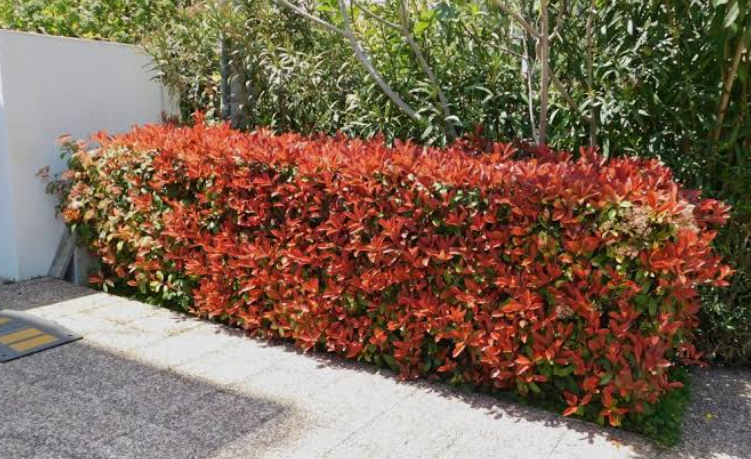
Red Tip Photinia
Red tip photinia produces brilliant bronze-red new growth at the branch tips that fades to glossy green over 2 to 4 weeks, a flush that repeats several times through the growing season, especially after pruning. Its considerable susceptibility to a serious fungal leaf spot disease has somewhat tempered its once-enormous popularity as a hedge plant.
It thrives in full sun to light shade and well-drained soil, with good air circulation between plants helping reduce disease pressure considerably. Its dramatic, repeating color flush remains a genuine draw for gardeners willing to manage the disease risk.
Pieris ‘Mountain Fire’
Pieris ‘Mountain Fire’ produces vivid red new growth each spring that gradually matures to glossy dark green, paired with drooping clusters of small white, urn-shaped flowers. Its evergreen structure means the plant offers year-round interest even outside its colorful spring flush.
It thrives in partial shade and acidic, well-drained soil, struggling in full, hot sun or alkaline ground. Its considerable spring color display has made it a favorite for a woodland-edge or shade garden setting.
Leucothoe ‘Scarletta’
Leucothoe ‘Scarletta’ produces deep burgundy-red new growth that matures to a glossy dark green, with foliage that often takes on renewed reddish tones again in winter. Its graceful, arching branches give it a soft, cascading form distinct from more upright shrubs on this list.
It thrives in partial to full shade and consistently moist, acidic soil, making it a genuine option for a shadier spot where many other colorful shrubs struggle. Its multi-season color shifts have made it a popular choice for extending foliage interest well beyond spring alone.
Nandina
Nandina, also called heavenly bamboo despite not being a true bamboo, produces reddish new growth in spring and often turns a vivid red again in fall and winter, giving it 2 distinct seasonal color displays from the same evergreen plant. Its fine, airy, bamboo-like foliage texture sets it apart from the broader leaves of most other shrubs on this list.
It thrives in full sun to partial shade and tolerates a wide range of soil conditions, including considerable drought once established. Its tendency to spread by seed has made it locally invasive in some regions, so checking local guidance before planting is worthwhile.
Spirea ‘Double Play Red’
Spirea ‘Double Play Red’ produces reddish new growth that contrasts against its blue-green mature foliage, topped with clusters of small red flowers through much of summer. Its compact, mounded habit makes it a practical choice for a smaller border or mass planting.
It thrives in full sun and well-drained soil, blooming most reliably with plenty of direct light. Its combination of colorful new growth and extended summer bloom has made it a popular low-maintenance landscaping choice.
Shrubs With Brilliant Red Fall Foliage
Burning Bush
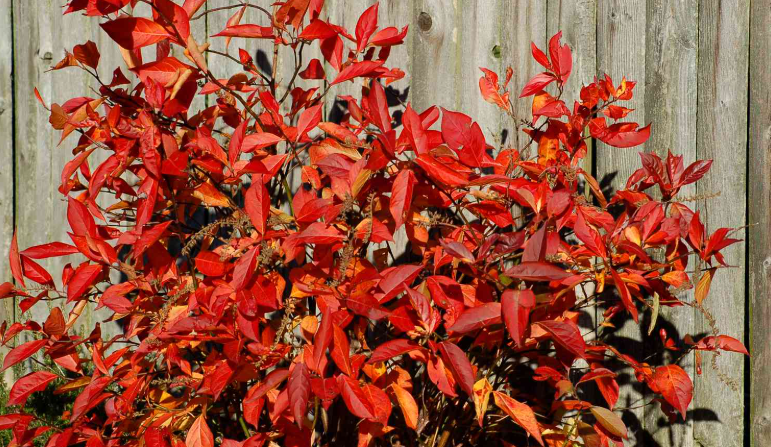
Burning bush produces some of the most intensely saturated red fall foliage of any widely planted landscape shrub, a display so vivid it’s given the plant its common name. Its considerable invasive tendency in parts of the eastern United States has led many states to restrict or discourage new plantings.
It thrives in full sun to partial shade and a wide range of soil conditions, which is part of why it spread so successfully beyond cultivation in the first place. Checking local invasive species regulations before planting is genuinely essential given its documented ecological impact in several regions.
Virginia Sweetspire
Virginia sweetspire produces fragrant white flower spikes in early summer, followed by foliage that turns a brilliant red to burgundy in fall, often persisting on the plant later into the season than many other shrubs. Its native status across much of the eastern United States has made it an increasingly popular alternative to non-native burning bush specifically for that fall color.
It thrives in full sun to partial shade and tolerates both wet and average soil conditions. Its genuine value as a native substitute for a more problematic introduced shrub has driven considerable recent interest among native-plant-focused gardeners.
Fothergilla
Fothergilla produces brush-like white spring flowers followed by foliage that turns a genuinely spectacular mix of yellow, orange, and red in fall, often displaying all 3 colors on the same plant at once. Its native range across the southeastern United States has made it a favorite for a native woodland garden.
It thrives in full sun to partial shade and acidic, well-drained soil, with the most vivid fall color developing in fuller sun exposure. Its multicolor autumn display sets it apart from shrubs offering just a single fall color.
Oakleaf Hydrangea
Oakleaf hydrangea produces large, oak-shaped leaves that turn a deep red to purple in fall, adding a genuinely dramatic second season of interest beyond its large summer flower panicles. Its exfoliating, cinnamon-colored bark provides a third point of visual interest once the leaves drop.
It thrives in partial shade and moist, well-drained soil, tolerating more shade than many other shrubs grown primarily for fall color. Its native status in the southeastern United States has made it a popular choice for a woodland-edge planting.
Red Chokeberry
Red chokeberry produces white spring flowers, followed by bright red berries in fall that persist alongside foliage that turns a vivid red at the same time, creating a genuinely striking combined display. Its berries, while technically edible, are notably astringent and more valued for wildlife than human consumption.
It thrives in full sun to partial shade and tolerates both wet and dry soil conditions remarkably well. Its combined fruit and foliage fall display has made it an increasingly popular native shrub for a wildlife garden.
Blueberry
Blueberry shrubs, grown primarily for their edible summer fruit, also put on a genuinely vivid red to burgundy fall foliage display that’s often overlooked given the plant’s more obvious culinary appeal. That dual-purpose value, fruit in summer and foliage color in fall, makes it a practical choice for an edible landscape.
It thrives in full sun and acidic, well-drained soil, requiring 2 varieties for best cross-pollination and fruit set in most cases. Its fall color alone would justify a planting even for a gardener with no particular interest in the berries.
Arrowwood Viburnum
Arrowwood viburnum produces flat clusters of white spring flowers, followed by blue-black berries and foliage that turns a deep red to maroon in fall. Its considerable wildlife value, from pollinators visiting the spring flowers to birds eating the fall berries, has made it a popular native hedging choice.
It thrives in full sun to partial shade and adapts to a wide range of soil conditions. Its reliable fall color and wildlife appeal have made it a genuine workhorse native shrub for a mixed border or informal hedge.
Enkianthus
Enkianthus, also called redvein enkianthus, produces delicate, bell-shaped spring flowers followed by foliage that turns a brilliant red in fall, among the more reliably vivid fall-color shrubs available for a shadier garden spot. Its tiered, horizontal branching habit gives it genuine structural interest even outside its colorful seasons.
It thrives in partial shade and acidic, well-drained soil, similar to the growing conditions favored by rhododendrons and azaleas. Its considerable fall color intensity has made it a favorite among gardeners specifically building a woodland-style planting.
Summersweet
Summersweet produces fragrant white or pink flower spikes in mid-to-late summer, a genuinely valuable bloom period when many other shrubs have already finished flowering, followed by foliage that turns yellow to a warm reddish-orange in fall. Its fragrance alone draws considerable pollinator activity during its bloom window.
It thrives in partial shade and moist, even wet, soil, tolerating boggy conditions better than most other fall-color shrubs on this list. Its combination of summer fragrance and fall color has made it a popular choice for a damp, shaded garden spot.
Dwarf Fothergilla
Dwarf fothergilla offers the same brush-like spring flowers and multicolor fall foliage display as standard fothergilla, scaled down to a considerably more compact size suited to a smaller garden. Its fall color typically runs through similar yellow, orange, and red tones as its larger relative.
It thrives in full sun to partial shade and acidic, well-drained soil, with fuller sun generally producing more vivid fall color. Its manageable size has made it a practical choice where full-sized fothergilla would be too large.
Warm-Climate Shrubs With Red or Coppery Foliage
Copper Plant
Copper plant produces large, vividly mottled leaves in shades of copper, red, orange, and bronze, among the most dramatically colored foliage of any shrub grown in a warm, frost-free climate. Its considerable color intensity has made it a popular choice for a tropical-style garden bed.
It thrives in full sun to partial shade and warm, humid conditions, generally grown as an annual or houseplant outside genuinely tropical and subtropical climates. Its bold, almost painterly leaf coloring sets it apart from the more subdued purple-red tones typical of temperate shrubs.
Red Shield Hibiscus
Red shield hibiscus produces deeply lobed, maple-like leaves in a rich burgundy-red shade, grown primarily for its striking foliage rather than its modest hibiscus flowers. Its considerable foliage color intensity has made it a popular filler plant in a mixed annual bed even in climates too cold for it to survive winter.
It thrives in full sun and well-drained soil, growing quickly enough during a single warm season to make a real visual impact even when treated as an annual. Its tropical origin means it needs genuine warmth to perform at its best.
Red Cordyline
Red cordyline produces long, strappy leaves in deep burgundy to red tones, adding a bold, architectural, almost spiky texture distinct from the softer foliage shapes of most other shrubs on this list. Its considerable visual drama has made it a popular container and accent plant in warm climates.
It thrives in full sun to partial shade and well-drained soil, tolerating considerable heat once established. Its striking form and color have made it a favorite for adding a tropical accent to a patio or poolside planting.
Purple Beech
Purple beech, particularly dwarf and shrub-form selections, offers the same deep purple foliage as the full-sized tree in a more manageable package suited to a smaller landscape. Its considerable color intensity holds well through the growing season before the leaves eventually drop in fall.
It thrives in full sun to partial shade and rich, well-drained soil, developing its deepest purple color with adequate direct sunlight. Its refined, elegant foliage color has made it a favorite for a more formal garden setting.
Red-Leaf Crape Myrtle
Red-leaf crape myrtle cultivars combine the plant’s classic summer flower display with foliage carrying a genuine reddish-purple tint throughout the growing season, a considerable departure from the plain green foliage of most standard crape myrtle varieties. Its dual-season appeal, colorful leaves plus a long summer bloom period, has made these cultivars increasingly popular.
It thrives in full sun and well-drained soil, flowering most prolifically with at least 6 hours of direct light. Its combination of foliage and flower color has made it a standout choice among the many crape myrtle varieties now available.
Key Takeaways
- Red-leaved shrubs can display foliage in shades ranging from bright scarlet and crimson to burgundy, maroon, and deep purple-red.
- Some shrubs maintain red foliage for much of the year, while others develop their strongest colors during spring, summer, or fall.
- Popular choices include Photinia, Japanese maple, Loropetalum, barberry, and smoke bush, each offering different leaf shapes, sizes, and growth habits.
- Sunlight can strongly influence foliage color, with many red-leaved varieties developing deeper or more vibrant tones in suitable light.
- These shrubs can be used as hedges, foundation plants, borders, specimen plants, privacy screens, and colorful landscape accents.
- Growing conditions vary by species, so consider hardiness zone, soil type, moisture, sunlight, mature size, and pruning needs before choosing a red-leaved shrub.