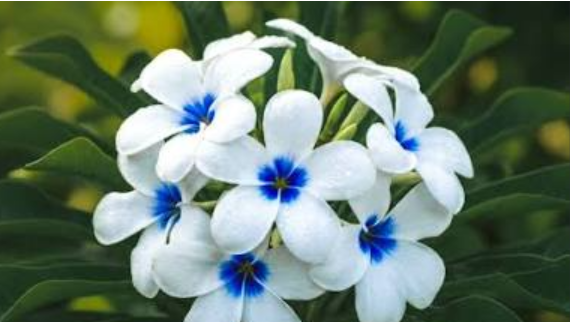
Flowers with blue centers represent a genuinely more deliberate visual investment than a white or yellow center might, since true blue pigment is already one of the rarer achievements in the plant kingdom, built from anthocyanin shifted toward blue through a subtle pH change within the petal’s own cells rather than any separate blue pigment. Spending that genuinely costly pigment specifically on a small central marking, rather than across the entire bloom, suggests the pattern is doing real work as a nectar guide rather than existing purely for visual flourish.
It’s worth being upfront that several of the flowers on this list show that blue-centered pattern in specific cultivars rather than as a universal trait running through the entire species, since flower breeders have often selected and intensified a naturally occurring blue eye that only appears faintly, or not at all, in a plant’s more common varieties. Checking the specific variety name before buying is genuinely worth doing if a distinct blue center is the whole reason for choosing a particular flower.
The pattern also shows up through a few genuinely different flower structures rather than one single mechanism. Some, like cornflower, achieve their blue center through a simple difference in shade between the outer ray florets and the inner disc florets of the same composite bloom. Others, like passionflower, build an elaborate separate structure called a corona specifically to display that banded blue coloring, a considerably more architecturally complex approach to the same basic visual effect.
The Missouri Botanical Garden’s plant finder database documents bloom color pattern and cultivar variation for the vast majority of species covered here. What follows covers 16 flowers with blue centers.
Cape Daisy
Cape daisy, also called osteospermum, produces a genuinely distinct blue-purple ring near the center of certain varieties, contrasting sharply against considerably lighter white or pale outer petals. Its considerable heat tolerance and long bloom season have made it a popular choice for a sunny border or container regardless of the specific center pattern chosen.
It thrives in full sun and well-drained soil, blooming most prolifically during the cooler shoulder seasons of spring and fall.
Cornflower
Cornflower produces a genuinely deeper, more saturated blue in its central disc florets compared to the lighter blue of its outer ray florets, a subtle 2-tone effect visible on close inspection of the composite bloom. Its long history as a wildflower and cut flower favorite reflects both its considerable charm and its remarkably low-maintenance nature.
It thrives in full sun and average soil, often self-seeding readily enough to return reliably the following season. The University of Illinois Extension’s plant biology resources documents the anthocyanin-based pH mechanism behind true-blue pigmentation in composite flowers like this one.
Nigella
Nigella, also called love-in-a-mist, produces a genuinely distinctive blue-toned central structure formed by its clustered stamens and developing seed pod, standing out against the considerably more delicate, feathery blue or white petals surrounding it. Its unusual, almost otherworldly bloom form has made it a longtime cottage garden favorite.
It thrives in full sun and well-drained soil, often self-seeding readily enough to naturalize gently throughout a favorable bed.
Torenia
Torenia, also called wishbone flower, produces a genuinely striking dark blue-purple blotch at the center of its bloom, contrasting sharply against considerably lighter blue, pink, or white petals surrounding it. Its excellent shade tolerance has made it one of the more reliable flowering options for exactly the spots where fewer other bedding plants perform well.
It thrives in partial to full shade and consistently moist soil, blooming continuously through a long summer season with minimal maintenance.
China Aster
China aster, in certain varieties, produces a genuinely darker blue center disc contrasting against lighter blue or lavender outer petals, a subtle gradient effect similar in principle to cornflower’s 2-tone structure. Its considerable range of available colors and forms has made it a popular late-summer and fall cut flower.
It thrives in full sun and well-drained, fertile soil, rewarding consistent moisture with a genuinely more prolific bloom display.
Bellflower
Bellflower, in certain white-flowered varieties, produces a genuinely distinct blue-tinted throat at the base of its bell-shaped bloom, a subtle contrast against the considerably paler surrounding petal color. Its delicate, nodding flower form and considerable variety of available species have made it a longtime cottage garden and rock garden favorite.
It tolerates a range of soil conditions and full sun to partial shade, thriving with minimal care once established.
Poppy Anemone
Poppy anemone produces a genuinely striking dark center, often appearing distinctly blue-black, at the heart of its vividly colored red, white, or pink petals, one of the more dramatic center-to-edge contrasts on this entire list. Its considerable popularity as both a garden and cut flower reflects that bold visual impact.
It grows from a tuber planted in fall in a mild climate, its considerable color range making it a versatile choice for a spring bulb display. The Missouri Botanical Garden’s plant finder database documents the dark central disc pattern common across poppy anemone’s many cultivated color forms.
Streptocarpus
Streptocarpus, also called Cape primrose, produces a genuinely distinctive blue or purple-toned throat pattern radiating from the center of its bloom, contrasting against considerably paler white, pink, or lavender petals. Its status as a popular flowering houseplant has made this center pattern a familiar sight on many windowsills.
It thrives in bright, indirect light and consistently moist, well-drained soil, blooming nearly continuously indoors under the right conditions. The Royal Horticultural Society’s plant science resources documents streptocarpus throat pattern variation across its many commercially available cultivars.
Clematis
Clematis, in certain white-flowered varieties, produces a genuinely prominent cluster of blue-toned stamens at the bloom’s center, creating a visible colored focal point against the considerably more neutral white petals surrounding it. Its vigorous climbing habit and considerable bloom size have made it one of the most popular flowering vines for a trellis or arbor.
It tolerates full sun to the flower with shaded roots, a specific combination often summarized as “head in the sun, feet in the shade.”
Delphinium
Delphinium, in certain varieties, produces a small central cluster of petals called a “bee,” genuinely appearing in a contrasting blue-black or deep blue shade against considerably paler white or pale blue surrounding petals. Its considerable height and vertical form provide real structural interest in a mixed border regardless of the specific center pattern chosen.
It thrives in full sun and rich, well-drained soil, demanding staking in a windy site given its considerable height and top-heavy bloom spikes.
Verbena
Verbena, in certain bicolor varieties, produces a genuinely distinct blue-purple eye at each individual flower’s center against considerably paler white surrounding color, a reversed version of the more common white-eyed verbena pattern. Its low, spreading habit makes that center pattern especially visible en masse across a groundcover planting.
It thrives in full sun and well-drained soil, tolerating heat and drought considerably better than many other nectar-rich bedding plants.
Petunia
Petunia, in certain star-patterned or picotee varieties, produces a genuinely distinct blue-purple center against considerably paler white petal edges, a striking reversal of the more commonly seen white-throated petunia pattern. Its long bloom season and reliable performance in both beds and containers have made it a garden staple regardless of the specific color pattern chosen.
It thrives in full sun and well-drained soil, blooming continuously through summer with regular deadheading.
Freesia
Freesia, in certain blue and white varieties, produces a genuinely distinct blue-toned throat at the base of its trumpet-shaped bloom, a subtle but real contrast against the considerably paler petal color spreading outward. Its remarkable fragrance has made it a longtime favorite for cut flower arrangements regardless of the specific center pattern.
It grows from a corm planted in fall in a mild climate, its considerable fragrance developing most fully as the flower matures.
Siberian Iris
Siberian iris, in certain varieties, produces a genuinely distinct blue signal patch at the center of its bloom, standing out against considerably paler white or cream-colored surrounding petals. Its narrow, grass-like foliage and considerable cold hardiness have made it a popular, low-maintenance perennial well beyond its striking center pattern.
It tolerates a range of soil conditions, including consistently moist sites many other iris types can’t handle, thriving in full sun to light shade.
Passionflower
Passionflower produces a genuinely elaborate corona structure at its center, its fine, thread-like filaments frequently banded in deep blue against a considerably paler white or lavender base color. Its intricate, almost otherworldly appearance has made it one of the most visually striking flowers a home gardener can grow on a simple trellis.
It climbs vigorously given a trellis, tolerating full sun and well-drained soil in a warm to temperate climate. The University of Florida IFAS Extension’s flowering vine resources documents the corona structure’s function in passionflower’s pollination biology.
Gentian
Gentian, in certain varieties, produces a genuinely deeper, more saturated blue toward the throat of its trumpet-shaped bloom compared to the somewhat lighter blue along the petal edges, a subtle gradient adding real visual depth to an already intensely colored flower. Its considerable difficulty to cultivate successfully has made a thriving gentian planting something of a genuine point of pride among alpine and rock garden enthusiasts.
It tolerates cool conditions and consistently moist, well-drained soil, thriving in exactly the alpine or mountainous conditions many species naturally occupy.
Key Takeaways
Flowers with blue centers can create a distinctive contrast between the center of the bloom and its surrounding petals. They occur in different flower colors, shapes, and sizes, including annuals, perennials, wildflowers, and ornamental garden plants.
Identifying flowers with blue centers is easier by examining several features together. Petal color and shape, the appearance of the center, leaf arrangement, plant height, growth habit, and blooming season can help distinguish similar-looking flowers.
When choosing flowers with blue centers for a garden, consider the local climate, sunlight, soil type, moisture, and available space. Combining plants with different bloom periods and growth habits can provide seasonal color and visual variety.