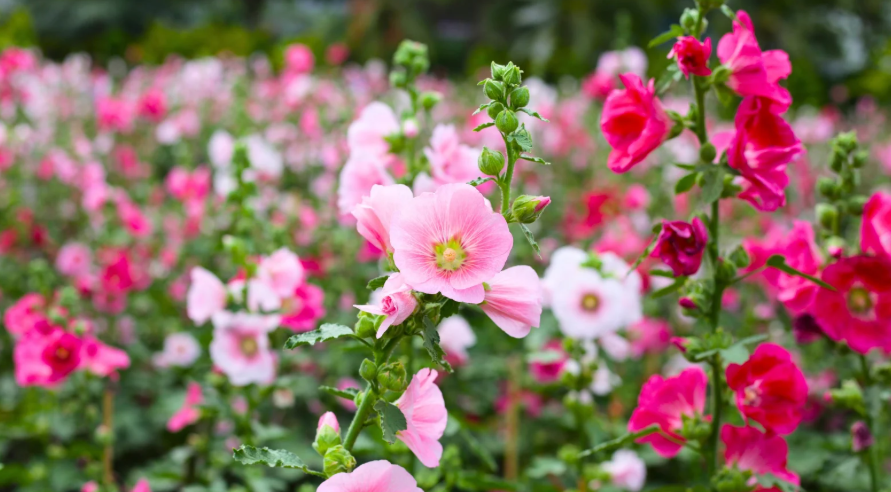
Hollyhocks are among the most iconic cottage garden flowers, instantly recognizable for their towering flower spikes that can rise well above head height, lined with large, papery blooms from the base of the stalk nearly to the tip. Belonging to the genus Alcea, hollyhocks are native to Southwestern and Central Asia, particularly the regions spanning modern-day Turkey and China, and were introduced to European gardens centuries ago, where they became a defining feature of traditional cottage-style plantings. Breeding over many generations has produced a wide array of Types of Hollyhock, ranging from classic single-flowered forms closely resembling the wild species to elaborate, ruffled double blooms that resemble peonies, spanning nearly every color in the garden palette except true blue. Their old-fashioned charm and dramatic height continue to make them a favorite for fence lines, cottage borders, and backdrop plantings.
Hollyhocks are most often grown as biennials, meaning they produce only foliage in their first year before sending up their tall flower spikes and blooming in their second year, though some modern cultivars have been bred to flower reliably in their first year from an early start indoors. A number of species within the Alcea genus contribute to the breeding of ornamental hollyhocks, including Alcea rosea, the most widely cultivated species, along with Alcea rugosa and Alcea ficifolia, both valued for their improved rust resistance compared to traditional garden hollyhocks. Flower forms vary considerably across cultivars, from simple, five-petaled single blooms typically three to five inches across to fully double, ruffled forms that can appear almost spherical, sometimes referred to informally as powder-puff types.
Hollyhocks generally thrive in full sun and well-draining soil, and because of their considerable height, often reaching five to eight feet or more, they perform best planted against a fence, wall, or other structure that offers some shelter from strong wind. Most types require minimal fertilizing and are relatively drought-tolerant once established, though consistent moisture during the flowering period supports a fuller, longer-lasting bloom display. Because hollyhocks are prone to self-seeding readily, many gardeners find that a planting, once established, will continue to return and spread through volunteer seedlings for years, even though individual plants are technically biennial or short-lived perennial in nature.
The many types of hollyhock available today reflect a long tradition of both deliberate breeding and naturalized garden selection, resulting in variation not only in color but also in flower form, plant height, and disease resistance, particularly to the rust fungus that has historically plagued the species. This guide profiles forty types of hollyhock, noting their origin and typical statistics such as height, bloom size, and flower form where available, to help gardeners choose the right varieties for cottage borders, backdrop plantings, and traditional garden displays.
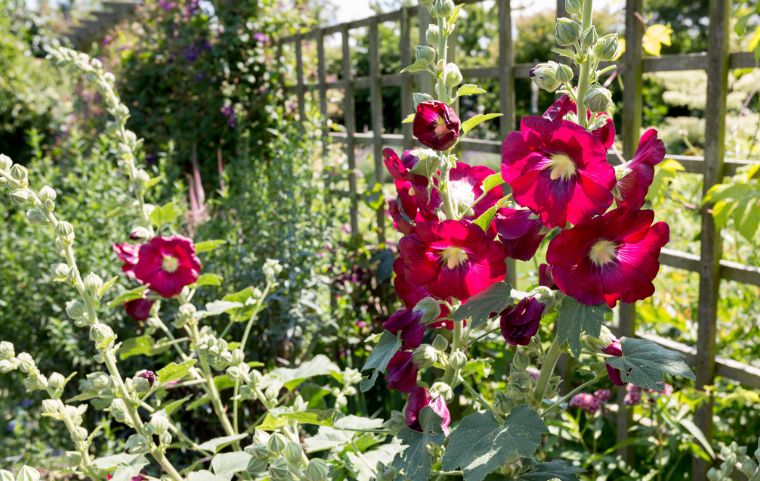
Also Read: How To Grow And Care For Hollyhock Flowers
Varieties of Hollyhock Flowers
1. Alcea rosea
Alcea rosea, commonly called the common hollyhock, is the foundational species behind the vast majority of cultivated hollyhock varieties, native to regions spanning Turkey and Central Asia. It typically grows five to eight feet tall, producing single, saucer-shaped blooms three to four inches across in shades of pink, white, red, and purple along a tall, unbranched flower spike. As the parent species for most modern hybrids, it remains widely grown in its own right for its classic, old-fashioned cottage garden appearance.
2. Nigra (Watchman)
Nigra, also sold under the name Watchman, is a striking single-flowered variety producing deep maroon-black blooms with a subtle yellow center, typically measuring three to four inches across on stems reaching six to eight feet tall. Its dramatically dark, near-black petal color makes it one of the most distinctive and sought-after hollyhock varieties. Its dark, moody coloring pairs strikingly with lighter-colored companion plantings in a mixed border.
3. Chater’s Double Salmon
Chater’s Double Salmon is part of the historic Chater’s Double series, first developed in England in the nineteenth century, producing fully double, ruffled salmon-pink blooms typically three to four inches across on stems reaching six to seven feet tall. Its dense, peony-like flower form set a new standard for double hollyhock breeding when the series was first introduced. Its soft coral-pink tone remains a popular choice for romantic cottage garden color schemes.
4. Chater’s Double Yellow
Chater’s Double Yellow produces fully double, buttery yellow blooms typically three to four inches across on tall stems reaching six to seven feet, sharing the same historic English breeding origin as the rest of the Chater’s Double series. Its bright, cheerful color adds a sunny accent to mixed cottage garden borders. Its ruffled, layered petal form gives it a notably fuller appearance than single-flowered hollyhock types.
5. Chater’s Double Scarlet
Chater’s Double Scarlet features vivid, fully double scarlet-red blooms typically three to four inches across on stems six to seven feet tall. Its bold, saturated color makes it one of the more eye-catching selections within the Chater’s Double series. Its dense, ruffled petals give the bloom a rich, textured appearance well suited to bold garden color schemes.
6. Chater’s Double White
Chater’s Double White produces fully double, pure white blooms typically three to four inches across on stems six to seven feet tall, offering a classic, elegant option within the historic Chater’s series. Its crisp white color pairs well with almost any other garden color palette. Its full, ruffled form gives it a particularly soft, romantic quality among white-flowered garden plants.
7. Chater’s Double Violet
Chater’s Double Violet features rich, fully double violet-purple blooms typically three to four inches across on stems six to seven feet tall. Its deep, saturated purple tone offers a striking contrast against lighter-colored companion plants in the garden. Its dense, layered petal form is characteristic of the broader Chater’s Double breeding line.
8. Chater’s Double Apricot
Chater’s Double Apricot produces soft, warm apricot-toned, fully double blooms typically three to four inches across on stems six to seven feet tall. Its gentle, warm coloring makes it a popular choice for soft pastel garden schemes. Its ruffled, full flower form shares the same historic origin as the rest of the Chater’s Double series.
9. Chater’s Double Rose
Chater’s Double Rose features rich rose-pink, fully double blooms typically three to four inches across on stems six to seven feet tall, another classic selection within the long-established Chater’s Double breeding line. Its vivid pink coloring makes it a popular choice for bold, romantic cottage garden plantings. Its dense, layered petals give it a particularly full, peony-like appearance.
10. Chater’s Double Mixed
Chater’s Double Mixed offers a full spectrum of colors from within the Chater’s Double series, including pinks, reds, yellows, whites, and purples, all sharing the same fully double, ruffled flower form typically three to four inches across on stems six to seven feet tall. This mixed seed strain allows gardeners to enjoy the full range of Chater’s colors within a single planting. Its historic English origin and reliable double form have kept it popular for well over a century.
11. Halo Apricot
Halo Apricot is part of the modern Halo series, producing single blooms in soft apricot tones with a distinctive darker “halo” ring at the center, typically measuring four to five inches across on more compact stems reaching four to five feet tall. Bred to offer a shorter, sturdier plant than traditional hollyhocks, the Halo series is especially popular for smaller garden spaces. Its soft coloring and eye-catching central pattern set it apart from solid-colored single varieties.
12. Halo Blush
Halo Blush features soft pink petals with a deeper rose “halo” marking at the center, typically measuring four to five inches across on compact stems four to five feet tall. Like other Halo series varieties, its shorter stature makes it more resistant to toppling in windy garden locations. Its gentle coloring and distinctive center pattern make it a popular choice for smaller cottage borders.
13. Halo Cerise
Halo Cerise produces vivid cerise-pink blooms with a darker central halo marking, typically four to five inches across on compact stems four to five feet tall. Its bold, saturated color combined with its more manageable height has made it a popular modern alternative to taller traditional hollyhock types. Its striking center pattern adds visual depth to each individual bloom.
Also Read: How To Grow Hollyhock From Seeds
14. Halo White
Halo White features crisp white petals accented by a soft lavender or pink halo marking at the center, typically measuring four to five inches across on compact stems four to five feet tall. Its clean coloring combined with a subtle patterned center gives it more visual interest than a purely solid white bloom. Its shorter, sturdier growth habit makes it well suited to exposed garden locations.
15. Halo Lavender
Halo Lavender produces soft lavender-purple blooms with a deeper purple halo at the center, typically four to five inches across on compact stems four to five feet tall. Its gentle, cool-toned coloring pairs especially well with silver-foliage companion plants in a mixed border. Its compact height, consistent with the broader Halo series, makes it a practical choice for smaller garden spaces.
16. Halo Red
Halo Red features vivid red petals with a darker, near-black halo marking at the center, typically measuring four to five inches across on compact stems four to five feet tall. Its bold coloring and striking central pattern make it one of the more dramatic selections within the Halo series. Its manageable height offers a sturdier alternative to taller traditional red hollyhock varieties.
17. Halo Salmon
Halo Salmon produces soft salmon-pink blooms with a deeper rose-toned halo at the center, typically four to five inches across on compact stems four to five feet tall. Its warm, gentle coloring makes it a popular choice for soft, warm-toned cottage garden palettes. Its compact growth habit, shared across the Halo series, makes it easier to manage than taller heirloom hollyhock types.
18. Queeny Purple
Queeny Purple is part of a compact, early-flowering series bred to bloom in its first year from seed rather than requiring a full biennial cycle, producing semi-double purple blooms typically three inches across on stems reaching thirty to thirty-six inches tall. Its notably shorter stature and faster bloom time make it a practical option for gardeners who want hollyhock flowers without the typical two-year wait. Its manageable size also suits container growing better than most traditional tall varieties.
19. Queeny Lime
Queeny Lime features unusual soft lime-green, semi-double blooms typically three inches across on compact, first-year-flowering stems thirty to thirty-six inches tall. Like other Queeny series varieties, it offers a much shorter growing timeline than traditional biennial hollyhocks. Its unusual green coloring makes it a popular choice for modern, unconventional garden palettes.
20. Queeny White
Queeny White produces clean white, semi-double blooms typically three inches across on compact stems thirty to thirty-six inches tall, sharing the same fast, first-year-flowering habit as the rest of the Queeny series. Its shorter stature makes it well suited to smaller garden beds and containers. Its reliable early bloom time offers a practical alternative for gardeners unwilling to wait two years for flowers.
21. Peaches ‘n’ Dreams
Peaches ‘n’ Dreams is a fully double variety producing soft, warm peach-toned, ruffled blooms typically three to four inches across on tall stems six to seven feet, closely related to the historic Chater’s Double breeding line. Its gentle, warm coloring and full, peony-like form have made it a popular choice for romantic, soft-toned garden schemes. Its dense, layered petals give each bloom a particularly lush, textured appearance.
22. Spring Celebrities Purple
Spring Celebrities Purple is part of a compact, early-blooming series producing single to semi-double purple flowers typically three inches across on shorter stems reaching twenty-four to thirty inches tall. Bred for a more compact garden footprint and quicker bloom time than traditional tall hollyhocks, it suits smaller borders and container plantings. Its rich purple coloring makes it a popular choice within the broader Spring Celebrities line.
23. Spring Celebrities White
Spring Celebrities White produces clean white, single to semi-double blooms typically three inches across on compact stems twenty-four to thirty inches tall, sharing the same shorter growth habit as the rest of its series. Its manageable size makes it an accessible choice for gardeners with limited space. Its crisp white color pairs well with the other more vividly colored Spring Celebrities selections.
24. Spring Celebrities Pink
Spring Celebrities Pink features soft pink, single to semi-double blooms typically three inches across on compact stems twenty-four to thirty inches tall. Its gentle coloring and manageable height make it a versatile choice for smaller cottage-style borders. Its relatively fast bloom time, consistent with the broader series, appeals to gardeners seeking quicker results than traditional biennial hollyhocks provide.
25. Indian Spring
Indian Spring is an heirloom variety producing single to semi-double blooms in a broad mix of pastel colors, typically three to four inches across on tall stems five to six feet, notable for reliably blooming in its first year from an early spring sowing. Its relatively fast bloom time compared to fully biennial types has kept it popular among gardeners for many decades. Its soft, varied color mix adds gentle diversity to a mixed cottage garden planting.
26. Summer Carnival Mixed
Summer Carnival Mixed produces fully double, ruffled blooms in a wide range of vivid colors, typically three to four inches across on tall stems five to six feet, blooming somewhat earlier than many older heirloom double varieties. Its full, festive color mix and dense double flower form make it a popular all-purpose choice for colorful garden borders. Its relatively strong stems help it perform well even in moderately exposed planting locations.
27. Majorette Mixed
Majorette Mixed is a compact, fully double variety producing ruffled blooms in a broad color mix, typically three inches across on notably short stems reaching only twenty-four to thirty inches tall. Its unusually short stature for a double-flowered hollyhock makes it well suited to smaller gardens, containers, and windy locations where taller varieties might topple. Its full, frilly bloom form gives it a distinctly different look from most compact single-flowered types.
28. Powder Puffs Mixed
Powder Puffs Mixed features fully double, densely ruffled blooms in a wide color range, typically three to four inches across on tall stems five to six feet, with a flower form so full it often obscures the individual petal structure entirely. Its extremely dense, spherical bloom shape has made it one of the most visually distinctive double hollyhock strains available. Its dramatic texture adds strong visual interest to the back of a mixed perennial border.
29. Blackcurrant Whirl
Blackcurrant Whirl produces striking, semi-double blooms in deep purple-black tones with contrasting lighter centers, typically three to four inches across on stems five to six feet tall. Its unusual, richly saturated coloring places it among the more dramatic and sought-after modern hollyhock introductions. Its moody, dark palette pairs especially well with silver or white companion plantings.
30. Alcea rugosa
Alcea rugosa, native to regions of Russia and Central Asia, is valued among hollyhock species for its notably improved resistance to rust disease compared to Alcea rosea, producing pale yellow, single blooms typically three inches across on stems reaching five to six feet tall. Its disease resistance has made it an important parent species in breeding programs aimed at developing sturdier, more rust-resistant hybrid hollyhocks. Its soft yellow coloring and clean foliage make it a practical choice for gardeners in regions where rust is a persistent problem.
31. Alcea ficifolia
Alcea ficifolia, sometimes called the fig-leaved hollyhock for its distinctively lobed foliage, is native to Siberia and known for both good rust resistance and strong cold hardiness, producing single blooms typically three to four inches across in shades of yellow, orange, and red on stems five to seven feet tall. Its foliage shape sets it apart visually from the rounder leaves typical of Alcea rosea. Its hardiness has made it a valuable species for gardeners in colder climates seeking reliable hollyhock performance.
32. Alcea pallida
Alcea pallida, native to southeastern Europe and parts of the Balkans, produces soft pink, single blooms typically two to three inches across on stems reaching four to five feet tall, somewhat shorter than many other cultivated hollyhock types. Its more modest size and delicate coloring give it a subtler presence than many showier hybrid varieties. Its species-level hardiness makes it a useful parent plant in ongoing hollyhock breeding efforts.
33. Alcea setosa
Alcea setosa, native to the eastern Mediterranean and parts of the Middle East, produces single, pale pink to lavender blooms typically two to three inches across on bristly, textured stems reaching four to six feet tall. Its distinctly hairy, or setose, stem and foliage texture give the species its common descriptive name. Its regional heat and drought tolerance make it a useful species for breeding hollyhocks suited to hot, dry climates.
34. Creme de Cassis
Creme de Cassis produces striking bicolor blooms with lighter cream-colored centers deepening into rich wine-purple edges, typically semi-double and three to four inches across on tall stems five to six feet. Its distinctive gradient coloring, reminiscent of the blackcurrant liqueur for which it is named, sets it apart from more solidly colored hollyhock varieties. Its rich, unusual palette has made it a popular choice among gardeners seeking a more contemporary hollyhock selection.
35. Mars Magic
Mars Magic features vivid, deep red single blooms typically three to four inches across on tall stems five to seven feet, valued for its bold, saturated color and vigorous growth habit. Its rich red tone makes it a popular alternative to older heirloom red hollyhock varieties. Its strong, upright stems generally hold up well even in moderately exposed garden locations.
36. Sunshine Mix
Sunshine Mix offers a bright collection of single to semi-double blooms in warm yellow, orange, and gold tones, typically three to four inches across on tall stems five to six feet. Its cheerful, sun-toned color palette makes it a popular choice for warm-themed cottage garden borders. Its mixed seed strain provides variation in exact shade while maintaining a consistently warm overall color range.
37. Old Barnyard Mix
Old Barnyard Mix is an heirloom seed strain preserving the informal, naturalized look of hollyhocks traditionally grown along farm fences and outbuildings, producing single blooms typically three inches across in a broad mix of colors on tall stems six to eight feet. Its rustic, old-fashioned character and reliable self-seeding habit have made it popular among gardeners seeking a more historically authentic hollyhock planting. Its tall, informal growth habit suits naturalized cottage garden and farmhouse-style landscaping particularly well.
38. Single Mixed
Single Mixed is a widely available, open-pollinated seed strain producing classic single blooms typically three to four inches across in a broad range of colors on tall stems five to seven feet. As one of the most traditional and economical hollyhock seed offerings, it remains a popular choice for gardeners seeking an authentic, old-fashioned look without the cost of named cultivars. Its genetic diversity from open pollination often results in subtle variation in color and form from plant to plant.
39. Country Garden Mix
Country Garden Mix offers a blend of both single and semi-double blooms in a wide range of pastel and jewel-toned colors, typically three to four inches across on tall stems five to seven feet. Its varied flower forms and colors give it a particularly informal, cottage-style appearance well suited to relaxed garden borders. Its mixed seed strain makes it a popular, budget-friendly choice for filling out the back of a perennial bed.
40. Everlasting Mix
Everlasting Mix is a modern seed strain bred for extended bloom duration compared to older heirloom types, producing single to semi-double flowers typically three to four inches across in a wide color range on tall stems five to six feet. Its longer flowering window, often continuing later into the season than traditional hollyhocks, has made it popular among gardeners seeking prolonged color from their plantings. Its mixed colors and extended bloom time make it a versatile choice for late-summer garden interest.