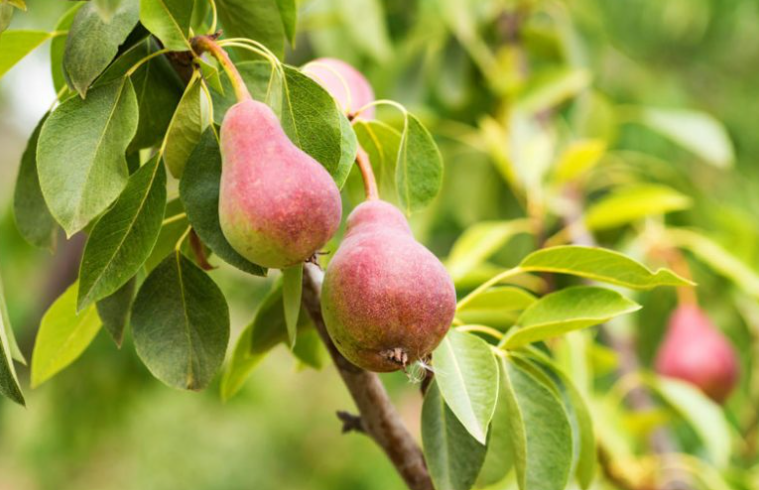
A pear behaves nothing like an apple once it’s off the tree, and treating it the same way is the fastest route to a mealy, disappointing piece of fruit. According to Oregon State University Extension, pears should be picked when mature in size but not yet fully ripe, since fruit picked too soon will shrivel in storage while overmature fruit turns coarse, grainy, and often rotten on the inside. Winter varieties like Anjou, Comice, and Bosc specifically need a period of cool storage before they ripen correctly, with Anjou requiring 45 to 60 days in the 35 to 40 degree Fahrenheit range, Bosc needing 45 days, and Comice ripening in as little as 30.
That storage requirement is part of why pears, unlike most other tree fruit, are almost always sold and eaten before they’re actually ready, ripening from the inside out in a way that makes a hard grocery-store pear entirely normal rather than a sign of poor quality. According to Oregon State University’s Extension archives, the 4 main varieties grown commercially in the Pacific Northwest, Bartlett, Anjou, Bosc, and Comice, will all satisfactorily cross-pollinate with one another, while Seckel is notably incompatible with Bartlett pollen and requires a different pollinizer entirely.
Beyond the small handful of varieties found in most grocery stores, pears span a genuinely large range of origins, from centuries-old European heirlooms to Asian varieties with an entirely different texture and eating experience. According to Utah State University Extension, Asian varieties like Nijisseiki ripen with a sweet, slightly tart flavor and a crisp texture closer to an apple than to a traditional European pear, a genuinely different eating experience from the soft, buttery flesh most people associate with the fruit.
These pears span backyard orchards, commercial Pacific Northwest growing regions, and centuries-old European breeding programs. What follows covers 40 types of pears, along with where each one grows, its hardiness range, and the growing data that sets it apart.
Bartlett
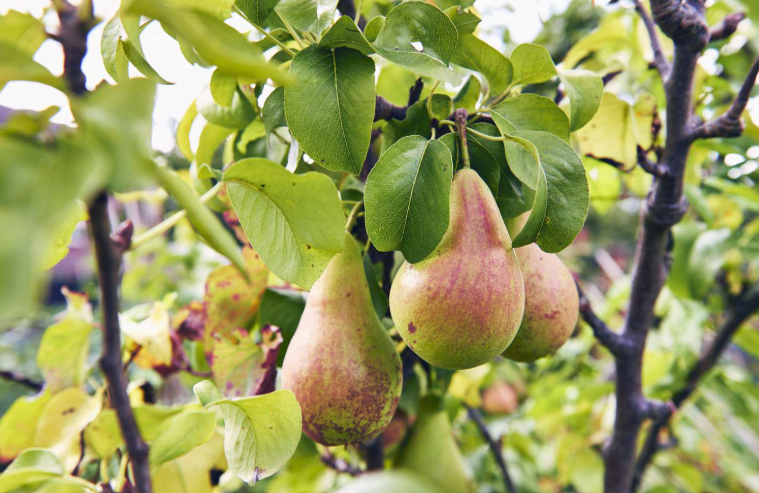
Bartlett is the world’s most popular pear, tolerating hot summers better than many other varieties and reaching high quality even in early-midseason harvest. Its rounded, bell-shaped fruit turns from green to yellow as it ripens, a color change that makes it one of the easier pears to judge for ripeness at a glance.
It tolerates USDA zones 5 through 8 and requires roughly 500 to 600 chill hours below 45 degrees Fahrenheit to break dormancy properly, making it well suited to most temperate American climates. It’s self-fruitful in many regions but produces a heavier crop with a second variety like Bosc or Anjou planted nearby for cross-pollination.
Red Bartlett
Red Bartlett shares the same juicy, classic pear flavor and bell-shaped form as standard Bartlett, distinguished by its blushed to solid red skin rather than the familiar green-to-yellow color change. Its skin color brightens somewhat as it ripens, similar to its green counterpart, though the underlying red tone remains throughout.
It tolerates USDA zones 5 through 8, sharing the same chill hour requirement and general growing needs as standard Bartlett. It benefits from the same cross-pollination partners, typically Bosc or Anjou, to ensure a full fruit set each season.
Anjou
Anjou, also called Green Anjou, is one of the most widely recognized pears in the United States, available nearly year-round thanks to its excellent storage life. Unlike Bartlett, its skin barely changes color as it ripens, making the classic “check the neck” gentle-pressure test the more reliable way to judge whether it’s ready to eat.
It tolerates USDA zones 5 through 9 and requires around 800 to 900 chill hours, a notably higher requirement than Bartlett. According to Oregon State University Extension, it’s a notoriously shy bearer without adequate cross pollination from a compatible variety like Bartlett planted within range.
Red Anjou
Red Anjou carries the same mild flavor and smooth texture as its green counterpart, distinguished by a deep red to burgundy skin that adds visual contrast to a fruit bowl or cheese board. Its skin, like standard Anjou, shows little color change during ripening, so gentle pressure near the stem remains the most reliable ripeness test.
It tolerates USDA zones 5 through 9 with the same 800 to 900 chill hour requirement as green Anjou. It similarly benefits from a nearby Bartlett or Bosc tree to ensure reliable annual fruiting.
Bosc
Bosc is immediately recognizable by its long, tapered neck and warm, bronze-russeted skin, and according to Oregon State University’s Extension archives, the variety originated in Belgium. Its firm, sweet, and notably spicy flavor, often compared to cinnamon or nutmeg, makes it a favorite for baking and poaching rather than eating fresh straight from the tree.
It tolerates USDA zones 5 through 8 and requires roughly 800 to 900 chill hours, ripening fully after about 45 days of proper cool storage. It cross-pollinates well with Bartlett and Anjou, both of which bloom within an overlapping window.
Comice
Comice, sometimes called the Christmas pear for its peak winter season, is widely considered the sweetest and juiciest of all commonly grown pear varieties. According to Oregon State University’s Extension archives, the variety originated in France in 1849 near the city of Angers, and its short, rounded shape with a rough-textured skin belies the remarkably smooth, buttery flesh inside.
It tolerates USDA zones 5 through 9 and requires around 800 chill hours, ripening in as little as 30 days of proper cool storage, the shortest window of the 4 main commercial varieties. It’s not reliably self-fruitful and benefits from a Bartlett or Anjou pollinizer planted nearby.
Seckel
Seckel, sometimes called the sugar pear, is a small, intensely sweet variety that Oregon State University’s Extension archives trace to Pennsylvania in the late 1700s, making it one of the oldest pear varieties still commercially grown in the United States today. Its diminutive size makes it poorly suited to baking or cooking, but its concentrated sweetness has made it a favorite for fresh eating and spiced whole preserves.
It tolerates USDA zones 5 through 8 and needs only around 500 chill hours, making it one of the more flexible varieties for slightly milder winter climates. Unlike most other major varieties, it’s cross-incompatible with Bartlett pollen, requiring a different pollinizer like Anjou instead.
Concorde
Concorde is a specialty pear developed from a cross between Comice and Conference, producing a green fruit with a distinctive vanilla-like flavor unlike most other commonly grown varieties. Its sweet, dessert-like taste has made it a favorite for eating on its own rather than incorporating into a cooked dish.
It tolerates USDA zones 5 through 8 and requires a moderate chill hour accumulation similar to its Comice parent, generally around 700 to 800 hours. It benefits from cross-pollination with another European variety flowering in the same window.
Forelle
Forelle takes its name from the German word for trout, a reference to the small red freckles scattered across its yellow-green skin that resemble the coloring of a rainbow trout. Its dense, slightly coarse flesh carries a sweet, cinnamon-spiced flavor that pairs particularly well with sharp cheese.
It tolerates USDA zones 5 through 8 and requires a moderate 600 to 700 chill hours, placing it between Seckel and the main commercial varieties in cold requirement. It’s best grown with a compatible pollinizer such as Bartlett to ensure consistent annual fruiting.
Clapp’s Favorite
Clapp’s Favorite closely resembles Bartlett in shape and flavor, ripening several days earlier in the season and making it a popular choice for growers wanting an early-season harvest. Its yellow-green skin often develops a red blush on the side most exposed to sunlight.
It tolerates USDA zones 4 through 8 and requires roughly 700 chill hours, slightly more cold-hardy overall than standard Bartlett. It cross-pollinates readily with Bartlett given the overlap in their bloom periods.
Warren
Warren produces a long, narrow, greenish-yellow fruit with exceptionally smooth, buttery flesh and strong resistance to fire blight, a bacterial disease that affects many other pear varieties. Its dessert-quality flavor has made it a favorite among home orchardists specifically seeking a disease-resistant tree without sacrificing eating quality.
It tolerates USDA zones 5 through 9 and requires around 600 to 700 chill hours. Its notable fire blight resistance makes it a reliable choice in the humid, disease-prone growing conditions common throughout the southeastern United States.
Moonglow
Moonglow, a cross between Seckel and Comice, produces medium-sized, short-necked, lightly russeted fruit with a thick skin that reduces insect damage and extends its storage life. Its soft, sweet, juicy flesh contains minimal grit compared to many other pear varieties.
It tolerates USDA zones 4 through 8 and requires roughly 700 chill hours. It shows good resistance to fire blight and is commonly recommended as a pollinizer for other varieties given its reliable, early bloom.
Ayers
Ayers, a cross between Moonglow and Anjou, ripens to a light green color with moderately fine, buttery flesh and a pleasantly mild, subacid flavor. It was developed by the USDA and Ohio State University and shows notably more resistance to fire blight than Seckel.
It tolerates USDA zones 4 through 8 and requires a moderate chill hour accumulation similar to its Moonglow parent. Its strong fire blight resistance makes it a dependable choice for home orchards in the humid eastern United States.
Kieffer
Kieffer produces a large, firm, yellow-green fruit considered an acceptable choice for preserving, though it generally ranks below Bartlett, Bosc, Anjou, and Comice in overall fresh-eating quality. Its exceptional hardiness and disease resistance made it a widely planted variety in home orchards throughout the southern United States for generations.
It tolerates USDA zones 4 through 9 and requires only around 350 to 400 chill hours, among the lowest of any commonly grown pear, which is why it performs so reliably in the warm, humid Deep South. It’s also notably resistant to fire blight, a major advantage in that same growing region.
Magness
Magness produces a medium-sized, greenish-yellow fruit with notably smooth, buttery flesh and strong resistance to fire blight, though it’s largely self-unfruitful and requires a compatible pollinizer to bear well. Its excellent flavor has kept it in circulation among home orchardists despite never achieving wide commercial distribution.
It tolerates USDA zones 5 through 8 and requires roughly 700 chill hours. Because its own pollen is sterile, it needs a separate variety such as Moonglow or Bartlett planted nearby purely to trigger fruit set rather than to pollinate itself.
Starkrimson
Starkrimson produces a solid, deep red fruit with juicy, sweet flesh, offering one of the most vividly colored options among common dessert pear varieties. The classic gentle-pressure “check the neck” method remains the most accurate way to judge its ripeness.
It tolerates USDA zones 5 through 8 and requires around 600 to 700 chill hours, similar to the Clapp’s Favorite lineage it derives from. It’s pollinated by Bartlett, with both varieties sharing a compatible bloom window.
Winter Nelis
Winter Nelis produces a small, round, russeted fruit with a spicy, aromatic flavor that develops fully only after an extended period of cold storage. Its late ripening season and long storage life made it a historically important variety for extending fresh pear availability well into winter before modern refrigeration became widespread.
It tolerates USDA zones 5 through 8 and requires roughly 800 chill hours, similar to Anjou and Bosc. Its notably long storage capacity, often several months longer than Bartlett, made it a valued variety before modern cold-chain shipping existed.
Conference
Conference produces a long, tapering, russeted fruit that ranks among the most widely grown pear varieties throughout the United Kingdom and continental Europe. Its firm, sweet flesh holds its shape well when cooked, making it a favorite for poaching in addition to fresh eating.
It tolerates USDA zones 5 through 8 and requires a moderate 600 to 700 chill hours. It’s partially self-fertile but produces a considerably heavier crop with a compatible pollinizer such as Bartlett or Comice nearby.
Rocha
Rocha, named for the region of Portugal where it originated, produces a small, round, yellow-green fruit with a sweet, aromatic flavor and notably smooth texture. It remains one of the most important commercial pear varieties grown in Portugal, exported to markets throughout Europe.
It tolerates USDA zones 6 through 9, reflecting the milder Mediterranean-adjacent climate of its native growing region. It requires a comparatively modest chill hour accumulation and performs best with warm, dry summers similar to coastal Portugal.
Abate Fetel
Abate Fetel produces a distinctively long, curved, thin-necked fruit with pale yellow-green, lightly russeted skin, considered one of Italy’s most important commercial pear varieties. Its sweet, delicately perfumed flavor and smooth texture have made it a popular choice throughout European markets.
It tolerates USDA zones 6 through 9 and requires a moderate chill hour accumulation similar to Rocha. It’s typically grown alongside a compatible European pollinizer variety in commercial Italian orchards.
Packham’s Triumph
Packham’s Triumph, developed in Australia, produces an irregularly shaped, knobby, green fruit with sweet, juicy flesh similar in flavor profile to Bartlett. It remains one of the most widely grown commercial pear varieties in the Southern Hemisphere.
It tolerates USDA zones 5 through 9 and requires a moderate chill hour range similar to Bartlett, reflecting its shared parentage. It’s self-fruitful in many climates but benefits from cross-pollination for a heavier annual crop.
Beurre Hardy
Beurre Hardy produces a medium to large, bronze-green, lightly russeted fruit with notably smooth, melting flesh and a flavor sometimes described as having a rose-like fragrance. It remains a popular garden variety throughout parts of Europe despite limited commercial availability elsewhere.
It tolerates USDA zones 5 through 8 and requires a moderate 600 to 700 chill hours. It cross-pollinates well with other mid-season European varieties like Conference.
Louise Bonne
Louise Bonne produces an elongated, greenish-yellow fruit with a red blush on the sun-exposed side, offering a sweet, juicy flavor and fine-grained flesh. It’s considered one of the higher-quality heirloom European pear varieties still occasionally found in specialty orchards.
It tolerates USDA zones 5 through 8 and requires a moderate chill hour accumulation typical of most European heirloom varieties. It benefits from a nearby pollinizer such as Bartlett or Conference for reliable fruiting.
Duchess
Duchess, also called Duchesse d’Angouleme, produces one of the largest fruit of any commonly grown pear variety, with irregular, knobby, yellow-green skin and firm, juicy flesh. Its impressive size has historically made it a popular choice for exhibition and specialty markets.
It tolerates USDA zones 5 through 8 and requires roughly 700 chill hours. It’s best grown with a compatible European pollinizer, since its large fruit size doesn’t reliably develop without adequate cross-pollination.
Flemish Beauty
Flemish Beauty produces a rounded, yellow-green fruit with a red blush and sweet, aromatic, juicy flesh, among the older European heirloom varieties still occasionally cultivated today. Its flavor is often considered excellent when picked and ripened correctly, though the fruit bruises easily and doesn’t ship well.
It tolerates USDA zones 4 through 8, among the more cold-hardy European heirlooms, which is part of why it persisted historically in New England orchards. It requires a moderate chill hour accumulation and cross-pollinates with most other European varieties blooming in the same window.
Old Home
Old Home is valued far more for its exceptional resistance to fire blight than for its middling fresh-eating quality, and it’s widely used as rootstock and in breeding programs specifically to pass along that disease resistance to other varieties. Its own fruit is edible but generally considered unremarkable compared to dessert-quality varieties like Comice or Bartlett.
It tolerates USDA zones 4 through 8 and requires roughly 800 chill hours. Its outstanding fire blight resistance is its defining trait, which is why it appears so frequently as a rootstock and parent variety rather than being grown for its fruit alone.
Harrow Sweet
Harrow Sweet, developed in Canada, produces a yellow, smooth-skinned fruit with sweet, juicy flesh and notable resistance to fire blight. Its combination of good eating quality and disease resistance has made it a popular choice for home orchardists in regions where blight pressure is a genuine concern.
It tolerates USDA zones 4 through 8 and requires roughly 800 chill hours, reflecting its Canadian breeding origin. It pairs well with Bartlett or Anjou as a cross-pollinator.
Blake’s Pride
Blake’s Pride produces a yellow, lightly russeted fruit with sweet, aromatic flesh and strong resistance to fire blight, developed specifically as a disease-resistant alternative to more susceptible dessert varieties. Its flavor profile has drawn comparisons to Bartlett, though with a notably longer storage life.
It tolerates USDA zones 5 through 8 and requires a moderate chill hour accumulation similar to Bartlett. Its strong disease resistance makes it a dependable choice in humid eastern growing conditions.
Summercrisp
Summercrisp produces a small, red-blushed fruit with a notably crisp, apple-like texture rather than the soft, buttery flesh typical of most European pears. Its early ripening season and exceptional cold hardiness have made it a popular choice for northern climates where other pear varieties struggle.
It tolerates USDA zones 3 through 7, among the most cold-hardy varieties on this list, capable of surviving winters that would kill most other pear trees outright. It requires a relatively low chill hour accumulation and is partially self-fruitful.
Sugar Pear
Sugar pear, an old American heirloom closely related to Seckel, produces small, intensely sweet fruit historically valued for preserving and spiced whole-fruit dishes rather than fresh eating alone. Its diminutive size and concentrated sweetness closely mirror the traits that made Seckel itself a lasting favorite.
It tolerates USDA zones 5 through 8, sharing a similar cold hardiness profile to its close relative Seckel. It requires a comparable chill hour range and benefits from a similar pollinizer strategy, avoiding Bartlett in favor of Anjou or another compatible variety.
Le Conte
Le Conte produces a large, smooth-skinned, yellow-green fruit historically popular throughout the southern United States for its heat tolerance and disease resistance. Its flavor is considered good but not exceptional, generally used for canning and preserving rather than fresh eating.
It tolerates USDA zones 6 through 9 and requires only around 350 to 400 chill hours, making it well suited to the mild winters of the Deep South. It shows good resistance to fire blight, an important trait given the humid growing conditions typical of its native region.
Orient
Orient, a hybrid variety, produces a round, yellow-green fruit with firm, somewhat gritty flesh and strong resistance to fire blight, making it a reliable choice for warm, humid climates where blight pressure is severe. Its fruit is best used for canning and preserving rather than fresh eating given its firmer, coarser texture.
It tolerates USDA zones 6 through 9 and requires a low 300 to 400 chill hours, among the lowest of any variety on this list. Its exceptional fire blight resistance is its primary value, making it a dependable rootstock and orchard tree in difficult growing conditions.
Hosui
Hosui, an Asian pear, produces a round, bronze-russeted fruit with a crisp, juicy texture closer to an apple than to a traditional European pear, along with a notably sweet flavor. Its combination of texture and sweetness has made it one of the more popular Asian pear varieties grown in home orchards.
It tolerates USDA zones 5 through 9 and requires around 450 chill hours, a notably lower requirement than most European varieties. It benefits from cross-pollination with another Asian pear variety such as Shinseiki.
Shinseiki
Shinseiki, an Asian pear, produces a round, yellow-skinned fruit with crisp, juicy, mildly sweet flesh, ripening earlier in the season than many other Asian varieties. Its reliable production and disease resistance have made it a popular choice for home orchardists new to growing Asian pears.
It tolerates USDA zones 5 through 9 and requires roughly 450 chill hours. It’s self-fruitful but produces a heavier crop when planted alongside another Asian variety for cross-pollination.
Nijisseiki
Nijisseiki, also called Twentieth Century, is a widely grown Asian pear that, according to Utah State University Extension, produces sweet, slightly tart, green-skinned, round fruit on a heavy-producing tree that often needs its fruit thinned in early summer to reach good size. Its crisp, apple-like texture is among the qualities that most clearly distinguish Asian pears from their softer European counterparts.
It tolerates USDA zones 5 through 9 and requires around 450 chill hours. Its notably heavy fruit set makes early summer thinning a routine part of growing it well rather than an optional step.
Chojuro
Chojuro, according to Utah State University Extension, produces russet-skinned fruit with a strong, distinctive flavor, very firm texture, and notably good storage life compared to many other Asian pear varieties. Its flattened, somewhat squat shape distinguishes it visually from the rounder form typical of most other Asian pears.
It tolerates USDA zones 5 through 9 and requires roughly 400 to 450 chill hours. Its firm flesh and strong storage life make it one of the longer-keeping Asian pear varieties available to home growers.
Kosui
Kosui, an Asian pear, produces a small to medium, russeted, golden-brown fruit with exceptionally sweet, juicy flesh and a crisp texture, often considered one of the sweetest Asian pear varieties available. Its name translates roughly to “fragrant water,” a reference to its notably juicy flesh.
It tolerates USDA zones 5 through 9 and requires around 400 to 450 chill hours. It benefits from cross-pollination with another Asian variety such as Hosui or Shinseiki for a fuller fruit set.
Shinko
Shinko, an Asian pear, produces a round, bronze-russeted fruit with crisp, mildly sweet flesh and notable resistance to fire blight compared to many other Asian pear varieties. That disease resistance has made it a popular choice in regions where blight pressure limits which pears can be reliably grown.
It tolerates USDA zones 5 through 9 and requires roughly 450 chill hours. Its comparatively strong fire blight resistance sets it apart from several other Asian varieties that are more vulnerable to the disease.
Ya Li
Ya Li, a Chinese Asian pear variety, produces an elongated, teardrop-shaped, yellow-green fruit with crisp, juicy, mildly sweet flesh. Its distinctive shape sets it apart from the rounder form typical of most other Asian pear varieties.
It tolerates USDA zones 5 through 9 and requires a moderate 400 to 500 chill hours. It’s typically grown alongside another Asian pear variety to ensure adequate cross-pollination.
Korean Giant
Korean Giant, also called Olympic, produces one of the largest fruit of any Asian pear variety, with a round, russeted, golden-brown skin and crisp, sweet, juicy flesh. Its impressive size and excellent storage life have made it an increasingly popular choice among home orchardists growing Asian pears.
It tolerates USDA zones 5 through 9 and requires roughly 450 chill hours, in line with most other Asian pear varieties. Its notably long storage life sets it apart even within a group of pears generally known for keeping well.
What You Need To Know
Pears are cherished fruits grown on trees within the Pyrus genus, part of the rose family, and have been enjoyed for thousands of years across temperate regions. Native to Europe, North Africa, and Asia, they thrive in climates with cool winters and warm summers, producing fruits that range from small and round to large and elongated. Their smooth or russeted skin encases flesh that can be crisp, juicy, or buttery, depending on ripeness and type, making them a versatile addition to both orchards and tables.
The flavor of pears is a delightful mix of sweetness and subtle tartness, often with floral or spicy undertones that deepen as they ripen. Unlike many fruits, pears are typically harvested firm and allowed to soften off the tree, a process that enhances their texture and sugar content. This ripening trait means they can be stored for weeks or even months, offering a fresh taste long after the harvest season ends. Their aroma, especially when fully ripe, adds to their appeal, hinting at the juicy bounty within.
Cultivating pears is straightforward for gardeners in the right zones, needing well-drained soil, full sun, and a period of winter chill to set fruit. The trees bloom with delicate white flowers in spring, attracting pollinators like bees, which are essential for a good yield. Once established, they can bear heavily—sometimes dozens of pounds per tree—though pruning keeps them manageable and healthy. Pests and diseases can challenge growers, but with care, these trees can live and produce for decades, even centuries in some cases.
In the kitchen, pears shine in countless ways, from being eaten fresh to starring in cooked dishes. Their flesh pairs beautifully with cheeses, nuts, or spices, and they can be baked, poached, or turned into preserves, retaining flavor and texture. Low in calories yet rich in fiber, vitamin C, and antioxidants, they’re a healthful choice that adds both nutrition and elegance to meals. Whether enjoyed as a simple snack or a refined dessert, pears bring a timeless charm to any culinary creation.
Further References
- Varieties – Pear | Washington State University — One of the most useful references for pear varieties, with separate sections for European, summer, winter, and Asian pears, plus descriptions and images.
- Pears | University of Connecticut — Covers European and Asian pear cultivars and provides background on pear varieties, fruit characteristics, and cultivation.
- Types of Fruit Trees — University of Maine Cooperative Extension — Explains the differences between European and Asian pears and lists numerous cultivars with growing characteristics.
- Growing Fruits: Growing Pears in the Home Orchard — University of New Hampshire Extension — Provides descriptions of varieties such as Bartlett, Bosc, Seckel, Clapp’s Favorite, Magness, and others, including ripening and disease-resistance information.
- Growing Apple and Pear Trees in a Home Garden — University of Maryland Extension — Contains a detailed cultivar list for both Asian and European pears, with information on fruit size, color, flavor, tree characteristics, and disease resistance.