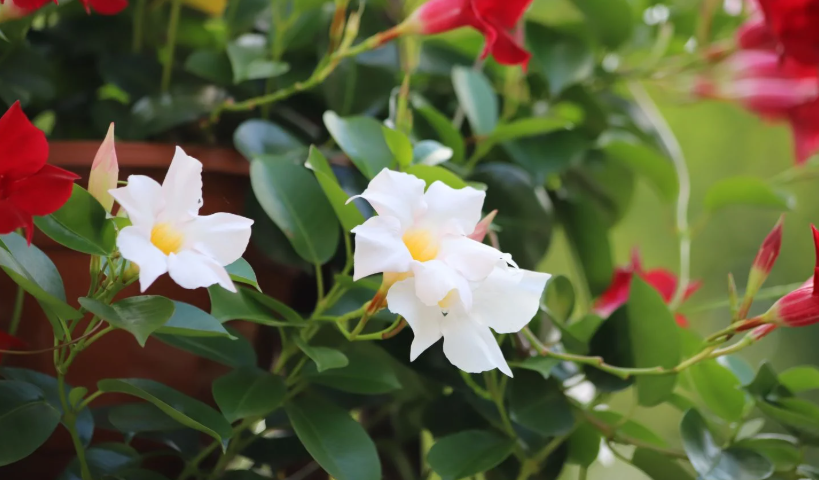
Mandevilla plants are stunning, fast-growing tropical vines and compact shrubs celebrated worldwide for their large, trumpet-shaped flowers in vivid shades of red, pink, white, and yellow that bloom with extraordinary generosity throughout the warm months of the year. Native to the tropical and subtropical regions of Central and South America, with the greatest species diversity concentrated in Brazil, they belong to the dogbane family alongside oleander and plumeria. With over 190 recognized species and a rapidly expanding catalogue of cultivated hybrids, mandevillas have become one of the most commercially important flowering tropical plants in the global ornamental plant trade.
In terms of size, mandevilla plants vary considerably between the vining and compact shrubby forms. Vining types can reach 10 to 20 feet in a single growing season when given adequate support in warm outdoor conditions, while the more compact Dipladenia types — which are essentially bushy, non-climbing mandevillas — typically stay between 1 and 3 feet in height, making them far more suitable for container growing on patios, balconies, and windowsills. Individual flowers range from 2 to 5 inches across depending on the variety, and plants in full bloom can carry dozens of open flowers simultaneously, creating a spectacle that few other container flowering plants can match.
Mandevillas are grown as perennials in USDA zones 9 to 11, where they can remain outdoors year-round and develop into substantial, woody-stemmed plants that flower prolifically each summer. In cooler zones 4 to 8, they are treated as annual container plants or brought indoors before the first frost of autumn for overwintering in a warm, bright indoor position. They prefer full sun to partial shade, consistently warm temperatures above 60°F, well-draining fertile soil, and regular feeding with a high-phosphorus fertilizer during the blooming season to support the prolific flower production they are capable of at their best.
The global market for mandevilla and dipladenia plants has grown substantially over the past two decades, driven by the development of increasingly compact, free-flowering, and weather-tolerant hybrids that suit the smaller outdoor spaces of modern homes. Annual retail sales of mandevilla plants in the United States alone are estimated in the tens of millions of plants, and in Europe the plant has become one of the most popular warm-season container flowering plants sold in garden centers each spring. Their combination of tropical glamour, easy container culture, long blooming season from late spring through autumn, and increasingly good heat and humidity tolerance has made them one of the signature flowering plants of the contemporary patio and balcony garden.
Also Read: Types of Prayer Plants
Types of Mandevilla (Dipladenia) Plants
1. Mandevilla Sundaville Red
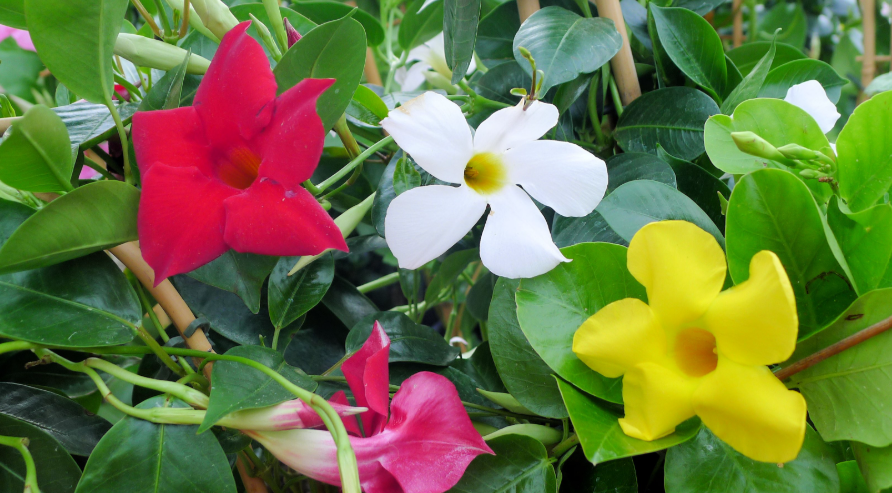
Sundaville Red is one of the most popular and widely sold mandevilla varieties in the world, producing large, vivid crimson-red trumpet flowers up to 4 inches across on a vigorous vining plant that climbs enthusiastically to 6 to 10 feet when given adequate support. The flowers are produced in continuous flushes from late spring through autumn and the rich red coloring is among the most saturated and vivid of any mandevilla variety, making it an immediate eye-catcher in any garden center display. It is a cornerstone of the Sundaville breeding program — one of the most commercially successful mandevilla series in the world — and is available from mainstream garden centers across North America and Europe.
2. Mandevilla Sundaville Pink
Sundaville Pink is the soft pink counterpart to the red-flowered Sundaville series, producing large, clear, warm pink trumpet flowers with a slightly deeper pink center that creates a subtle two-tone effect within each bloom. It grows vigorously to 6 to 10 feet as a climber and produces flowers continuously throughout the warm months with the same extraordinary prolificacy as the red form. The soft, feminine pink coloring is enormously popular with gardeners seeking a romantic, cottage-garden-inspired color palette for patio containers and trellised wall plantings.
3. Mandevilla Sundaville White
Sundaville White produces large, pure white trumpet flowers with a soft yellow throat that glows warmly at the center of each pristine bloom, creating an elegant, sophisticated color combination quite unlike the more vivid red and pink forms. It climbs to 6 to 10 feet and flowers with the same prolific generosity as the rest of the Sundaville series throughout the warm growing season. The clean, pure white flowers are particularly effective when combined with deep red or vivid pink mandevillas in mixed container plantings, and the white form is widely used by professional garden designers for formal and contemporary outdoor plant displays.
4. Dipladenia Rio Deep Red
Rio Deep Red is one of the most popular compact Dipladenia varieties, producing vivid, deep crimson-red trumpet flowers on a bushy, non-climbing plant that stays neatly between 12 and 18 inches in height and spread, making it one of the most practical mandevilla relatives for small containers, window boxes, and balcony planters. The compact, self-branching habit means it requires no staking or support and maintains an attractive, rounded form throughout the season. The deep red flowers are produced in continuous flushes from late spring through autumn and the plant is notably heat-tolerant.
5. Dipladenia Rio Pink
Rio Pink is the compact pink-flowered form of the popular Rio Dipladenia series, producing clear, warm pink trumpet flowers on a bushy, non-climbing plant reaching 12 to 18 inches in height. It is one of the most widely sold compact Dipladenia varieties in mainstream garden retail, valued for its tidy, self-supporting growth habit, prolific flowering, and excellent heat tolerance. The warm pink flowers complement virtually every container color scheme and the compact size makes it versatile across a wide range of planting situations from hanging baskets to patio pots.
6. Mandevilla Alice du Pont
Alice du Pont is one of the most celebrated classic mandevilla varieties in cultivation, producing large, rich, deep pink to rose-pink trumpet flowers up to 4 inches across on a vigorous, large-growing vine that can reach 15 to 20 feet in warm, frost-free conditions. It is one of the older named mandevilla varieties still widely grown today and is particularly popular in USDA zones 9 to 11 where it can develop into a spectacular, large-scale climbing specimen on pergolas, fences, and archways. The large flower size and rich, saturated pink coloring make it one of the most impressive mandevilla varieties for creating a dramatic tropical garden statement.
7. Mandevilla Sundaville Cream Pink
Sundaville Cream Pink is a soft, romantically colored cultivar from the Sundaville series producing flowers in a delicate blend of pale cream and soft pink that creates one of the most gentle and sophisticated color combinations in the entire mandevilla range. It climbs to 6 to 10 feet and flowers continuously throughout the warm season with the same reliable prolificacy characteristic of the Sundaville breeding program. The subtle, blended cream and pink tones make it a popular choice for soft-palette garden schemes and elegant patio container displays.
8. Mandevilla Sundaville Classic Red
Sundaville Classic Red is a refined, large-flowered cultivar from the Sundaville series with slightly deeper, more velvety red petals than the standard Sundaville Red, with a better-defined, slightly darker center that adds depth and visual richness to each individual bloom. It grows to 6 to 10 feet as a climber and produces flowers continuously from late spring through autumn in the same prolific manner as the broader Sundaville range. The enhanced color depth and flower refinement make it a preferred choice for gardeners who want the boldest, most visually impactful red mandevilla available.
9. Mandevilla Boliviensis
Mandevilla Boliviensis is a species mandevilla rather than a commercial hybrid, native to Bolivia and Ecuador, producing masses of smaller, pure white trumpet flowers with a vivid yellow throat on a vigorous vining plant that climbs to 10 to 15 feet in warm conditions. The flowers are slightly smaller than those of the large commercial hybrid varieties — typically 1.5 to 2.5 inches across — but are produced in extraordinary abundance along arching stems, creating a waterfall effect of white and yellow blooms that is particularly beautiful when the plant is trained over a large arch or pergola. It is one of the most cold-tolerant mandevilla species and performs well in USDA zone 9.
10. Mandevilla Laxa
Mandevilla Laxa, commonly called the Chilean Jasmine, is a vigorous, deciduous climbing mandevilla species from the Andean foothills of Argentina and Bolivia that produces clusters of pure white, intensely fragrant trumpet flowers on a fast-growing vine reaching 15 to 20 feet. Unlike most mandevilla species, the Chilean Jasmine is deciduous, losing its leaves in winter, and is considerably more cold-hardy than most of its tropical relatives, surviving outdoors in USDA zones 7 to 11 with appropriate winter protection. The powerful, sweet fragrance of the flowers — a quality rare in the mandevilla genus — makes it one of the most sought-after mandevilla species for temperate garden planting.
11. Dipladenia Sundaville Beauty Pink
Sundaville Beauty Pink is a compact, bushy Dipladenia type from the Sundaville series combining the large, showy flowers of the climbing Sundaville varieties with the tidy, non-climbing growth habit of the smaller Dipladenia forms. Plants reach 18 to 24 inches in height and produce large, clear pink trumpet flowers continuously throughout the warm season, making it one of the most flower-generous compact mandevilla types currently available. The combination of large flower size, compact habit, and prolific blooming has made it a bestseller in the European container plant market.
Also Read: Types of Begonia Plants
12. Mandevilla Sundaville Dark Red
Sundaville Dark Red is among the most intensely colored of all Sundaville series mandevillas, producing flowers in an exceptionally deep, velvety, near-burgundy red that is significantly darker and richer than the standard Sundaville Red. It climbs to 6 to 10 feet and flowers continuously from late spring through autumn, and the depth and richness of the flower color give it a sophisticated, dramatic quality particularly effective in formal garden settings and dark-toned container arrangements. It is a popular choice for gardeners who want the most dramatic, deeply colored red mandevilla available.
13. Mandevilla Sundaville Pretty Pink
Sundaville Pretty Pink is a cultivar within the Sundaville series with slightly smaller, more rounded flower petals than the classic Sundaville Pink, in a soft, clear pink tone with an appealing, fresh character that suits informal and cottage-style garden schemes. It climbs to 6 to 10 feet and flowers with consistent prolificacy throughout the warm season. The slightly softer, more rounded flower form and gentle pink coloring make it a popular alternative to the more boldly colored members of the Sundaville range.
14. Dipladenia Madinia Red
Madinia Red is a popular compact Dipladenia variety from the Madinia breeding series, producing vivid red trumpet flowers on a bushy, self-supporting plant reaching 12 to 16 inches in height with a notably compact, rounded form that is ideal for small containers and window boxes. It is one of the most heat and sun-tolerant compact Dipladenia varieties available and maintains prolific flowering throughout the warmest months of the season when less heat-tolerant varieties begin to slow their bloom production. It is widely available in mainstream garden retail across Europe and North America.
15. Dipladenia Madinia Pink
Madinia Pink is the warm pink-flowered form from the Madinia compact Dipladenia series, producing clear, vibrant pink trumpet flowers on a bushy, non-climbing plant reaching 12 to 16 inches in height. It shares the outstanding heat and sun tolerance of the Madinia Red and flowers prolifically from late spring through autumn without requiring deadheading to maintain bloom production. The bright, clear pink flower color is particularly vivid in full sun and fades only slightly as individual blooms age, maintaining an attractive display across the season.
16. Mandevilla Sundaville Rose
Sundaville Rose is a cultivar from the Sundaville series producing flowers in a deep, warm rose-pink that sits between the softer pink and the more vivid red forms in the color spectrum, offering a rich, saturated flower color with slightly cooler pink overtones than the standard Sundaville Pink. It climbs to 6 to 10 feet and flowers continuously throughout the warm season with the same exceptional prolificacy as the broader Sundaville range. The rich rose-pink coloring is widely considered one of the most appealing flower colors in the entire mandevilla category by gardeners and garden designers alike.
17. Mandevilla Splendens
Mandevilla Splendens is a species mandevilla from southeastern Brazil producing large, rose-pink to deep pink trumpet flowers up to 4 inches across on a moderately vigorous vine that climbs to 10 to 15 feet in warm conditions. It is one of the parent species from which many of the most popular modern hybrid mandevilla varieties were developed and retains considerable ornamental merit in its own right, with large, well-formed flowers and attractive, slightly glossy foliage. It performs well in USDA zones 9 to 11 outdoors and is an important reference species for understanding the development of the modern commercial mandevilla range.
18. Dipladenia Rio White
Rio White is the pure white-flowered form from the popular Rio compact Dipladenia series, producing clean, bright white trumpet flowers with a soft yellow throat on a bushy, non-climbing plant reaching 12 to 18 inches in height. The white flowers are produced in continuous flushes throughout the warm season and are particularly effective in mixed container plantings where the pure white blooms provide a bright, clean contrast to the more vivid reds and pinks of companion varieties in the same series. It is widely available in mainstream garden retail and is a popular choice for formal and contemporary container planting schemes.
19. Mandevilla Sanderi
Mandevilla Sanderi is a Brazilian species mandevilla producing smaller, bright pink to rose-red trumpet flowers about 2 inches across on a vigorous climbing to scrambling vine that reaches 10 to 15 feet in warm conditions. It is one of the most important parent species in the development of modern compact Dipladenia hybrids and contributes the compact, bushy growth tendency and heat tolerance found in many of the most popular contemporary commercial varieties. It performs well in USDA zones 9 to 11 and is occasionally available from specialist tropical plant nurseries.
20. Mandevilla Sundaville Giant White
Sundaville Giant White is a large-flowered selection from the Sundaville series with individual flowers reaching up to 5 inches across — significantly larger than the already impressive blooms of the standard Sundaville White — in the same pure white with yellow throat color combination. It climbs to 6 to 10 feet and the extraordinary flower size makes it one of the most visually impactful mandevilla varieties for creating a dramatic display on a trellis, fence, or pergola. The combination of very large flower size and prolific bloom production makes it one of the most spectacular white-flowered climbing plants available for warm-season container culture.
21. Mandevilla Sundaville Redstar
Sundaville Redstar is a distinctive cultivar from the Sundaville series with red trumpet flowers marked with a prominent white star-shaped central marking that radiates from the throat of each bloom outward toward the petal margins, creating a unique bicolor effect quite unlike the solid-colored flowers of most other mandevilla varieties. It climbs to 6 to 10 feet and flowers continuously throughout the warm season, and the unusual star marking on each flower creates a more complex and visually interesting bloom than the plain single-colored varieties. It is a popular novelty variety in specialist garden retail and among collectors of unusual mandevilla cultivars.