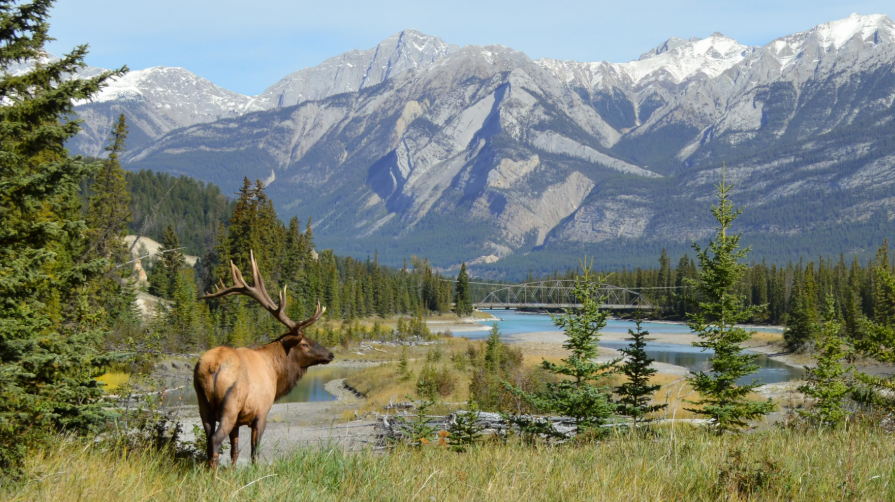
The boreal forest isn’t one uniform block of trees stretching across the northern hemisphere. Ecologists studying the biome, going back to a foundational 1972 classification by researchers Hare and Ritchie, have long divided it into distinct structural zones that shift as you move from its warmer southern edge toward the Arctic tundra, along with a handful of more specific forest types shaped by permafrost, wetness, and the transition into neighboring biomes.
Terminology varies somewhat depending on which side of the Atlantic you’re reading about. In North America, “boreal forest” is generally used for the biome’s more southerly, forested reaches, while “taiga,” a Russian word meaning marshy pine forest, is often reserved for the sparser, more barren northern fringe closer to the treeline. In Europe, by contrast, the entire biome from south to north is simply called taiga, with no separate northern-only term. Either way, the underlying structural pattern is the same.
This article covers the main types of boreal forest recognized by ecologists: the 3 latitudinal zones that structure the biome from south to north, plus several additional forest types defined by wetness, permafrost, and the biome’s transition into neighboring ecosystems. Canada’s own national inventory recognizes a similar pattern within its own borders, describing the boreal zone there as consisting of 3 structural types, forest-tundra in the north, open lichen woodland further south, and closed forest in the warmer, more southern reaches of the country.
Closed-Canopy Forest
Closed-canopy forest, sometimes called the southern taiga zone, forms the southernmost and most productive portion of the entire boreal biome. According to Britannica’s overview of the taiga biome, it contains the greatest richness of species, the warmest soils, the highest overall productivity, and the longest growing season found anywhere within the boreal zone.
Trees here grow closely enough together that their crowns interlock into a genuine continuous canopy, shading out much of the forest floor and typically supporting a moss-dominated understory rather than the open, lichen-covered ground found further north. This type occurs across a genuinely wide range of soil types and topographies, and it’s the version of boreal forest most people picture when they imagine dense, unbroken northern woodland.
Lichen Woodland
Lichen woodland, also called sparse taiga, occupies the middle latitudinal zone of the boreal biome, positioned between the closed-canopy forest to the south and the forest-tundra ecotone to the north. Trees here are noticeably shorter and more widely spaced than in the closed-canopy zone, though still considerably more numerous than the scattered, isolated trees found in the forest-tundra further north.
Because the tree canopy no longer closes overhead, far more sunlight reaches the forest floor, and lichen becomes the dominant groundcover in the open spaces between trees rather than the mosses typical of closed-canopy forest. That lichen groundcover carries real ecological weight, since it serves as critical winter forage for caribou and reindeer across much of this zone. Decomposition also proceeds notably slowly throughout the boreal biome generally, and leaf litter here has been estimated to break down roughly 60 times more slowly than equivalent litter in a tropical rainforest, a pattern that holds with particular force in this cooler, more open lichen woodland zone.
Forest-Tundra
Forest-tundra marks the boreal biome’s northernmost latitudinal zone, an ecotone, or transition area, that occurs right at the edge of tree growth before the landscape gives way entirely to open Arctic tundra. Trees here are scattered, stunted, and often widely isolated from one another rather than forming any kind of continuous stand.
Conditions at this extreme northern edge are genuinely marginal for tree growth, and Britannica’s entry on the taiga’s structural zones notes that many trees in the forest-tundra zone have never been documented producing viable seed, or have only done so sporadically, reflecting just how close this zone sits to the biological limit of where a tree can successfully reproduce at all. The treeline itself, the boundary separating forest-tundra from true treeless tundra, sits at the very northern edge of this zone.
Larch Forest
Larch forest stands apart from the 3 latitudinal zones above as a distinct type defined less by latitude and more by soil conditions, specifically thin, waterlogged ground underlain by permafrost. Unlike the spruce, pine, and fir that dominate most of the boreal biome, larch is deciduous, dropping its needles every autumn, and larch forests typically grow open, with an understory of shrubs, mosses, and lichens rather than a dense canopy.
The scale of this forest type differs dramatically by continent. In Alaska, stands of American larch, also called tamarack, tend to be localized, patchy phenomena rather than a dominant regional forest type. East of Siberia’s Yenisei River, by contrast, extreme continental climate conditions and nearly continuous permafrost combine to produce vast stretches of forest dominated by Dahurian larch, making this larch-dominated type a genuinely major feature of the Eurasian boreal landscape in a way it simply isn’t in North America.
Boreal-Temperate Transition Forest
Boreal-temperate transition forest occupies the biome’s warmest, southernmost edge, forming the ecotone between true boreal forest and the temperate broadleaf deciduous forest that lies further south. This type is a genuine mixed forest, combining needleleaf evergreen conifers with broadleaf deciduous hardwoods rather than the conifer-dominated composition typical of boreal forest further north.
The specific hardwood species involved vary by continent. In the United States, this transition zone is typically dominated by a mix that includes white pine, sugar maple, and American beech, while the equivalent transition in Scandinavia, Finland, and western Russia often includes oak, maple, elm, and lime scattered among the conifers. This southern boreal subzone also experiences the longest and warmest growing season found anywhere in the biome, and in parts of Scandinavia, Finland, and western Russia, it’s warm and productive enough to support real agricultural use.
Wetland and Peatland Boreal Forest
Wetland boreal forest, including the bogs, fens, and peatlands scattered throughout the biome, represents a genuinely distinct forest type shaped primarily by waterlogged, poorly drained soil rather than by latitude alone. These waterlogged conditions slow decomposition dramatically, allowing thick layers of partially decayed organic matter, known as peat, to accumulate over time in a way upland forest soil simply doesn’t support.
That slow decomposition gives boreal wetland forest an outsized role in the biome’s overall carbon storage, since peatlands are estimated to hold a substantial share of all the carbon stored across the entire boreal region. Black spruce and larch are especially well adapted to this wet, low-oxygen, nutrient-poor forest type, often forming open, stunted stands quite different in appearance from the same species growing on better-drained upland ground nearby.
Upland Boreal Forest
Upland boreal forest occupies better-drained mineral soil sites, forming a genuine structural and compositional counterpart to the wetland forest type described above. Freed from the waterlogged conditions that constrain wetland stands, upland boreal forest typically supports taller, denser, and more productive tree growth across a wider range of species.
White spruce in particular thrives on these better-drained upland sites, often growing alongside trembling aspen and balsam fir in the kind of productive mixedwood stands that make up much of the closed-canopy forest described earlier. The contrast between a stunted black spruce bog stand and a tall, vigorous white spruce upland stand, sometimes located just a short distance apart, illustrates just how much local soil drainage alone can shape which type of boreal forest develops on a given piece of ground.
Key Takeaways
- Boreal forests are found mainly across the Northern Hemisphere, forming extensive forest belts across Canada, Alaska, northern Europe, and Russia.
- Different boreal forests develop under different climate and soil conditions, resulting in variations in tree species, density, and vegetation.
- Spruce-dominated forests are common throughout the boreal zone, particularly in colder and wetter regions.
- Pine-dominated boreal forests often occur on drier, sandy, or nutrient-poor soils, with species such as jack pine adapted to challenging conditions.
- Fir and spruce forests are common in cooler, moist areas, while deciduous species such as birch and aspen may become more prominent following disturbances.
- Larch-dominated forests are distinctive because larches are deciduous conifers, shedding their needles during autumn despite being coniferous trees.
- Fire, insects, soil conditions, temperature, and moisture strongly influence boreal forest composition, causing forests to change from one region to another.
- Boreal forests provide important wildlife habitat and store substantial amounts of carbon, making them significant components of northern ecosystems.