
Asparagus is one of the oldest cultivated vegetables in the world, with a history of human cultivation stretching back over 2,500 years to ancient Egypt, Greece, and Rome, where it was prized both as a luxury food and as a medicinal plant. Native to the coastal regions of Europe, northern Africa, and western Asia, it has spread through cultivation to become one of the most widely grown perennial vegetables on earth, produced commercially on every inhabited continent. Global asparagus production exceeds 9 million metric tons annually, with China accounting for approximately 90 percent of world production, followed by Peru, Germany, Mexico, and the United States.
Asparagus is one of the very few truly perennial vegetables grown in temperate gardens, with well-established crowns capable of producing harvests reliably for 20 to 30 years or longer with appropriate care. Individual plants grow to 4 to 6 feet in height during their ferning stage — the period after harvest when the spears are allowed to develop into feathery, fern-like foliage that replenishes the crown’s energy reserves for the following season. Most varieties are grown in USDA zones 3 to 8, though some heat-tolerant varieties extend production into zones 9 and 10, and the spears are harvested in spring over a period of 6 to 8 weeks from established crowns.
Nutritionally, asparagus is one of the most impressive vegetables available, providing meaningful amounts of folate, vitamin K, vitamin C, vitamin A, potassium, and the prebiotic inulin fiber alongside the distinctive amino acid asparagine from which the vegetable takes its name. A single 100-gram serving of asparagus provides only 20 calories while delivering over 50 percent of the recommended daily intake of folate — making it one of the most nutrient-dense low-calorie vegetables in existence. The well-documented phenomenon of asparagus-scented urine — experienced by approximately 40 percent of people who can detect it — is caused by the sulfur-containing metabolite asparagusic acid produced when the body metabolizes compounds unique to asparagus.
Asparagus is consumed across virtually every food culture in the world, eaten fresh steamed, roasted, grilled, and stir-fried, preserved by blanching and freezing, and canned commercially for the global food service industry. White asparagus — produced by mounding soil over the developing spears to exclude light and prevent chlorophyll development — is a celebrated seasonal delicacy across Germany, the Netherlands, Belgium, and France, where the spring white asparagus season is treated with the same cultural reverence as truffle season. Purple asparagus varieties with higher sugar content and anthocyanin pigmentation have become increasingly popular in premium fresh markets. The extraordinary longevity of well-maintained asparagus beds — producing year after year for decades from a single planting — makes asparagus one of the most rewarding long-term investments in any vegetable garden.
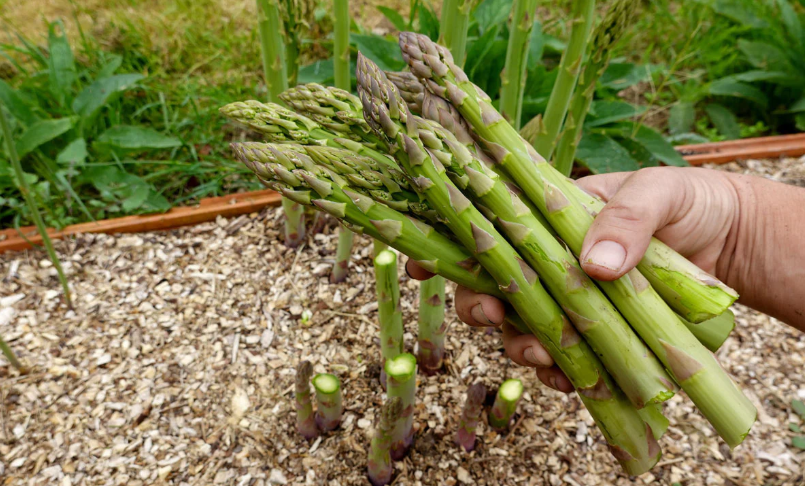
Types of Asparagus Plants
1. Jersey Knight
Jersey Knight is the most widely planted and commercially important asparagus variety in the United States, developed by Rutgers University as part of the celebrated Jersey series of all-male hybrid varieties and producing very large, thick, tender, dark green spears of outstanding eating quality with excellent uniformity and consistency across the harvest. As an all-male hybrid it produces no seed-bearing female plants — which divert energy into berry production rather than spear growth — resulting in significantly higher yields than older mixed-gender varieties, typically 30 to 40 percent more productive than traditional open-pollinated types. It is cold-hardy in USDA zones 3 to 8 and is widely available from mainstream garden centers and seed suppliers.
2. Jersey Supreme
Jersey Supreme is an early-maturing companion variety in the celebrated Rutgers University Jersey series, producing the first spears of the season approximately one to two weeks earlier than Jersey Knight and Jersey Giant under the same growing conditions — making it the finest choice for gardeners who want the earliest possible fresh asparagus harvest each spring. The spears are large, well-formed, dark green, and of excellent eating quality comparable to the finest Jersey series varieties, and the all-male hybrid genetics provide the same yield advantage over traditional varieties. It is cold-hardy in USDA zones 3 to 8.
3. Jersey Giant
Jersey Giant is the third member of the celebrated Rutgers University Jersey series, producing the largest individual spear diameter of any Jersey series variety alongside excellent spear quality and the all-male hybrid yield advantage. The very large spear size — sometimes exceeding three quarters of an inch in diameter — makes it particularly suited to grilling and roasting where the substantial spear size creates an impressive and satisfying eating experience. It is cold-hardy in USDA zones 3 to 8 and is widely grown by both commercial producers and home gardeners who want maximum spear size from their asparagus beds.
4. Mary Washington
Mary Washington is the most historically important asparagus variety in American horticulture, developed by J.B. Norton of the USDA in the early twentieth century and remaining one of the most widely grown and readily available open-pollinated asparagus varieties in North America for many decades. It produces medium to large, well-formed, dark green spears with loose, purple-tinted tips of good eating quality on a mixed-gender plant population that includes both male and female plants. While producing lower yields than modern all-male hybrids, it has the advantage of self-seeding — producing volunteer seedlings — and is cold-hardy in USDA zones 3 to 8.
5. Purple Passion
Purple Passion is the most widely grown and commercially important purple asparagus variety, producing vivid, deep purple to burgundy-purple spears with a distinctively sweet, tender, less fibrous flesh that contains approximately 20 percent more sugar than standard green varieties — making it the sweetest and most tender-eating asparagus variety widely available to home gardeners. The purple coloring fades to green when cooked, so purple asparagus is best appreciated eaten raw or very lightly cooked to preserve the attractive purple color and showcase the sweet flavor. It is cold-hardy in USDA zones 3 to 8 and is increasingly available from mainstream garden centers.
6. Atlas
Atlas is an important commercial asparagus variety developed for production in warm climates — particularly California, Peru, and other Mediterranean and subtropical asparagus-producing regions — with exceptional heat tolerance that allows it to perform well in zones 6 to 10 where most standard temperate varieties struggle in the heat. It produces large, straight, well-formed, dark green spears of excellent commercial quality with good uniformity across the harvest season and has become one of the most important varieties in the global fresh market asparagus trade. The combination of heat tolerance and excellent spear quality makes it invaluable for warm-climate production.
7. Millennium
Millennium is an important Canadian asparagus variety developed at the University of Guelph specifically for cold-climate production in zones 3 to 6 where severe winters can damage or kill less cold-hardy varieties. It produces large, tender, dark green spears of very good eating quality with excellent cold hardiness down to -40°F under appropriate snow cover conditions, and has become one of the most widely planted commercial asparagus varieties in Ontario, Michigan, and other cold-climate production regions of North America. The exceptional cold hardiness combined with good spear quality make it indispensable for northern growers.
8. Gijnlim
Gijnlim is one of the most widely planted commercial asparagus varieties in Europe, developed in the Netherlands and producing very high yields of large, straight, well-formed, medium green spears of excellent eating quality and uniformity that suit the demanding standards of European fresh market and supermarket retail. It is particularly well-adapted to the cool, maritime climate conditions of northern Europe — particularly the Netherlands, Belgium, Germany, and the United Kingdom — and produces early season harvests that begin before most other varieties are ready. It is hardy in USDA zones 4 to 8.
9. Backlim
Backlim is an important Dutch commercial asparagus variety developed as a later-season companion to Gijnlim, producing large, well-formed, dark green spears of excellent quality that extend the main commercial harvest season after Gijnlim’s peak production period has passed. The combination of Gijnlim for early season and Backlim for mid to late season provides Dutch and Belgian commercial growers with an extended, continuous harvest window of consistently high-quality asparagus spears. It is hardy in USDA zones 4 to 8 and is widely planted in northwestern European commercial asparagus production.
10. Mondeo
Mondeo is a premium Dutch hybrid asparagus variety producing exceptionally large, very uniform, thick, straight, bright green spears of outstanding eating quality and commercial presentation that command premium prices in European fresh asparagus markets. It is particularly valued by commercial growers serving the premium fresh market segment where maximum spear size, uniformity, and visual quality are the primary commercial requirements. It is hardy in USDA zones 4 to 8 and represents the continuing Dutch leadership in commercial asparagus variety development for European production.
11. White Asparagus Varieties (Generalized)
White asparagus is produced from any standard green asparagus variety by the practice of earthing up — mounding soil over the developing crowns and emerging spears to exclude all light and prevent chlorophyll development, maintaining the spears in complete darkness throughout their growth. The resulting white, blanched spears have a milder, more delicate, slightly nuttier and sweeter flavor than green asparagus and are a celebrated seasonal delicacy across Germany, the Netherlands, Belgium, and France where the spring white asparagus season from April to June — known as Spargelsaison in Germany — is a major culinary and cultural event.
12. Connover’s Colossal
Connover’s Colossal is one of the oldest and most historically important asparagus varieties still in commercial cultivation, an American heirloom variety introduced in the 1800s that was one of the most widely grown asparagus varieties in both American and British gardens through the nineteenth and early twentieth centuries. It produces large, well-formed, tender, green spears of good eating quality on vigorous, productive plants that are reliably cold-hardy in USDA zones 3 to 8. Despite producing lower yields than modern all-male hybrids, it remains popular among heritage vegetable enthusiasts and gardeners who prefer open-pollinated, seed-producible varieties.
13. Precoce D’Argenteuil
Precoce D’Argenteuil is the most celebrated French heirloom asparagus variety, originating from the famous Argenteuil asparagus-growing region northwest of Paris that was the most important asparagus production area in Europe from the seventeenth through nineteenth centuries and produced the asparagus served at the finest Parisian restaurants of the Belle Époque era. It produces distinctive, large, pinkish-purple-tipped green spears of exceptional, rich, complex flavor considered by French culinary traditionalists to be among the finest-tasting asparagus available. It is hardy in USDA zones 4 to 8 and is available from specialist French and European heritage vegetable seed suppliers.
14. UC 157
UC 157 is a University of California-developed commercial asparagus variety that became the most widely planted asparagus variety in the world during the 1980s and 1990s due to its outstanding heat tolerance, year-round production potential in subtropical climates, and excellent fresh market spear quality that established it as the foundation variety of the Peruvian asparagus industry — now the world’s second largest asparagus exporting nation. It produces medium to large, straight, well-formed, dark green spears of good commercial quality and has been decisive in establishing year-round global fresh asparagus supply chains. It is suited to USDA zones 6 to 11.
15. Thielim
Thielim is a modern Dutch commercial asparagus variety developed for white asparagus production specifically, producing the thick, straight, well-formed spears with tight, compact tips that are the most commercially desirable characteristics in white asparagus for the premium European white asparagus market. The thick, uniform spears peel cleanly — peeling being an essential preparation step for white asparagus in European cuisine — and the flavor after blanching is mild, delicate, and sweet. It is planted extensively in the major white asparagus producing regions of the Netherlands, Germany, and Belgium.
16. Ramado
Ramado is a Spanish asparagus variety developed for commercial production in the warm, dry Mediterranean climate of southern Spain, particularly the Navarra and Extremadura regions that are Spain’s most important commercial asparagus-producing areas. It produces large, straight, well-formed green spears of very good eating quality adapted to the spring production season of Mediterranean climates, and Spain is one of Europe’s most important asparagus producers and exporters. It is suited to USDA zones 6 to 9 and represents the development of regionally adapted asparagus varieties for specific Mediterranean production environments.
17. Viking KBC
Viking KBC is an important commercial asparagus variety widely grown in Michigan and other Great Lakes states of the United States, developed for cold-climate commercial production with a combination of good cold hardiness, high yield, and acceptable spear quality that meets commercial fresh market standards. It represents an important generation of regionally adapted commercial asparagus varieties developed before the Jersey series became dominant, and it remains planted in some established Michigan commercial operations where it has proven its reliable long-term performance over many seasons. It is hardy in USDA zones 3 to 7.
18. Erasmus
Erasmus is a modern Dutch hybrid asparagus variety developed for northern European commercial production, producing large, uniform, dark green spears of very good commercial quality with particularly good tip tightness — a desirable characteristic in fresh market asparagus that affects the visual quality and shelf life of harvested spears. Loose, open tips that begin to feather into early fern development are a significant quality defect in fresh market asparagus, and Erasmus has been selected for the consistently tight, compact tips that maintain quality through the distribution and retail chain. It is hardy in USDA zones 4 to 8.
19. Sweet Purple
Sweet Purple is an alternative purple asparagus variety to the widely grown Purple Passion, producing similarly vivid, deep purple spears with high sugar content and exceptional eating quality at young harvest stages when the spears are thin and exceptionally tender and sweet. It was developed in Italy and reflects the Italian tradition of asparagus cultivation excellence, particularly in the Veneto region where purple and white asparagus varieties have been cultivated for centuries. It is hardy in USDA zones 4 to 9 and is available from specialist asparagus and Italian vegetable seed suppliers.
20. Pacific Purple
Pacific Purple is a New Zealand-developed purple asparagus variety that has become commercially important in New Zealand, Australia, and increasingly in North American specialty markets for producing large, very deeply colored, vivid purple spears of outstanding sweetness and tender eating quality. New Zealand has developed significant expertise in purple asparagus variety breeding and production and Pacific Purple represents the Southern Hemisphere contribution to the growing premium purple asparagus market. It is hardy in USDA zones 4 to 9 and is available from specialist asparagus nurseries in Australia and New Zealand.
21. Grande
Grande is a modern Italian asparagus hybrid producing very large, thick, straight, well-formed green spears of excellent eating quality developed specifically for the Italian commercial fresh and processing asparagus market. Italy is one of Europe’s most important asparagus-producing nations and has a strong tradition of asparagus breeding for both green and white production, and Grande represents the Italian breeding industry’s contribution to the development of large-speared, high-quality commercial varieties. It is hardy in USDA zones 5 to 9 and is available from Italian specialist agricultural suppliers.
22. Vegalim
Vegalim is a French commercial asparagus variety developed for green asparagus production in the Loire Valley and other major French asparagus-producing regions, producing good-quality green spears of acceptable commercial standard suited to the French fresh asparagus market. France is an important asparagus-producing nation with a strong cultural attachment to both green and white asparagus, and regionally adapted French varieties like Vegalim reflect the development of asparagus types suited to French growing conditions and consumer preferences. It is hardy in USDA zones 4 to 8.
23. Portlim
Portlim is another Dutch commercial asparagus variety from the same breeding programs that produced Gijnlim and Backlim, developed to fill a specific position in the commercial harvest season calendar and producing spears of the consistent quality standard expected by European supermarket buyers. The Dutch asparagus breeding industry has produced more commercially important asparagus varieties than any other national breeding program and Portlim represents the continuing commitment to developing varieties that precisely meet the quality, timing, and productivity requirements of the sophisticated European fresh produce market. It is hardy in USDA zones 4 to 8.
24. Dariana
Dariana is a modern French hybrid asparagus variety developed by INRAE — the French National Institute for Agricultural Research — producing large, well-formed, dark green spears of excellent quality with particularly good resistance to asparagus rust, one of the most damaging fungal diseases affecting asparagus production in wet, humid growing conditions. The disease resistance combined with good spear quality makes it a practical choice for organic and low-spray asparagus production where fungicide applications are restricted. It is hardy in USDA zones 4 to 8 and is available from French specialist seed suppliers.
25. Asparagus Officinalis (Wild Type)
The wild type asparagus, found growing naturally in coastal meadows, sand dunes, and scrubland across southern Europe, western Asia, and North Africa, produces thin, intensely flavored, dark green spears considerably smaller than any cultivated variety — typically only pencil-thin or thinner — with an exceptionally rich, concentrated, complex asparagus flavor that is more intense and complex than that of most cultivated varieties. It is the original wild ancestor from which all cultivated asparagus varieties have been developed over 2,500 years of selection and breeding, and the thin, intensely flavored wild spears are prized by foragers and culinary enthusiasts who encounter them in appropriate coastal habitats across their natural range.
26. Cito
Cito is an exceptionally early-maturing Dutch asparagus variety developed for producing the first asparagus spears of the season as early as possible — typically two to three weeks before the standard early varieties — filling a premium early market position in European retail where the very first fresh local asparagus of the spring season commands the highest prices and attracts the most consumer interest. The exceptionally early production combined with acceptable spear quality make it commercially valuable specifically for the early season premium market position, and it is planted alongside standard varieties in Dutch and German commercial operations to maximize early season revenue. It is hardy in USDA zones 4 to 8.
27. Huchel’s Alpha
Huchel’s Alpha is a German asparagus variety developed in Germany for both green and white production, producing straight, well-formed spears with tight tips suited to white asparagus production by earthing up. Germany is the world’s most culturally passionate asparagus-consuming nation — Germans consume more asparagus per capita than any other nation — and the development of varieties specifically suited to German growing conditions and the demanding white asparagus production method reflects the cultural and commercial importance of asparagus in German food culture. It is hardy in USDA zones 4 to 8.
28. Green Pacific
Green Pacific is a New Zealand-developed commercial green asparagus variety producing large, straight, well-formed, vivid green spears of very good eating quality adapted to New Zealand’s growing conditions for both domestic market and export production. New Zealand exports significant quantities of fresh asparagus to Japan, Australia, and other Asian markets, and varieties developed for New Zealand growing conditions that produce high-quality spears suitable for long-distance export refrigerated shipping are commercially important. It is suited to USDA zones 5 to 9 and represents New Zealand’s contribution to asparagus variety development.
29. Argenteuil
Argenteuil refers to the traditional French asparagus type associated with the historic Argenteuil growing region northwest of Paris, encompassing several related heirloom varieties produced using traditional French methods that result in the characteristic large, pinkish-purple-tipped, partially blanched or green spears of exceptional flavor quality that made Argenteuil the most celebrated asparagus in nineteenth-century European cuisine. The Argenteuil asparagus tradition — though commercial production in the original region has largely ceased — represents the most important historical asparagus culture in Western European culinary history and continues to influence premium asparagus production standards. It is hardy in USDA zones 4 to 8.
30. Apollo
Apollo is an important commercial asparagus variety developed in Australia for warm-climate production in the Murray-Darling Basin and other major Australian asparagus-producing regions, producing large, straight, well-formed, dark green spears of excellent fresh market quality adapted to the warm spring growing conditions of Australia. Australia produces fresh asparagus during the Southern Hemisphere spring — September through November — providing Northern Hemisphere markets with out-of-season fresh asparagus during the European and North American autumn, and Apollo is one of the primary varieties used in Australian export production. It is suited to USDA zones 6 to 10.