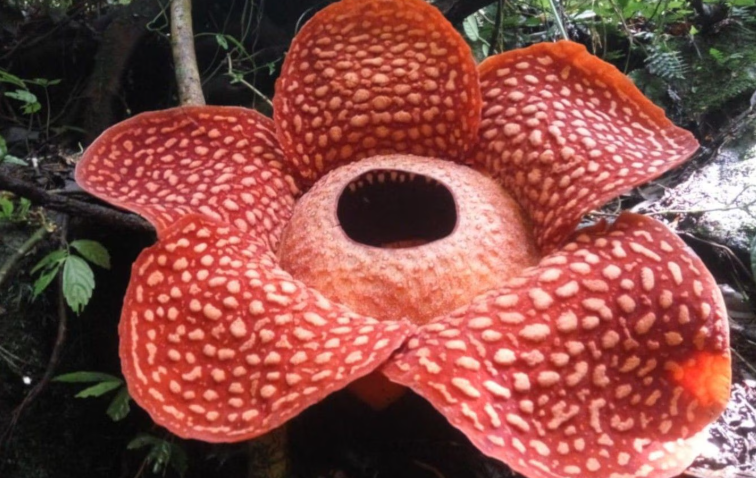
Plants that smell like rotting meat aren’t malfunctioning or diseased, they’re executing a genuinely deliberate evolutionary strategy called carrion mimicry, and it’s one of the more fascinating pollination stories in the entire plant kingdom. Most flowers advertise sweetness to attract bees and butterflies, but a genuine subset evolved in the opposite direction entirely, producing the exact volatile compounds released by decomposing flesh specifically to fool flies and carrion beetles searching for a place to lay eggs or feed. Those insects arrive expecting a carcass, pick up pollen while investigating the deception, and carry it to the next flower still convinced they’re chasing a genuine meal.
Several of these plants take the deception considerably further than scent alone. A number of carrion mimics have evolved genuine thermogenesis, the ability to generate their own internal heat through rapid cellular respiration, which helps volatilize their odor compounds and carry the scent considerably further than a passive bloom ever could. Some also mimic the visual appearance of decaying flesh directly, developing mottled reddish-brown coloring and a texture that genuinely resembles rotting tissue under close inspection, layering a visual deception on top of the olfactory one.
It’s worth knowing upfront that several of the most famous plants in this category are genuinely difficult, or in one case essentially impossible, to grow at home. The titan arum requires years of patient cultivation before its single, massive bloom even opens, and rafflesia is a genuine parasitic plant with no independent root or stem system at all, making cultivation outside its specific host vine essentially unachievable in a home setting. The plants further down this list are considerably more realistic options for an actual garden or greenhouse.
The Missouri Botanical Garden’s carrion flower collection documents the biology and bloom cycles of several of these species in more detail than a general list can. What follows covers 10 plants that smell like rotting meat.
Corpse Flower
Corpse flower produces the single most famous carrion scent in the plant world, its enormous bloom, sometimes reaching several feet tall, releasing an intense odor of decaying flesh that can genuinely carry for a considerable distance once it opens. Its bloom event happens so rarely, sometimes only once every several years, that a flowering specimen at a botanical garden regularly draws crowds specifically to experience the smell firsthand.
It requires a genuinely warm, humid greenhouse environment and years of patient cultivation, its rare bloom cycle making it a project for a dedicated institution rather than a typical home garden. The United States Botanic Garden has documented bloom timing and visitor turnout data from its own flowering specimens over the years.
Carrion Flower
Carrion flower produces star-shaped blooms with a genuinely convincing rotting-flesh odor on a low-growing succulent popular among collectors specifically for that novelty value. Its mottled, often hairy petal surface also visually mimics decaying tissue, adding a genuine textural deception to the scent-based one.
It tolerates poor, well-drained soil and bright, indirect light, thriving as a genuinely manageable houseplant or greenhouse specimen despite its startling bloom.
Dead Horse Arum
Dead horse arum produces a genuinely convincing carrion scent paired with real thermogenic heat generation, its bloom warming several degrees above the surrounding air temperature specifically to help volatilize and spread its odor further. Its Mediterranean native range and unusual biology have made it a genuine subject of considerable scientific study.
It tolerates a range of soil conditions in a warm, frost-free climate, its combination of heat and scent representing one of the more sophisticated carrion-mimicry strategies in this entire category.
Voodoo Lily
Voodoo lily, a genuine relative of the corpse flower, produces a similarly foul scent on a considerably more compact and garden-manageable plant. Its dramatic, mottled purple-black spathe emerges before any leaves, creating a genuinely striking, almost sinister early-season display.
It tolerates partial shade and rich, well-drained soil, growing from a tuber that returns reliably each year in a suitably warm climate.
Starfish Flower
Starfish flower produces large, genuinely star-shaped blooms covered in fine hairs that enhance both its visual and scent-based resemblance to decaying flesh. Its considerable popularity among succulent collectors reflects real fascination with the novelty of a plant that smells this deliberately unpleasant.
It tolerates poor, well-drained soil and bright light, thriving as a genuinely low-maintenance succulent despite its startling bloom scent.
Red Trillium
Red trillium, also called Stinking Benjamin for exactly the reason its name suggests, produces a deep maroon woodland flower with a genuine carrion-like odor that draws the flies and beetles responsible for its pollination. Its considerable visual beauty as a native spring wildflower belies the genuinely unpleasant scent hiding within its elegant 3-petaled form.
It tolerates significant shade and rich, consistently moist woodland soil, thriving in the same understory conditions many other native spring ephemerals favor.
Dutchman’s Pipe
Dutchman’s pipe, in several of its many species, produces genuinely dung- or carrion-scented flowers specifically adapted to trap and briefly hold visiting flies before releasing them coated in pollen. Its distinctive pipe-shaped bloom is a genuine structural adaptation supporting that trap-and-release pollination strategy.
It climbs vigorously given a trellis or arbor, tolerating a range of soil conditions and partial shade in a suitably warm climate.
Rafflesia
Rafflesia produces the genuinely largest single flower in the entire plant kingdom, its massive, mottled reddish bloom emitting an intense carrion odor to attract the carrion flies responsible for its pollination. Its existence as a true parasitic plant, with no leaves, stems, or roots of its own, growing entirely within a host vine, makes it essentially impossible to cultivate outside its native Southeast Asian rainforest habitat.
It cannot be grown as a garden or greenhouse specimen at all, remaining one of the only entries on this list that exists purely as a wild botanical curiosity rather than a cultivatable plant. The Kew Royal Botanic Gardens documents the considerable conservation challenges involved in studying a parasitic plant this difficult to observe in the wild.
Skunk Cabbage
Skunk cabbage produces a genuinely pungent, skunk-and-carrion-like odor from one of the earliest blooms of the entire growing season, often emerging while snow is still on the ground. Its considerable thermogenic ability lets it generate real internal heat, melting the surrounding snow and helping the plant’s odor compounds volatilize even in genuinely cold, early-spring conditions.
It tolerates consistently wet, boggy soil and significant shade, thriving in exactly the damp woodland conditions its early bloom timing depends on. The University of Wisconsin-Madison Botany Department has published research specifically on skunk cabbage’s thermogenic snow-melting ability.
Carrion Cactus
Carrion cactus, despite the common name, is a genuine Stapeliad succulent rather than a true cactus, producing star-shaped, often mottled flowers with a convincingly foul odor similar to its close carrion flower relatives. Its low, clumping growth habit makes it a genuinely manageable addition to a succulent collection.
It tolerates poor, well-drained soil and bright, indirect light, thriving as a low-maintenance succulent specimen despite its startling bloom scent.
Key Takeaways
Key Takeaways: Plants That Smell Like Rotting Meat
- Some plants produce strong, unpleasant odors resembling rotting meat as a specialized strategy for attracting pollinating insects.
- These foul-smelling flowers commonly attract flies, beetles, and other insects that are naturally drawn to decaying organic matter.
- Plants in groups such as carrion flowers and some arums are well known for producing unusual odors associated with meat, decay, or other organic materials.
- The smell can range from mildly unpleasant to extremely strong, depending on the species, flower maturity, temperature, and time of day.
- Many carrion-scented plants have unusual flower shapes, colors, or markings that can further mimic the appearance of decaying material.
- Not every foul-smelling plant smells exactly like rotting meat; some produce odors resembling garbage, sewage, fermented food, or other decomposing materials.
- Despite their unpleasant fragrance, these plants are important because their unusual pollination strategies help them reproduce successfully in their natural habitats.