Pink colored fruit is, in nearly every case, red fruit with the pigment turned down. The same compounds that make a tomato or a cherry red produce pink when there is less of them or when they sit over a pale background. That is why most pink fruits are close relatives of red ones.
The more useful question is where the pink is. In a grapefruit, a guava, or a Cara Cara orange, it is hidden in the flesh under an ordinary-looking rind. In a Pink Lady apple or a white peach, it is a thin wash on the skin over white or yellow flesh.
That difference changes how a shopper judges the fruit. Hidden pink gives no outside clue at all, so the label and the feel of the fruit matter most. Pink skin can be read directly, but it often reflects sunlight and cool nights more than ripeness.
This list of 55 fruits begins with pink flesh, moves to pink skin, and ends with berries and garden crops that are fruits in the botanical sense. Each description notes where the pink sits, what causes it, and what it reveals about ripeness. Growing regions and seasons refer to the United States unless noted.
1. Pink Grapefruit
Pink grapefruit has a yellow rind and blush-pink flesh that is milder and less bitter than white grapefruit. The first pink grapefruit was found on a single branch in a Florida grove in 1906. Florida remains the main source of true pink varieties.
The pink comes from a small amount of lycopene, the pigment that colors tomatoes. The rind sometimes shows a faint pink flush, but it is not a reliable clue. The flesh color also fades as the season goes on, so early winter fruit is the pinkest.
2. Cara Cara Orange
Cara Cara is a navel orange with salmon-pink flesh, discovered on a ranch in Venezuela in 1976. It is seedless, low in acid, and sweet, with a hint of berry. California fruit is in season from December to April.
The outside looks like any other navel orange, so only the sticker reveals what is inside. Its pink is lycopene, which sets it apart from blood oranges, whose red comes from a different pigment. Because lycopene does not depend on cold nights, the color is consistent from year to year.
3. Pink Lemon
Pink lemon is a natural mutation of the Eureka lemon found in a Southern California home garden in 1931. The young fruit has a rind striped in green and cream, and the tree has variegated leaves. The juice is as sour as that of an ordinary lemon.
As the fruit ripens, the stripes fade, and the rind turns yellow, while the flesh inside becomes light pink. A fully ripe pink lemon can therefore pass for a regular one. The pink is strongest in fruit picked at full maturity.
4. Chandler Pomelo
Chandler is the most common pink-fleshed pomelo in American stores and was released by California citrus breeders in 1961. It is very large, with a thick, smooth yellow rind and firm pink segments. The flavor is sweet and mild, with almost none of the bitterness of grapefruit.
The rind gives no hint of the pink inside. Ripe fruit feels heavy and has a faint floral scent. It is harvested from December through April.
5. Pink Finger Lime
Pink finger lime is a slender Australian citrus, 2 to 3 inches long, now grown in California. Its pulp is made of tiny, firm beads that burst like caviar. In pink varieties the beads range from pale blush to rose.
The skin may be green, brown, or maroon, and it does not predict the color of the beads. A ripe fruit comes off the tree easily and feels full. The flavor is sharp and lime-like, and the beads are used as a garnish.
6. Pink Guava
Pink guava has yellow-green skin and soft, aromatic, salmon-pink flesh. It is the type used for most guava juice, nectar, and paste. The seeds are small, hard, and edible.
The flesh is colored by lycopene, and pink guava holds more of it by weight than a fresh tomato. Skin color tells only whether the fruit is ripe, turning from green to yellow as it softens. A strong, musky fragrance is the best sign of a ready fruit.
7. Pinkglow Pineapple
Pinkglow is a pink-fleshed pineapple developed by a single fruit company and grown in Costa Rica. It reached American stores in 2020 after federal regulators cleared it in 2016. The flesh is sweeter and less sharp than that of a yellow pineapple.
A normal pineapple converts its pink lycopene into yellow pigment as it ripens, and this variety was engineered to keep the lycopene. The shell looks ordinary from outside. Each fruit is sold without its crown and commands a premium price.
8. Strawberry Papaya
Strawberry papaya is a small Hawaiian type weighing about 1 pound, with salmon-pink to red-orange flesh. It is sweeter than the large Mexican papayas and has a mild berry note. The black seeds in the center are edible and peppery.
The skin turns from green to yellow as the fruit ripens and says nothing about the color inside. A fruit that is mostly yellow and gives to gentle pressure is ready. The pink tone comes from lycopene.
9. Mamey Sapote
Mamey sapote is a football-shaped fruit with rough, sandpaper-brown skin and salmon-pink to deep red flesh. The flavor is rich and sweet, like a blend of sweet potato, pumpkin, and almond. South Florida grows the American crop, and most of it goes into milkshakes.
The brown skin never changes color, so growers use a scratch test. Nicking the skin near the stem should reveal pink flesh and not green. The fruit is then left to soften for several days.
10. Pink Pearl Apple
Pink Pearl is an apple with bright pink flesh, bred in Northern California and released in 1944. Its skin is pale, translucent yellow, sometimes with a blush. The flavor is tart and crisp, with a hint of raspberry.
The skin is thin enough that a faint pink glow sometimes shows through. The flesh pigment is anthocyanin, the same compound that colors red apple skin. The apple ripens in late August and September and has a short season.
11. Hidden Rose Apple
Hidden Rose is a pink-fleshed apple found as a chance seedling in Oregon. It has yellow-green skin with pale dots and a slight blush. The rose-red flesh is tart-sweet and tastes faintly of strawberry.
The name describes it well, since nothing on the outside suggests the color inside. It ripens late, in October, and keeps better than Pink Pearl. The flesh holds its color when baked and turns sauce and pies pink.
12. Celeste Fig
Celeste is a small fig with light brown to violet skin and strawberry-pink flesh. It is very sweet and is often called the sugar fig. It is the classic backyard fig of the Gulf states.
The opening at the base of the fruit stays tightly closed, which keeps out insects and prevents souring in humid weather. A ripe fig droops on its stem and feels soft. Figs do not ripen after picking, so timing is everything.
13. Adriatic Fig
Adriatic fig has pale green skin and vivid strawberry-pink to red flesh. The flavor is intensely sweet and jam-like. It is grown in California and is widely used for fig paste.
The skin stays green even at full ripeness, which leads many people to pick it too early. Softness and a drooping neck are the real signs. Split open, it shows one of the strongest color contrasts of any fruit.
14. Pink Lady Apple
Pink Lady is the brand name of an apple bred in Western Australia from a cross made in 1973. It has a bright pink blush over a yellow-green background. The flesh is firm, fizzy, and both sweet and tart.
The pink is anthocyanin in the skin, and it forms only with strong sunlight and cool autumn nights. The apple needs about 200 days on the tree and is among the last picked each fall. Fruit must meet set standards for color and sugar to carry the brand name.
15. Pink Luster Apple
Pink Luster is a newer apple from the Cornell University breeding program in New York, released in 2020. It has bright pinkish-red skin over a yellow background. The flesh is crisp, juicy, and mildly sweet.
It ripens in mid-September, well ahead of Pink Lady, and is aimed at farm stands and pick-your-own orchards. The pink color develops best on fruit exposed to full sun. A yellow background, not green, shows that it is ready.
16. Lady Alice Apple
Lady Alice was found as a chance seedling in a Washington orchard in 1979. It has pink-red stripes over a creamy yellow background. The flesh is dense, sweet, and slightly tart.
Unlike most apples, it is held in storage after the fall harvest and released in winter. Its flavor improves and its background color deepens during those months. It appears in stores from January through spring.
17. White Peach
White peach has creamy skin washed with pink and red, over white flesh that is often stained pink near the pit. It is low in acid, so it tastes sweeter than a yellow peach. The flavor is floral and delicate.
The pink blush depends on sun exposure and does not show ripeness. The cream background should have no green left in it. White peaches bruise very easily and are best bought slightly firm.
18. Saturn Peach
Saturn peach, also called donut peach, is a flattened fruit with pale yellow skin and a pink-red blush. The white flesh is sweet, low in acid, and tastes faintly of almond. The small pit pops out cleanly.
Flat peaches came from China and became common in American stores in the 1990s. The same background test applies, so the base color should be creamy with no green. They ripen in midsummer and keep only a few days.
19. White Nectarine
White nectarine has smooth, rosy-pink to red skin over cream and very sweet white flesh. It is a fuzz-free white peach and shares its low acid. California grows nearly all of the supply.
Because the acid is so low, white nectarines taste sweet even while firm. The pink skin is not a ripeness sign, and the background should be cream. Firm fruit softens in a day or two on the counter.
20. Dapple Dandy Pluot
Dapple Dandy is a cross of plum and apricot bred in California and often sold as dinosaur egg. Its pale green-yellow skin is speckled with pink and red dots. The flesh is creamy pink to red and tastes sweet with a slight tang.
The speckles spread and the skin turns more maroon as the fruit ripens. A ripe fruit gives slightly at the tip. It is harvested in August.
21. Royal Ann Cherry
Royal Ann is a firm, yellow cherry with a pink-red blush, grown in Oregon since 1847. It is sweet when fresh, with clear flesh and colorless juice. It is the main variety used to make maraschino cherries.
The pale flesh takes dye easily, which is why processors favor it. The modern method for brining these cherries was developed by a professor in Oregon in the 1920s. Fresh fruit should have a creamy yellow background under the blush.
22. Pink Pomegranate
Pink pomegranates, such as ‘Eversweet’ and ‘Pink Satin’, have light pink seed sacs and a pinkish-yellow rind. The juice is nearly clear and does not stain. The flavor is very sweet with almost no tartness, and the seeds are soft.
These varieties taste sweet even before they reach full color, which makes them good for cooler coastal gardens. The fruit does not ripen after picking. A heavy fruit with slightly flattened sides is ready.
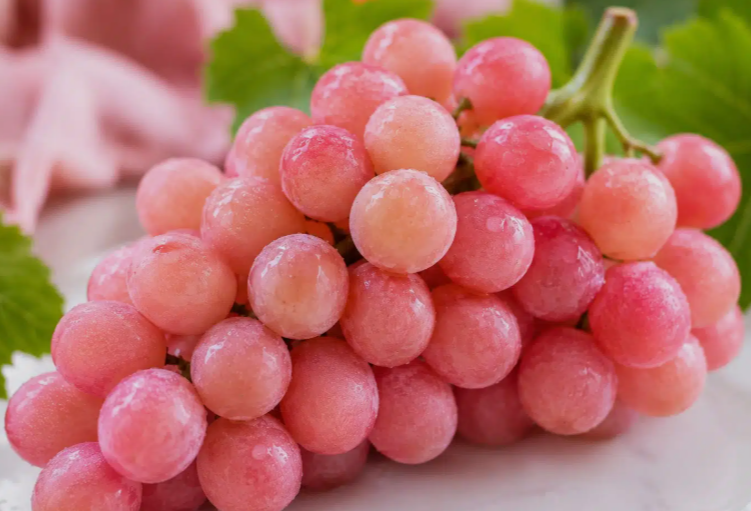
23. Reliance Grape
Reliance is a seedless, pink-red grape released by the University of Arkansas in 1982. It is sweet, with the fruity flavor of American grapes and a skin that slips off the pulp. The vine survives winters to about 20 degrees below zero.
The color can be pale or patchy in hot weather even when the grapes are fully sweet. Taste is a better test than shade. The fruit ripens in August in most regions.
24. Canadice Grape
Canadice is a small, pink-red seedless grape released by breeders in New York in 1977. The berries grow in tight, heavy clusters. The flavor is sweet and slightly spicy.
It ripens early, often by mid-August, and can hang on the vine for weeks without spoiling. Full color develops better in cool climates than in hot ones. It is one of the most reliable seedless grapes for northern gardens.
25. Delaware Grape
Delaware is a small, pinkish-red American grape that became popular in Ohio in the mid-1800s. It is very sweet, with tender skin and a delicate flavor. It has long been used for sparkling wine in the eastern states.
The clusters turn from green to light pink-red in September. Sugar is high even when the color is pale. The variety is also widely grown as a table grape in Japan.
26. Pinot Gris Grape
Pinot Gris is a wine grape with grayish-pink skin, and its name means gray pinot. It arose as a color mutation of the dark Pinot Noir grape. Oregon is the leading American region for it.
The pink skin is usually separated from the juice quickly to make white wine. When the juice is left on the skins, it becomes a copper-pink wine. The berries deepen from green to dusky pink as they ripen.
27. Dragon Fruit
Dragon fruit is a cactus fruit with hot pink skin, green-tipped scales, and white flesh dotted with tiny black seeds. The taste is mild and lightly sweet, somewhere between kiwi and pear. This white-fleshed type is the one most often seen in supermarkets.
The pink skin is colored by betalains, the pigments found in beets. Ripe fruit is bright and evenly colored and gives slightly when pressed. The scale tips begin to wither as it reaches its peak.
28. Pink-Fleshed Dragon Fruit
Pink-fleshed dragon fruit comes from hybrids between white and red types, such as ‘Delight’ and ‘Cosmic Charlie’. The flesh ranges from pale blush to hot pink. These varieties are noticeably sweeter than the plain white kind.
Nothing on the outside separates them from white-fleshed fruit. They are sold by variety name, mostly at California farmers markets. The same ripeness signs apply, including bright skin and a slight give.
29. Peruvian Apple Cactus Fruit
Peruvian apple cactus is a tall, columnar cactus common in yards across Southern California and Arizona. Its apple-sized fruit has smooth, spineless, magenta-pink skin and white flesh with crunchy black seeds. The flavor is mild and sweet, like a juicy dragon fruit.
The skin shifts from violet to pinkish-red as the fruit ripens. It should be picked before it splits open, which happens within a day or two of full color. Many homeowners do not realize the fruit is edible.
30. Lychee
Lychee has a bumpy, leathery shell that ranges from rosy pink to red, depending on the variety. Inside is translucent white flesh with a sweet, floral taste. South Florida grows most of the domestic crop.
The main season is June through July, and the fruit does not ripen after picking. The pink shell browns within days of harvest, so color is a guide to freshness. Brown fruit that still feels full can be fine inside.
31. Pink Banana
Pink banana is a small ornamental species with fuzzy, bright pink fruits about 3 inches long. The clusters point upward instead of hanging down. The white flesh is sweet but packed with hard black seeds.
The peel splits open on its own when the fruit is ripe, which removes any guesswork. The plant stays 4 to 6 feet tall and survives winters in zone 8 with mulch. It is grown far more for its looks than for eating.
32. Wax Apple
Wax apple is a bell-shaped tropical fruit with glossy, waxy skin, most often in shades of pink. The flesh is crisp, airy, and watery, with a light sweetness. It grows in home gardens in South Florida and Hawaii.
Color is a rough guide to sugar, since pale pink fruit is mild and deep rose fruit is sweeter. The fruit bruises at a touch and lasts only a few days. It is eaten whole, skin included.
33. Rose Apple
Rose apple is a small, round fruit, pale yellow-green and often blushed with pink. It is hollow, with thin, crisp flesh and 1 or 2 loose seeds. The taste and smell are strikingly like rosewater.
A ripe fruit rattles when shaken, because the seeds come loose inside. The pink blush appears on the side facing the sun. The tree grows in Florida, California, and Hawaii, where it has become invasive.
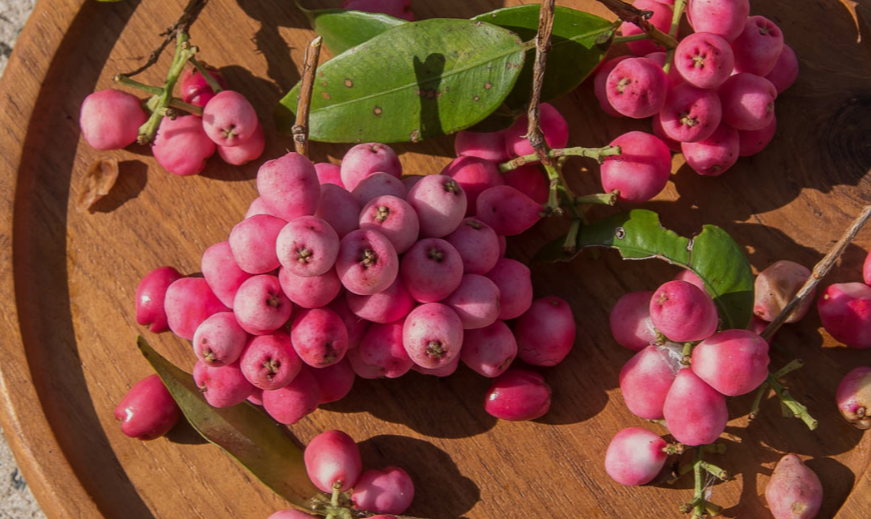
34. Lilly Pilly
Lilly pilly is an Australian evergreen shrub widely planted as a hedge in coastal California. It bears clusters of magenta-pink berries about half an inch wide. The fruit is crisp and tart, with a spicy note like clove.
The berries are ripe when fully colored and beginning to drop, usually in summer and fall. Most gardeners never taste them, though they make a good pink jelly. The color holds through cooking.
35. Chilean Guava
Chilean guava is a small evergreen shrub from South America with pea-sized berries in deep pink to red. The flavor resembles wild strawberry with a hint of spice. It is said to have been a favorite fruit of Queen Victoria.
The berries ripen in late fall and are ready when soft and strongly fragrant. The shrub suits zones 8 to 10 and does best in the mild Pacific Northwest. Each berry is eaten whole.
36. Pink Peppercorn
Pink peppercorn is the dried berry of the Peruvian and Brazilian pepper trees and is not related to true pepper. It has a thin, brittle, rosy shell and a sweet, resinous, mildly peppery taste. Cooks use it for color and aroma.
The trees belong to the cashew family, so the berries can cause reactions in people with tree nut allergies. The berries are harvested when they turn from green to rose-pink. The Brazilian species is also a major invasive plant in Florida.
37. Pink Lemonade Blueberry
Pink Lemonade is a true blueberry that ripens deep pink and never turns blue. It was developed by USDA breeders and became the first pink blueberry widely sold to gardeners. The berries are firm, sweet, and milder than blue ones.
The fruit passes from green to pale pink to deep rose, and only the last stage is ripe. Pale pink berries are still sour. The bush grows 4 to 5 feet tall and needs acidic soil.
38. Pink Popcorn Blueberry
Pink Popcorn is a cold-hardy pink blueberry released by the University of Minnesota in 2014. Its blush-colored berries are paler than those of Pink Lemonade, closer to cream with a pink flush. The taste and crisp texture match a good blue variety.
Because the berries never darken, ripeness is judged by a full blush and a slight softness. The bush survives winters in zone 3. It ripens from early to midseason.
39. Pink Champagne Currant
Pink Champagne currant bears long strings of translucent, pale pink berries in July. It is sweeter and less sharp than a red currant and is pleasant to eat fresh. Each berry is about a quarter inch wide.
Pink currants are a color form between red and white types. The whole string is picked once every berry has turned from green to clear pink. Some states restrict currant bushes to protect white pines from a rust disease.
40. Gloire des Sablons Currant
Gloire des Sablons is a French heirloom currant with pale, rosy-pink berries. The fruit is translucent enough that the seeds show through the skin. The flavor is mild and sweet for a currant.
It ripens in midsummer on an upright bush 3 to 4 feet tall. Yields are lower than those of red currants, which is why it stayed a garden variety. The berries make a delicate, pale pink jelly.
41. Pixwell Gooseberry
Pixwell gooseberry was developed in North Dakota in 1932 and is the most common gooseberry in American gardens. Its berries turn rosy-pink when fully ripe, starting from pale green. The flavor is mild and tart-sweet.
Green berries are picked for pies, and pink ones are sweet enough to eat fresh. The fruit hangs on long stems away from the thorns, which makes picking easy. Bushes are hardy to zone 3.
42. Captivator Gooseberry
Captivator is a cross of American and European gooseberries with large, teardrop-shaped fruit. The berries ripen pinkish-red and are sweet enough to eat straight from the bush. The mature canes are nearly thornless.
Fruit colors gradually, and berries that are fully pink and slightly soft are at their best. It ripens in mid-July across most northern states. The plant resists the mildew that troubles European gooseberries.
43. Pineberry
Pineberry is a pale strawberry with red seeds and a faint aroma of pineapple. In shade it stays creamy white, and in sun it develops a pink blush. It is smaller and softer than a red strawberry.
Ripeness is judged in reverse, by the seeds turning red while the flesh stays pale. The University of Florida released a commercial variety in 2020, and it is sold under several brand names. Pineberries need a red strawberry variety nearby for good pollination.
44. Double Gold Raspberry
Double Gold is a raspberry from the Cornell University breeding program with golden fruit washed in pink. The color is often described as champagne. The berries are very sweet and soft.
The name refers to its 2 crops, one in fall and one the following summer. Ripe berries show a full peach-pink blush and slip off the core easily. They are too tender to ship, so the variety is grown in home gardens.
45. Pink Mulberry
Pink mulberry is the lavender-pink fruit borne by some white mulberry trees. Trees of this species can ripen white, pink, or nearly black fruit, and the name refers to the buds, not the berries. The fruit is very sweet and low in acid.
Pink forms never darken, so softness is the test. Ripe berries fall when the branch is shaken. The tree was brought to America in colonial times to feed silkworms and now grows wild in many states.
46. Brandywine Tomato
Brandywine is a pink heirloom tomato that dates to the 1880s and often weighs more than 1 pound. It has soft, meaty flesh and a rich flavor that set the standard for heirloom tomatoes. The plant is recognizable by its broad, potato-like leaves.
A pink tomato has the same red flesh as a red one, but its skin is clear instead of yellow. Red flesh seen through clear skin reads as pink. Brandywine ripens late and often keeps green shoulders even when ready.
47. Arkansas Traveler Tomato
Arkansas Traveler is a rose-pink heirloom tomato from the Ozarks, grown since before 1900. The fruits are medium-sized, about 6 to 8 ounces, with a mild, balanced flavor. Arkansas named the pink tomato its official state fruit and vegetable in 1987.
This variety is valued for setting fruit through heat, humidity, and drought. The smooth skin resists cracking after rain. It is ripe when evenly pink with a slight give.
48. Mortgage Lifter Tomato
Mortgage Lifter is a pink beefsteak tomato bred in West Virginia in the 1930s by a radiator repairman with no formal training. He sold the seedlings for $1 each and paid off his $6,000 mortgage in 6 years. The fruits commonly weigh 1 to 2 pounds.
The flesh is meaty, mild, and sweet, with few seeds. Like other pink tomatoes, it owes its shade to clear skin over red flesh. Large fruits ripen from the bottom up and are best picked before the shoulders soften.
49. Pink Bumblebee Tomato
Pink Bumblebee is a cherry tomato with rosy-pink skin marked by gold stripes. It was bred in California in the 2010s. The flavor is sweet and bright, and the fruit resists cracking.
The stripes are the ripeness guide, turning from green to gold as the background turns from pale to rose. Fruits ripen a few at a time along each cluster. The vines keep bearing until frost.
50. Rosa Bianca Eggplant
Rosa Bianca is an Italian heirloom eggplant, round and plump, shaded in lavender-pink and white. The flesh is creamy and mild, with no bitterness and few seeds. An eggplant is a berry in the botanical sense.
Eggplants are eaten before they are ripe, so gloss matters more than color. A shiny fruit that springs back when pressed is ready. Dull skin means it is overmature, seedy, and bitter.
51. Pink Banana Squash
Pink banana squash is a very large winter squash, 2 to 3 feet long, with smooth, salmon-pink skin. The orange flesh is sweet, dry, and fine-grained. It is so big that stores in the West usually sell it in cut pieces.
The rind turns from pale cream to pink and hardens as the squash matures. A fingernail should not dent it at harvest. It keeps for 3 to 6 months in a cool, dry place.
52. Porcelain Doll Pumpkin
Porcelain Doll is a pink-skinned pumpkin introduced in 2012, with a share of seed sales pledged to breast cancer research. It is squat and deeply ribbed and weighs about 20 pounds. The deep orange flesh is sweet and good for pie.
The skin is tan at first and turns pink as the fruit matures and cures. Leaving it on the vine until the stem dries gives the best color. It is grown for both display and cooking.
53. Galeux d’Eysines Squash
Galeux d’Eysines is a French heirloom squash with flattened, salmon-pink fruit covered in tan, peanut-like warts. It weighs 10 to 20 pounds. The orange flesh is smooth and sweet and is traditionally used for soup.
The warts form when sugar seeps through the skin and hardens. More warts mean a sweeter, more mature squash. It does not store as long as other winter squash and is best used within a few months.
54. Cranberry Bean
Cranberry bean, also called borlotti, has cream-colored pods splashed with bright pink. The pod is the fruit of the plant, and the beans inside are cream with red speckles. Cooked, they are creamy and slightly nutty.
The pods are ready for fresh shelling when they turn from green to cream with vivid pink streaks and feel leathery. Left longer, they dry to tan for storage. The pink markings on the beans fade to brown in cooking.
55. Rhubarb
Rhubarb is a leaf stalk and not a fruit, but a U.S. customs court ruled in 1947 that it should be classed as one because of how it is used. The stalks range from green to pink to deep red and are very tart. It is cooked with sugar in pies, sauces, and jam.
Stalk color depends on the variety and has nothing to do with ripeness or sweetness. Green stalks are just as ready as pink ones. The leaves are toxic and must always be cut off.
Key Takeaways
- Pink-colored fruits come in many shapes and sizes, ranging from small berries and tropical fruits to large melons and tree fruits.
- Their color can vary from pale pink and blush to bright pink, coral, salmon, and pinkish-red depending on the variety and ripeness.
- Some fruits have naturally pink flesh, while others develop pink skin or a combination of pink skin and flesh.
- Popular examples include pink guava, dragon fruit, grapefruit, watermelon, pink pineapple, lychee, and certain apple and grape varieties.
- Pink fruits can differ greatly in flavor, with some being sweet and juicy while others have tart, acidic, floral, or mildly tropical flavors.
- Many pink-colored fruits are grown in warm climates, but several varieties can also thrive in temperate regions or be cultivated in greenhouses and home gardens.