Naturally blue flowers are genuinely rarer than a walk through any garden center might suggest, since true blue pigment is one of the harder colors for a plant to produce, built from anthocyanin, the same pigment family behind red and purple coloring elsewhere in nature, shifted toward blue through a specific pH environment within the flower’s own petal cells. A considerable number of flowers marketed as “blue” are actually closer to violet or lavender once examined closely, which makes a genuinely, reliably blue bloom worth seeking out specifically rather than assuming any purplish flower will do.
“Naturally” blue, for the purposes of this list, means a plant whose typical, expected flower color is blue without requiring any artificial dye or unusual intervention, though it’s worth an honest exception for hydrangea, whose considerable color range genuinely includes blue as one of its natural possibilities depending on soil chemistry rather than any dye or breeding trick. That’s a real, natural response to available soil aluminum, not an artificial manipulation, which is different from spraying a white flower with blue dye for a themed bouquet.
Blue flowers span a genuinely wide range of plant types, from tiny spring bulbs blooming before most other plants have even begun growing, to towering perennial spikes, to sprawling vines and even a handful of aquatic plants growing directly in standing water. Organizing a list this size by general plant category makes the sheer diversity considerably easier to take in than a single undifferentiated list of 75 names would.
The Missouri Botanical Garden’s plant finder database documents bloom color and cultivar variety for the vast majority of species covered here. What follows covers 75 naturally blue flowers, spanning spring bulbs, perennials, annuals, shrubs and vines, wildflowers, and aquatic plants.
Spring Bulbs
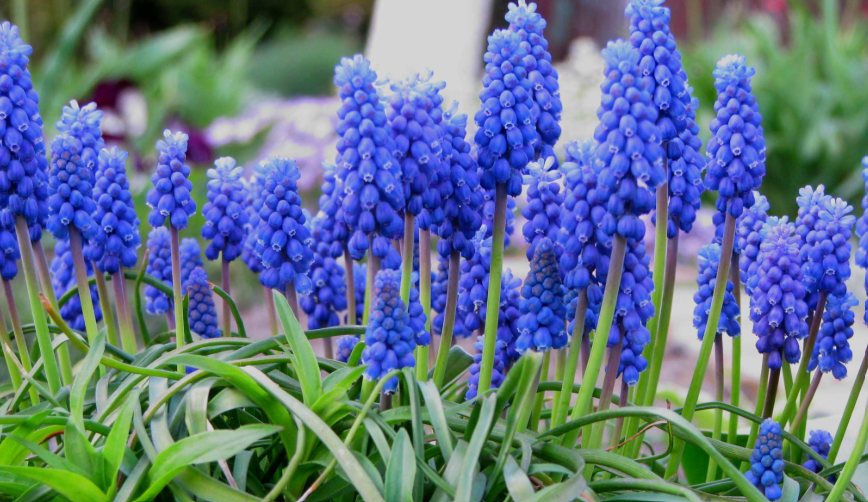
Grape Hyacinth
Grape hyacinth produces genuinely dense, tightly clustered spikes of small blue flowers each spring, its considerable resemblance to a cluster of tiny grapes giving the plant its common name. Its early bloom timing and reliable naturalizing ability have made it a popular bulb for mass spring plantings.
It grows from a bulb planted in fall, its considerable spread over time creating genuine drifts of blue color in an established bed. The University of Illinois Extension’s plant biology resources documents the anthocyanin-based pH mechanism behind true-blue pigmentation across the flowering plants covered in this list.
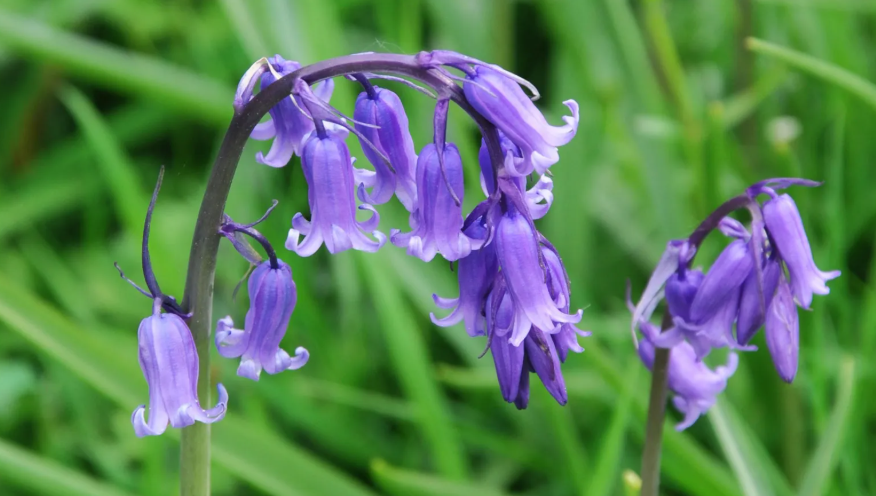
Bluebell
Bluebell produces genuinely dense carpets of small, nodding blue flowers each spring, its considerable naturalizing ability having made woodland bluebell displays a genuine seasonal spectacle in parts of the world where it grows wild. Its early bloom timing places it among the first considerable flushes of blue color in a temperate spring garden.
It tolerates significant shade and consistently moist, rich soil, thriving in the same dappled woodland conditions many other spring bulbs favor.
Siberian Squill
Siberian squill produces genuinely small but vividly saturated blue star-shaped flowers, among the earliest and most reliably blue of any spring bulb. Its considerable ease of naturalizing has made it a popular choice for a lawn or woodland edge planting where it can spread freely.
It tolerates a range of soil conditions and partial shade, its considerable cold hardiness letting it bloom reliably even through a lingering late-winter chill.
Glory-of-the-Snow
Glory-of-the-snow produces genuinely star-shaped blue flowers with a paler center, often emerging directly through late snow cover in exactly the conditions its common name references. Its considerable early bloom timing makes it one of the very first blue flowers of the entire growing season.
It tolerates cold, well-drained soil and full sun to partial shade, thriving in exactly the cool, early-spring conditions its bloom timing depends on.
Camassia
Camassia, a genuine native prairie bulb, produces tall spikes of star-shaped blue-purple flowers considerably taller than most other spring bulbs on this list. Its native wetland-adjacent habitat has made it a valued addition to a rain garden or naturalized meadow planting.
It tolerates consistently moist soil better than many other spring bulbs, thriving in exactly the damp meadow conditions its native range provides.
Dwarf Iris
Dwarf iris, particularly Iris reticulata, produces genuinely small but intensely saturated blue-purple blooms among the very earliest flowers of the entire spring season. Its compact size makes it well suited to a rock garden or the front of a border where a larger iris would overwhelm the space.
It tolerates cold, well-drained soil, thriving in exactly the sharp drainage a rock garden or raised bed provides.
Blue Anemone
Blue anemone, in several species commonly called windflower, produces genuinely delicate, cup-shaped blue blooms with a pale center formed by its cluster of stamens. Its early spring timing and considerable woodland charm have made it a favorite for a shaded spring garden.
It tolerates partial shade and consistently moist, well-drained soil, thriving in the same dappled woodland conditions many spring ephemerals favor.
Puschkinia
Puschkinia produces genuinely delicate, pale blue star-shaped flowers with subtle darker blue striping down each petal, a quietly elegant addition to an early spring bulb display. Its considerable subtlety compared to more vividly colored spring bulbs makes it a favorite for a naturalistic planting style.
It tolerates a range of soil conditions and full sun to partial shade, naturalizing gently over time in a favorable spot.
Perennials
Delphinium
Delphinium produces genuinely tall, dramatic flower spikes in some of the most intensely saturated true blues available in the entire perennial garden. Its considerable height and vertical form provide real structural interest in a mixed border.
It thrives in full sun and rich, well-drained soil, demanding staking in a windy site given its considerable height and top-heavy bloom spikes.
Salvia
Salvia offers genuinely reliable blue-flowering varieties across its considerable range of species, its spikes of small tubular flowers drawing significant pollinator attention throughout a long bloom period. Its ease of care has made it a dependable garden staple for a blue-themed bed.
It thrives in full sun and well-drained soil, tolerating heat and drought considerably better than many other flowering perennials.
Russian Sage
Russian sage produces tall, airy spikes of small blue-purple flowers, its considerable fine texture and silvery foliage providing a soft, hazy blue effect across an entire planting. Its long bloom period and drought tolerance have made it a favorite for a sunny, low-maintenance border.
It wants full sun and well-drained soil, and cutting it back hard each spring keeps its open, airy growth habit consistent.
Veronica
Veronica, also called speedwell, produces genuinely reliable spikes of small blue flowers over a long bloom period, its considerable ease of care making it a dependable border choice. Its low-maintenance nature and pollinator appeal have made it a longtime perennial garden favorite.
It tolerates a range of soil conditions and full sun, thriving with minimal care once established.
Balloon Flower
Balloon flower produces genuinely distinctive puffed buds that pop open into star-shaped blue blooms, the inflated bud stage giving the plant its common name. Its considerable longevity as a perennial means an established planting can persist reliably for many years.
It tolerates a range of soil conditions and full sun to partial shade, thriving with minimal maintenance once established.
Baptisia
Baptisia, also called false indigo, produces genuinely striking spikes of blue, pea-like flowers on a substantial, long-lived native perennial. Its considerable drought tolerance once established and low maintenance needs have made it an increasingly popular native garden choice.
It tolerates poor, dry soil and full sun, developing a genuinely deep taproot that makes an established plant remarkably self-sufficient.
Gentian
Gentian produces a genuinely intense, saturated blue trumpet-shaped bloom considered by many alpine gardeners among the truest blues available in the entire plant kingdom. Its considerable difficulty to cultivate successfully has made a thriving gentian planting something of a genuine point of pride among rock garden enthusiasts.
It tolerates cool conditions and consistently moist, well-drained soil, thriving in exactly the alpine or mountainous conditions many species naturally occupy.
Bellflower
Bellflower, also called campanula, produces genuinely delicate, nodding blue bell-shaped blooms across a considerable range of available species and forms. Its variety of available heights, from low groundcover types to taller border varieties, makes it a versatile choice throughout a garden.
It tolerates a range of soil conditions and full sun to partial shade, thriving with minimal care once established.
Sea Holly
Sea holly produces genuinely striking, spiky, metallic-blue flower heads with an unusual, almost thistle-like appearance quite different from a typical soft-petaled bloom. Its distinctive texture provides real visual contrast against softer, rounder blue flowers nearby.
It tolerates poor, dry soil and full sun, thriving on considerable neglect once its deep taproot is established.
Globe Thistle
Globe thistle produces genuinely spherical, spiky blue flower heads on a substantial, architectural perennial that draws considerable pollinator attention throughout summer. Its unusual round bloom shape makes it an immediately recognizable addition to a mixed border.
It tolerates poor, dry soil and full sun, thriving on considerable neglect once established.
Amsonia
Amsonia, also called bluestar, produces clusters of genuinely pale, star-shaped blue flowers in spring, followed by attractive golden foliage color in fall for real multi-season interest. Its considerable durability and low maintenance needs have made it an increasingly popular native perennial choice.
It tolerates a range of soil conditions and full sun to partial shade, thriving with minimal care once established.
Lupine
Lupine produces genuinely tall, dramatic spikes of pea-like flowers in vivid true blue among its considerable range of available colors. Its distinctive palmate foliage adds real textural interest even before the dramatic flower spikes emerge.
It tolerates poor, well-drained soil and full sun to partial shade, thriving in exactly the lean conditions many other tall perennials would find insufficient.
Monkshood
Monkshood, in its blue varieties, produces tall spikes of distinctive, helmet-shaped flowers, though it’s worth noting the plant is genuinely among the most toxic ornamental perennials commonly grown. Its dramatic late-season color has kept it in cultivation despite that considerable toxicity concern.
It tolerates partial shade and consistently moist, rich soil, its genuine and serious toxicity warranting real caution around children and pets during handling.
Himalayan Blue Poppy
Himalayan blue poppy produces genuinely one of the most intensely saturated true blues found anywhere in the plant kingdom, its papery, delicate petals surrounding a bright golden center. Its considerable difficulty to cultivate successfully outside a genuinely cool, humid climate has made it something of a holy grail among dedicated perennial gardeners.
It demands genuinely cool summers and consistently moist, humus-rich soil, thriving only in a narrow range of climates that closely mimic its native Himalayan habitat. The Royal Horticultural Society’s plant science resources documents this species’ genuine cultivation difficulty outside its specific native climate range.
Blue Flax
Blue flax produces genuinely delicate, sky-blue flowers on a fine, airy plant that reseeds itself readily across a naturalized meadow planting. Its considerable delicacy and light, see-through texture make it a graceful addition threaded through a mixed border.
It tolerates poor, dry soil and full sun, thriving on considerable neglect once established.
Catmint
Catmint produces long-blooming spikes of small lavender-blue flowers, its considerable nectar production drawing a wide range of pollinators throughout an extended summer bloom period. Its aromatic gray-green foliage provides attractive texture even between bloom flushes.
It thrives in full sun and well-drained soil, often reblooming with a simple midsummer shearing.
Hardy Geranium
Hardy geranium, in varieties like ‘Johnson’s Blue,’ produces genuinely soft, saturated blue-purple flowers over a long bloom period on a reliable, easy-care perennial. Its mounding, spreading habit makes it a useful groundcover between taller blue-flowering companions.
It tolerates a range of soil conditions and full sun to partial shade, thriving with minimal care once established.
Sea Lavender
Sea lavender produces genuinely airy clouds of small blue-purple flowers, its delicate, cloud-like form making it a popular filler both in the garden and in dried flower arrangements. Its considerable salt tolerance has made it a valued choice for a coastal garden.
It tolerates poor, sandy soil and salt spray, thriving in exactly the challenging coastal conditions many other flowering perennials can’t handle.
Chicory
Chicory produces genuinely vivid sky-blue, daisy-like flowers on a wiry, easy-to-grow roadside plant found naturalized across much of North America and Europe. Its considerable toughness and ability to thrive in poor, disturbed soil have made it a familiar wayside sight.
It tolerates poor, dry, disturbed soil and full sun, thriving with essentially no cultivation required.
Siberian Iris
Siberian iris produces genuinely elegant blue blooms on narrow, grass-like foliage, its considerable cold hardiness and low-maintenance nature making it a popular, easy-care perennial. Its slender form suits both a formal border and a more naturalized planting style.
It tolerates a range of soil conditions, including consistently moist sites many other iris types can’t handle, thriving in full sun to light shade.
Brunnera
Brunnera, also called Siberian bugloss, produces genuinely delicate sprays of small, forget-me-not-like blue flowers held above attractive, often silver-patterned heart-shaped foliage. Its considerable shade tolerance has made it a valued groundcover for exactly the dim spots where fewer other blue-flowering perennials will bloom.
It tolerates significant shade and consistently moist, rich soil, thriving in the same damp woodland conditions many shade perennials require.
Woodland Phlox
Woodland phlox, in its blue varieties, produces clusters of fragrant blue flowers in a genuine native spring wildflower valued for its shade tolerance and gentle naturalizing habit. Its considerable fragrance adds a sensory dimension to an early spring woodland garden.
It tolerates significant shade and consistently moist, rich soil, thriving in the same dappled understory conditions many spring ephemerals favor.
Virginia Bluebells
Virginia bluebells produce genuinely nodding clusters of true-blue, bell-shaped flowers on a native spring ephemeral that goes fully dormant by summer. Its considerable fleeting beauty has made its brief spring display something many native plant gardeners look forward to each year.
It tolerates significant shade and consistently moist, rich soil, thriving in the same damp woodland conditions many other spring ephemerals require.
Jacob’s Ladder
Jacob’s ladder produces genuinely delicate clusters of blue, bell-shaped flowers above finely divided, ladder-like foliage that gives the plant its common name. Its considerable shade tolerance and gentle woodland charm have made it a favorite for a naturalized shade garden.
It tolerates partial shade and consistently moist, rich soil, thriving in the same damp woodland conditions many other shade perennials favor.
Blue Star Creeper
Blue star creeper produces genuinely tiny, star-shaped pale blue flowers on a low, mat-forming groundcover popular for filling gaps between garden stepping stones. Its considerable tolerance for light foot traffic has made it a practical, low-maintenance choice for exactly that purpose.
It tolerates partial shade and consistently moist soil, spreading readily enough to fill in ground-level gaps within a season or 2.
Ajuga
Ajuga, also called bugleweed, produces genuinely dense spikes of small blue-purple flowers atop a low, spreading groundcover valued as much for its colorful foliage as its bloom. Its considerable vigor makes it an effective, if occasionally aggressive, groundcover choice.
It tolerates a range of soil conditions and full sun to significant shade, spreading vigorously enough to need occasional containment.
Stokes’ Aster
Stokes’ aster produces genuinely large, fringed blue flowers on a compact native perennial valued for its considerable bloom size relative to its modest overall plant height. Its unusual, feathery petal texture sets it apart from a typical daisy-like bloom.
It tolerates a range of soil conditions and full sun, thriving with minimal care once established.
Leadwort
Leadwort, also called ceratostigma, produces genuinely vivid true-blue flowers in late summer and fall, a valuable late-season color source when many other blue-flowering perennials have already finished. Its foliage often turns a striking bronze-red in fall, adding a second season of color.
It tolerates a range of soil conditions and full sun to partial shade, spreading gradually to form a genuine groundcover over time.
Annuals
Cornflower
Cornflower produces genuinely vivid true-blue blooms on a wiry, easy-to-grow annual, its considerable color intensity making it one of the more reliably blue flowers available to a home gardener. Its long history as a wildflower and cut flower favorite reflects both its considerable charm and its remarkably low-maintenance nature.
It thrives in full sun and average soil, often self-seeding readily enough to return reliably the following season.
Forget-Me-Not
Forget-me-not produces genuinely small but vivid sky-blue flowers in dense clusters, its low, spreading habit making it a popular groundcover choice beneath taller companion plants. Its considerable self-seeding tendency means a single planting often continues spreading gently for years.
It tolerates partial shade and consistently moist soil, thriving in exactly the damp, cool conditions many spring bloomers favor.
Morning Glory
Morning glory, particularly the Heavenly Blue variety, produces a genuinely vivid true-blue trumpet-shaped bloom each morning, its rapid climbing growth making it a popular choice for a trellis or fence needing quick seasonal coverage. Its considerable color intensity has made this specific variety one of the most recognizable blue flowers in casual home gardening.
It thrives in full sun and average soil, climbing vigorously given a support structure to grow on.
Larkspur
Larkspur, a genuine annual relative of delphinium, produces tall spikes of vivid blue flowers considerably easier to grow from seed than its more demanding perennial cousin. Its cottage garden charm and reliable self-seeding have made it a longtime favorite for a cutting garden.
It thrives in full sun and well-drained soil, often self-seeding readily enough to return reliably the following season.
Ageratum
Ageratum produces genuinely fuzzy, cluster-forming blue or purple flowers on a compact, easy-care annual popular for edging a border. Its considerable bloom reliability through summer heat has made it a dependable, low-maintenance bedding plant choice.
It thrives in full sun to partial shade, blooming reliably from summer through the first frost with minimal care.
Lobelia
Lobelia produces genuinely small but intensely saturated blue flowers on a compact, mounding or trailing annual popular for containers and border edges. Its considerable color intensity has made certain varieties among the most vividly blue annuals commonly available.
It tolerates full sun to partial shade and consistently moist soil, blooming most reliably in cooler spring and fall conditions.
Nigella
Nigella, also called love-in-a-mist, produces genuinely delicate blue flowers surrounded by feathery, thread-like foliage, followed by distinctive ornamental seed pods valued in dried arrangements. Its unusual, ethereal bloom form has made it a longtime cottage garden favorite.
It thrives in full sun and well-drained soil, often self-seeding readily enough to naturalize gently throughout a favorable bed.
Cape Daisy
Cape daisy, also called osteospermum, produces genuinely vivid blue-purple varieties among its considerable range of available colors, its daisy-like form providing reliable, cheerful color through a long bloom season. Its considerable heat tolerance has made it a popular choice for a sunny border or container.
It thrives in full sun and well-drained soil, blooming most prolifically during the cooler shoulder seasons of spring and fall.
Mealy Cup Sage
Mealy cup sage, a genuine annual salvia species, produces dense spikes of small, intensely blue-violet flowers over an extended summer bloom period. Its considerable reliability and drought tolerance have made it a popular choice for a sunny border needing consistent blue color.
It thrives in full sun and well-drained soil, tolerating considerable heat and drought once established.
Torenia
Torenia, also called wishbone flower, produces genuinely striking blue and purple bicolor blooms with excellent shade tolerance, making it one of the more reliable flowering options for exactly the spots where fewer other bedding plants perform well. Its compact, mounding habit suits both containers and shaded border edges.
It thrives in partial to full shade and consistently moist soil, blooming continuously through a long summer season with minimal maintenance.
Browallia
Browallia produces genuinely vivid violet-blue, star-shaped flowers on a shade-tolerant annual valued specifically for reliable color in exactly the dim spots many other blue-flowering plants struggle to bloom in. Its considerable shade tolerance has made it a favorite for a hanging basket or shaded container.
It thrives in partial to full shade and consistently moist soil, blooming reliably through summer with minimal direct sun.
Statice
Statice, in its blue varieties, produces small, papery flowers held in dense, colorful clusters valued both fresh and dried, retaining their color remarkably well after drying. Its considerable popularity as a dried flower makes a blue statice planting doubly useful for both garden display and craft use.
It thrives in full sun and well-drained soil, tolerating drought considerably better than many other flowering annuals.
Shrubs and Vines
Plumbago
Plumbago produces genuinely soft, sky-blue flower clusters over an extended bloom period, its sprawling, semi-woody growth habit making it a popular choice for a warm-climate border or container. Its considerable heat tolerance has made it a reliable summer-long bloomer in a hot climate many other blue-flowering plants would struggle with.
It thrives in full sun and well-drained soil in a warm climate, blooming continuously through a long, heat-intensive summer season.
Ceanothus
Ceanothus, also called California lilac, produces genuinely dense clusters of small blue flowers on a woody shrub particularly valued in West Coast native gardens. Its considerable drought tolerance once established reflects real adaptation to the Mediterranean-style climate of its native range.
It thrives in full sun and well-drained soil, tolerating considerable drought once its root system is established.
Butterfly Bush
Butterfly bush, in its blue varieties, produces long, fragrant flower spikes that draw considerable pollinator activity throughout an extended bloom season, though it’s become invasive in parts of the country and worth checking regional guidance before planting. Its considerable bloom volume has made it a longtime butterfly garden favorite despite that concern.
It thrives in full sun and well-drained soil, and choosing a sterile cultivar can reduce its invasive seeding potential where that’s a genuine regional issue.
Hydrangea
Hydrangea is genuinely capable of producing true blue flowers naturally, with acidic, aluminum-rich soil triggering that color shift rather than any dye or breeding trick. Its considerable bloom size and long-lasting flower clusters have made it one of the most popular flowering shrubs for exactly this kind of natural color response.
It thrives in partial shade and consistently moist, rich soil, its considerable responsiveness to soil pH giving a gardener genuine, direct control over its eventual flower color. The University of Georgia Extension’s soil and plant science resources documents the aluminum-availability mechanism behind hydrangea’s genuine soil-pH color response.
Blue Hibiscus
Blue hibiscus, genuinely distinct from the more common tropical hibiscus, produces true blue-purple flowers on a woody Australian native shrub valued for that unusual color within the broader hibiscus family. Its considerable heat and drought tolerance once established have made it a popular choice in warm coastal climates.
It thrives in full sun and well-drained soil, tolerating considerable coastal exposure and drought once established.
Rose of Sharon
Rose of Sharon, in its blue-toned varieties, produces large, showy hibiscus-like blooms on a reliably cold-hardy woody shrub considerably tougher than its tropical hibiscus relatives. Its considerable late-summer bloom timing fills a genuine gap when many earlier-flowering shrubs have already finished.
It tolerates a range of soil conditions and full sun to partial shade, thriving with minimal care once established.
Blue Potato Bush
Blue potato bush produces genuinely abundant clusters of small, star-shaped blue-purple flowers with a bright yellow center on a sprawling, semi-woody shrub. Its considerable bloom volume and long flowering season have made it a popular warm-climate landscaping choice.
It thrives in full sun and well-drained soil in a warm climate, blooming nearly continuously through a long growing season.
Agapanthus
Agapanthus produces genuinely striking rounded flower clusters in true blue, its dramatic globe-shaped bloom heads standing atop tall, leafless stems. Its considerable drought tolerance once established makes it a practical choice for a sunny, low-water garden bed.
It thrives in full sun and well-drained soil, tolerating considerable heat and drought once its root system is established.
Clematis
Clematis, in varieties like ‘Jackmanii,’ produces genuinely large, vivid blue-purple blooms on a vigorous climbing vine popular for a trellis or arbor. Its considerable bloom size and reliable performance have made it one of the most popular flowering vines available.
It tolerates full sun to the flower with shaded roots, a specific combination often summarized as “head in the sun, feet in the shade.”
Passionflower
Passionflower produces a genuinely elaborate corona structure at its center, its fine, thread-like filaments frequently banded in vivid blue against a paler base petal color. Its intricate, almost otherworldly appearance has made it one of the most visually striking flowering vines a home gardener can grow.
It climbs vigorously given a trellis, tolerating full sun and well-drained soil in a warm to temperate climate.
Wisteria
Wisteria produces genuinely dramatic, cascading clusters of blue-purple flowers on an enormously vigorous climbing vine, among the most iconic naturally blue-flowering plants grown anywhere. Its considerable vigor requires a genuinely sturdy structure and regular pruning to keep the vine’s substantial growth in check.
It thrives in full sun and well-drained soil, its considerable vigor and weight requiring a structure genuinely strong enough to support decades of woody growth. The Missouri Botanical Garden’s plant finder database documents wisteria’s considerable structural weight requirements once a vine reaches full maturity.
Sweet Pea
Sweet pea, in its blue varieties, produces genuinely fragrant, delicate flowers on a climbing annual vine valued for both its color and its considerable scent. Its cool-season preference makes it a favorite for an early spring or fall cutting garden.
It thrives in full sun and rich, well-drained soil, performing best in cooler weather before summer heat causes it to decline.
Wildflowers and Native Plants
Spiderwort
Spiderwort produces genuinely vivid blue-purple, 3-petaled flowers each opening for just a single day, on a native perennial that continues producing new blooms in succession throughout its bloom period. Its considerable ease of care and reliable spread have made it a popular native garden choice.
It tolerates a range of soil conditions and full sun to partial shade, thriving with minimal care once established.
Blue-Eyed Grass
Blue-eyed grass produces genuinely small but vividly blue-purple, star-shaped flowers on a native plant with grass-like foliage despite not actually being a true grass. Its diminutive size makes it a subtle but charming addition to a native meadow or rock garden planting.
It tolerates a range of soil conditions and full sun to partial shade, thriving in exactly the meadow conditions its native habitat provides.
Prairie Gentian
Prairie gentian, a genuine wild relative of the more commonly cultivated lisianthus, produces elegant blue-purple, rose-like blooms native to American prairies and moist meadows. Its considerable elegance in the wild reflects the same refined bloom form that’s made its cultivated relative so popular as a cut flower.
It tolerates consistently moist soil and full sun, thriving in exactly the damp prairie conditions its native habitat provides.
Blue Vervain
Blue vervain produces genuinely small blue-purple flowers arranged along tall, slender spikes, a native wildflower valued for its considerable wildlife and pollinator appeal. Its tall, upright form makes it a useful vertical accent in a native meadow planting.
It tolerates consistently moist soil and full sun, thriving in exactly the damp meadow and streamside conditions its native habitat provides.
Harebell
Harebell, a genuine wild bellflower species, produces delicate, nodding blue bell-shaped flowers on thin, wiry stems found naturally across much of the Northern Hemisphere. Its considerable delicacy and understated charm have made it a beloved wildflower in exactly the rocky, exposed sites where sturdier plants often struggle.
It tolerates poor, rocky soil and full sun, thriving in exactly the lean, exposed conditions its native alpine and meadow habitats provide.
Blue Flag Iris
Blue flag iris, a genuine North American native wildflower, produces striking blue-purple blooms in wet meadows and along pond and stream edges throughout much of its native range. Its considerable value for wetland restoration reflects its natural adaptation to consistently soggy soil.
It tolerates consistently wet to standing water conditions, thriving in exactly the marshy habitat many other iris types can’t tolerate.
Fringed Gentian
Fringed gentian produces genuinely striking, intensely blue flowers with distinctively fringed petal edges, a native wildflower blooming in fall when many other wild blue flowers have already finished. Its considerable rarity and specific habitat requirements have made a wild fringed gentian sighting a genuine highlight for native plant enthusiasts.
It tolerates consistently moist, undisturbed soil, thriving in exactly the specific wet meadow habitat its considerable habitat sensitivity requires. The USDA Forest Service’s native plant resources documents fringed gentian’s genuine habitat specificity and its status as a conservation-sensitive native wildflower in several states.
Blue Wood Aster
Blue wood aster produces genuinely abundant small, pale blue-violet flowers in fall, a native woodland wildflower providing real late-season color in exactly the shaded conditions many other fall bloomers can’t tolerate. Its considerable shade tolerance has made it a valued addition to a native woodland garden.
It tolerates significant shade and a range of soil conditions, thriving in the same wooded understory habitat many other native fall bloomers favor.
Aquatic Plants
Water Hyacinth
Water hyacinth produces genuinely showy spikes of blue-purple flowers atop its floating rosette of leaves, a striking bloom despite the plant’s considerable reputation as an aggressive invasive species in many warm-climate waterways. Its floating growth habit means the flowers rise directly from the water’s surface rather than any rooted structure.
It thrives in full sun and still water, its aggressive floating growth genuinely capable of covering an open pond surface if left unmanaged.
Pickerelweed
Pickerelweed, a genuine native aquatic wildflower, produces spikes of blue-purple flowers directly from shallow pond and wetland margins throughout much of its native range. Its considerable value for pond edge wildlife habitat has made it a popular choice for a natural water garden.
It thrives in shallow standing water and full sun, thriving in exactly the marginal wetland conditions its native habitat provides.
More Blue-Flowering Favorites
Chinese Forget-Me-Not
Chinese forget-me-not produces genuinely vivid, intensely blue flowers considerably larger and more saturated than the more delicate true forget-me-not, on a biennial or short-lived perennial popular for its bold color. Its considerable color intensity has made it a favorite for adding a genuine splash of true blue to a mixed border.
It thrives in full sun and well-drained soil, often self-seeding readily enough to return reliably in subsequent seasons.
Anchusa
Anchusa, also called Italian bugloss, produces genuinely intense, saturated blue flowers on a tall, somewhat coarse perennial valued specifically for that rich color intensity. Its considerable height makes it a useful back-of-border choice in a cottage-style planting.
It tolerates a range of soil conditions and full sun, thriving with minimal care once established.
Borage
Borage produces genuinely vivid blue, star-shaped flowers that are among the most attractive blooms to bees and other beneficial insects in any garden, continuously producing new flowers throughout an extended bloom period. Its edible flowers and leaves have also made it a genuine culinary herb beyond its considerable ornamental value.
It thrives in full sun and average soil, blooming continuously and reliably attracting pollinators throughout the growing season.
Corydalis
Corydalis, in its blue varieties, produces genuinely delicate, tubular flowers above finely divided, fern-like foliage, a considerably less common blue than most other perennials on this list. Its preference for cool growing conditions has made it a specialty item among dedicated alpine and woodland gardeners.
It tolerates partial shade and consistently cool, moist, well-drained soil, thriving in exactly the specific conditions its considerable cultivation difficulty demands.
Bearded Iris
Bearded iris, in its blue varieties, produces genuinely dramatic, ruffled blooms on a classic garden perennial available in a considerable range of blue shades from pale powder blue to deep indigo. Its exposed rhizome and considerable bloom drama have made it a longtime garden favorite regardless of the specific color chosen.
It thrives in full sun and well-drained soil, its exposed rhizome genuinely benefiting from being planted at the soil surface rather than buried.
Key Takeaways
Blue flowers are often admired for their cool, calming appearance that stands out among warmer garden tones. Their color is less common in nature, making them appear unique and eye-catching in both wild and cultivated landscapes. The soft blue hues evoke a sense of peace and serenity wherever they grow.
These blooms can range from pale sky shades to deep indigo tones. Their coloring is influenced by soil conditions, light exposure, and pigment levels within the petals. Some varieties even shift in tone depending on the acidity or alkalinity of the soil they grow in.
They are frequently associated with tranquility, inspiration, and sincerity. Their gentle appearance often symbolizes trust, loyalty, and spiritual reflection, making them a popular choice in gardens and floral arrangements meant to convey calm emotion.
Many thrive in temperate climates with moderate sunlight and well-drained soil. They tend to prefer cooler temperatures and slightly moist environments, though a few species have adapted to harsher or drier conditions.
Pollinators such as bees and butterflies are naturally drawn to their vivid shades. The blue coloration often stands out against green foliage, guiding these insects toward the nectar within the blooms and supporting healthy pollination cycles.