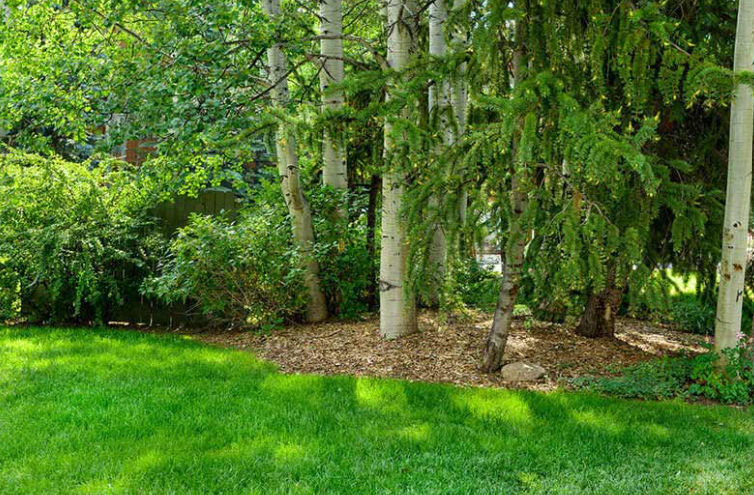
The most common mistake people make with a shady lawn isn’t neglect, it’s the seed bag. Every spring, someone overseeds a patchy area under a big oak with the same Kentucky bluegrass or perennial ryegrass mix that worked fine in the sunny part of the yard, and every year it thins out and dies back by midsummer regardless of how much water or fertilizer goes into it. The grass isn’t dying from bad luck. It’s dying because it was never bred to handle low light in the first place.
There’s also a hard limit worth knowing upfront: no turfgrass, no matter how shade-tolerant the seed bag claims it is, will hold up under less than roughly 3 hours of direct sun a day. Below that threshold you’re not choosing the wrong grass, you’re choosing between the wrong grass and no grass at all, and a shade-tolerant groundcover or a mulched bed becomes the more honest answer. Above that threshold, though, the right species makes a genuinely dramatic difference.
The University of Maryland Extension’s guide to growing grass in shade is a solid starting point if you want the specifics on mowing height and fertilizing schedules once you’ve settled on a species, since shaded turf generally needs different handling than a sunny lawn even within the same grass type. Fine fescues are where nearly every serious shade-lawn recommendation starts, but turf isn’t the only category worth considering here, since a handful of ornamental grasses and sedges will fill a shaded bed with texture and movement in spots where you’ve already given up on lawn entirely. What follows covers 21 grasses that genuinely perform in shade, spanning both lawn turf and ornamental ground cover.
Hard Fescue
Hard fescue is consistently rated the best-performing fine fescue for shade, tolerating low light, poor soil, and drought better than almost any other turfgrass available. It’s also one of the lowest-maintenance lawn grasses out there, needing infrequent mowing and minimal fertilizer.
It doesn’t handle foot traffic well, so it’s best reserved for a low-use area rather than a shaded play space or high-traffic path.
Strong Creeping Red Fescue
Strong creeping red fescue spreads slowly via underground rhizomes, filling in bare patches on its own rather than requiring constant reseeding. Along with Chewings fescue, it’s specifically singled out as one of the most tolerant fine fescues of dense foliar shade cast by trees.
It prefers drier soil and struggles in anything consistently wet, so good drainage matters even in a shaded spot.
Slender Creeping Red Fescue
Slender creeping red fescue is a distinct fine fescue subtype from its strong creeping cousin, sharing the same general shade tolerance and low-maintenance profile but spreading somewhat less aggressively. It’s commonly blended with other fine fescues rather than planted alone.
Like the rest of the fine fescue group, it wants at least a few hours of direct sun and soil that drains well, even in a shaded bed.
Chewings Fescue
Chewings fescue is one of the 2 fine fescues most consistently identified as the best performers under actual tree shade, alongside strong creeping red fescue. It forms a dense, bunching growth habit rather than spreading by rhizome.
A blend using roughly 40 percent Chewings fescue alongside strong creeping red and hard fescue is a commonly recommended formula for the toughest shaded lawn areas.
Sheep Fescue
Sheep fescue is the lowest-maintenance member of the fine fescue group, valued for its fine texture and minimal input needs rather than for standing up to heavy use. It tolerates shade well but isn’t typically the first choice where foot traffic is a concern.
It’s often included in a fine fescue blend at a smaller percentage rather than planted as the dominant species on its own.
Tall Fescue
Tall fescue has good shade tolerance for a coarser, more traffic-durable grass, needing a minimum of about 4 hours of direct sunlight to hold up over time. Its deep root system also makes it one of the more drought-resistant options on this list.
It’s commonly blended with a small percentage of shade-tolerant Kentucky bluegrass, since the bluegrass fills in bare spots the tall fescue’s bunching growth habit leaves behind.
Rough Bluegrass
Rough bluegrass, also called rough stalk bluegrass, is one of the most shade-tolerant turfgrasses available specifically in cool, consistently moist conditions, doing poorly the moment things dry out in summer heat. It spreads aggressively by stolons, which can be a genuine liability if it escapes into a sunny part of the lawn.
It’s best reserved for lawns with several mature trees and persistent shade, not a spot with just one or two trees causing partial thinning.
Shade-Tolerant Kentucky Bluegrass
Most Kentucky bluegrass varieties handle shade poorly, but a couple of specific cultivars, Glade and Bensun, are bred with genuinely better tolerance for light shade than the species typically offers. They’re usually blended into a tall fescue or fine fescue mix rather than planted as a monoculture.
Fertilizing slightly above the normal rate used in sunny lawns helps these varieties compensate for the reduced light they’re working with.
St. Augustinegrass
St. Augustinegrass is the most shade-tolerant warm-season turfgrass commonly grown in the South, holding up in partial shade where bermudagrass and buffalograss simply thin out and die. It spreads via above-ground stolons, forming a dense, coarse-textured lawn.
It still needs a reasonable amount of daily sun to persist long-term, and deep shade under a dense canopy will eventually thin it out regardless of the species’ relative tolerance.
Zoysiagrass
Zoysiagrass’s shade tolerance is genuinely more moderate than marketing sometimes suggests, and general guidance from several extension programs specifically advises against using it in shady locations at all. Certain finer-textured cultivars perform somewhat better than the species average, but it’s not the first grass to reach for under real tree cover.
If you already have a zoysia lawn and shade is creeping in from growing trees, thinning the canopy will likely help more than switching cultivars.
Hakone Grass
Hakone grass, also called Japanese forest grass, forms cascading, arching mounds of fine-textured foliage that genuinely prefer shade rather than merely tolerating it. Several variegated cultivars add gold or cream striping to the leaf blades for extra visual interest in a dim corner of the garden.
It wants consistently moist, well-drained soil and struggles in anything approaching drought, even in deep shade.
Pennsylvania Sedge
Pennsylvania sedge forms a low, fine-textured carpet that works as a genuine lawn alternative in dry shade where turfgrass simply won’t establish. It’s native to much of the eastern United States and spreads slowly to fill in a bed over a couple of seasons.
It tolerates foot traffic considerably better than most ornamental sedges, making it one of the more practical shaded lawn substitutes available.
Northern Sea Oats
Northern sea oats produces distinctive, flattened, oat-like seed heads that dangle from arching stems, offering movement and texture in a shaded bed that most turfgrasses can’t match. It tolerates both dry and consistently moist shaded soil.
It self-seeds readily enough that some gardeners consider it a touch aggressive, so deadhead the seed heads if you want to keep it contained to one area.
Autumn Moor Grass
Autumn moor grass forms neat, compact mounds of fine foliage and produces delicate flower spikes in late summer, tolerating shade considerably better than most ornamental grasses bred primarily for full sun. Its tidy, well-behaved growth habit makes it a low-maintenance choice for a formal shaded border.
It prefers well-drained soil and handles a range of soil pH without much complaint.
Blue Wood Sedge
Blue wood sedge produces fine, blue-green foliage that spreads gradually into an attractive groundcover under trees and shrubs. Its cool coloring provides a nice contrast against the darker greens typical of most shade garden foliage.
It tolerates a range of soil moisture levels, from reasonably dry to consistently damp, without much fuss either way.
Plantain-Leaved Sedge
Plantain-leaved sedge produces unusually broad, glossy, evergreen leaves rather than the narrow, grassy blades typical of most sedges, giving it a distinct textural presence in a shaded woodland garden. It stays attractive through winter in mild climates.
It prefers rich, consistently moist soil, closer to the woodland conditions it grows in naturally than to a typical dry shade bed.
Palm Sedge
Palm sedge produces broad, arching leaves radiating from the stem in a pattern that genuinely resembles a miniature palm frond, an unusual look among ornamental grasses and sedges. It tolerates both shade and consistently wet soil better than almost anything else on this list.
It’s a strong choice for a shaded rain garden or the soggy edge of a pond, where most turfgrass alternatives would simply rot.
Bowles Golden Sedge
Bowles golden sedge produces bright, golden-yellow foliage that genuinely lights up a shaded corner rather than disappearing into the background the way plain green foliage does. Its color holds up well even in fairly low light conditions.
It prefers consistently moist soil, doing best near a pond edge or in a rain garden setting rather than a dry shaded bed.
Variegated Japanese Sedge
Variegated Japanese sedge produces arching, cream-and-green striped foliage that forms a dense, mounding clump over time. Its variegation provides visual brightness in a shaded bed without needing any actual flowers to do it.
It tolerates a range of soil conditions and handles both light and fairly deep shade reasonably well once established.
Ivory Sedge
Ivory sedge stays notably compact and fine-textured compared to many of its sedge relatives, forming a tidy, low tuft rather than a sprawling clump. It’s a good fit for a smaller shaded rock garden or border edge.
It prefers well-drained, somewhat alkaline soil, tolerating drier conditions than several of the moisture-loving sedges on this list.
Wood Rush
Wood rush produces grass-like tufts of fine foliage that tolerate genuinely deep shade better than almost any true grass or sedge, thriving in exactly the dim, dry conditions under a dense evergreen canopy where little else survives. Its unassuming, understated appearance makes it more of a filler groundcover than a showpiece.
It spreads slowly by rhizome, gradually filling in a shaded bed over a few seasons without becoming aggressive.
Conclusion
Growing grass in shaded areas can be challenging because limited sunlight reduces the energy available for healthy growth. However, some grass species and blends are better adapted to low-light conditions and can perform well when their other growing requirements are met.
Choosing the right grass depends on the amount of shade, climate, soil type, moisture, and how the lawn will be used. Improving drainage, avoiding excessive watering, and pruning nearby vegetation where appropriate can also increase the amount of available light and improve growing conditions.
With suitable grass selection and proper care, shaded areas can maintain a healthier and more attractive lawn. Mowing at the correct height, managing foot traffic, and providing adequate moisture and nutrients can help shade-tolerant grasses remain established over time.