The Stately Conifer of the High Rockies
Engelmann spruce is the tree standing at timberline in the Rocky Mountains, a tall, narrow, spire-shaped conifer that thrives in exactly the cold, wet, high-altitude conditions few other trees can tolerate. Look for the tallest, straightest trees near the edge of a subalpine forest, and there’s a good chance you’re looking at Engelmann spruce.
Its scientific name, Picea engelmannii, honors George Engelmann, a German-born physician and botanist based in St. Louis, whose personal botanical collection eventually became the foundation of the world-famous Missouri Botanical Garden. Engelmann was a prolific collector and correspondent across the American West during the 19th century, and this stately high-mountain spruce is one of several plants that carry his name today. A prominent peak in Colorado’s Front Range, Engelmann Peak, was also named in his honor, a further reflection of how closely his work is tied to the Rocky Mountain landscape he spent so much of his career documenting.
This guide covers the tree’s classification and naming, how to identify it, where it grows, how it survives at the very edge of the treeline, its remarkable longevity, its tendency to hybridize with related spruce species, its wildlife value, and what it takes to grow one.
Botanical Classification
Engelmann spruce belongs to the genus Picea within the pine family, and its full scientific name, Picea engelmannii Parry ex Engelm., reflects a common botanical convention where one researcher, in this case Charles Christopher Parry, first proposed the name and another, George Engelmann himself, formally published and validated the description. A primarily Mexican segment of the species is sometimes formally distinguished from the typical form found across the rest of its range, though no other varieties or geographic races are generally recognized.
The genus name Picea comes from the ancient Latin word for pitch, a nod to the resinous sap common across all spruce species. Engelmann spruce is closely related to several other North American spruces, and that close relationship has real practical consequences, since the species hybridizes naturally where its range overlaps with its relatives.
Identifying Characteristics
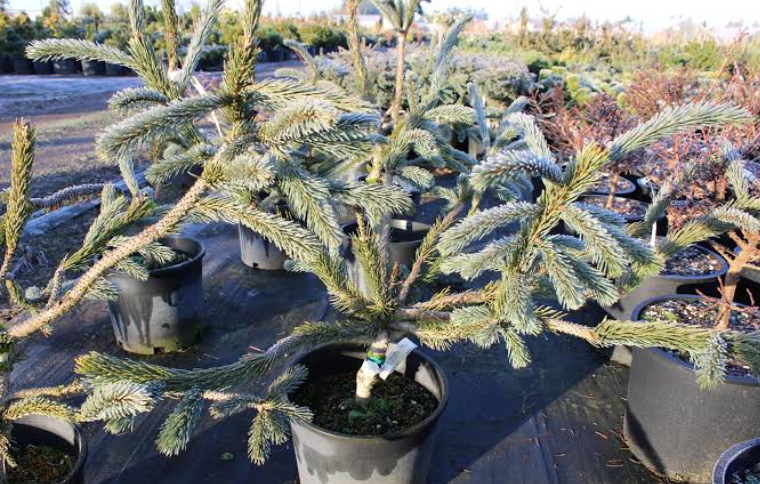
Engelmann spruce has sharp, four-sided needles, and one of the more reliable ways to distinguish it from a similar-looking relative is surprisingly tactile: rolling a needle between your fingers reveals that distinct four-sided shape, and the young twigs themselves are noticeably, finely hairy, a feature that helps separate Engelmann spruce from the closely related blue spruce, whose twigs are usually hairless. Its bark is thin, gray-brown to reddish, and covered in loose, flaky scales.
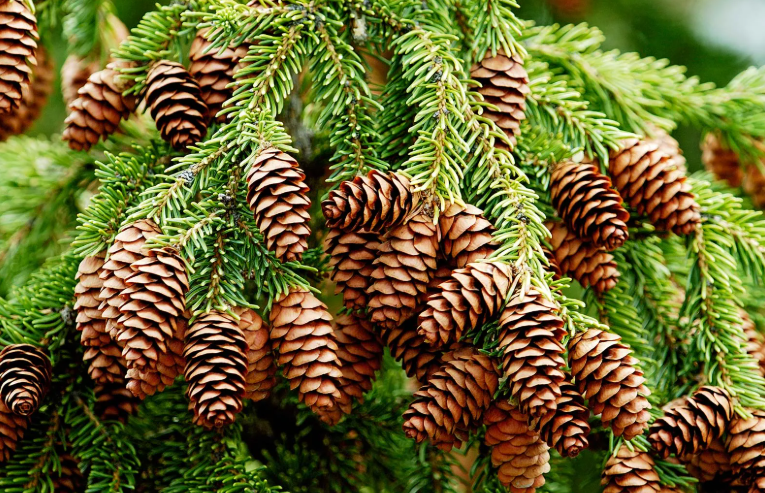
The tree’s overall silhouette is narrow and conical, built to shed heavy mountain snow efficiently, with graceful, somewhat bowed branches contributing to its notably elegant profile compared to some other conifers. Its cones are relatively slender and papery, hanging downward from the branches, and it produces small yellow flowers each spring. From a distance, the clearest identifying clue is often simply height and posture: Engelmann spruce frequently stands taller and straighter than the surrounding subalpine fir and other neighboring trees near the treeline. Engelmann spruce can also be told apart from the more coastal Sitka spruce by needle shape, since Sitka spruce needles are notably flatter, while Engelmann spruce needles stay distinctly four-sided all the way around.
Native Range and Habitat
Engelmann spruce is native to the mountains of western North America, ranging from central British Columbia and southwestern Alberta south through the Cascades of Washington and Oregon and into extreme northern California, and east through the Rocky Mountains from Montana down through Arizona and New Mexico. Two isolated populations also occur in northern Mexico, representing the southernmost extent of the species.
Elevation varies considerably across that range. Along the coastal mountains and interior valleys of southwestern British Columbia, the species can occur as low as roughly 2,500 to 3,500 feet, while further south and east it typically grows much higher, commonly found between 8,000 and 11,000 feet in Colorado and generally above 4,000 feet throughout most of its range. In many areas, Engelmann spruce grows right up to the alpine treeline itself, the elevation boundary beyond which trees simply can’t survive.
Surviving at Timberline
Life at the treeline demands genuine physiological toughness, and Engelmann spruce has adapted to that challenge in a visually dramatic way. As growing conditions become progressively harsher near the upper elevation limit of tree growth, Engelmann spruce and other high-mountain conifers are compressed into a stunted, wind-sculpted form called krummholz, a German word meaning “crooked wood.”
These krummholz specimens, twisted and low to the ground rather than tall and upright, provide genuine shelter for wildlife and other plants that might not otherwise survive the punishing wind and cold of that exposed alpine environment. It’s a striking contrast: the very same species that produces some of the tallest, straightest spire-like trees in a subalpine forest just a bit lower down the mountain becomes a low, twisted shrub mat once it reaches the true edge of where trees can grow at all.
Growth and Longevity
Engelmann spruce is a genuinely long-lived tree, typically maturing at around 300 years of age, and it retains the capacity to keep growing well even at a very advanced age, unlike many trees that slow dramatically once mature. Exceptional individual trees have been documented living 760 to 850 years, and trees in that extreme age range, while uncommon, are not unheard of.
Mature trees commonly reach 80 to 130 feet tall, though exceptional specimens grow considerably larger. One of the largest known Engelmann spruces, found along the North Cascades Highway, exceeds 220 feet in height, and a record specimen in Montana has been measured at 160 feet. Open-grown trees begin producing cones somewhere between 15 and 40 years of age, though the very best seed production doesn’t occur until the tree reaches somewhere between 150 and 250 years old, a genuinely long developmental timeline compared to many other conifers.
Hybridization
Engelmann spruce doesn’t stay neatly separate from its relatives wherever their ranges overlap. In the northern portion of its range, it hybridizes freely and intergrades with white spruce, a pattern especially well documented around Glacier National Park in Montana, where the two species’ ranges come into close contact. In British Columbia’s Chilliwack River Valley, Engelmann spruce has also been documented hybridizing with Sitka spruce.
That hybridization tendency extends to its close relative Colorado blue spruce as well, and the two species can be genuinely difficult to distinguish in the field. According to Wikipedia’s summary of blue spruce taxonomy, cone and cone-scale measurements between the two species actually overlap, even though blue spruce generally grows larger overall, and the most reliable field distinction comes down to those finely hairy Engelmann twigs versus the typically hairless twigs of blue spruce.
Wildlife Value
Engelmann spruce supports a genuine range of wildlife beyond simply providing shelter in its krummholz form near timberline. According to Calscape’s plant database, the species serves as a butterfly host plant, with 6 confirmed and as many as 19 likely butterfly and moth species relying on it at some point in their life cycle.
Its dense, high-elevation stands also provide cover and habitat value for a range of birds and mammals adapted to subalpine and near-treeline conditions, and its abundant, if periodic, seed crops feed various seed-eating birds and small mammals throughout the mountain ecosystems where it grows. Wood used from Engelmann spruce is prized well beyond the forest itself, valued for construction lumber and, thanks to its light weight and resonant qualities, for musical instrument soundboards as well.
Landscape Uses
Engelmann spruce is generally used in large-scale plantings, parks, and along highways rather than as a typical residential specimen tree, reflecting both its considerable eventual size and its specific preference for a cool, high-elevation climate that many home landscapes simply can’t replicate. The Oregon State University Landscape Plants database lists it as hardy to USDA zone 2, noting it performs best in full sun on moist, well-drained soil.
A named cultivar, ‘Vanderwolf’s Blue Pyramid,’ offers a more compact, gray-blue, densely pyramidal option for cultivation, reaching about 7 feet tall and 4 feet wide after 10 years; interestingly, it was originally sold under a different name, marketed as a form of Engelmann spruce until a 1971 reclassification clarified its identity. For a genuine, full-sized Engelmann spruce planting, choosing a site with real elevation, cool temperatures, and consistent moisture will do far more for the tree’s long-term health than any amount of soil amendment at a lower, warmer site.
Growing Considerations
Because Engelmann spruce is so specifically adapted to cool, moist, high-mountain conditions, it performs poorly in a hot, dry, or low-elevation setting, and it’s rarely found naturally in coastal lowland areas for exactly that reason. The USDA NRCS Plant Guide notes that seed source matters considerably for successful planting, since seedlings grown from northern, lower-elevation seed sources tend to show better height growth even when planted at a higher elevation, while seed sourced from higher elevations or more southern latitudes tends to produce trees with different frost and winter-hardiness tradeoffs.
Given how long the species takes to reach peak seed production, and how specifically it’s adapted to its native mountain climate, Engelmann spruce is best suited to a large property in a genuinely cool, high-elevation region rather than an ordinary suburban yard at lower elevation.
Pests and Diseases
The single most serious threat to Engelmann spruce is the spruce beetle, an insect pest largely restricted to mature and overmature trees, and epidemics of this beetle have occurred throughout recorded history. In recent years, spruce beetle outbreaks have devastated significant stretches of Engelmann spruce forest across Colorado specifically, a genuinely serious and ongoing forest health concern across the species’ range.
Because the beetle preferentially attacks older, mature stands, forest managers often watch stand age and density closely as part of managing outbreak risk, though a full mature Engelmann spruce forest, given the species’ natural multi-century lifespan, is exactly the kind of stand structure the beetle favors most. According to the U.S. Forest Service’s own silvics description of the species, spruce beetle epidemics have occurred throughout recorded history in Engelmann spruce forests, making periodic outbreaks a longstanding, recurring feature of the species’ ecology rather than a purely modern phenomenon.
The Bottom Line
Engelmann spruce is a genuine icon of the high Rocky Mountain landscape, a tree built to stand tall and straight through centuries of harsh mountain winters, then twist itself into a low, protective krummholz mat once it reaches the very edge of where trees can grow at all. It rewards a cool, moist, high-elevation site with remarkable longevity, but it’s not a tree suited to an ordinary low-elevation garden, and its long-term health across the Rockies now depends heavily on how well forest managers can navigate the ongoing threat of spruce beetle outbreaks.
Key Takeaways
Engelmann Spruce (Picea engelmannii)
- Engelmann spruce is a high-elevation conifer native to western North America, particularly the Rocky Mountains and surrounding mountain ranges.
- It has a narrow, conical growth habit, with branches that often extend close to the ground when trees grow in open conditions.
- Its needles are short, four-sided, and blue-green to green, growing individually from small woody projections on the branches.
- The cones hang downward from the branches and mature from green or purplish shades to brown, providing a useful identification feature.
- It is adapted to cold mountain climates, commonly growing at high elevations where winters are long and growing seasons are relatively short.
- Engelmann spruce generally prefers cool, moist, well-drained soils, particularly in mountainous forests and areas with reliable moisture.
- The species has ecological and commercial importance, providing habitat and food for wildlife while also being used for lumber, pulp, and other wood products.
- Young Engelmann spruce can be vulnerable to drought, insects, and environmental stress, so conditions should be considered carefully when growing it outside its natural mountain habitat.
Further References
- USDA Forest Service — Engelmann Spruce — Detailed information on the species’ native range, climate, elevation, soils, growth, reproduction, ecology, and management.
- Utah State University Extension — Engelmann Spruce — Useful identification information covering needles, twigs, cones, bark, growth habits, landscape use, and preferred growing conditions.
- USDA Forest Service — Engelmann Spruce, Fire Effects Information System — Covers distribution, habitat, elevation, soil requirements, regeneration, growth, and ecological relationships.
- USDA Forest Service — Planting Engelmann Spruce: A Field Guide — A Forest Service guide focused specifically on establishing and planting Engelmann spruce seedlings.
- USDA Forest Service — Engelmann Spruce Factsheet — Provides information on the species’ distribution, growth, wood characteristics, and uses.