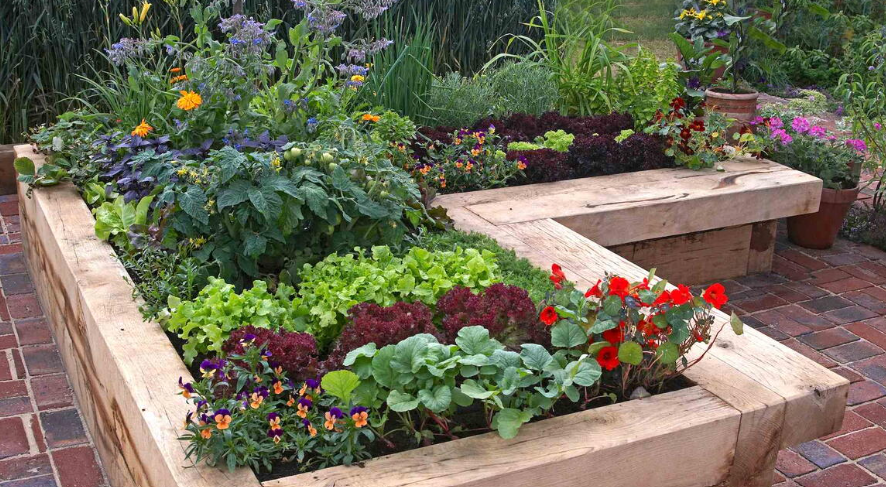
The best vegetables to grow in raised beds tend to be the ones that specifically benefit from what a raised bed actually changes about the growing environment, rather than just any vegetable that happens to grow well in the ground. A raised bed lets a gardener start with genuinely loose, stone-free, well-amended soil regardless of what the native ground underneath looks like, and that control matters most for root vegetables, which fork, stunt, or grow crooked the moment they hit compacted clay or a buried rock a traditional garden bed can’t easily fix.
Raised beds also warm up considerably faster in spring than ground-level soil, since the elevated structure catches more direct sun and drains excess moisture that would otherwise keep soil cold longer. That earlier warmth genuinely extends the practical growing season for heat-loving crops like tomatoes and peppers, letting a gardener get a head start weeks before an in-ground bed would be ready.
The contained, easily managed footprint of a raised bed also supports denser, more intensive planting than a traditional row garden typically allows, since amended soil and defined edges make close spacing considerably more practical. That’s part of why so many raised bed vegetable lists lean toward compact bush varieties over sprawling vines, though a sturdy trellis mounted at the bed’s edge turns even a vining crop into a genuinely space-efficient raised bed resident.
Depth matters more in a raised bed than almost any other single factor, since a shallow 6-inch bed suits lettuce and radishes just fine but genuinely limits a deep-rooted crop like parsnips or sweet potatoes. The Oregon State University Extension’s raised bed vegetable guide covers depth requirements for a range of crops in more technical detail than a general list can. What follows covers 45 of the best vegetables to grow in raised beds, spanning root vegetables, vining and bush crops, leafy greens, and a handful of reliable perennials.
Carrots
Carrots genuinely need the loose, stone-free soil a raised bed provides to grow straight and well-formed, since compacted or rocky ground causes the roots to fork or stunt in a way no amount of watering can fix. A raised bed’s controlled soil composition removes that obstacle entirely from the start.
They want full sun and consistently moist soil, performing considerably better in a raised bed than in native ground with any real clay or rock content.
Beets
Beets benefit from the same loose, well-drained soil a raised bed offers, developing cleaner, more uniform roots than they typically would in heavier native ground. Their relatively shallow root depth also means even a modestly sized raised bed suits them well.
They want full sun and loose, well-drained soil, offering both an edible root and genuinely nutritious greens from the same planting.
Radishes
Radishes mature faster than almost any other vegetable on this list, genuinely ready for harvest within a few weeks, making them a practical choice for filling in a raised bed’s gaps between slower-growing crops. Their shallow root depth means they thrive even in a relatively thin raised bed.
They tolerate cool soil and light frost well, and the University of Georgia Extension’s raised bed vegetable trials have documented reliable root vegetable performance in a controlled raised bed environment.
Turnips
Turnips grow quickly in a raised bed’s loose, well-drained soil, offering both a usable root and edible greens from a single planting. Their relatively shallow root system suits even a modestly deep raised bed without issue.
They tolerate light frost and a range of soil conditions, thriving in the same controlled soil a raised bed provides for many other root vegetables.
Parsnips
Parsnips need a genuinely deep raised bed, at least 12 inches, to develop their long, straight root properly, since anything shallower forces the root to fork or stunt against the bed’s bottom. A raised bed’s loose soil composition also matters more here than for almost any other root vegetable.
They tolerate significant cold and loose, well-drained soil, rewarding a properly deep bed with a genuinely long, unblemished harvest.
Potatoes
Potatoes benefit from a raised bed’s loose, easily hilled soil, which makes it considerably simpler to mound additional soil around the growing stems as tubers develop than working in dense native ground would allow. A deeper bed, ideally 12 inches or more, supports a genuinely better yield.
They want full sun and loose, well-drained soil, and a raised bed’s soil warms faster in spring, letting an early crop get started sooner than in-ground planting would allow.
Garlic
Garlic thrives in a raised bed’s well-drained soil, genuinely reducing the risk of bulb rot that heavier, poorly draining native ground can cause over a long fall-to-summer growing period. Its modest root depth suits even a relatively shallow raised bed.
It wants full sun and well-drained soil, and mulching after fall planting helps protect developing roots through a cold winter regardless of bed depth.
Onions
Onions benefit from a raised bed’s loose, well-drained soil during their early growth, and the bed’s faster spring warming gives them a genuine head start on the long season they need to bulb up properly. Their relatively shallow root system suits most standard raised bed depths.
They want full sun and well-drained soil, choosing a variety suited to the local day-length conditions for reliable bulb formation.
Sweet Potatoes
Sweet potatoes need genuinely loose, deep soil to develop well-formed tubers, making a raised bed with at least 12 to 14 inches of depth considerably more productive than typical compacted garden ground. Their vigorous vining growth also benefits from the defined edges a raised bed provides to contain their spread.
They want full sun and warm, loose soil, thriving in the faster-warming conditions a raised bed offers over cooler in-ground soil.
Tomatoes
Tomatoes benefit enormously from a raised bed’s faster spring soil warming, since consistently warm soil is genuinely critical to strong early root development. A sturdy cage or trellis mounted within the bed keeps an indeterminate variety’s vigorous growth contained and off the ground.
They want full sun and consistently warm, well-drained soil, and the University of Georgia Extension’s tomato growing guide covers raised bed spacing recommendations specifically for maximizing yield in a contained space.
Cucumbers
Cucumbers grow well in a raised bed’s warm, loose soil, and training the vine up a trellis mounted along the bed’s edge turns a naturally sprawling plant into a genuinely space-efficient vertical grower. That vertical training also keeps developing fruit cleaner and easier to spot at harvest time.
They want full sun and consistent moisture, benefiting from the raised bed’s improved drainage during a heavy rain that would otherwise leave cucumber roots sitting in standing water.
Pole Beans
Pole beans take full advantage of a raised bed’s defined structure, since a trellis or tepee mounted directly into the bed lets the vine climb rather than sprawl across limited ground space. Their considerably higher yield per square foot compared to a bush variety makes them a genuinely efficient raised bed choice.
They want full sun and well-drained soil, rewarding the vertical support a raised bed makes easy to install with a genuinely productive, space-saving harvest.
Peas
Peas thrive in a raised bed’s loose, well-drained soil, and a simple trellis along the bed’s edge supports their climbing habit without sacrificing valuable ground space elsewhere. Their preference for cool spring soil also benefits from a raised bed’s faster warming at the very start of the season.
They tolerate a light frost without serious damage, making them one of the earliest crops worth direct-seeding into a raised bed once the soil has properly warmed.
Winter Squash
Winter squash benefits from a raised bed’s warm soil to get its vigorous vine established quickly, though its considerable sprawl generally needs either a very large bed or a sturdy trellis to keep it genuinely contained. Training the vine vertically also improves air circulation, reducing certain fungal disease pressure.
It wants full sun and rich, well-drained soil, needing the raised bed’s full growing season warmth to properly mature before fall frost.
Bush Beans
Bush beans suit a raised bed’s contained footprint particularly well, growing compactly without needing any trellis or additional structure at all. Their reliable, forgiving nature makes them a genuinely easy first crop for a new raised bed.
They want full sun and well-drained soil, thriving in the loose, well-amended conditions a raised bed typically provides from the very first season.
Zucchini
Zucchini produces abundantly in a raised bed’s rich, warm soil, though its considerable spread means a single plant can genuinely fill an entire smaller bed on its own. Choosing a more compact bush variety helps keep its footprint manageable in a limited space.
It wants full sun and rich, well-drained soil, benefiting from the raised bed’s improved drainage during a wet stretch that would otherwise risk root rot.
Peppers
Peppers benefit enormously from a raised bed’s faster soil warming, since consistently warm soil and air temperature are genuinely critical to strong pepper growth from the very start of the season. Their relatively compact, upright form also suits a raised bed’s contained space without needing much additional structure.
They want full sun and warm, well-drained soil, often outperforming an in-ground planting given how much a raised bed’s earlier warmth benefits this particular crop. The North Carolina State University Extension’s raised bed guide documents soil temperature differences between raised and in-ground beds across a growing season.
Eggplant
Eggplant shares peppers’ genuine need for consistently warm soil, making a raised bed’s faster spring warming a real advantage over cooler in-ground planting. Its compact, upright growth habit also fits neatly into a raised bed’s defined space.
It wants full sun and rich, warm soil, rewarding the raised bed’s improved warmth with more reliable fruit set than a cooler in-ground bed would provide.
Lettuce
Lettuce suits a raised bed’s intensive spacing particularly well, its shallow root system letting several plants grow close together in a way a traditional row garden rarely accommodates as efficiently. Its quick maturity also makes it a practical crop to tuck into any gap a raised bed’s layout leaves open.
It tolerates partial shade, benefiting from a raised bed positioned to catch some afternoon shade during the hottest part of summer.
Spinach
Spinach thrives in a raised bed’s loose, fertile soil, its shallow root system suiting even a modestly shallow bed without any issue. Its considerable cold tolerance also benefits from a raised bed’s faster spring warming, letting an early crop get started sooner.
It tolerates light frost well, and the Cornell University Cooperative Extension’s raised bed planning guide covers spacing recommendations for maximizing leafy green yield in a compact bed.
Kale
Kale grows reliably in a raised bed’s well-amended soil, its considerable cold hardiness meaning a fall crop can often be harvested well past the point an in-ground bed would have frozen solid. Its shallow root system suits even a modestly deep raised bed without issue.
It wants full sun to partial shade, tolerating a raised bed’s faster-draining conditions better than a soggy, poorly drained in-ground spot might allow.
Swiss Chard
Swiss chard tolerates a wide range of raised bed conditions, performing reliably through both cooler spring weather and genuine summer heat in a bed that drains well. Its colorful stems, in shades of red, yellow, and white depending on variety, add ornamental value alongside its productivity.
It tolerates partial shade and a range of soil types, remaining one of the more forgiving vegetables for a raised bed regardless of exact soil composition.
Arugula
Arugula grows quickly in a raised bed’s loose, fertile soil, its rapid maturity making it a practical choice for filling small gaps between slower-growing crops elsewhere in the bed. Its shallow root system suits even the thinnest raised bed without any real limitation.
It tolerates light frost and partial shade, thriving in the same intensively spaced conditions many other quick-maturing leafy greens benefit from in a raised bed.
Mustard Greens
Mustard greens grow rapidly in a raised bed’s rich, well-drained soil, offering a genuinely fast harvest for a gardener wanting quick results early in the season. Its shallow root depth suits even a modestly shallow bed without issue.
They tolerate light frost and a range of soil conditions, thriving in the loose, fertile conditions a raised bed typically provides.
Bok Choy
Bok choy performs reliably in a raised bed’s controlled soil, its relatively compact size and shallow root system suiting intensive spacing particularly well. Its quick maturity also makes succession planting a genuinely practical way to keep a continuous harvest coming.
It tolerates light frost and partial shade, thriving in the loose, well-drained conditions a raised bed consistently provides.
Broccoli
Broccoli benefits from a raised bed’s consistently rich, well-amended soil, forming a tighter, higher-quality head than it often would in poorer native ground. Its relatively upright growth habit also suits a raised bed’s defined spacing well.
It wants full sun and consistently moist, rich soil, rewarding the raised bed’s improved fertility with a genuinely better-formed harvest.
Cauliflower
Cauliflower shares broccoli’s genuine preference for consistently rich, moist soil, a condition a raised bed’s controlled composition makes considerably easier to maintain than variable native ground. Its slightly fussier nature makes that consistency genuinely valuable.
It wants full sun and rich, consistently moist soil, benefiting from the more even moisture a raised bed’s contained structure helps maintain.
Cabbage
Cabbage tolerates a raised bed’s cooler shoulder-season soil well, genuinely surviving a light frost without serious damage regardless of the bed’s exact depth. Its considerable storage life after harvest also suits a gardener planning ahead for winter use.
It wants full sun and rich, well-drained soil, remaining one of the more forgiving brassicas for a raised bed of nearly any reasonable depth.
Brussels Sprouts
Brussels sprouts need a raised bed’s full growing season to mature properly, genuinely benefiting from the earlier spring start a warmer bed allows compared to cooler in-ground soil. A light frost right before harvest sweetens their flavor regardless of where they’re grown.
They want full sun and rich, consistently moist soil, rewarding the raised bed’s earlier start with a genuinely better shot at full maturity before winter arrives.
Kohlrabi
Kohlrabi grows quickly in a raised bed’s loose, fertile soil, its compact, bulbous form suiting intensive spacing particularly well compared to bulkier brassica relatives. Its relatively shallow root system suits even a modestly shallow bed.
It tolerates light frost and a range of soil conditions, thriving in the same controlled, well-drained environment many other quick-maturing crops benefit from.
Leeks
Leeks need a genuinely deep raised bed to develop a long, well-blanched stalk, since the loose soil makes it considerably easier to mound soil up around the growing plant than dense native ground would allow. Their cold tolerance also means they can often be left in a raised bed and harvested well into late fall.
They want full sun and rich, consistently moist soil, benefiting from a raised bed’s loose composition specifically for the hilling technique that improves stalk quality.
Celery
Celery needs consistently moist soil to develop good flavor and texture, a condition a raised bed’s controlled composition makes considerably easier to maintain evenly than variable native ground. Its considerable water needs make consistent moisture matter more than almost any other single factor.
It wants full sun to partial shade and rich, consistently moist soil, benefiting from a raised bed positioned where regular watering is genuinely convenient.
Fennel
Fennel develops its characteristic bulb most reliably in a raised bed’s loose, consistently fertile soil, avoiding the compaction that can cause a misshapen bulb in denser native ground. Its feathery foliage also adds attractive texture to a raised bed planting.
It wants full sun and rich, well-drained soil, performing best when its bulb has room to develop without any real soil resistance.
Green Onions
Green onions grow quickly in a raised bed’s loose soil, their narrow, upright form making them a genuinely efficient choice for tucking into tight gaps between larger crops elsewhere in the bed. Their shallow root system suits even the thinnest raised bed without any real limitation.
They tolerate light frost and a range of soil conditions, thriving in the intensively spaced conditions a raised bed’s contained structure supports well.
Radicchio
Radicchio grows reliably in a raised bed’s well-drained soil, its compact, upright head suiting intensive spacing particularly well compared to a looser, sprawling leafy green. Its considerable cold tolerance also benefits from a raised bed’s improved drainage during a wet fall stretch.
It tolerates light frost and a range of soil conditions, developing its characteristic bitter flavor most reliably during the cooler stretches a raised bed’s earlier and later season extends.
Endive
Endive grows well in a raised bed’s loose, fertile soil, its relatively compact form suiting the intensive spacing a raised bed encourages. Its shallow root system means even a modestly shallow bed suits it without issue.
It tolerates partial shade and a range of soil conditions, thriving in the same controlled, well-drained environment many other leafy greens benefit from in a raised bed.
Strawberries
Strawberries genuinely thrive in a raised bed, since the improved drainage considerably reduces the crown and root rot that a poorly drained in-ground bed can cause over a strawberry patch’s multi-year lifespan. Their shallow root system also suits even a modestly shallow bed perfectly well.
They want full sun and consistently moist, well-drained soil, rewarding a dedicated raised bed with years of reliable fruit production.
Asparagus
Asparagus is a genuine perennial vegetable best suited to its own dedicated raised bed, since the crop occupies the same space for 15 years or more and benefits enormously from the loose, well-drained soil a raised bed maintains over that entire lifespan. A deeper bed, ideally 12 inches or more, supports the crop’s extensive root system.
It wants full sun and rich, well-drained soil, rewarding the patience of a 2- to 3-year establishment period with decades of reliable spring harvests. The University of Minnesota Extension’s perennial vegetable guide covers dedicated raised bed planning for long-term crops like asparagus specifically.
Rhubarb
Rhubarb thrives as a long-term raised bed resident, its considerable cold hardiness and minimal ongoing care needs making it a genuinely low-maintenance perennial choice once established. Its extensive root system benefits from a raised bed’s loose soil composition over its multi-year lifespan.
It tolerates significant cold and a range of soil conditions, remaining productive in the same raised bed spot for many years without needing to be moved.
Cantaloupe
Cantaloupe benefits considerably from a raised bed’s faster-warming soil, since consistently warm ground is genuinely critical to strong early vine growth and eventual fruit sweetness. Training the vine up a sturdy trellis, with slings to support developing fruit, keeps this naturally sprawling crop genuinely manageable in a contained bed.
It wants full sun and rich, well-drained soil, rewarding the raised bed’s earlier seasonal warmth with a genuine head start on a crop that needs the full length of summer to properly ripen.
Bush Watermelon
Bush watermelon varieties, bred specifically for a considerably more compact growth habit than traditional sprawling watermelon vines, suit a raised bed’s contained footprint in a way a standard variety simply couldn’t manage. Their reduced sprawl still delivers full-sized fruit despite the plant’s smaller overall scale.
It wants full sun and rich, well-drained, consistently warm soil, benefiting from a raised bed’s faster spring warming to get its considerable growing season underway sooner.
Basil
Basil thrives in a raised bed’s warm, well-drained soil, its compact form making it a genuinely easy companion planting tucked between larger vegetables elsewhere in the bed. Its rapid growth rewards the bed’s consistent warmth with a genuinely continuous harvest through summer.
It wants consistent warmth and moisture, benefiting from the same faster soil warming that makes a raised bed such an advantage for tomatoes and peppers nearby.
Edamame
Edamame, a genuine soybean grown specifically for harvest while still green, performs reliably in a raised bed’s loose, well-drained soil. Its compact, bushy growth habit suits intensive spacing without needing any trellis or additional support structure.
It wants full sun and well-drained soil, thriving in the same warm, loose conditions many other raised bed legumes benefit from.
Okra
Okra benefits considerably from a raised bed’s faster-warming soil, since it’s a genuinely heat-loving crop that struggles to get started in cool, slow-to-warm ground, particularly in a cooler climate with a shorter true summer. Its relatively compact, upright growth habit also suits a raised bed’s defined space well.
It wants full sun and warm, well-drained soil, rewarding the raised bed’s earlier seasonal warmth with a genuinely longer, more productive harvest window.
Microgreens
Microgreens make exceptionally efficient use of a raised bed’s contained, intensively managed space, harvested within just a couple of weeks of sowing and genuinely ideal for filling any small gap left open between slower-growing crops. Their minimal root depth means even the shallowest raised bed suits them perfectly.
They tolerate a range of light conditions, thriving in the loose, easily worked soil surface a raised bed consistently provides for quick, repeated sowing.
Key Takeaways
Vegetables grown in raised beds can benefit from improved drainage, loose soil, and easier access for planting, watering, and harvesting. Leafy greens, root vegetables, herbs, legumes, and many fruiting vegetables can perform well when the raised bed provides suitable growing conditions.
Choosing vegetables for raised beds depends on bed depth, sunlight, soil quality, climate, available space, and the mature size of each plant. Deep-rooted crops need sufficient soil depth, while sprawling or climbing vegetables may require additional room or support. Proper spacing can also improve airflow and reduce competition between plants.
With good soil preparation and regular care, raised beds can support productive vegetable gardens throughout the growing season. Maintaining consistent moisture, adding nutrients when needed, controlling weeds, and rotating crops can help keep plants healthy and make efficient use of the available space.