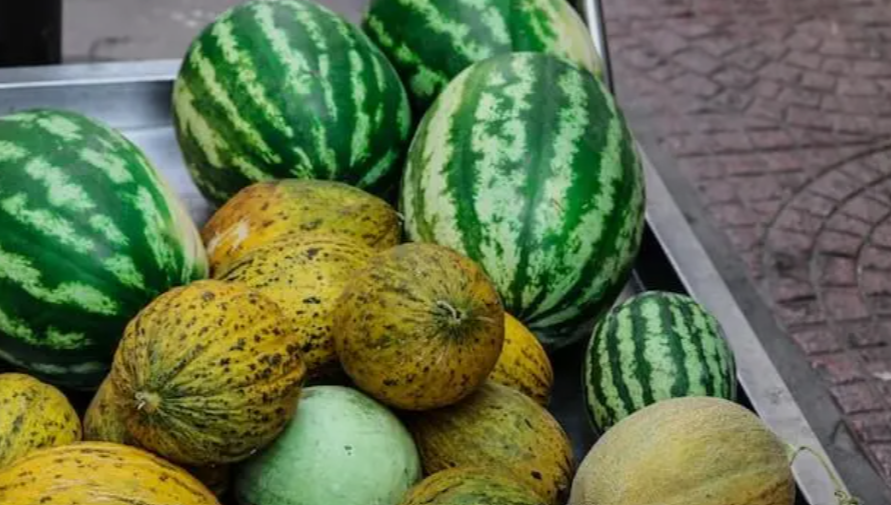
Cold-hardy melon varieties are a special case, because no melon can survive a frost. Melons are tender, heat-loving vines in the same plant family as cucumbers and squash. For a melon, being suited to the cold means ripening quickly and setting fruit in cool weather, so that the crop is finished before the first autumn frost.
The word melon covers two main groups. Muskmelons include cantaloupes, honeydews and their relatives, while watermelons belong to a separate branch of the family. Both groups trace their origins to Africa and Asia and have been grown for thousands of years.
Watermelon is the larger crop by far, with a world harvest of about 105 million metric tons in 2023. Most melons are grown in hot regions with long summers. In northern areas, gardeners depend on early varieties and a few simple techniques.
The University of Minnesota advises choosing melons that mature in 65 to 80 days and planting only once the soil reaches 65°F. Black plastic mulch can raise soil temperature by about 5°F, and clear plastic by as much as 14°F. The 21 varieties below are the ones most often recommended for short, cool seasons, and each entry notes where they are grown.
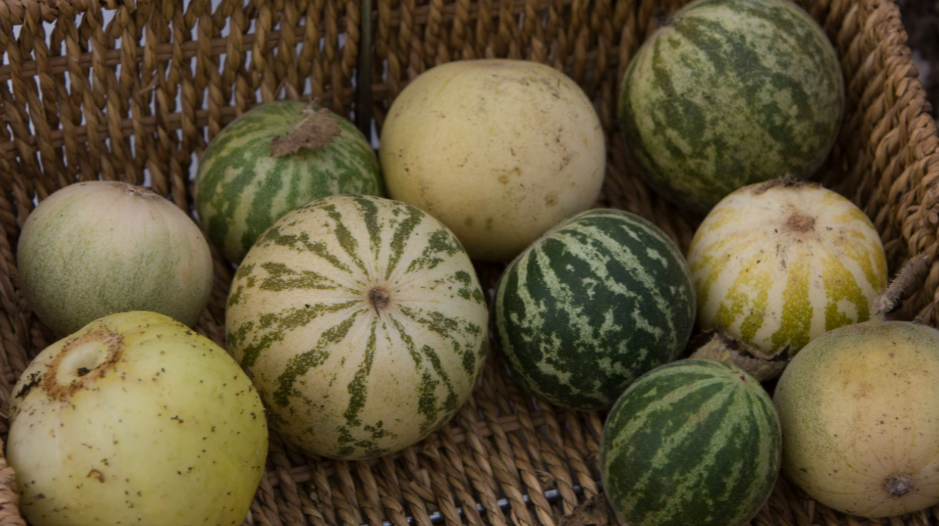
1. Minnesota Midget
Minnesota Midget is the best-known melon for short seasons. It is a miniature cantaloupe only about 4 inches across. The flesh is thick, golden and sweet right to the rind. The vines seldom grow more than 3 feet long. It can be raised in a large container.
It was bred at the University of Minnesota in St. Paul and introduced in 1948. It ripens in 60 to 75 days and can even produce two crops in a season. It resists fusarium wilt. The University of Minnesota notes that only melons maturing in under 90 days can ripen fruit in the north. It is grown across the northern United States, Canada and in cool coastal gardens.
2. Sweet Granite
Sweet Granite is an early cantaloupe bred for New England. Its fruit is oblong and weighs 2 to 3 pounds. The rind has light netting. The flesh is orange and sweet, with a mild flavor. The melons keep for only a day or two once ripe.
It was released in 1966 by a professor at the University of New Hampshire. It is well suited to sowing directly in the garden in far northern, coastal and mountain climates. It ripens in about 70 days. The vines set fruit even in cool summers. It is grown in New England, the Pacific Northwest and the Mountain West.
3. Far North
Far North is one of the earliest cantaloupes in existence. The fruit is small, about the size of a softball. It weighs roughly 1 pound. The flesh is orange and sweet. The vines are short and sparse.
It is said to have come to the Canadian prairies with settlers from Ukraine. It ripens in about 65 to 70 days. Its tiny size is the price of its speed. It suits gardens where other melons fail entirely. It is grown in the Canadian prairies, Alaska and the northern Plains.
4. Passport
Passport is an early melon of the green-fleshed type. Its fruit is round and weighs 4 to 6 pounds. The rind is netted and turns yellow-tan when ripe. The flesh is light green, juicy and very sweet. The aroma is strong and tropical.
It was developed by a plant breeder at the University of New Hampshire. Iowa State University lists it as an early variety, ripening in about 75 days. It sets fruit well in cool conditions. A newer relative with better mildew resistance has partly replaced it. It is grown in New England, the upper Midwest and Canada.
5. Earlidew
Earlidew is a honeydew melon bred for the north. Its fruit is round and smooth, with a pale, creamy rind. The flesh is lime-green and sweet. Each melon weighs 2 to 3 pounds. The fruit slips from the vine when ripe, unlike most honeydews.
Standard honeydews need 80 to 100 days and a long, hot summer. Earlidew ripens in about 75 to 80 days. That makes honeydew possible where it was once out of reach. It is a hybrid, so seed cannot be saved true. It is grown in the northern United States and southern Canada.
6. Halona
Halona is a classic eastern cantaloupe with early maturity and large size. The fruit is ribbed, heavily netted and about 4 to 5 pounds. The flesh is deep orange and sweet. The vines are vigorous. It ripens in roughly 73 days.
It was developed from breeding lines created at the University of New Hampshire. UNH Extension recommends it as an early muskmelon adapted to New England. It resists powdery mildew and fusarium wilt. Its breeder spent more than 50 years developing melons for northern climates. It is grown in New England, New York, the Great Lakes states and Canada.
7. Oka
Oka is a heritage melon from Quebec. It was bred in 1912 by a Trappist monk at the monastery at Oka, near Montreal. It is a cross between the Montreal melon and an old American variety called Banana. The fruit has orange flesh and about 10 ribs. The flavor is rich and sweet.
It is an early variety well suited to relatively short growing seasons. It can be grown successfully in most regions of Quebec. It ripens in about 75 to 80 days from transplanting. It was thought extinct until it was rediscovered on an island near Montreal. It is grown in Quebec, Ontario, New England and the upper Midwest.
8. Montreal Market
The Montreal Market melon was once the most famous melon in North America. Its flesh is green, with a slight taste of nutmeg. The fruits were very large, heavily netted and deeply ribbed. In its day it was called the Champagne of melons. Slices sold for high prices in New York hotels.
The first records of it come from Jesuits who grew it in 1684. It was stabilized as a variety around 1870. It vanished when farms disappeared from the Island of Montreal and was later recovered from a seed bank. It is temperamental and keeps very poorly. It is grown today by heritage gardeners in Quebec and the Northeast.
9. Noir des Carmes
Noir des Carmes is an old French cantaloupe. Its name refers to the Carmelite monks who are said to have grown it. The rind is very dark green, nearly black, when young. It turns orange with green mottling as it ripens. The flesh is orange, aromatic and very sweet.
It ripens in about 75 days. The fruit weighs 2 to 3 pounds and has smooth, ribbed skin. The color change makes ripeness easy to judge. It sets fruit reliably in cool summers. It is grown in France, Britain, the Pacific Northwest and the northern United States.
10. Petit Gris de Rennes
Petit Gris de Rennes is a small French melon from Brittany. Its rind is gray-green and lightly speckled. The fruit weighs about 2 pounds. The flesh is orange and exceptionally sweet. Many growers rank it among the best-flavored melons.
It is said to have been grown in the garden of the Bishop of Rennes about 400 years ago. It is adapted to the cool, maritime climate of northwestern France. It ripens in about 80 to 85 days. The rind stays greenish even when the fruit is ripe. It is grown in France, Britain and the Pacific Northwest.
11. Collective Farm Woman
Collective Farm Woman is a Ukrainian heirloom melon. Its rind is smooth and turns golden-yellow when ripe. The flesh is white, crisp and very sweet. The fruit is round and weighs 2 to 3 pounds. It is closer to a honeydew than to a cantaloupe.
It reached American gardeners in the early 1990s through a seed-saving organization. It ripens in about 80 to 85 days. It is known for maturing in the short summers of central Russia. The fruit keeps for several weeks after harvest. It is grown in Ukraine, Russia, the northern United States and Canada.
12. Jenny Lind
Jenny Lind is an American heirloom from the 1840s. It is named for a famous Swedish singer of that era. The fruit is small and flattened, with a knob at the blossom end. The flesh is light green and sweet. Each melon weighs 1 to 2 pounds.
It ripens in about 70 to 80 days. It originated in New Jersey and was a popular market melon in the 1800s. The vines are productive and fairly compact. Its small size helps it ripen in cool seasons. It is grown by heirloom gardeners across the northern United States.
13. Emerald Gem
Emerald Gem is an heirloom cantaloupe introduced by a Philadelphia seed company in 1886. Its rind is dark green and ribbed, with little netting. The flesh is salmon-orange and very juicy. The flavor is rich and spicy. The fruit weighs 2 to 3 pounds.
It ripens in about 70 to 80 days. It was one of the most popular home garden melons for decades. The fruit is too soft and thin-skinned to ship. It bears heavily over a long period. It is grown by heirloom gardeners in the Northeast and Midwest.
14. Iroquois
Iroquois is a large cantaloupe bred for the Northeast. Its fruit is ribbed, heavily netted and 5 to 7 pounds. The flesh is deep orange and thick. The flavor is sweet and full. It ripens in about 75 to 85 days.
It was released by Cornell University in 1944. It was one of the first melons bred to resist fusarium wilt, a soil disease that had devastated northern melon fields. It became a standard market melon in New York and the Great Lakes region. It is still valued for its disease resistance. It is grown in New York, Michigan, Ontario and New England.
15. Delicious 51
Delicious 51 is an early cantaloupe from Cornell University. Its fruit weighs 3 to 4 pounds. The flesh is thick, orange and sweet. The rind is netted and lightly ribbed. It ripens in about 77 to 80 days.
Cornell University records that it was released in 1951 as the second of two fusarium-resistant varieties from the same breeder. The disease it resists was first reported in Minnesota in 1933. It combines earliness with good eating quality. It remains a favorite with home gardeners. It is grown in New York, New England, the upper Midwest and Canada.
16. Blacktail Mountain
Blacktail Mountain is a watermelon bred for cold nights. Its fruit is round, with a very dark green rind. It weighs 6 to 12 pounds. The flesh is deep red, crisp and sweet. It ripens in about 70 days.
It was developed in the 1970s in northern Idaho, where summer nights often fall into the 40s. Its breeder selected it as a teenager in his family’s garden. It sets fruit in conditions too cool for most watermelons. It also performs well in hot, humid climates. It is grown in the northern Rockies, the Pacific Northwest, the upper Midwest and Canada.
17. Sweet Siberian
Sweet Siberian is a watermelon with apricot-orange flesh. Its fruit is oblong and weighs 8 to 10 pounds. The rind is light green. The flesh is very sweet and juicy. It ripens in about 80 to 85 days.
It came to North America from Russia in the late 1800s. It was bred for the short summers of the Russian interior. The pale rind helps prevent sunscald. It is one of the few orange-fleshed watermelons for cool regions. It is grown in the northern United States and Canada.
18. Cream of Saskatchewan
Cream of Saskatchewan is a watermelon with pale, cream-colored flesh. Its fruit is round and weighs 5 to 10 pounds. The rind is light green with dark stripes. The flesh is sweet and fine-textured. It ripens in about 80 days.
It was brought to the Canadian prairies by Russian immigrants. It is well adapted to cool, northern summers. The rind is thin and brittle and can split if handled roughly. For that reason it is strictly a garden melon. It is grown in Saskatchewan, Manitoba, Alberta and the northern Plains.
19. New Hampshire Midget
New Hampshire Midget is a very early, small watermelon. Its fruit weighs 4 to 6 pounds. The rind is thin and striped. The flesh is red and sweet. It ripens in about 65 to 70 days.
It was bred at the University of New Hampshire and introduced around 1951. It was one of the first icebox watermelons, small enough to fit in a refrigerator. It won a national award for new garden varieties. It ripens where larger watermelons never do. It is grown in New England, the upper Midwest and Canada.
20. Golden Midget
Golden Midget is a small watermelon with a built-in ripeness signal. Its rind turns from green to golden-yellow when the fruit is ready. The flesh is salmon-pink and sweet. Each melon weighs about 3 pounds. It ripens in roughly 70 days.
It was developed at the University of New Hampshire in the late 1950s. Its breeders crossed New Hampshire Midget with a yellow-rinded variety. The color change removes the guesswork that troubles most watermelon growers. The vines are compact. It is grown in New England, the northern states and Canada.
21. Sugar Baby
Sugar Baby is the most widely grown icebox watermelon. Its fruit is round, with a very dark green rind. It weighs 8 to 10 pounds. The flesh is bright red, firm and sweet. It ripens in about 75 to 80 days.
It was introduced in Oklahoma in the 1950s. Iowa State University notes that most watermelons need 75 to 95 days from seeding, which places Sugar Baby at the early end. Its small size suits small gardens and small households. It is sold by nearly every seed company. It is grown throughout the United States and Canada, including the northern states.
Key Takeaways:
– Early-maturing varieties are best for short summers: Melons such as ‘Minnesota Midget’, ‘Early Hanover’, and ‘Sugar Baby’ are useful options for gardeners with shorter growing seasons because they can mature relatively quickly under suitable conditions.
– Melons prefer warm growing conditions: Most melons, including muskmelons (Cucumis melo) and watermelons (Citrullus lanatus), are frost-sensitive warm-season crops. Choosing early varieties helps them produce fruit before autumn temperatures drop.
– Cold tolerance differs from early maturity: A melon variety that matures quickly is not necessarily frost-hardy. Most melons cannot withstand freezing temperatures, so their success in cooler regions depends on timing and growing conditions.
– Soil temperature affects germination: Melon seeds germinate best in warm soil, generally around 70–95°F (21–35°C). Planting after the soil has warmed helps seedlings establish faster and reduces the risk of poor germination.
– Season-extension techniques can improve results: Black plastic mulch, raised beds, row covers, and sheltered sunny locations can warm the soil and encourage faster growth. Covers should be managed carefully to avoid overheating plants and to allow pollinators access when flowers appear.
– Choose varieties suited to your local growing season: Check days to maturity, local frost dates, fruit size, and disease resistance before planting. In cooler climates, starting seeds indoors and transplanting after the danger of frost has passed can help increase the chance of a successful harvest.
Sources:
- University of Minnesota Extension: Growing melons in the home garden
- University of New Hampshire Extension: Growing melons in New Hampshire
- Cornell University: Fusarium Diseases of Cucurbits
- Iowa State University Extension: Melons
- University of Minnesota Extension: Extending the growing season
- University of New Hampshire: melon variety innovations
- University of New Hampshire Magazine: The Matchmaker
- Seed Savers Exchange: Minnesota Midget Melon
- Seed Savers Exchange: Sweet Granite Melon
- Seed Savers Exchange: Oka Melon
- Atlas Obscura: Montreal melons
- Jardins de l’écoumène: Oka melon
- Terre Promise: Montreal Melon
- Mother Earth News: Oka Melon
- Wikipedia: Elwyn Meader