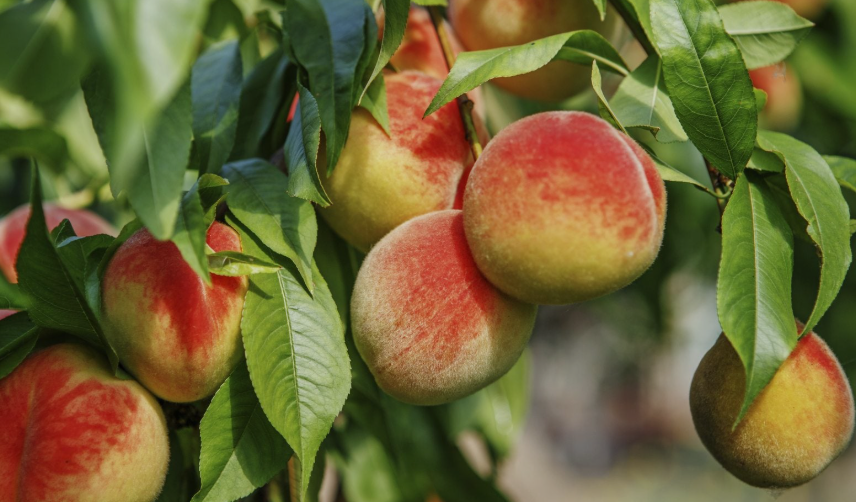
Cold hardy peach trees extend one of summer’s favorite fruits into regions where ordinary peaches fail. The peach is native to China and has been cultivated for several thousand years. China still grows most of the world’s crop, and the United States harvests roughly 680,000 tons a year, led by California, South Carolina and Georgia.
Peaches are among the least hardy of the common fruit trees. Iowa State University reports that damage to flower buds begins near -11°F and that buds are often killed below -18°F. The wood itself is injured as temperatures approach -20°F.
Winter cold is only half the problem. Peaches bloom earlier than apples or pears, so late spring frosts often destroy the flowers even after a mild winter. In northern Iowa, growers can expect a harvest about once every five years.
A cold-hardy peach therefore needs two things, flower buds that survive deep cold and a late bloom that dodges spring frost. Breeders in New Hampshire, North Carolina, Michigan and Ontario have produced varieties with both. The 21 trees below are the most reliable, and each entry notes where they are grown.
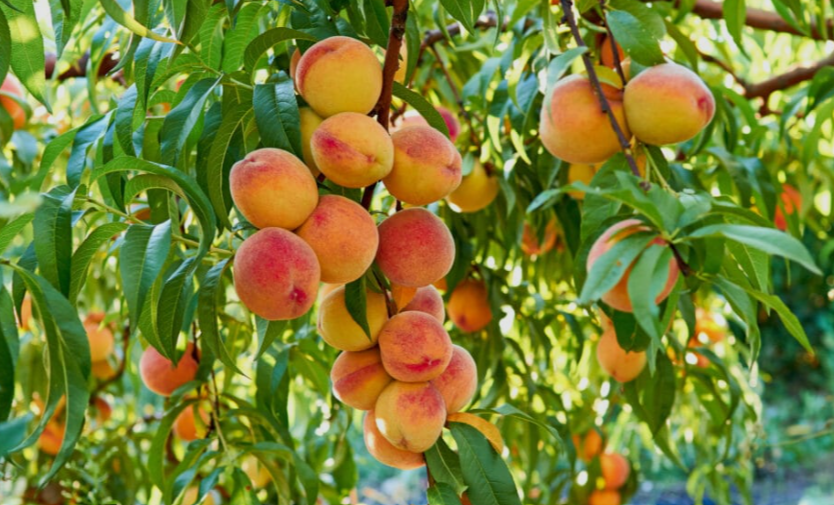
1. Reliance
Reliance is the standard by which cold-hardy peaches are measured. It bears medium-sized, yellow-fleshed fruit with a dull red blush. The pit separates freely from the flesh. The flavor is pleasant but milder than that of the best dessert peaches. It ripens in early to mid-August.
The New Hampshire Agricultural Experiment Station introduced it in 1964. Its parentage includes a hardy white-fleshed peach from Minnesota. The original trees bore fruit after a winter low of -25°F, when standard varieties nearby had almost none. Iowa State University lists it among the best peaches for that state. It is grown in New England, New York, the upper Midwest, Colorado and southern Canada.
2. Contender
Contender combines cold hardiness with truly high fruit quality. The peaches are large, firm and yellow-fleshed, with a bright red blush. They are freestone and richly flavored. The tree is vigorous and yields heavily. It ripens in mid-August in most northern areas.
North Carolina State University released it in the late 1980s. It needs about 1,050 hours of winter chilling, so it flowers late and escapes many spring frosts. It is the number one commercial variety planted in North Carolina and an industry standard. It also shows moderate resistance to bacterial spot. It is grown in the Carolinas, the Mid-Atlantic, the Midwest, New England and Ontario.
3. Intrepid
Intrepid is a yellow peach bred for flower buds that withstand frost. Its fruit is medium-sized, with attractive red color over a bright yellow ground. The flesh is melting and freestone. It ripens about 11 days before Contender. The tree is productive and carries a heavy load of flower buds.
North Carolina State University released it in 1999. It needs about 1,000 chilling hours and blooms late. In a New Mexico trial, 81% of its flower buds were alive after a severe January freeze. It is recommended for northern New Mexico. It is grown in the Carolinas, the Midwest, the Northeast and the Mountain West.
4. Challenger
Challenger is a sister variety of Intrepid from the same program. It bears medium-sized, yellow, freestone peaches. The skin is red over bright yellow. It ripens about 18 days before Contender, in midsummer. The flavor is sweet and balanced.
It was also released in 1999. It needs about 950 chilling hours. Its flower buds show high cold hardiness during dormancy and at bloom. It is suited to areas where Contender has been grown successfully. It is grown in North Carolina, the Mid-Atlantic, the Midwest and New England.
5. China Pearl
China Pearl is a cold-hardy white peach. Its fruit is very large, with white, low-acid flesh. The flavor is sweet and mild. It is freestone. It ripens late, about two weeks after Contender in some areas.
North Carolina State University lists it as a 1999 release noted for white, low-acid flesh and late blooming. It needs about 1,100 chilling hours and flowers even later than Contender. After a New Year’s freeze in New Mexico, 87% of its flower buds survived, the best of 20 varieties tested. Its acidity is less than half that of Contender. It is grown in the Carolinas, the Midwest, the Northeast and New Mexico.
6. Madison
Madison is an old favorite for cold, frost-prone sites. Its fruit is medium-sized, with orange-yellow flesh and a bright red blush. It is freestone, firm and rich in flavor. It ripens in late August. The tree is productive.
It was developed in Virginia and introduced in the 1960s. Iowa State University recommends it for Iowa. Growers report that its buds are among the most tolerant of cold. It also tolerates spring frost at bloom better than most. It is grown in the Mid-Atlantic, the Midwest, New England and the Mountain West.
7. Veteran
Veteran is a Canadian peach known for dependable crops in cool climates. Its fruit is round, yellow-fleshed and medium to large. The skin peels easily. The flesh is soft and good for canning. It ripens in mid to late August.
It was bred in Ontario and introduced in 1928. Growers describe it as very winter-hardy, though not as large or as red as Contender. It sets fruit in cool, wet springs when other varieties fail. That makes it a favorite west of the Cascades. It is grown in Ontario, British Columbia, Washington, Oregon and the Northeast.
8. Polly
Polly is considered the hardiest white-fleshed peach. Its fruit is medium-sized, with white skin and a red blush. The flesh is white, juicy and very sweet. It clings to the pit. It ripens in midseason.
It was introduced in Iowa in the 1930s. Iowa State University still recommends it. In old Iowa trials it was among the few varieties to carry fruit after a winter low of -25°F. Growers also note that its blossoms tolerate frost. It is grown in Iowa, Nebraska, Minnesota and the upper Midwest.
9. Redhaven
Redhaven is the most widely planted freestone peach in the world. Its fruit is medium-sized and almost fully red over yellow. The flesh is firm, yellow and sweet. It was the first of the modern red-skinned peaches. It ripens in late July to early August.
Michigan State University released it in 1940. Its hallmarks are vigor, high productivity and above-average cold hardiness. Canadian breeders use it as the standard against which other varieties’ hardiness is judged. Its sheer number of flower buds means a few usually survive bad winters. It is grown in Michigan, Ontario, the Northeast, the Midwest, the Pacific Northwest and Europe.
10. Garnet Beauty
Garnet Beauty is an early-ripening sport of Redhaven. Its fruit is medium to large and heavily blushed with red. The flesh is yellow, firm and streaked with red. It clings partly to the pit. It ripens about 10 days ahead of Redhaven.
It arose as a bud mutation in Ontario. It shares the tree vigor and hardiness of its parent. It gives northern growers an earlier crop of the same type. Some growers find it slightly less reliable than Redhaven after hard winters. It is grown in Ontario, Michigan, New York and the Northeast.
11. Halehaven
Halehaven is a classic Michigan peach and a parent of Redhaven. Its fruit is large, round and yellow-fleshed. The skin is red over yellow and fairly tough. It is freestone and sweet. It ripens in mid-August.
Michigan State University introduced it in the 1930s. Its flower buds are hardier than those of the older varieties it replaced. It is excellent for canning and freezing. The tree is vigorous and productive. It is grown in Michigan, the Midwest, the Northeast and the Mountain West.
12. Glohaven
Glohaven is a large, round peach with very little fuzz. The skin is mostly red over deep yellow. The flesh is firm and yellow and resists browning when cut. It is freestone. It ripens about two weeks after Redhaven.
Michigan State University released it in the 1960s. It is a favorite for canning and freezing because the slices keep their color. It is moderately hardy, though some growers report poor bloom after severe winters. It is best in the milder parts of the northern peach belt. It is grown in Michigan, Ohio, Pennsylvania, New York and Ontario.
13. Cresthaven
Cresthaven is a late-season peach with firm, durable fruit. The peaches are medium to large, with bright red skin over gold. The flesh is yellow, freestone and resistant to browning. It ships and stores well. It ripens about four weeks after Redhaven.
Michigan State University released it in the 1960s. Its wood is hardy, and the tree is long-lived. It extends the harvest into September in the North. Ontario breeders later used it as a parent for hardier varieties. It is grown in Michigan, Ontario, Pennsylvania, New Jersey and the Midwest.
14. Harken
Harken is a round, attractive peach from Ontario. Its fruit is medium to large, with red skin over yellow. The flesh is yellow, sweet and slow to brown. It is freestone. It ripens shortly after Redhaven.
It was bred at a research station at Harrow, Ontario, and released around 1970. It was selected for cold hardiness and resistance to disease. It became a parent of Harrow Beauty. The flavor is among the best of the Canadian varieties. It is grown in Ontario, Michigan, New York and the Pacific Northwest.
15. Canadian Harmony
Canadian Harmony bears large, firm, yellow peaches. The skin is red-blushed over yellow. The flesh is freestone and flavorful. It ripens in late August. The tree is vigorous and productive.
It was released from Harrow, Ontario, in the late 1960s. It is often sold simply as Harmony. It is hardy across the main northern peach districts. Its large fruit size sets it apart from older hardy types. It is grown in Ontario, Michigan, New York, Connecticut and the Northeast.
16. Harrow Beauty
Harrow Beauty is a very attractive, medium-sized peach with firm flesh. It is freestone and brightly colored. It ripens just after Canadian Harmony. The tree is of medium vigor and productive. The fruit resists browning.
It came from a cross between Cresthaven and Harken made at Harrow, Ontario. In controlled freezing tests, its flower buds and wood proved hardier than those of both parents. Canadian breeders rate it as equaling or surpassing Redhaven in hardiness. It was introduced for sites less favored than the best peach land in Ontario. It is grown in Ontario, Michigan, New York and New England.
17. Harrow Diamond
Harrow Diamond is an early peach for cold sites. Its fruit is medium-sized, with a bright red blush over 60% to 70% of the yellow skin. The flesh is yellow and nearly freestone. It ripens well ahead of Redhaven. The flowers are large, pink and showy.
It was released from Harrow, Ontario, in the 1980s. The University of Kentucky marks it as a hardy variety of special use in colder sites. Growers report that it is fairly winter-hardy. Its flavor is good, though not outstanding. It is grown in Ontario, Michigan, Kentucky, Ohio and the Northeast.
18. Blushingstar
Blushingstar is a white-fleshed peach with a distinctive, aromatic flavor. Its fruit is medium to large, with a pink-red blush. The flesh is white tinged with pink. It is freestone and firm. It ripens in mid to late August.
It was bred in Michigan. New Mexico State University recommends it for northern New Mexico after a trial of 20 varieties. Some nurseries market it for very cold regions. Growers’ reports are mixed, with some finding it less reliable after test winters. It is grown in Michigan, the Midwest, the Northeast and the Mountain West.
19. PF 24C Cold Hardy
PF 24C Cold Hardy is a large, late-season yellow peach. The fruit can reach 3 inches across. The skin is red over yellow, and the flesh is firm and freestone. It ripens in late August. The flavor is sweet and full.
It was developed by a private peach breeder in southwestern Michigan. It was selected for flower buds that survive hard winters. The University of Kentucky includes it in its list of varieties for that state. Growers name it among the peaches with frost-tolerant blossoms. It is grown in Michigan, the Midwest, the Mid-Atlantic and New England.
20. Frost
Frost is a peach bred for cool, wet climates. Its fruit is medium-sized, with yellow flesh and a red blush. It is freestone and sweet. It ripens in mid-August. The flowers are large and showy.
Its main strength is resistance to peach leaf curl, a disease that cripples peaches in rainy springs. It was selected in the Pacific Northwest. It is hardy through the milder northern zones. It needs a few years to build its resistance fully. It is grown in western Washington, Oregon, British Columbia and Britain.
21. Saturn
Saturn is a flat, donut-shaped peach. Its flesh is white, sweet and low in acid. The skin is pale with a red blush. The small pit pops out easily. It ripens in midsummer.
It was released in New Jersey in the 1980s. Its flower buds are hardier than those of most white peaches. One experienced Midwest grower calls it a hardy and regular producer. It blooms early, though, which exposes it to spring frost in some sites. It is grown in New Jersey, the Mid-Atlantic, the Midwest and California.
Key Takeaways:
– Peach varieties differ in cold hardiness: Peach trees (Prunus persica) generally grow best in temperate climates, but some cultivars tolerate colder winters than others. Tree survival also depends on rootstock, tree age, and local growing conditions.
– Several varieties suit colder regions: ‘Reliance’, ‘Contender’, ‘Madison’, and ‘Intrepid’ are popular choices for gardeners in colder areas. Their suitability varies by location, so check regional recommendations before planting.
– Late-blooming varieties can reduce frost damage: Winter-hardy trees may survive freezing temperatures, yet their blossoms can still be damaged by late spring frosts. Choosing cultivars that bloom later can improve the chances of a successful harvest.
– Chilling requirements influence fruit production: Peach trees need a certain amount of winter chill to flower and produce fruit properly. Select varieties with chilling requirements that match your local climate.
– Sunlight and drainage support healthy peach trees: Peaches generally perform best in full sun and well-drained soil. Proper pruning, adequate spacing, and consistent watering help maintain tree health and fruit quality.
– Choose trees suited to your growing zone: Check USDA hardiness zones, winter lows, spring frost risk, chill-hour requirements, and ripening dates before planting. Matching these factors to your region can improve tree survival and fruit production.
Sources:
- Iowa State University: Growing Peaches in Iowa
- North Carolina State University: Dennis Werner, germplasm releases
- New Mexico State University: Peach Cultivar Evaluation in Northern New Mexico
- Iowa State University: peach varieties for Iowa
- North Carolina State University: Contender peach award
- North Carolina State University: evaluating peach cultivars for western NC
- University of Kentucky: Peach Cultivar Performance
- American Pomological Society: Challenger and Intrepid Peaches
- American Pomological Society: China Pearl Peach
- American Pomological Society: Reliance, a New, Hardy, Freestone Peach
- American Pomological Society: The Redhaven Peach
- American Pomological Society: Peach Variety Performance in Southwest Iowa
- HortScience: Harrow Beauty Peach
- ISHS: Breeding cold hardy peach cultivars for Canada
- Google Patents: China Pearl peach
- Growing Fruit forum: peach varieties with frost resistance
- Growing Fruit forum: peach variety suggestions for Ohio