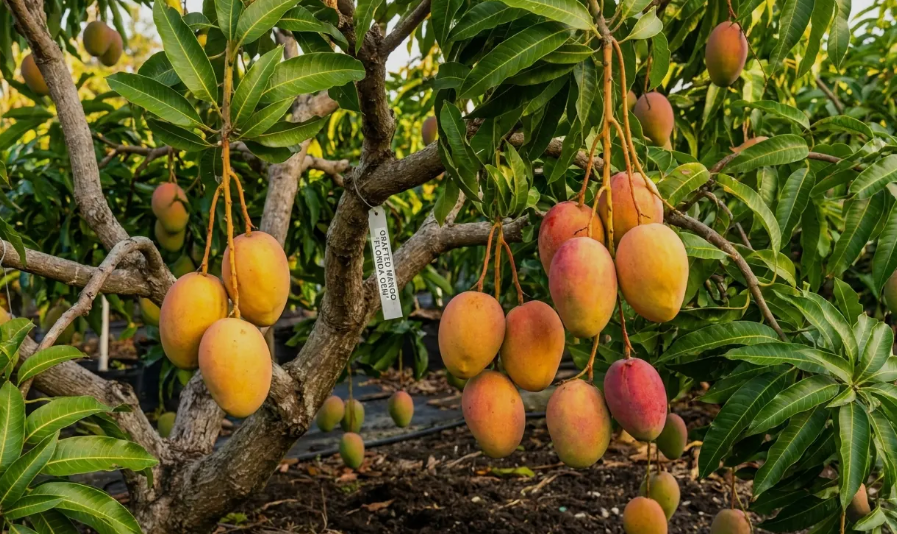
Cold hardy mangoes are a matter of degree, because the mango is a tropical tree with very little tolerance for frost. It is native to the region around northeastern India and Myanmar and has been cultivated for at least 4,000 years. India still grows about 44% of the world’s mangoes, out of a global harvest of roughly 59 million tonnes.
The fruit reached Florida in the 1800s, and a single seedling named Haden launched the modern industry there after it first fruited in 1910. Florida went on to breed most of the varieties now exported around the world. The United States is the largest importer, with most of its supply coming from Mexico and Peru.
A mature mango tree can withstand about 25°F for a few hours, while a young tree may be killed at 29°F to 30°F. Flowers and small fruit can be damaged below 40°F. University of Florida researchers have found no significant difference in cold resistance among varieties, and the trees do not harden off as winter approaches.
What does differ is how well a variety copes with cool, marginal climates. Some have proven themselves in California, some rebloom after a cold snap, and some stay small enough to cover or grow in a pot. The 29 mangoes below are chosen on those grounds, and each entry notes where they are grown.
1. Manila
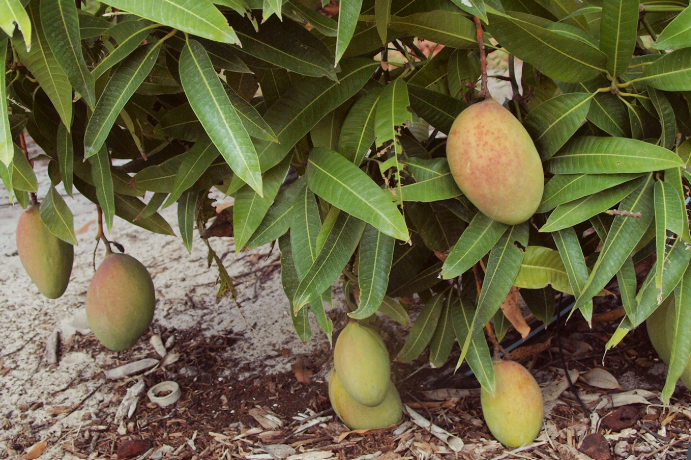
Manila is the mango most often grown at the cool edge of the crop’s range. Its fruit is small, slender and yellow. The flesh is sweet, soft and nearly free of fiber. It comes from a seedling race common in the Mexican state of Veracruz. Its seeds produce offspring that resemble the parent.
Growers report that Philippine-type mangoes from Mexico have proven the hardiest in California. A University of California Master Gardener describes a lush, 8-foot Manila growing in the ground near Sacramento. The same writer cautions that mangoes dislike temperatures under 40°F and that frost kills them. It is the usual starting point for inland and northern California gardeners. It is grown in Mexico, southern California, the Philippines and warm parts of northern California.
2. Thomson
Thomson is a California mango selected from a Manila seedling. Its fruit is yellow and medium to large. The flesh is sweet and has little fiber. The seed produces several shoots that come true to type. It ripens in late summer and fall.
It originated in Vista, in northern San Diego County, in 1966. It was selected for the cool, coastal conditions of southern California. It resists the mildew that troubles mangoes near the ocean. It is seldom grown outside the state. It is grown in coastal San Diego, Orange and Los Angeles counties.
3. Edgehill
Edgehill is one of the oldest California mango selections. Its fruit is small to medium and green with a red blush. The flesh is sweet and nearly fiberless. The tree is upright and fairly hardy by mango standards. It ripens in fall and early winter.
It originated in Vista, California, in the 1920s. It was chosen from seedlings that survived and fruited in local conditions. It performs best in warm foothill and inland sites. It is the parent of another California variety. It is grown in San Diego County and other parts of southern California.
4. T1
T1 is a seedling of Edgehill selected in the same California town. Its fruit is larger than that of its parent. The skin is green with a red blush. The flesh is sweet and of good quality. It ripens late in the California season.
It originated in Vista in 1969. It was bred from a tree already adapted to the region. That local parentage is its main advantage in a cool climate. It remains a specialty variety. It is grown in northern San Diego County and nearby foothill areas.
5. Aloha
Aloha is a California mango with large, red-blushed fruit. The flesh is sweet and has little fiber. It ripens earlier than many varieties in California. The tree is spreading. It bears well near the coast.
It originated in San Diego in 1971. It was selected by a local grower who tested many seedlings. Early ripening matters in California, where late fruit can hang into winter. It is little known elsewhere. It is grown in coastal southern California.
6. Reliable
Reliable takes its name from its steady cropping. Its fruit is medium to large and yellow with a red blush. The flesh is sweet. It ripens over a long period. The tree is compact.
It originated in San Diego in 1966. It was chosen for consistent fruiting under cool coastal conditions. Many Florida varieties flower but fail to set fruit there. Its small size makes it easier to protect on cold nights. It is grown in San Diego County and coastal southern California.
7. Keitt
Keitt is the leading commercial mango of California. Its fruit is large and stays green when ripe. The orange flesh is very sweet and free of fiber. It ripens late, from late summer into fall. It must be picked firm and ripened off the tree.
It originated in Homestead, Florida, in 1945. A California grower tested more than 50 varieties in the desert before settling on it. A freeze in January 2007 still ravaged most of the desert mango orchards. Growers replanted the damaged and dead trees. It is grown in California’s Coachella Valley, Florida, Mexico, Israel and Spain.
8. Valencia Pride
Valencia Pride is one of the most widely grown mangoes in southern California. Its fruit is long, curved and yellow with a pink-red blush. The flesh is sweet, firm and fiberless. It ripens before Keitt. The fruit is too soft for commercial shipping.
It is a Florida variety and one of the fastest-growing mango trees. That vigor helps it recover after cold damage. Some growers in marginal areas have still lost young trees. Its large size makes it hard to cover in a freeze. It is grown in southern California, the California desert and Florida.
9. Kent
Kent is a large, late mango with rich, sweet flesh. The skin is green with a dark red blush. The flesh has almost no fiber. It ripens in late summer. It is a parent of several modern varieties.
It was selected in Florida in the 1940s. It is one of the main export varieties in Mexico, Peru and Ecuador. Late varieties can rebloom after a cold snap destroys the first flowers. It does not fruit reliably in cool coastal California. It is grown in Florida, Mexico, Peru, Ecuador, Spain and Israel.
10. Kensington Pride
Kensington Pride is the standard mango of Australia. Its fruit is medium to large and yellow with an orange-red blush. The flavor is rich and distinctive. The flesh is juicy with a little fiber. Its seed produces several true-to-type seedlings.
It originated at Bowen, Queensland. It is grown well south of the tropics along the Australian east coast. Seedling trees are vigorous and long-lived. It flowers irregularly in cool springs. It is grown in Queensland, the Northern Territory, Western Australia and northern New South Wales.
11. Osteen
Osteen is the main mango of mainland Europe. Its fruit is large and oblong, with purple-red skin. The flesh is sweet, mild and nearly fiberless. It ripens late. It stores and ships well.
It originated in Florida. It became the leading variety on the subtropical coast of southern Spain. That coast lies at the northern limit of commercial mango growing. Its late season suits the long, mild Spanish autumn. It is grown in Spain, Portugal, Israel and Florida.
12. Haden
Haden is the mango that founded the Florida industry. Its fruit is large, round and red over yellow. The flavor is rich and aromatic. The flesh has some fiber near the seed. The tree is large and vigorous.
It grew from a seed planted in Coconut Grove, Florida, in 1902 and first fruited in 1910. The University of Florida lists it among the good varieties for home growing on the Gulf Coast. The same source notes that mango trees survive north of their usual range in sheltered spots. Most Florida varieties descend from it. It is grown in Florida, Hawaii, Mexico and many tropical countries.
13. Tommy Atkins
Tommy Atkins dominates the world mango trade. Its fruit is large and oval, with thick red and green skin. The flesh is firm, mildly sweet and somewhat fibrous. It ships and stores exceptionally well. The tree is productive.
It is a seedling of Haden that first fruited in southern Florida in 1940. Growers value it for disease resistance and toughness. A healthy, vigorous tree recovers better from cold injury. Its flavor is plainer than that of most other varieties. It is grown in Mexico, Brazil, Peru, Ecuador, Florida and Israel.
14. Glenn
Glenn is one of the easiest mangoes to grow. Its fruit is medium-sized and yellow with a pink-red blush. The flesh is sweet, soft and fiberless. It ripens in June and July in Florida. The tree is of medium vigor.
It is a Florida seedling of Haden. Nurseries describe it as a consistent producer that is effortless to grow. Its early to mid-season harvest finishes before autumn. Its moderate size is easier to protect than a large tree. It is grown in Florida, California, Hawaii and the Caribbean.
15. Bailey’s Marvel
Bailey’s Marvel is a large, fast-growing mango tree. Its fruit is large and yellow with a red blush. The flesh is sweet, firm and nearly fiberless. It ripens in mid to late season. The tree is very vigorous.
It originated on Florida’s Gulf Coast. Nurseries often promote it as unusually tolerant of cold. No university trial has confirmed that claim. Its rapid growth does help it rebuild a canopy after damage. It is grown in central and southern Florida.
16. Florigon
Florigon is an early Florida mango. Its fruit is medium-sized and yellow. The flesh is sweet, soft and fiberless. It ripens from May to July. Its seed produces several true-to-type seedlings.
The University of Florida rates it moderately resistant to anthracnose, the main mango disease in humid climates. It bears well. Its early harvest avoids late-season weather. The tree is vigorous. It is grown in southern Florida and the Caribbean.
17. Edward
Edward is prized for superb flavor. Its fruit is large and yellow with a pink-red blush. The flesh is rich, sweet and free of fiber. It ripens from May to July. The tree is moderately vigorous.
It is a Florida variety. The University of Florida rates its fruit production as poor. It is moderately resistant to anthracnose. It is planted for quality, not quantity. It is grown in Florida, Hawaii and by collectors in California.
18. Irwin
Irwin is a bright red mango of medium size. The flesh is sweet, mild and fiberless. It ripens in June and July in Florida. The tree is of medium vigor. It bears heavily.
It originated in Florida. It became the main variety grown under cover in Japan and is widely planted in Taiwan. Both are subtropical regions with cool winters. It is very susceptible to anthracnose in wet climates. It is grown in Florida, Taiwan, Japan, Australia and Peru.
19. Zill
Zill is an early mango with small to medium fruit. The skin is red over yellow. The flesh is sweet and aromatic. It ripens from May to July. The tree is vigorous.
It originated in Florida as a seedling of Haden. It was an important early commercial variety. Its early season is useful where summers are short. It is susceptible to anthracnose. It is grown in Florida, South Africa and parts of the Caribbean.
20. Saigon
Saigon is a group of seedling mangoes from Southeast Asia. Its fruit is small to medium and green to yellow. The flesh is sweet, soft and fiberless. It ripens from May to July. It comes true from seed.
The University of Florida rates it resistant to anthracnose. Seed-grown trees are vigorous and deep-rooted. Such trees need no grafting and can regrow true if frozen back. Fruit quality varies from tree to tree. It is grown in Florida, Vietnam and the Caribbean.
21. Pickering
Pickering is one of the best mangoes for a pot. The tree is naturally compact and bushy. Its fruit is medium-sized and yellow. The flesh is firm, sweet and fiberless, with a hint of coconut. It begins bearing while very young.
A potted mango can be moved under cover when cold threatens. The University of Florida notes that many varieties are suited to small home landscapes and that young trees may be killed at 29°F to 30°F. Nurseries rank Pickering among the top choices for container growing. It ripens in June and July. It is grown in Florida, California and in greenhouses farther north.
22. Cogshall
Cogshall is an ultra-compact mango tree. Its fruit is medium-sized and yellow with a red blush. The flesh is sweet, soft and fiberless. It ripens in June and July. The tree is of low to medium vigor.
It originated on Florida’s Gulf Coast. It can be kept under 8 feet with light pruning. That size makes it practical to cover during a freeze. It bears well for its size. It is grown in Florida, California and in containers elsewhere.
23. Carrie
Carrie is famous for its flavor. Its fruit is medium-sized and stays green-yellow when ripe. The flesh is very soft, rich and completely fiberless. It ripens in June and July. It has a strong, aromatic taste.
It is a Florida variety. Nurseries list it among the mangoes suited to container growing. One nursery calls its flavor by far the most outstanding. The fruit is too soft to ship. It is grown in Florida, California and Hawaii.
24. Ice Cream
Ice Cream is the most popular of the small patio mangoes. The tree is slow-growing and very compact. Its fruit is small and stays green when ripe. The flesh is sweet and rich, with a flavor said to match its name. It ripens in midsummer.
It came to Florida from the Caribbean. Its tiny size suits a large pot on a patio. It can be wheeled indoors for winter. Yields are modest. It is grown in Florida, the Caribbean and in containers in cooler regions.
25. Julie
Julie is the classic dwarf mango of the Caribbean. Its fruit is small and flattened, with green-yellow skin and a pink blush. The flesh is deep orange, rich and sweet. It ripens in summer. The tree grows very slowly.
It is especially loved in Jamaica and Trinidad. It is a parent of several compact Florida varieties. Its small stature suits container growing. It is prone to disease in humid weather. It is grown in the Caribbean, Florida and in pots elsewhere.
26. Nam Doc Mai
Nam Doc Mai is the most famous mango of Thailand. Its fruit is long, slender and yellow. The flesh is very sweet, smooth and fiberless. It is also eaten green and crisp. Its seed produces several true-to-type seedlings.
Nurseries call it the most popular variety for pot culture. It ripens in June and July in Florida. It often flowers more than once in a year. A second bloom can replace flowers lost to cold. It is grown in Thailand, Florida, Australia and California.
27. Mallika
Mallika is a compact mango bred in India. Its fruit is medium to large and yellow. The flesh is very sweet, with a honey-like flavor and no fiber. It is picked mature but green and ripened indoors. It ripens in midsummer.
It is a cross between two classic Indian varieties. The tree stays small and suits containers. Growers in southern California have shown interest in it. It resists disease fairly well. It is grown in India, Florida, California and Israel.
28. Lancetilla
Lancetilla bears some of the largest mangoes grown. A single fruit can weigh several pounds. The skin is bright red. The flesh is sweet, firm and fiberless. It ripens late in the season.
It comes from Honduras. Despite the size of its fruit, the tree stays compact. Nurseries list it among the mangoes suited to container growing. Its late season can be a drawback where autumn turns cool early. It is grown in Honduras, Florida and Central America.
29. Rosigold
Rosigold is one of the earliest mangoes to ripen. Its fruit is small and yellow with a red blush. The flesh is sweet, soft and fiberless. It ripens in March and April in Florida. The tree is small and of low vigor.
The University of Florida includes it among the varieties recommended for home landscapes. Its very early bloom can be caught by winter cold. In a mild year it gives fruit months ahead of other varieties. Its small size makes it easy to cover. It is grown in southern Florida and in containers elsewhere.
Key Takeaways:
– Mango cold tolerance varies by variety: Mango trees (Mangifera indica) are tropical plants that generally prefer warm conditions. Some cultivars tolerate brief cool spells better than others, but most are sensitive to frost and prolonged cold.
– Certain varieties are popular in cooler growing areas: ‘Pickering’, ‘Glenn’, ‘Mallika’, and ‘Cogshall’ are grown by gardeners in subtropical regions. However, none should be considered truly frost-hardy, and their performance depends on local temperatures and growing conditions.
– Young mango trees need extra protection: Seedlings and young trees are particularly vulnerable to cold damage. Growing them in containers, moving potted trees under shelter, or using suitable frost protection can help in regions with occasional cold snaps.
– Fruit quality differs among cultivars: Mango varieties produce fruits with different sizes, shapes, skin colors, sweetness levels, and flesh textures. Choosing a cultivar suited to your climate and preferred flavor can improve your growing experience.
– Sunlight and drainage are essential: Mango trees generally grow best in full sun, warm conditions, and well-drained soil. Waterlogged roots and persistent cold can weaken trees and limit fruit production.
– Choose varieties according to your local climate: Consider minimum winter temperatures, frost frequency, and the length of the warm growing season before planting. In cooler regions, container cultivation and a protected growing location may be more practical than planting mango trees outdoors year-round.
Sources:
- University of California: Mango Experiment
- University of Florida: A mango tree in your yard?
- University of Florida: Mango Growing in the Florida Home Landscape
- University of Florida: cold tolerance of tropical fruit
- University of Florida: Mango Varieties Recommended for Florida
- International Tropical Fruits Network: mango varieties
- Sunset: mangoes in the California desert
- Top Tropicals: mango varieties
- Wikipedia: Haden mango
- Wikipedia: Mango
- Fairchild Tropical Botanic Garden: The History of Mangos in South Florida
- Abasto: Mango, the unofficial king of fruits
- Central Florida Ag News: Florida mango production
- Growing Fruit forum: Ataulfo mango in Northern California