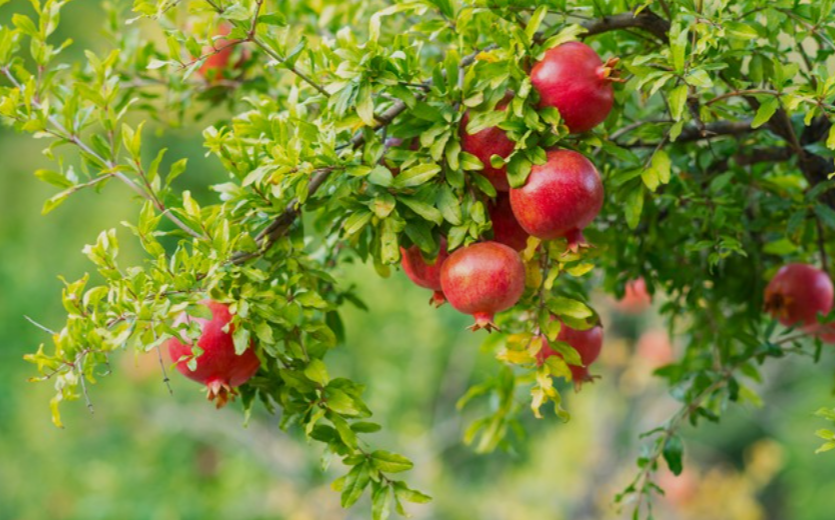
Cold hardy pomegranate fruit trees extend one of the world’s oldest fruits beyond the hot, dry regions where it is usually grown. The pomegranate is native from Iran to the Himalayas of northern India and has been cultivated since ancient times. It grows as a dense, bushy shrub or small tree, with orange-red flowers that make it ornamental as well as useful.
The plant is tougher than most people expect. Texas extension specialists note that it is more cold-hardy than citrus, with some varieties tolerating 10°F while others are damaged at 18°F. The University of Georgia reports that most varieties are hardy to 12°F and that the hardier types survive without damage down to 7°F.
Two patterns help in choosing a variety. Hard-seeded types are thought to be hardier than soft-seeded ones, and varieties collected in Central Asia during the Soviet era are hardier than those bred in California. Wonderful, the standard commercial variety in California, performs very poorly in Georgia.
Timing matters as much as the lowest temperature. Trees are most resistant in midwinter and most vulnerable in fall, before they are fully dormant, and at bud break in spring. The 30 pomegranates below are the ones most often grown where winters are cold, and each entry notes where they are planted.
1. Salavatski
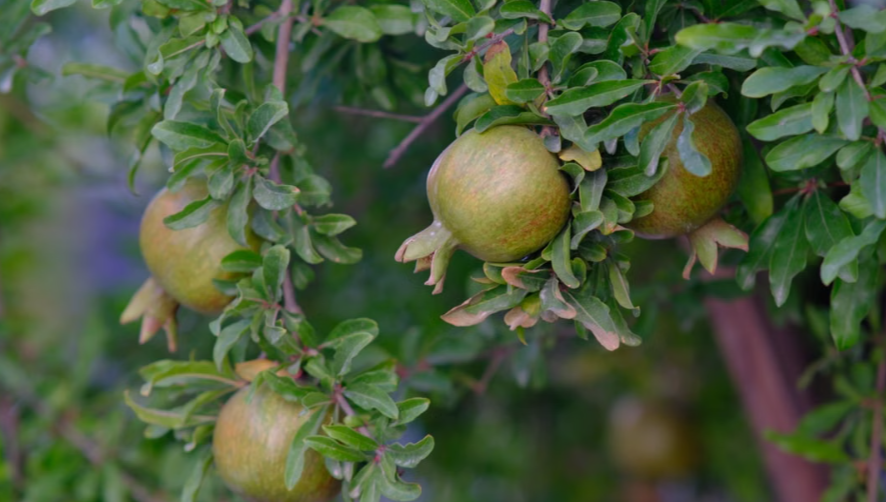
Salavatski is the best-known cold-hardy pomegranate in the United States. Its fruit is medium-sized and yellow, with a pink to red blush. The arils are light red and tart-sweet. The seeds are fairly soft. The tree bears early and heavily.
Clemson University notes that the Russian series has the best cold tolerance of the pomegranates recommended for South Carolina. Salavatski belongs to that group and is also sold as Russian 8. In a West Texas trial it combined high yield with high sugar. Growers say it is the variety with the most convincing record of surviving in the ground. It is grown in Texas, Georgia, the Carolinas, Virginia, Utah and Florida.
2. Kazake
Kazake is a compact, hardy pomegranate from Central Asia. Its fruit is small to medium, with yellow skin flushed light red. The arils are pale and sweet-tart. The seeds are hard. The plant is vigorous for its size.
It is also known as Russian 30. It is often recommended alongside Salavatski for the coldest pomegranate regions. In Georgia trials its juice measured about 14.6% sugar. Its hard seeds make it better for juice than for eating fresh. It is grown in Georgia, the Carolinas, Texas, Utah and the upper South.
3. Surh-Anor
Surh-Anor is a hardy pomegranate with golden skin. The fruit is medium to large, with yellowish-green skin touched with red. The arils are cream to rosy-pink and slightly tart. The seeds are hard. It is a consistent producer.
It comes from Turkmenistan and is also called Russian 33. University of Florida notes rate its cropping as heavy. A Texas grower reported no damage to it in a freeze that killed the tops of other hardy varieties. It blooms early, which can expose it to late spring frost. It is grown in Texas, Georgia, Florida and New Mexico.
4. Al-Sirin-Nar
Al-Sirin-Nar is one of the most productive hardy pomegranates. Its fruit is medium to large and red. The arils are large and red, with very good, slightly tart flavor. The seeds are hard. It begins bearing at a young age.
It comes from Turkmenistan and is also called Russian 6. The University of Florida rates its cropping as very heavy. In West Texas it was one of four varieties notable for both high yield and high sugar. Texas extension specialists list it among the varieties suited to that state. It is grown in Texas, Georgia, Florida and California.
5. Afganski
Afganski is a hardy variety with small to medium fruit. The skin is yellow with red accents. The arils are medium to large, red, and mild with a slight tartness. Georgia researchers describe it as sweet. It bears early and crops consistently.
It comes from Turkmenistan and is also called Russian 26. The University of Florida rates its cropping as heavy. One northern grower reports that it fruited after a hard winter. It is one of the more dependable of the Russian series. It is grown in Florida, Georgia, the Carolinas and Utah.
6. Kaj-Acik-Anor
Kaj-Acik-Anor is a medium-sized pomegranate with yellow skin and a light pink accent. The arils are pink. The flavor is good, mild and slightly tart. The seeds are of medium hardness. Its arils were chosen to illustrate the University of Georgia’s pomegranate guide.
It comes from Turkmenistan and is also called Russian 9. Growers report that its hardiness varies by climate. In some regions it outlasts Salavatski, and in others it does not. Its cropping is rated low to medium in Florida. It is grown in Georgia, Florida, Texas and the Carolinas.
7. Bala Miursal
Bala Miursal is a Central Asian pomegranate with red fruit. The arils are red and sweet-tart. The seeds are hard. The fruit is medium to large. It ripens in midseason.
It is also known as Russian 25. It has been grown in commercial trial plantings in southern Georgia. Its juice measured about 13.8% sugar there. Growers in northern Utah keep it outdoors in a dry climate with winter lows near 0°F. It is grown in Georgia, Florida, Utah and Texas.
8. Kara Bala Miursal
Kara Bala Miursal is a darker relative of Bala Miursal. Its fruit is deep red. The arils are dark and sweet-tart. The seeds are hard. The juice is strongly colored.
It is also known as Russian 16. In a Georgia trial its juice had the highest sugar level of the varieties measured, at 16.2%. It is suited to juice production. It shares the hardiness of the Russian series. It is grown in southern Georgia and in collections across the Southeast.
9. Apseronski
Apseronski is a pomegranate from the Caucasus region. Its fruit is medium-sized. The arils are sweet, and the seeds are soft. In a West Texas evaluation its juice measured over 18% sugar. It ripens in fall.
It is named for a peninsula on the Caspian Sea. It was included in Texas A&M’s trial of 22 varieties at El Paso. Soft-seeded types are usually less hardy than hard-seeded ones. It is hardier than most California varieties. It is grown in Texas, Georgia and Florida.
10. Nikitski Ranni
Nikitski Ranni is an early pomegranate with a good, sweet flavor. Its fruit is medium-sized and light red. The arils are large and light pink. The seeds are hard. Its name means early in Russian.
The University of Florida rates its cropping as heavy and notes that it cropped well at the University of Georgia farm. Georgia researchers found it one of two varieties that performed consistently well. Growers there planted a 2-acre block of it. Its early ripening helps it finish before fall frost. It is grown in Georgia, Florida, the Carolinas and Utah.
11. Kunduzski
Kunduzski is a pomegranate named for a region of northern Afghanistan. Its fruit is medium-sized. The arils are sweet, with soft seeds. In a West Texas evaluation its juice measured 18% sugar. It ripens in fall.
It was part of Texas A&M’s variety trial at El Paso. It reached American collections with the Central Asian varieties. It tolerates cold better than standard commercial types. It suits fresh eating because of its soft seeds. It is grown in Texas, Florida and California.
12. Saartuzski
Saartuzski is a Central Asian pomegranate with sweet-tart fruit. The arils are red. The seeds are hard. The fruit is medium-sized. It is used mainly for juice.
It is also known as Russian 31. In a Georgia trial its juice measured 15.8% sugar. It was grown in a commercial test planting in the southern part of that state. It is hardy by pomegranate standards. It is grown in Georgia and in southeastern collections.
13. Sumbar
Sumbar is a sweet, soft-seeded pomegranate. Its fruit is pink to red. The arils are pink and mild, with little acid. It ripens in September and October. It is named for a river valley in Turkmenistan.
One nursery rates it hardy to 0°F or below. A grower who tested many varieties lists it among those showing great promise. Others find it less hardy than the toughest hard-seeded types. It is one of the hardier choices for people who dislike hard seeds. It is grown in the Pacific Northwest, California, Utah and the Gulf states.
14. Agat
Agat is a Central Asian pomegranate with dark red fruit. The arils are red and sour-sweet. The seeds are medium-hard. The fruit is medium to large. It is tart enough to be best as juice.
It is kept in the national pomegranate collection in California. Growers in northern Utah include it among the varieties they grow outdoors. It was not part of the Georgia station collection that introduced most Russian varieties to the South. It is uncommon in nurseries. It is grown in California, Utah and by collectors elsewhere.
15. Kaim-Anor
Kaim-Anor is another of the Central Asian varieties brought to Georgia. Its fruit is medium-sized. The arils are red and sweet-tart. The seeds are hard. It ripens in midseason.
It is also known as Russian 7. It came to Florida’s university collection from a federal station in Georgia. It belongs to the group that extension services consider the hardiest. It is grown mainly in research and collector plantings. It is grown in Georgia and Florida.
16. Belbek
Belbek is a pomegranate from the Crimean region. Its fruit is medium-sized and red. The arils are sweet-tart. The seeds are hard. It is little known in North America.
Growers who trade hardy varieties describe it as hardier than most others they have tried. It is named for a river valley in Crimea. No university has published trial data on it. It is easier to obtain in Europe than in the United States. It is grown in eastern Europe and by a few American collectors.
17. Russian 18
Russian 18 is a hardy red pomegranate also sold as Texas Red. Its fruit is medium to large and red. The arils are red and sweet-tart. The seeds are hard. It bears reliably.
Texas A&M AgriLife Extension lists it among the varieties recommended for the Austin area. Growers in northern Utah also grow it outdoors. It came from the same Central Asian collections as Salavatski. It is one of the easier hardy varieties to find in Texas nurseries. It is grown in Texas, Oklahoma, Utah and the Southeast.
18. Parfianka
Parfianka is widely considered the best-tasting pomegranate. Its fruit is red, with bright red arils. The flavor balances sweetness and acidity. The seeds are small and soft. The tree is compact.
It was selected in Turkmenistan. Its hardiness is debated among growers. One who tested many varieties found that it did not meet his hardiness requirements, while others keep it outdoors in northern Utah. It is best treated as moderately hardy. It is grown in California, Florida, Georgia, Texas and Utah.
19. Desertnyi
Desertnyi is a soft-seeded pomegranate with a hint of citrus in its flavor. Its fruit is pinkish-red. The arils are red and sweet with slight tartness. It colors early in the season. The tree is small.
It comes from Turkmenistan. A grower who tested many varieties lists it among those showing great promise for hardiness. It goes dormant early in fall, which helps protect it. It is still a soft-seeded type and less hardy than the toughest varieties. It is grown in California, Florida, Texas and the Southeast.
20. Kandahar
Kandahar is a hard-seeded pomegranate from Afghanistan. Its fruit is large and deep red. The arils are dark and pleasantly acidic. In a West Texas evaluation its juice measured 16% sugar. It yielded heavily there.
Texas A&M AgriLife Extension evaluated it in El Paso County, where winter lows reach 10°F to 15°F. It was also part of the university’s 22-variety trial. Its fruit is prone to sunburn in the desert. Its hard seeds suit it to juice. It is grown in West Texas, New Mexico, Utah and Afghanistan.
21. Entek Habi Saveh
Entek Habi Saveh is a hardy pomegranate from Iran. Its fruit is small and yellow with a pink accent. The peel shows red at the ends of the fruit. The arils are small and pearl-colored. The flavor is tart.
The University of Florida rates its cropping as low and notes that it seems prone to sunburn and splitting. Growers value it for hardiness more than for fruit. Iranian varieties are considered hardier than American ones but less hardy than the best Central Asian types. It is grown as a trial variety in cold areas. It is grown in the Carolinas, Georgia, Florida and Utah.
22. Alk Pust Ghermez Saveh
Alk Pust Ghermez Saveh is another Iranian pomegranate. Its name refers to its red skin and to the city of Saveh. The fruit is medium-sized. The arils are red and sweet-tart. The seeds are hard.
It reached the Southeast through a federal research station in Georgia. Growers in northern Utah include it among the varieties they grow outdoors. It belongs to the Iranian group, which is moderately hardy. It is seldom offered by nurseries. It is grown in Georgia, Florida and Utah.
23. Gissarskii Rozovyi
Gissarskii Rozovyi is a soft-seeded pomegranate with pink fruit. The arils are pink and sweet-tart. Tasters at public events in California have ranked it among their favorites. The fruit is medium to large. It ripens in midseason.
A Texas grower found it the most cold-hardy of the soft-seeded varieties he was testing. It survived cold that should, in theory, have killed it. It took damage but was not killed to the ground. It is still less hardy than the best hard-seeded types. It is grown in California, Texas and the Southeast.
24. Texas Pink
Texas Pink is a sweet, pink pomegranate also sold as Fleishman. Its fruit is large and round, pink inside and out. The arils are very sweet. The seeds are fairly soft. It drops its leaves early in fall.
Early dormancy helps a pomegranate avoid damage from the first freezes. It is grown outdoors by collectors in northern Utah. A Texas grower counts it among the varieties he relies on. It is less hardy than the hard-seeded Russian types. It is grown in Texas, California, Nevada and Georgia.
25. Spanish Sweet
Spanish Sweet is a pale, sweet pomegranate also called Papershell. Its skin is thin and light-colored. The arils are sweet with little acid. The seeds are semi-hard. In a West Texas evaluation its juice measured 15.5% sugar.
Texas A&M AgriLife Extension lists it among the varieties for the Austin area. It was also part of the university’s El Paso trial. Experienced growers suggest it for mild areas but not for very cold ones. It is included here as a sweet option for moderate winters. It is grown in Texas, California and the Gulf states.
26. Utah Sweet
Utah Sweet is a shrubby pomegranate with pink flowers and pink fruit. The arils are pale pink, sweet and soft-seeded. The plant grows to about 12 feet. It tolerates drought well. It was part of Texas A&M’s El Paso trial.
Nurseries often promote it as very cold-hardy. Growers say that claim is overstated, and one nurseryman rates it only for mild-winter regions. It does best in dry climates, where pomegranates harden off more fully. It is not in the same class as the Russian varieties. It is grown in southern Utah, Nevada, Arizona and Texas.
27. Eversweet
Eversweet is a very sweet pomegranate with almost no tartness. Its rind is pink to red. The arils are pale, and the juice is clear. The seeds are soft. It needs a shorter season than most varieties.
A grower who tested many varieties lists it among those showing great promise for hardiness. That is unusual for a soft-seeded California variety. It ripens where summers are too cool for others. It is still best with some winter protection in cold areas. It is grown in California, the Pacific Northwest and the Southwest.
28. Wonderful
Wonderful is the standard commercial pomegranate. Its fruit is large and deep red. The arils are dark red and sweet-tart. The juice is intensely colored. It ripens late, in October.
It is not a cold-hardy variety and serves here as the benchmark. The University of Georgia reports that it performs very poorly in that state, and Georgia growers removed it from their trial. It did survive a severe freeze for one grower in the Dallas area. It was among the best for nutrient content in West Texas. It is grown in California, Texas, Arizona, Israel and Chile.
29. Cranberry
Cranberry is a pomegranate grown in the Southeast for its tart, bright red arils. The fruit is medium-sized. The flavor is sharp and suits juice. It ripens in fall. It came to university collections from a Florida nursery.
Georgia researchers found it one of two varieties that performed consistently well. Growers there planted a 2-acre block of it alongside Nikitski Ranni. It tolerates the humid climate that defeats many varieties. It is hardy in the southern part of the pomegranate belt. It is grown in Georgia and Florida.
30. Ben Ivey
Ben Ivey is a Texas pomegranate selection. Its fruit is red and sweet. In a West Texas trial it ranked among the top five varieties for sugar. It was also one of four notable for combining high yield with high sugar. Its fruit can split in some seasons.
It was tested by Texas A&M at El Paso. It is adapted to the heat, drought and salty soils of that region. It handles the winter lows of West Texas. It is not widely sold outside the state. It is grown in West Texas and New Mexico.
Key Takeaways:
– Pomegranate trees vary in cold tolerance: Most pomegranates (Punica granatum) thrive in warm climates, but some varieties tolerate colder winters better than others. Selecting a suitable cultivar is essential for successful growth in regions with freezing temperatures.
– Some varieties are better suited to cooler climates: Russian pomegranate selections, including ‘Salavatski’ and ‘Kazake’, are known for their relatively good cold tolerance. However, survival depends on tree maturity, local conditions, and the severity and duration of winter cold.
– Cold hardiness does not guarantee fruit production: A pomegranate tree may survive winter but produce little fruit if the growing season is too short for its fruits to mature. Choose varieties with suitable ripening times for your climate.
– Sunlight and well-drained soil are important: Pomegranates generally perform best in full sun and well-drained soil. Adequate sunlight supports flowering and fruit development, while poor drainage can damage roots.
– Winter protection can improve survival: Planting in a sheltered location, applying mulch around the root zone, and protecting young trees during severe cold can reduce winter damage. Keep mulch away from direct contact with the trunk.
– Check local hardiness conditions before planting: Consider your USDA hardiness zone, typical winter lows, and length of the frost-free growing season. Even relatively cold-hardy pomegranates may experience branch dieback or reduced fruit production after severe freezes.
Sources:
- Clemson University: Pomegranates
- University of Florida: Cultivar Selection Guide for Florida-Grown Pomegranates
- Texas A&M AgriLife Extension: Pomegranate Cultivars in El Paso County
- University of Georgia: Pomegranate Production
- University of Georgia: Pomegranate Cultivars of Georgia
- University of Georgia: Georgia Pomegranate Update 2014
- University of Georgia: Pomegranates in Georgia 2015
- Texas AgriLife Extension: Texas pomegranates
- Texas A&M AgriLife Extension: Fruit Varieties for Travis County
- HortScience: Performance of 22 Pomegranate Varieties
- ASHS: Field Trials of 22 Pomegranate Cultivars in West Texas
- ASHS: Texas Pomegranate Variety Trial
- University of Florida: pomegranate accessions
- Growing Fruit forum: super hardy pomegranates
- Growing Fruit forum: pomegranates for Central Texas
- Growing Fruit forum: breeding cold hardy pomegranates
- Growing Fruit forum: Utah Sweet pomegranate
- L.E. Cooke: Pomegranates in Zone 7