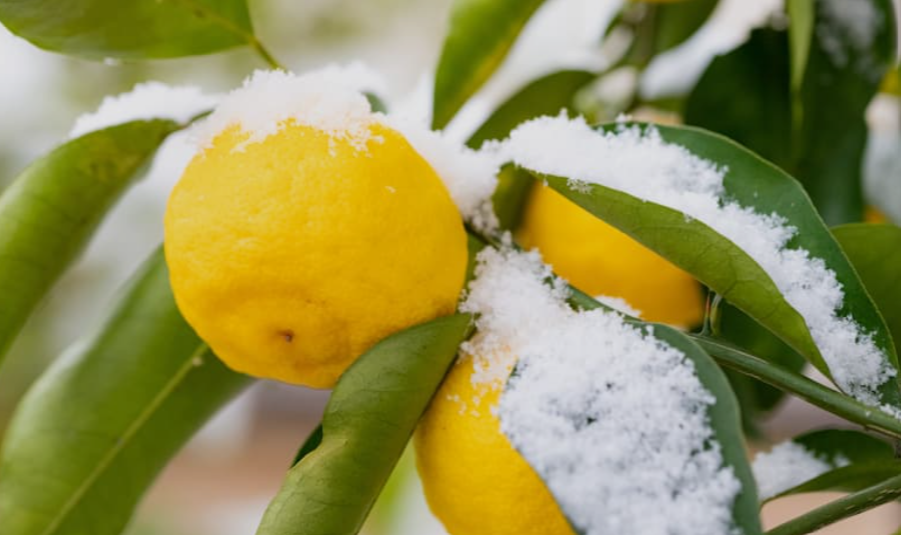
Cold hardy citrus fruit trees make it possible to pick oranges, mandarins and lemons far north of the traditional groves. Citrus trees are evergreens that trace their origin to the foothills of the Himalayas. Most are damaged when temperatures fall into the mid-20s, and lemons, limes and citrons are hurt even sooner.
Citrus is one of the world’s largest fruit crops. Global production passed 158 million metric tons in the 2021 and 2022 season, and oranges make up about half of the total. China is the leading producer, with roughly 28% of the world crop.
In the United States, the industry has been shifting. Florida’s output fell from 150 million boxes in 2005 to 16 million in 2023 because of a disease called citrus greening. At the same time, growers in south Georgia have planted about 2,700 acres of cold-tolerant citrus where almost none grew a decade earlier.
A citrus tree usually withstands temperatures 3 to 4 degrees lower than its fruit can. Hardiness also depends on a gradual slide into cold weather, since a sudden freeze after a warm spell does far more harm. The 35 trees below are listed with the temperatures they are reported to survive and the places where they are grown.
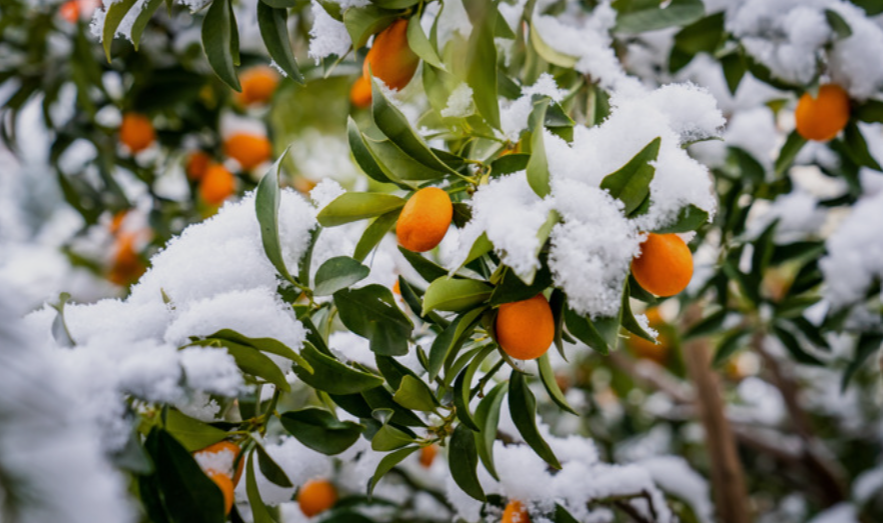
1. Trifoliate Orange
The trifoliate orange is the hardiest citrus relative of all. It is a thorny, deciduous shrub or small tree with leaves divided into three leaflets. Its fruit is yellow, fuzzy and about the size of a golf ball. The flesh is seedy, sour and bitter, though it can be made into marmalade. Fragrant white flowers appear on bare branches in spring.
It survives winter lows well below 0°F. Alabama Extension notes that as a rootstock it can add up to 5 degrees of cold tolerance to a satsuma tree. It is the parent of most hardy citrus hybrids. It is native to China and Korea. It is grown from the Gulf Coast north to New England and has naturalized in parts of the Southeast.
2. Flying Dragon
Flying Dragon is a contorted form of the trifoliate orange. Its green stems twist and zigzag, and its thorns curve like claws. The bare winter silhouette is its main attraction. It bears the same small, bitter, yellow fruit as its parent. It grows slowly to about 6 feet.
It is as hardy as the ordinary trifoliate orange. Nurseries use it as a dwarfing rootstock that keeps grafted citrus trees small. It also brings those trees into fruit at a younger age. It makes an impenetrable hedge. It is grown as an ornamental across the eastern United States and in Japan.
3. Citrange
The citrange is a cross between the sweet orange and the trifoliate orange. It was first bred by government scientists in the late 1890s. The fruit looks like a small orange. The juice is sharp and somewhat bitter, though it can be used for drinks and marmalade. A variety called Rusk is considered the most edible.
Citranges are reported to survive temperatures near 0°F. They keep most of their leaves in mild winters. Their greatest use is as rootstocks for commercial citrus. Two well-known selections support much of the world’s orange crop. They are grown in the Southeast, Texas and the Pacific Northwest.
4. Citrumelo
The citrumelo is a hybrid of the grapefruit and the trifoliate orange. Its fruit is large and yellow, like a small grapefruit. The flesh is juicy and sour, with a slight bitterness. A variety called Dunstan is regarded as the best for eating. The tree is vigorous and thorny.
It is reported to tolerate about 5°F. The juice can be sweetened and used like grapefruit juice. One selection is among the most widely used citrus rootstocks in the world. It resists several soil diseases. It is grown in Georgia, the Carolinas, Texas and the Gulf states.
5. Thomasville Citrangequat
The Thomasville citrangequat is a three-way hybrid of kumquat, sweet orange and trifoliate orange. It is named for Thomasville, Georgia, where it first fruited. The fruit is small and oval. It tastes like a lime when green and turns sweeter as it ripens to orange. It is the most edible of its group.
It is reported to survive about 5°F. The tree is upright, thorny and very productive. The juice makes a good substitute for lime. It was developed by government breeders in the early 1900s. It is grown in Georgia, the Carolinas, Texas and the Pacific Northwest.
6. Ichang Papeda
The Ichang papeda is a wild citrus from the mountains of central and southwestern China. It is among the hardiest true citrus, reported to tolerate about 0°F. Its leaves have a broad, winged stalk nearly as large as the blade. The fruit is small, yellow and lemon-scented. It has little juice and is not eaten fresh.
Its importance lies in its offspring. It is a parent of the yuzu, the sudachi and the Ichang lemon. The tree is evergreen and slow-growing. The rind is highly aromatic. It is grown as an ornamental in Britain, the Pacific Northwest and the upper South.
7. Ichang Lemon
The Ichang lemon is a hybrid of the Ichang papeda and the pummelo. Its fruit is large, often the size of a grapefruit. The juice is plentiful and tastes much like lemon. The rind is thick and fragrant. It has long been cultivated in China.
It is reported to tolerate about 10°F. One fruit can yield enough juice for a pie. It is used for lemonade, cooking and scenting rooms. The tree is thorny and productive. It is grown in Georgia, the Carolinas, Texas and the Pacific Northwest.
8. Yuzu
The yuzu is a sour, intensely aromatic citrus prized in Japanese and Korean cooking. The fruit is yellow, bumpy and about the size of a tangerine. It has many seeds and little juice. The rind is the most valued part. Its scent combines lemon, mandarin and grapefruit.
It is reported to survive temperatures of about 10°F to 12°F. In Japan it flavors sauces, soups and sweets, and whole fruits are floated in hot baths at the winter solstice. In Korea it is made into a sweet tea. The tree is thorny and slow to bear. It is grown in Japan, Korea, China, California and the Pacific Northwest.
9. Sudachi
The sudachi is a small, round, green citrus from Japan. It is harvested and used while still green. The juice is sharply sour, with a peppery aroma. It is squeezed over grilled fish, noodles and mushrooms. Each fruit is about the size of a golf ball.
It is a relative of the yuzu and shares much of its hardiness. Nearly all of Japan’s crop comes from one prefecture on the island of Shikoku. The fruit ripens in late summer, earlier than most citrus. The tree is compact and productive. It is grown in Japan and by specialty growers in California and the Southeast.
10. Kabosu
The kabosu is another Japanese sour citrus related to the yuzu. Its fruit is larger than the sudachi, about the size of a tennis ball. It is picked green and turns yellow if left on the tree. The juice is abundant and sharply acidic. It is used like vinegar in sauces and dressings.
It tolerates cold in a similar range to the sudachi. Most of Japan’s kabosu comes from one prefecture on the island of Kyushu. It is served with fish, hot pot dishes and grilled meat. The tree is thorny and vigorous. It is grown in Japan and in small plantings in California.
11. Changsha Mandarin
The Changsha is one of the most cold-hardy sweet citrus fruits. It is a small mandarin with bright orange peel and flesh. The flavor is sweet and pleasant. Its main fault is that it is very seedy. It has long been cultivated in China.
It is known to have survived temperatures below 10°F. It has been grown successfully as far north as the Dallas and Fort Worth area. It comes fairly true from seed, so many trees are grown on their own roots. Breeders have used it to create several hardier hybrids. It is grown in Texas, the Gulf Coast and Georgia.
12. Owari Satsuma
The Owari satsuma is the classic cold-hardy citrus of the Gulf Coast. Its fruit is seedless, sweet and very easy to peel. The University of Georgia states that the satsuma offers the highest degree of success of any sweet citrus in that state. It ripens from October to December. The fruit is often ripe while the peel is still partly green.
Mature trees are hardy to about 15°F. By the early 1940s, some 12,000 acres grew in Louisiana, Alabama and northern Florida. Freezes later destroyed much of that planting, but it has rebounded. Satsumas now make up 80% to 90% of Georgia’s citrus crop. They are also grown in Texas, Mississippi, California and Japan.
13. Brown Select Satsuma
Brown Select is an improved satsuma from Louisiana. Its fruit resembles Owari but ripens about 2 weeks earlier. It is seedless, sweet and easy to peel. The tree has a more compact, less drooping shape. The fruit is medium to large.
Its hardiness is similar to that of Owari. The earlier harvest lets growers pick before the first hard freezes. It has become a leading variety in the new plantings of south Georgia. It also extends the selling season. It is grown in Louisiana, Georgia, Alabama and northern Florida.
14. Kimbrough Satsuma
Kimbrough is a satsuma selected for extra cold tolerance. Mississippi State University describes it as probably the most cold-hardy of the mandarin oranges. Its fruit is somewhat larger than Owari. It is sweet, juicy and nearly seedless. It ripens in midseason.
It was released in Louisiana after it survived severe freezes in the 1980s. It tends to bear heavily in alternate years. The peel is slightly rougher than on other satsumas. It is recommended for the northern edge of the satsuma belt. It is grown in Louisiana, Mississippi, Alabama and Georgia.
15. Miho Satsuma
Miho is an early-ripening satsuma from Japan. Its fruit is sweet, juicy and seedless, with thin, easy-to-peel skin. It ripens in September and October. The fruit is about 3 inches across. The tree is small and spreading.
Texas A&M named it a Texas Superstar plant in 2010. Its early harvest means the fruit is off the tree before winter cold arrives. It is recommended for home gardens. It also does well in large containers. It is grown in Texas, Louisiana and along the Gulf Coast.
16. Seto Satsuma
Seto is another Japanese satsuma chosen for Texas gardens. Its fruit is flattened, with smooth, thin rind. It is seedless and very sweet. It ripens early in the fall. The tree is compact.
It was named a Texas Superstar alongside Miho in 2010. Field trials in Texas had tested many citrus types for cold tolerance before the two were chosen. Breeders later crossed both with a hardier mandarin to create new hybrids. It is easy to grow in a pot. It is grown in Texas and the Gulf states.
17. Arctic Frost
Arctic Frost is a hybrid of a satsuma and the Changsha mandarin. Texas A&M reports that it is the most cold-hardy satsuma hybrid tested so far. It survived 9°F at a research site in East Texas. The fruit is juicy, nearly seedless and easy to peel. It ripens in late fall or early winter.
The breeding work began in 1997 with the aim of combining hardiness and fruit quality. It was named a Texas Superstar in 2015. The tree grows relatively tall and bears fragrant white flowers. It is usually sold on its own roots, so it can regrow true if frozen back. It is grown in Texas and across the Gulf South.
18. Orange Frost
Orange Frost is a sister hybrid of Arctic Frost. It has survived 12°F. The peel and flesh are a bright, deep orange, inherited from its Changsha parent. The fruit is sweet, with only a seed or two. It peels easily.
It was named a Texas Superstar in 2014. Many growers consider its flavor the better of the two hybrids. Young trees need protection for their first three winters. Like its sibling, it is grown on its own roots. It is grown in Texas, Louisiana and the Gulf Coast.
19. Sweet Frost
Sweet Frost is a cold-hardy tangerine from the University of Georgia. It was developed from the Changsha mandarin. Breeders treated the parent to reduce its seeds, leaving only two or three per fruit. The fruit is sweet and bright orange. It ripens in fall.
It was released in November 2016 after years of testing at the university’s Tifton campus. It was bred mainly for homeowners. The breeder’s goal was to let anyone in the southernmost part of the country grow citrus in a backyard. It has also been planted in commercial groves. It is grown in south Georgia and northern Florida.
20. Grand Frost
Grand Frost is a cold-hardy lemon from the same Georgia program. It was developed from the Ichang lemon. The fruit is large and juicy. It has far fewer seeds than its parent. It is used like an ordinary lemon.
It was released in 2016 along with Sweet Frost. After one hard freeze, the tree lost about 18 inches of branch tips and recovered. It gives gardeners a true lemon substitute where ordinary lemons die. It is aimed at home growers. It is grown in south Georgia and the Gulf states.
21. Pink Frost
Pink Frost is a cold-hardy red grapefruit released by the University of Georgia. Its fruit is similar to the Ruby Red grapefruit but somewhat deeper in color. It is seedless. The original tree was found growing in Georgia. It ripens from late November to March.
It was released in 2016. Grapefruit is among the more cold-tolerant kinds of citrus once mature. The long season lets fruit be picked through the winter. It has been planted in both home gardens and commercial groves. It is grown in south Georgia and northern Florida.
22. Keraji Mandarin
The Keraji is a small mandarin from the southern islands of Japan. Its fruit is yellow-orange and about 2 inches across. The flavor is sweet-tart and is often compared to lemonade. It peels easily. It ripens early in the fall.
It is considered hardier than the satsuma. Growers report that it tolerates temperatures in the low to mid-teens. The tree is small and suits a container. It is uncommon in nurseries. It is grown by hobbyists in the Southeast, Texas and the Pacific Northwest.
23. Juanita Tangerine
The Juanita tangerine is a chance seedling from South Carolina. It was grown from the seed of a store-bought tangerine. The fruit is sweet, juicy and of good quality. It has a moderate number of seeds. It ripens in late fall.
The original tree is reported to have survived temperatures near 0°F in the 1980s. That record made it well known among growers of hardy citrus. It is usually grafted onto trifoliate orange for extra protection. It is still a specialty variety. It is grown in the Carolinas, Georgia and the Gulf states.
24. Ten Degree Tangerine
The Ten Degree tangerine is a hybrid of a clementine and the yuzu. It was bred in Texas. Its name refers to the temperature it is said to survive. The fruit is sweet-tart and juicy. It contains a fair number of seeds.
It combines mandarin flavor with the hardiness of its yuzu parent. The fruit ripens in late fall. The tree is thorny and upright. It is sold by specialty nurseries. It is grown along the Texas Gulf Coast and in the lower South.
25. Nagami Kumquat
The Nagami is the most widely grown kumquat. Its fruit is small, oval and bright orange. It is eaten whole, peel and all. The peel is sweet, and the flesh is tart. The fruit ripens from late fall through winter.
Kumquats can withstand temperatures as low as 16°F. They stay dormant in cool weather, which protects them from late freezes. The fruit is also candied and made into marmalade. The tree is compact and ornamental. It is grown in Florida, the Gulf Coast, California and China.
26. Meiwa Kumquat
The Meiwa is the best kumquat for eating fresh. Its fruit is round and larger than the Nagami. Both the peel and the flesh are sweet. It has few seeds. The rind is thick and tender.
It shares the hardiness of other kumquats, to about 16°F. The University of Georgia notes that kumquats are the most cold-hardy of the commonly grown acid citrus fruits. The tree is slow-growing and nearly thornless. It does very well in a large pot. It is grown in the Gulf states, Florida, California and Japan.
27. Marumi Kumquat
The Marumi is a small, round kumquat. Its peel is sweet and spicy, and its flesh is sharply tart. It is one of the oldest kumquats in cultivation. The fruit is smaller than the Meiwa. It is especially good candied or preserved.
It is as hardy as the other kumquats. The tree is dense, thorny and very decorative. It bears heavily. The fruit holds on the tree for months. It is grown in Japan, China, Florida and the Gulf Coast.
28. Calamondin
The calamondin is a small, sour citrus that looks like a tiny tangerine. Its fruit is about an inch across, with thin, sweet peel. The juice is very acidic. It is used in drinks, marinades and marmalade. The tree flowers and fruits for much of the year.
The University of Florida rates it as cold-hardy to 22°F and suggests using the fruit as you would lemons or limes. Young trees should be protected until established. It is a staple of cooking in the Philippines. It is also the most popular citrus houseplant. It is grown in Florida, the Gulf Coast, California and Southeast Asia.
29. Nippon Orangequat
The Nippon orangequat is a cross between a satsuma and the Meiwa kumquat. Its fruit is round and larger than a kumquat. It is eaten whole, like its kumquat parent. The rind is thick and sweet, and the juice is tart. It makes excellent marmalade.
It is reported to tolerate about 15°F. It was bred by government scientists and introduced in the 1930s. The fruit holds on the tree for months and sweetens over time. The tree is small and ornamental. It is grown in the Gulf states, Georgia and California.
30. Eustis Limequat
The Eustis limequat is a cross between the Key lime and a kumquat. Its fruit is small, oval and yellow when ripe. The juice tastes like lime. The peel is thin and edible. It was created in Florida in the early 1900s.
Mississippi State University notes that the limequat is more cold-hardy than the lime and can be grown outdoors along the Gulf Coast. It tolerates brief dips into the low 20s. It gives gardeners a lime substitute where true limes freeze. The tree is nearly thornless and bears heavily. It is grown in Florida, the Gulf Coast and California.
31. Meyer Lemon
The Meyer lemon is a natural hybrid between a lemon and a mandarin or orange. Its fruit is rounder and smoother than a true lemon. The skin is thin and turns deep yellow-orange. The juice is sweeter and less acidic. It was brought from China to the United States in 1908.
Mississippi State University calls it the most cold-hardy of the lemons. It tolerates temperatures of about 20°F. It bears much of the year in mild climates. It is the most popular lemon for containers. It is grown along the Gulf Coast, in Texas, California and Florida.
32. Taiwanica Lemon
The Taiwanica lemon is a sour citrus from Taiwan. It is a relative of the sour orange, not a true lemon. Its fruit is yellow, elongated and seedy. The juice is very sour and is used as a lemon substitute. The tree is vigorous and thorny.
It is reported to tolerate about 10°F. It bears heavily and reliably. It has also been used as a rootstock. The fruit ripens in late fall and holds well on the tree. It is grown in the Southeast, Texas and the Pacific Northwest.
33. Bloomsweet Grapefruit
Bloomsweet is a Japanese citrus that resembles a mild grapefruit. Its fruit is large and yellow, with a slight neck. The flesh is sweet and juicy, with little of the usual bitterness. It peels and separates into segments easily. It is known in Japan as kinkoji.
It is hardier than true grapefruit and is said to tolerate the mid-teens. It became popular in Texas as a grapefruit for areas too cold for the commercial types. The tree is upright and vigorous. The fruit ripens in late fall. It is grown along the Texas Gulf Coast and in the lower South.
34. Republic of Texas Orange
The Republic of Texas orange is an old sweet orange with a long history on the Gulf Coast. It is said to have been grown in Texas since the 1840s. The fruit is medium to large, round and sweet. It contains seeds. It ripens in late fall and winter.
It has survived many freezes that killed other sweet oranges. Growers rate it hardy into the mid-teens once established. It is one of the few true sweet oranges recommended for cold areas. The tree is vigorous and productive. It is grown in coastal Texas and Louisiana.
35. Sour Orange
The sour orange is the bitter orange used for traditional marmalade. Its fruit is rough-skinned, deep orange and very sour. The rind is thick and aromatic. The flowers yield a fragrant oil used in perfume. The tree is upright, thorny and handsome.
It is hardier than the sweet orange. The University of Florida names it, with trifoliate orange, as a particularly cold-hardy rootstock. Spanish settlers brought it to Florida in the 1500s. It is planted as a street tree in warm, dry cities. It is grown in Spain, the Gulf Coast, Florida, Arizona and California.
Key Takeaways:
- Cold-hardy citrus trees tolerate cooler temperatures than most traditional citrus varieties, making them suitable for gardeners in areas that experience occasional frost or mild winter freezes. Examples include yuzu, kumquats, and certain hardy mandarin hybrids.
- Yuzu is one of the best-known cold-tolerant citrus varieties, valued for its aromatic, tart fruit and ability to withstand colder conditions than many common lemons and oranges.
- Kumquats are among the more cold-tolerant edible citrus fruits, with varieties such as Nagami and Meiwa producing small, flavorful fruits that can often be eaten whole, including the sweet rind.
- Cold tolerance varies considerably among citrus species and cultivars. A tree’s ability to survive cold depends on its age, health, rootstock, acclimation, and the duration and severity of freezing temperatures.
- Cold-hardy citrus trees still need suitable growing conditions, including well-drained soil, adequate sunlight, and protection from cold winds. Planting near a sheltered, sunny wall or growing trees in containers can help in colder locations.
- Surviving winter does not guarantee a reliable fruit harvest. Flowers, young fruit, and ripening crops may be damaged by frost, so gardeners should consider local winter temperatures, growing-season length, and fruit ripening time when choosing a variety.
Sources:
- Alabama Extension: Citrus Budding guide
- Texas A&M AgriLife: Arctic Frost named Texas Superstar
- University of Florida: Cold-Hardy Citrus
- University of Georgia: Citrus Fruits for Southern and Coastal Georgia
- University of Georgia: Science you can peel
- Clemson University: Cold Tolerance in Citrus
- Mississippi State University: Fruit and Nut Review, Citrus
- Growing Produce: Georgia Citrus Seeking to Make Its Mark
- Citrus Industry: Georgia Citrus Varieties and History
- PlantAnswers: The Hardy Satsuma Story
- Texas Gardener: Sweet Satisfying Satsumas
- Wikipedia: Cold-hardy citrus
- Gardening Know How: Cold Hardy Citrus Trees
- Joint Genome Institute: Determining the Citrus Ancestral Home
- Farming Portal: The Global Popularity of Citrus Fruits