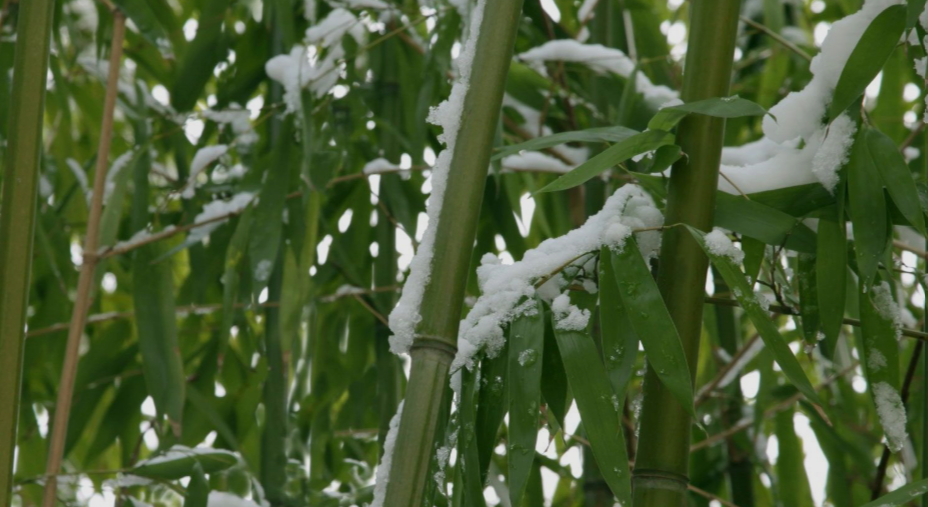
Cold-hardy bamboo varieties can survive winters well below zero, which surprises people who think of bamboo as a tropical plant. Bamboo is a woody grass, and roughly 1,500 kinds grow around the world. They range from ground covers a foot high to timber giants taller than a five-story building.
Bamboos fall into two groups according to how they spread. Running bamboos send out long underground stems and can travel many feet in a season. Clumping bamboos expand slowly from a tight base and stay where they are planted.
Most cold-hardy bamboos are runners from the temperate forests of China and Japan. The hardiest of all, however, are a group of clumping mountain bamboos from the high country of western China. North America has its own native bamboo as well, which once covered up to 10 million acres of southern lowlands.
A hardiness figure for bamboo usually refers to the canes and leaves. The roots often survive lower temperatures and send up fresh shoots in spring even if the top is killed. The 24 bamboos below are listed with the lowest temperatures they are reported to tolerate and the places where they are grown.
1. Yellow Groove Bamboo
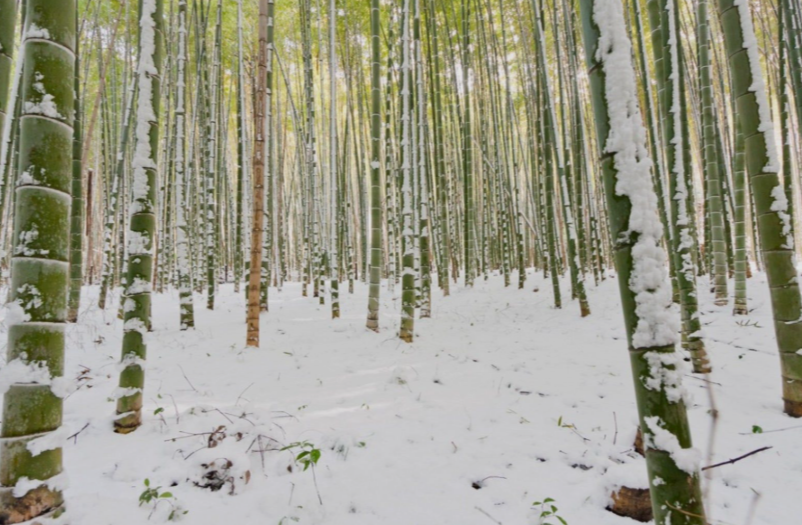
Yellow groove bamboo is the most widely planted hardy bamboo in the northern United States. Its dark green canes have a bright yellow stripe running down the groove on each segment. Some of the lower canes grow in a distinct zigzag. It reaches up to 35 feet in mild areas and 15 to 25 feet in cold ones. The young shoots are edible and free of bitterness.
It is hardy to about -10°F. It comes from eastern China and was introduced to the United States in the early 1900s. It spreads fast, and Connecticut researchers have studied it as a nuisance plant. A root barrier is essential wherever it is planted. It is grown across the Northeast, Midwest and mid-Atlantic states.
2. Spectabilis Bamboo
Spectabilis is a color form of yellow groove bamboo with the pattern reversed. Its canes are golden yellow with a green stripe in the groove. New canes exposed to spring sun often flush red or magenta. It has the same zigzag lower canes as its parent. It grows 15 to 30 feet tall.
It is often called spectacular bamboo. Garden guides list it among the running bamboos hardy enough for cold, exposed sites. Its bright canes show especially well against snow. It needs the same containment as yellow groove. It is grown in the northern United States, Canada and northern Europe.
3. Nude Sheath Bamboo
Nude sheath bamboo is regarded as one of the hardiest of the tall running bamboos. Its canes are dark green, with a white, powdery ring below each joint. They reach 1 to 2 inches thick and 25 to 30 feet tall. New canes often emerge nearly black. The shoots are among the best for eating.
It is recommended for the coldest bamboo-growing regions of the United States. Reports of the lowest temperature it survives range from about -10°F to -20°F. The canes are strong and arch gracefully under snow. It comes from eastern China. It is grown in the Midwest, New England and the central Plains.
4. Bissetii Bamboo
Bissetii is a dense, bushy bamboo that makes one of the best hardy screens. Its leaves are dark, glossy green and stay attractive through winter. It is one of the first bamboos to send up shoots in spring. The canes are slender and reach 20 to 30 feet. They turn golden-tan where the sun strikes them.
It is cold-hardy to at least -10°F, and growers report survival to -25°F with proper mulching. It is named for a plant explorer who worked with bamboos in the United States. It spreads vigorously and needs a barrier. It comes from western China. It is grown throughout the northern United States and southern Canada.
5. Incense Bamboo
Incense bamboo takes its name from a waxy coating on its canes that gives off a sweet scent. The fragrance is strongest when the canes are rubbed on a warm day. It grows up to 30 feet tall. The canes are thick for their height and taper quickly. It is one of the few temperate bamboos that tolerates wet ground.
The University of Washington reports that it suffers no winter damage at -5°F. At -15°F the canes die back, but the plant sends up new shoots in spring. Its tolerance of soggy soil makes it useful near ponds and ditches. It comes from eastern China. It is grown in the Northeast, the Pacific Northwest and the upper South.
6. Red Margin Bamboo
Red margin bamboo is named for the red edges on the sheaths that wrap its new shoots. Its canes have unusually long sections between the joints. It is one of the fastest-spreading temperate bamboos. It can reach 40 feet or more in good conditions. The shoots are edible and of good quality.
It is hardy to about -5°F. It tolerates wind, drought and poor soil better than most bamboos. The long, straight canes are valued for craft work. It comes from central China. It is grown in the mid-Atlantic states, the South and the Pacific Northwest.
7. Parvifolia Bamboo
Parvifolia is a running bamboo with thick canes and small leaves. It produces some of the largest canes of any bamboo grown in cold climates. New canes are covered in a white powder that gives them a blue-gray look. It grows 30 to 40 feet tall in favorable sites. The shoots are considered very good to eat.
Nurseries rate it as hardy to somewhere between -5°F and -15°F. It also tolerates wetter soil than most of its relatives. It is still fairly new to Western gardens. It comes from eastern China. It is grown in the Northeast, Midwest and northern Europe.
8. Vivax Bamboo
Vivax is the tallest bamboo that can be grown in cold-winter regions. It can reach 70 feet, with canes up to 5 inches thick. It grows very quickly once established. The cane walls are thin, so heavy snow or ice can snap them. The shoots are large and edible.
It is hardy to about -5°F. A yellow-caned form is one of the most striking large bamboos. It is often planted as a substitute for moso where winters are too cold. It comes from eastern China. It is grown in the mid-Atlantic states, the South and the Pacific Northwest.
9. Black Bamboo
Black bamboo is one of the most recognizable ornamental bamboos. Its canes emerge green and darken to glossy ebony over two or three years. It can reach 50 feet, though 20 to 30 feet is usual in gardens. The slender canes contrast with bright green leaves. They are used for furniture and decorative work.
It is hardy to about 0°F. It spreads more slowly in cool climates than in warm ones. The color is best in full sun. It comes from southern China. It is grown in the South, the Pacific Coast and sheltered gardens farther north.
10. Henon Bamboo
Henon is the giant green form of black bamboo. Its canes never turn black. They are covered with a pale bloom that gives them a gray-green cast. It grows much larger than black bamboo and can exceed 50 feet. The canes are thick-walled and strong.
Garden guides describe it as reliably hardy where winter lows reach -5°F to -10°F. It is thought to be the original wild form of the species. It makes a stately grove with an open, airy canopy. It comes from China. It is grown in the mid-Atlantic states, the South and the Pacific Northwest.
11. Moso Bamboo
Moso is the largest temperate bamboo in the world. It can grow 75 feet tall, with canes 7 inches thick. New canes are covered in soft, velvety down. Its small leaves give the towering plant a feathery look. It is the main commercial bamboo of China.
Moso supplies most of the world’s bamboo flooring, fabric and canned shoots. It is hardy to about 0°F. It is slow and difficult to establish, especially in cool climates. It comes from southeastern China. It is grown in the southern United States, mainly in Georgia, Alabama and the Carolinas.
12. Golden Bamboo
Golden bamboo is the most common running bamboo in the American South. It grows up to 35 feet tall. Its canes turn from green to golden-yellow in sun. The joints near the base are often crowded together in a swollen, tortoiseshell pattern. That feature makes it easy to identify.
It is also called fishpole bamboo because its canes were widely used for fishing rods. It is hardy to about 0°F to 5°F. It has escaped cultivation and is considered invasive in many southern states. It comes from southeastern China. It is grown from Maryland to Florida and west to California.
13. Umbrella Bamboo
Umbrella bamboo is one of the two hardiest bamboos known. It is a clumping type and does not spread aggressively. Its slender canes arch outward under a soft canopy of leaves. New shoots are light blue and age to yellow-green. It grows 10 to 15 feet tall.
It is hardy to -20°F. It was introduced to cultivation in 1910 by a famous plant collector, who thought it one of the most beautiful of all bamboos. It grows wild in China at elevations of 10,000 feet, where giant pandas feed on it. It does poorly in hot, humid summers. It is grown in the Northeast, the Pacific Northwest, Canada and northern Europe.
14. Fountain Bamboo
Fountain bamboo is the other contender for hardiest bamboo. North Carolina State University describes it as exceptionally cold-resistant, though it does not withstand hot, humid summers well. Its upright stems arch over at the top, sometimes taking a weeping form. The canes are slender and often purplish. It is a non-invasive clumper.
It is hardy to -20°F and can reach 18 feet. It prefers moist, rich soil in partial shade. It is used as a hedge, screen or windbreak. It comes from the mountains of western China. It is grown in New England, the upper Midwest, the Pacific Northwest and Britain.
15. Rufa Bamboo
Rufa is a compact clumping bamboo with a fountain-like shape. North Carolina State University gives its size as 6 to 10 feet tall and wide. The sheaths on its canes are reddish-brown. It is evergreen and resists deer. It tolerates heat and drought better than other mountain bamboos.
Hardiness ratings vary, from 0°F in some references to much lower in others. One gardener reports a plant surviving a winter in Winnipeg. It is among the most sun-tolerant of the hardy clumpers. It comes from China. It is grown across much of the United States, in hedges and large containers.
16. Dragon’s Head Bamboo
Dragon’s head bamboo is a clumping type with thick canes and weeping foliage. It grows up to 15 feet tall. The canes arch widely, so a mature clump needs plenty of room. The leaves are small and dense. It forms a broad, rounded mound.
It is hardy to -10°F. It takes more sun than umbrella or fountain bamboo. It makes an effective informal screen. It comes from the mountains of central China. It is grown in the Northeast, the Pacific Northwest and northern Europe.
17. Scabrida Bamboo
Scabrida is one of the most colorful hardy clumping bamboos. Its new canes are steel-blue. They are wrapped in rusty-orange sheaths that last for months. Older canes turn olive green. It grows 12 to 16 feet tall.
It is rated hardy to about -10°F. It tolerates more sun than most mountain bamboos. The leaves are long and narrow, which gives the clump a graceful look. It comes from western China. It is grown in the Pacific Northwest, the mid-Atlantic states and Europe.
18. Red Panda Bamboo
Red panda bamboo is a delicate clumping type with very thin canes. It grows to around 10 feet tall. Its leaves are tiny. The canes turn shades of red and orange where the sun reaches them. Several named selections are sold for their color.
It is cold-hardy down to -20°F. It was collected in a mountain park in western China that is home to wild pandas. It needs afternoon shade in hot climates. Its fine texture suits small gardens and containers. It is grown in the northern United States, Canada and northern Europe.
19. River Cane
River cane is the native bamboo of the United States. The University of Illinois notes that it is one of only three bamboo species native to the continent. It once formed vast thickets called canebrakes along rivers. In Illinois it now occupies less than 2% of its former range. Its stems are usually under an inch thick.
Canebrakes shelter many animals, including a rare songbird that nests in them. Native Americans wove the canes into baskets and mats and used them for arrow shafts. Researchers are replanting it to stabilize stream banks. Its hardiness suggests it could grow well north of its natural range. It is found from Texas and Florida north to Illinois, Ohio and Maryland.
20. Arrow Bamboo
Arrow bamboo has stiff, straight canes and very large leaves. The leaves can be a foot long. It grows 12 to 18 feet tall. In Japan its canes were traditionally made into arrows. It spreads slowly for a running bamboo.
It is hardy to about 0°F. It tolerates shade, wind and salt spray. That makes it a good choice for coastal screens and hedges. It comes from Japan and Korea. It is grown along the East Coast, in the South and in the Pacific Northwest.
21. Kuma Bamboo
Kuma bamboo is a low-growing bamboo with broad leaves. It stands only 2 to 4 feet tall. In autumn the leaf edges dry to a creamy white. The effect looks like variegation and lasts all winter. It is a classic plant of Japanese gardens.
It is hardy to around -5°F. It thrives in shade under trees. It spreads aggressively and needs a barrier or a confined bed. It comes from Japan. It is grown as a ground cover in the eastern United States, the Pacific Northwest and Europe.
22. Kuril Bamboo
Kuril bamboo is the northernmost bamboo in the world. It grows wild on Sakhalin and the Kuril Islands and in northern Japan. Deep snow protects it through winter there. The canes are 6 to 10 feet tall and curve at the base. The leaves are large and leathery.
It is hardy to roughly -10°F or lower with snow cover. Its spring shoots are a prized wild vegetable in Japan. It forms dense thickets on mountain slopes. It spreads steadily and needs room. It is grown in cold regions of the northern United States, Canada and northern Europe.
23. Dwarf Whitestripe Bamboo
Dwarf whitestripe bamboo is a ground cover with leaves striped in green and white. It grows 2 to 4 feet tall. The foliage is bright and crisp in spring. It spreads by runners to form a dense mat. It has been grown in Japanese gardens for centuries.
The leaves are damaged near 0°F, but the roots survive well below that. Gardeners often mow it to the ground in late winter. Fresh growth then comes up clean and colorful. It needs a barrier to keep it in bounds. It is grown as a ground cover across the northern and eastern United States.
24. Temple Bamboo
Temple bamboo is a stiff, upright bamboo with a narrow outline. It grows 20 to 25 feet tall. The canes stand very straight and turn purple-brown in sun. Short branches hold the leaves close to the cane. It spreads slowly for a running type.
It is hardy to about -5°F. Its columnar shape makes it one of the best bamboos for tall, narrow hedges. It stands up well to wind. It comes from Japan. It is grown along both coasts of the United States and in Britain.
Key Takeaways:
- Cold-hardy bamboo varieties can survive freezing winter temperatures, making them suitable for gardens in regions where many tropical bamboo species cannot thrive. Popular options include Phyllostachys nuda, Phyllostachys bissetii, and Fargesia rufa.
- Bamboo cold tolerance varies by species and cultivar. Some varieties withstand severe winter cold, while others perform best in milder climates. Local minimum temperatures and the duration of freezing conditions are important when selecting bamboo.
- Cold-hardy bamboo comes in both running and clumping types. Running bamboo, such as many Phyllostachys species, spreads through underground rhizomes and may require root barriers, while clumping bamboo, including Fargesia varieties, generally expands more gradually.
- Most cold-hardy bamboo varieties grow best in fertile, well-drained soil with adequate moisture. Many thrive in full sun or partial shade, although the ideal light conditions depend on the species and local climate.
- Cold-hardy bamboo is useful for landscaping, particularly for privacy screens, windbreaks, ornamental planting, and natural garden boundaries. Different varieties offer a range of heights, stem colors, foliage textures, and growth habits.
- Choosing the right bamboo requires considering both winter hardiness and growth behavior. Check the variety’s temperature tolerance, mature height, spreading habit, sunlight needs, and water requirements before planting it in your garden.
Sources:
- University of Washington: Growing bamboo in Northeastern U.S.
- North Carolina State University: Fountain bamboo
- University of Illinois Extension: Illinois’ Only Native Bamboo Species
- North Carolina State University: Green panda bamboo
- Alabama Cooperative Extension: rivercane
- University of Kentucky: Bamboo
- National Park Service: Rivercane, Our Native Bamboo
- Connecticut Agricultural Experiment Station: Running bamboo in Connecticut
- Bambu Batu: Cold hardy bamboo
- Bambu Batu: Growing bamboo in Colorado
- Bambu Batu: Clumping bamboo for cold climates
- Bamboo Garden: Cold Hardy Bamboo
- Bamboo Garden: Umbrella Bamboo
- Bamboo Sourcery: Umbrella Bamboo
- Gardening Know How: Growing Bamboo in Zone 6
- UBC Botanical Garden forum: Seeking bamboo
- Bamboo Plants Canada: Bisset’s Bamboo