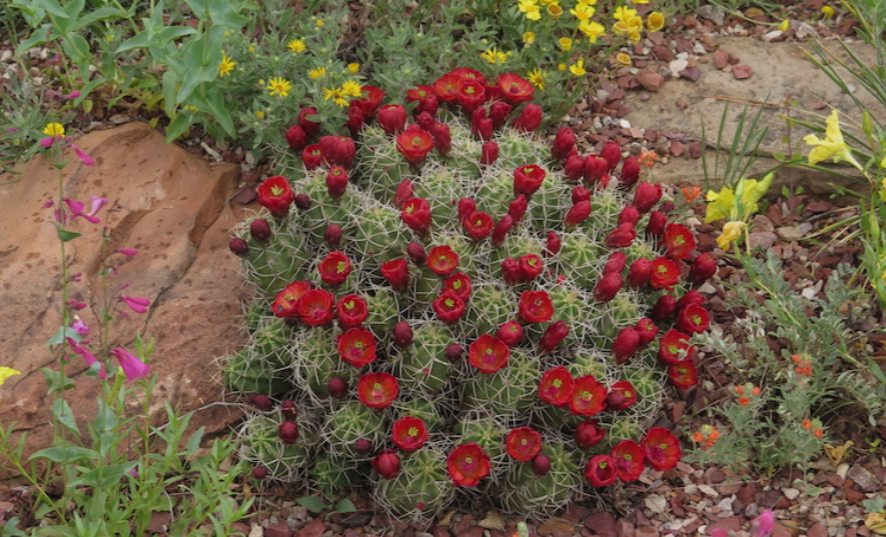
Cold hardy cactus varieties prove that these plants are not limited to hot deserts. The cactus family contains roughly 1,600 to 2,000 species, nearly all native to the Americas. Their natural range runs from Patagonia in the south to the Canadian prairies in the north.
Every cactus has a feature found in no other plant family, a small, cushion-like spot called an areole. Spines, flowers and new branches all grow from these points. The spines themselves are modified leaves, and the thick green stems do the work of making food.
Most cacti cannot tolerate freezing, but perhaps 10% to 20% of species live where temperatures drop below zero. These plants prepare for winter by losing water from their stems. Colorado State University explains that this dehydration keeps the cells from bursting when they freeze.
The toughest species can survive -40°F, and four are native to Canada. Cold is rarely what kills a hardy cactus in the garden. Wet soil is the real danger, so every plant below needs full sun and sharp drainage.
1. Eastern Prickly Pear
The eastern prickly pear is the native cactus of the eastern United States. North Carolina State University describes it as a clump-forming or sprawling plant with flat, fleshy, green pads. The pads carry clusters of reddish-brown barbed bristles but usually no long spines. Large yellow flowers open in late spring. They are followed by red, pear-shaped fruit.
It tolerates more moisture than almost any other cactus and often grows in ordinary garden soil. It withstands winter lows of about -30°F. The pads shrivel and lie flat in winter, then plump up again in spring. It grows wild on sand dunes, rocky outcrops and dry fields from New England to the Gulf Coast. It is also native to southern Ontario and has naturalized in parts of Europe.
2. Brittle Prickly Pear
The brittle prickly pear is the northernmost cactus in the world. It grows wild in Alberta at 58° north, less than 8° of latitude from the Arctic Circle. The plant is tiny, only 4 to 8 inches tall. Its pads are small and plump, more rounded than flat. They break off at the slightest touch, which is how the plant spreads.
Scientists have found that it withstands about -58°F in its natural habitat. Detached pads cling to passing animals and root where they fall. It rarely flowers, but the blooms are yellow when they appear. It ranges from British Columbia to Manitoba and south through the Great Plains and Rocky Mountains. An isolated colony also grows in eastern Ontario.
3. Plains Prickly Pear
The plains prickly pear forms low, spreading mats across the dry grasslands of western North America. Its pads are densely covered in spines. The flowers are large and may be yellow, pink or magenta. The fruit is dry and spiny, not fleshy. Plants stand only 4 to 12 inches tall.
It can resist temperatures of about -40°F. It is one of four cacti native to Canada. Ranchers know it well because it increases on overgrazed rangeland. It ranges from Alberta and Saskatchewan south to Texas and Arizona. Many selected forms with unusual flower colors are sold for rock gardens.
4. Bigroot Prickly Pear
The bigroot prickly pear takes its name from its thick, tuberous roots. It is also called the twistspine prickly pear. The pads are blue-green and wrinkle in winter. Its flowers are yellow with red centers. They are followed by fleshy, red-purple fruit that is edible.
The swollen roots store water and food through drought and cold. It is hardy across most of the northern Plains. The plant stays low, forming clumps a few inches high and several feet wide. It is native from Texas and Arizona north to Minnesota and South Dakota. It is one of the easiest prickly pears to grow in the Midwest.
5. Tulip Prickly Pear
The tulip prickly pear is a sprawling cactus of the Southwest and southern Plains. Its pads are large and carry long, brown spines. The flowers are bright yellow with a red or orange base. The fruit is purple-red and juicy. Plants grow 1 to 3 feet tall and spread widely.
The fruits are edible and are made into jelly and syrup. It tolerates winter lows of around -20°F in dry soil. It grows wild from Utah and Colorado south to Texas and northern Mexico. The pads often flush purple in cold weather. It is widely planted in water-wise gardens across the interior West.
6. Beavertail Cactus
The beavertail cactus has wide, flat, blue-gray pads shaped like a beaver’s tail. The pads look smooth because they have no long spines. They are dotted, however, with tufts of tiny barbed bristles that lodge in skin. The flowers are a brilliant magenta. They open in early spring and are among the showiest of any cactus.
It is native to the Mojave and Sonoran deserts. Despite that origin, it survives winter lows of around 0°F to -10°F if kept dry. Winter moisture is its main enemy, so a rain cover or gravel bed helps. It grows wild in California, Nevada, Utah and Arizona. It is grown in dry gardens throughout the interior West.
7. Grizzly Bear Cactus
The grizzly bear cactus is a form of prickly pear covered in long, white, hair-like spines. The spines can reach 4 inches and hide the pads almost completely. The effect is a shaggy mound that glows in low light. Its flowers are pink or yellow. Plants stay low, usually under a foot tall.
It comes from the high deserts and mountains of the Great Basin and Mojave. The University of Nevada, Reno lists it among the cacti that live well in the cold high desert. The long spines shade the plant and trap a layer of still air. It grows wild in California, Nevada, Utah and Arizona. It is popular with collectors of hardy cacti.
8. Purple Prickly Pear
The purple prickly pear is known for the color of its pads. They turn deep violet in cold weather or drought. Long black spines line the upper edges of the pads. The flowers are yellow with red centers. The plant grows 2 to 3 feet tall.
It is native to the Chihuahuan Desert. It tolerates winter lows of about 0°F. The purple color is strongest in winter and fades to blue-green with summer rain. It grows wild in western Texas, New Mexico, Arizona and northern Mexico. It is planted in the Southwest and in sheltered spots farther north.
9. Engelmann Prickly Pear
The Engelmann prickly pear is a large, shrubby cactus that can reach 4 to 6 feet tall. Its pads are round and up to a foot across. The spines are white and flattened. Yellow flowers appear in late spring. The purple-red fruit is juicy and sweet.
The fruit is widely harvested for jelly, syrup and candy. It is less hardy than the low prickly pears and tolerates lows of roughly 0°F to 10°F. It is the most common large prickly pear of the American Southwest. It grows wild from California to Texas and south into Mexico. It is planted as a barrier hedge and landscape specimen.
10. Spineless Prickly Pear
The spineless prickly pear is prized because it can be handled almost safely. Its pads have no long spines and very few of the tiny barbed bristles. The pads are smooth and blue-green. The flowers are yellow. The plant forms a mound about 3 feet tall and wider.
It comes from Texas. It survives winter lows of around 0°F. It tolerates humidity better than most western cacti. That makes it a favorite in gardens across the southeastern United States. It is also grown in Texas, the Gulf Coast and the mid-Atlantic states.
11. Golden Prickly Pear
The golden prickly pear is a low, nearly spineless cactus from the canyon country of the Southwest. Its pads are thick and blue-green. The flowers are yellow or pink. It spreads along the ground in loose chains. Plants stand only a few inches high.
A selection called Coombe’s Winter Glow is rated for cold regions through the warm South. Its pads turn bright purple-red in winter, and it bears vivid magenta flowers. The winter color is its main attraction in a cold garden. The species grows wild in southern Utah and northern Arizona. It is planted in Colorado, Utah and other parts of the Mountain West.
12. Tree Cholla
The tree cholla is the hardiest of the tall, branching cacti. It grows 3 to 8 feet high, with rope-like, jointed stems. The stems are covered in sharp, barbed spines. Magenta flowers open in early summer. Yellow, knobby fruits follow and persist through winter.
Colorado State University rates it hardy to -15°F. When the plant dies, it leaves a hollow woody skeleton with a lattice of holes. The wood is used for walking sticks and crafts. It grows wild in Colorado, Kansas, Oklahoma, New Mexico, Texas and northern Mexico. It is the main vertical element in many cold-climate cactus gardens.
13. Whipple Cholla
The Whipple cholla is a low, dense cholla from the high country of the Four Corners region. It grows 1 to 3 feet tall. The stems are short and thickly covered with pale spines. Its flowers are yellow-green. The fruits are yellow and knobby.
It grows at elevations up to about 8,000 feet, where winters are long and cold. It is among the hardiest of the chollas. Its compact form suits small gardens better than the tree cholla. It grows wild in Utah, Colorado, Arizona and New Mexico. It is planted in rock gardens across the interior West.
14. Christmas Cholla
The Christmas cholla has the thinnest stems of any cholla, hardly thicker than a pencil. It forms a tangled shrub 2 to 5 feet tall. The flowers are small and greenish-yellow. Its real show comes in winter. The stems are then covered in bright red, berry-like fruits.
The fruit display around December gives the plant its name. It tolerates winter lows of about 0°F. Birds eat the fruits and spread the seeds. It grows wild in Texas, Oklahoma, New Mexico, Arizona and Mexico. It is planted in the Southwest for winter color.
15. Club Cholla
The club cholla is a low, mat-forming relative of the taller chollas. Its stems are short and club-shaped. They bear broad, flat, white spines shaped like daggers. The flowers are yellow. Mats stand only 3 to 6 inches high but spread several feet across.
It is found only in central New Mexico. It grows on open, sandy grassland where winters are cold and dry. It is hardy in the middle of the country if drainage is sharp. The flat white spines make it one of the most distinctive hardy cacti. It is grown mainly by collectors and in rock gardens.
16. Claret Cup Cactus
The claret cup cactus is the best-known hardy cactus for flowers. It forms mounds of ribbed, cylindrical stems. In spring it bears waxy, cup-shaped flowers of brilliant scarlet. The blooms stay open day and night for several days. Hummingbirds pollinate them.
Colorado State University rates the claret cup group hardy to -20°F. Colorado State University Extension notes that five species of hedgehog cactus are native to Colorado. Old plants can form mounds of dozens of stems. It grows wild in Colorado, New Mexico, Arizona and Utah. It is widely planted in dry gardens across the Mountain West.
17. Scarlet Hedgehog Cactus
The scarlet hedgehog cactus is a close relative of the claret cup. It bears similar red to orange-red flowers. Its stems are slightly smaller and more numerous. Large plants can form mounds of a hundred stems or more. Male and female flowers are usually borne on separate plants.
It is one of four hedgehog cacti native to Pueblo County, Colorado. It is hardy through most of the central United States in dry soil. The red fruits are juicy and edible. It grows wild in Colorado, New Mexico, Arizona and western Texas. It is planted alongside claret cup in hardy cactus collections.
18. Lace Hedgehog Cactus
The lace hedgehog cactus is a small, neat plant 3 to 8 inches tall. Its spines lie flat against the stem in comb-like rows. The pattern resembles lace. In late spring it bears very large, pink to magenta flowers. The blooms can be wider than the plant itself.
Colorado State University rates it hardy to -25°F. It is among the easiest hedgehog cacti to grow in a cold garden. The flat spines make it less hazardous to handle than most. It grows wild in Colorado, Kansas, Oklahoma and Texas. It is well suited to troughs, pots and rock gardens.
19. Green-Flowered Hedgehog Cactus
The green-flowered hedgehog cactus is one of the smallest hardy species. Many plants are only 1 to 3 inches tall. Its flowers are yellowish-green, an unusual color for a cactus. They have a light lemon scent. The spines may be red, white or banded in both colors.
Colorado State University rates it hardy to -20°F. It is the only hedgehog cactus that grows naturally near Denver. The plants hide among prairie grasses and are easy to overlook. It grows wild from South Dakota and Wyoming south to New Mexico and Texas. It is grown in troughs and miniature rock gardens.
20. Fendler’s Hedgehog Cactus
Fendler’s hedgehog cactus has only a few stout stems. Its flowers are among the largest of the group. They are deep magenta and up to 3 inches across. The stems are dark green, with a few long, dark spines. Plants grow 4 to 10 inches tall.
The red fruits are edible and taste something like strawberries. It is hardy across the central United States in dry soil. It flowers in late spring. It grows wild in Arizona, New Mexico, Colorado and western Texas. It is planted in dry gardens for its outsized blooms.
21. Spinystar
The spinystar is a small ball cactus and one of the four cacti native to Canada. It grows as a single globe or a tight cluster. The stems are hidden under a dense cover of spines. Its flowers are pink with yellow centers. They bloom from spring to early summer.
It tolerates temperatures of about -30°F. The University of Nevada, Reno describes its half-inch, dark-tipped spines and round clusters. The fruits are green and juicy and are eaten by wildlife. It ranges from Alberta, Saskatchewan and Manitoba south to Texas and Mexico. It is one of the most widely grown hardy ball cacti.
22. Missouri Foxtail Cactus
The Missouri foxtail cactus is a small, low ball cactus of the Great Plains. It grows only 1 to 3 inches high. The flowers are yellowish-green to pale gold. Its fruits ripen bright red. They stay on the plant through winter and into the next spring.
Colorado State University rates it hardy to -25°F. In winter the plant shrinks and pulls itself down nearly level with the soil. That habit protects it from wind and cold. It grows wild from North Dakota and Montana south to Texas. It is grown in rock gardens and troughs across the northern states.
23. Sneed’s Pincushion Cactus
Sneed’s pincushion cactus is a tiny plant that forms dense clusters of white, spiny stems. Each stem is only about an inch across. A mature clump may hold dozens of them. The flowers are pale pink. The whole plant looks like a mound of snowballs.
Colorado State University rates it hardy to -20°F. It is rare in the wild and protected by law. It grows on limestone ledges in a few mountain ranges of western Texas and southern New Mexico. Nursery-grown plants are widely available and easy to raise. It is grown in troughs and rock gardens.
24. Mountain Ball Cactus
The mountain ball cactus grows at higher elevations than almost any other cactus. It is found on mountain slopes and ridges up to 10,000 feet. The plant is a rounded ball covered in spines. It blooms very early, often while snow still lies nearby. The flowers may be pink, white or yellow.
The University of Nevada, Reno notes that it grows only about 6 inches tall and a foot wide. The university recommends a spot with morning sun and afternoon shade. Its flowers attract native bees. It grows wild in Colorado, Utah, Nevada, Wyoming, Idaho and Montana. Colorado State University lists it among the hardiest of all cacti.
25. Small-Flower Fishhook Cactus
The small-flower fishhook cactus is a barrel-shaped plant of the Colorado Plateau. Its central spines are long and hooked at the tip. The hooks give the group its common name. The flowers are pink to purple. Plants grow 3 to 8 inches tall.
It is adapted to cold, dry winters and hot summers. It is difficult to grow and is usually raised from seed. The plants resent winter moisture and rich soil. It grows wild in Utah, Arizona, Colorado and New Mexico. It is grown mainly by specialist collectors.
26. Horse Crippler
The horse crippler is a broad, low dome that barely rises above the ground. It can spread to 12 inches across while standing only a few inches high. The spines are thick, stiff and extremely strong. Its name comes from the injuries it caused to horses on the range. The flowers are pink, with fringed petals.
Bright red fruits follow the flowers. It tolerates winter lows of about 0°F and somewhat below in dry soil. It is slow-growing and long-lived. It grows wild in Texas, Oklahoma, New Mexico and northern Mexico. It is planted in the southern Plains and Southwest.
27. Little Nipple Cactus
The little nipple cactus is a flat, disc-shaped plant that sits flush with the soil. It is covered in small, cone-shaped bumps, each tipped with a cluster of spines. The stem contains milky sap. Cream to pale pink flowers form a ring around the top. Red, club-shaped fruits appear the following year.
Its low profile helps it escape cold and grazing animals. It tolerates winter lows of about 0°F. In drought it shrinks even lower into the ground. It grows wild in Texas, Oklahoma, New Mexico, Arizona and Mexico. It is grown in the southern Plains and in pots farther north.
28. Hardy Maihuenia
The hardy maihuenia is an unusual cactus from the Andes of Chile and Argentina. It forms a dense, spiny cushion only a few inches high. Unlike most cacti, it keeps small, green, cylindrical leaves. The flowers are yellow. Old plants can spread to several feet across.
It comes from cold mountain slopes with snowy winters. It tolerates winter wet better than most hardy cacti. That trait makes it valuable in rainy climates. It is hardy through much of the central and northern United States. It is grown in Britain, the Pacific Northwest and the Rocky Mountain region.
29. Bruch’s Chin Cactus
Bruch’s chin cactus is a tiny, clustering plant from the mountains of central Argentina. Each stem is only 1 to 2 inches across. The plants form tight mounds over time. The flowers are pale pink and appear in spring. They are large for the size of the plant.
It grows at high elevations, where winters are cold and dry. It survives winter lows a little below 0°F in dry soil. It is one of the few South American ball cacti hardy enough for cold gardens. Its small size suits troughs and pots. It is grown by collectors in the United States and Europe.
Key Takeaways:
- Cold-hardy cacti can survive freezing temperatures, making them suitable for outdoor gardens in regions where many other succulents cannot withstand winter conditions. Species such as prickly pear and hedgehog cactus are among the best-known examples.
- Prickly pear cacti (Opuntia spp.) include several exceptionally cold-tolerant varieties, with some surviving severe winter temperatures when planted in suitable locations with excellent drainage.
- Cold tolerance varies among cactus species, depending on their natural habitats, growing conditions, and ability to withstand prolonged exposure to frost. Always check the hardiness of the specific variety before planting it outdoors.
- Well-drained soil is essential for growing cold-hardy cacti, particularly during winter. Excess moisture around the roots can cause rot when temperatures drop, so sandy or gravelly soil and raised planting areas can be beneficial.
- Many cold-hardy cacti produce attractive flowers, with blooms ranging from yellow and orange to pink, red, and purple. Their distinctive spines, unusual growth forms, and seasonal flowers make them valuable additions to rock gardens and drought-tolerant landscapes.
- Choosing the right cold-hardy cactus depends on local winter conditions, including minimum temperatures, rainfall, soil drainage, and frost duration. Selecting an appropriately hardy species and providing plenty of sunlight can improve its chances of thriving outdoors year-round.
Sources:
- North Carolina State University: Eastern Prickly Pear
- Colorado State University Extension: Know Your Natives, Echinocereus Cacti
- University of Nevada, Reno: cold-hardy cacti
- Colorado State University: Winter-hardy Cacti
- Colorado State University: Cold Hardy Cacti webinar
- The Canadian Encyclopedia: Cactus
- Albert Mondor: Real tough guys
- Phoenix Perennials: Brittle Prickly Pear
- Phoenix Perennials: Eastern Prickly Pear
- Fine Gardening: Cold-Hardy Cacti for the Mountain West
- New World Encyclopedia: Cactus