Fruits that are green on the inside catch most people off guard, because we learn early that green means unripe. Bananas, tomatoes and strawberries all start out green and leave the color behind as they sweeten. A small group of fruits never makes that switch, and they taste best while the flesh is still the color of a spring leaf.
The pigment responsible is chlorophyll, the same one that colors leaves and stems. In most fruits it breaks down during the last weeks of ripening, and the yellows, oranges and reds hidden underneath finally show. In the fruits below, the chlorophyll either holds on through full ripeness or the fruit is picked and eaten before it has a chance to fade.
The skin gives very little away. A kiwifruit is brown and fuzzy, a Hass avocado is almost black, and a horned melon is bright orange and covered in spikes, yet all three open to green. A Granny Smith apple, as green as any fruit in the store, is plain white once you bite through the peel.
The 24 fruits here range from supermarket staples to specialty crops you may need a farmers’ market to find. They include sweet melons, sour citrus and several that cooks treat as vegetables even though botanists count them as fruits. Each description covers the shade of green to expect, how the fruit tastes, and where it is grown in the United States.
1. Kiwifruit
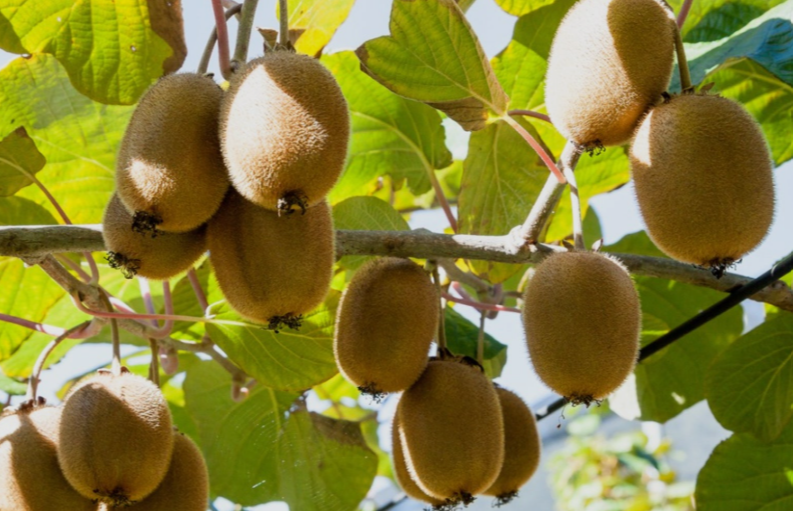
Kiwifruit is the best-known fruit that stays green at full ripeness, with emerald flesh, a pale core and a ring of tiny black seeds. The common green variety is called Hayward, and it accounts for most of the kiwifruit sold in American stores. In Hayward, the chloroplasts survive ripening instead of breaking down as they do in most fruits, a trait the University of Reading uses in a classroom pigment experiment. reading
The fruit is native to China and was given its current name by New Zealand exporters in 1959. California grows nearly all of the American crop, mostly in the Sacramento and San Joaquin valleys. A kiwifruit is ready to eat when it gives slightly under gentle pressure, much like a ripe peach.
2. Kiwiberry
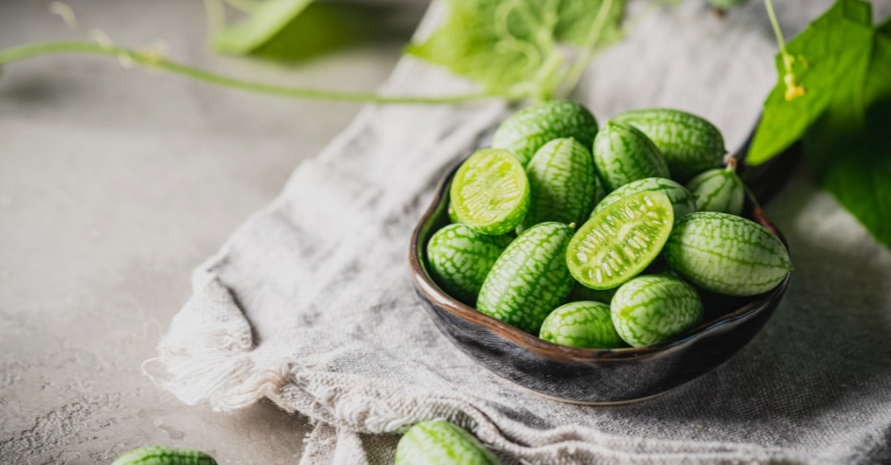
The kiwiberry is a grape-sized relative of the kiwifruit with smooth, hairless skin that is eaten along with the flesh. Cut one in half and it looks like a miniature kiwifruit, with the same bright green flesh and ring of black seeds. The flavor is sweeter and less acidic than the fuzzy kind, which makes it easy to eat by the handful.
The vines are far tougher than those of the kiwifruit and can survive winter lows of around -25°F. That hardiness has made the fruit a small specialty crop in Oregon, Pennsylvania and New England. The berries ripen in early fall and keep for only a couple of weeks, so the season in stores is short.
3. Avocado
Avocado flesh is greenest just beneath the skin and fades to buttery yellow near the pit, so a single slice shows both colors. The dark green outer layer holds the most pigment, which is why scraping the inside of the peel adds color to guacamole. The texture is unlike any other fruit on this list, because avocados store their energy as oil instead of sugar.
Hass is the dominant variety in American stores, and every Hass tree traces back to one seedling patented in California in 1935. California produces roughly 90% of the avocados grown in the United States, with Florida and Hawaii supplying most of the rest. The cut flesh browns quickly in air, and a squeeze of lime juice slows the change.
4. Honeydew Melon
Honeydew has smooth, creamy-white rind and pale green flesh that deepens slightly toward the seed cavity. The flesh is about 90% water, and a ripe melon typically weighs between 4 and 8 pounds. When fully mature it is among the sweetest melons sold, with a clean flavor and very little aroma until it is cut.
Unlike cantaloupe, honeydew does not detach from the vine on its own when ripe. Growers judge maturity by a change in rind color from green-white to cream and by a faintly waxy feel on the surface. California’s Central Valley and Arizona supply most of the domestic crop.
5. Galia Melon
The Galia melon looks like a cantaloupe on the outside and a honeydew on the inside. Its netted rind turns golden yellow when ripe, while the flesh stays pale green from the rind to the seed cavity. The aroma is strong and spicy, and it is usually the first sign that a melon is ready.
Breeders in Israel released the Galia in 1973 as a cross between a netted melon and a green-fleshed one. It is now grown in greenhouses and open fields across Spain, Central America and the southern United States. Shoppers should pick one that is more gold than green and smells sweet at the stem end.
6. Ogen Melon
The Ogen is a small, round melon with yellow-green rind marked by darker green stripes that run from stem to blossom end. The flesh inside is pale green and soft, almost melting when fully ripe. Its sweetness and perfume are stronger than honeydew’s, which has earned it a loyal following among melon growers.
The melon takes its name from Ha’Ogen, the Israeli kibbutz where it was first grown commercially. It is too delicate to ship long distances, so American gardeners grow it mainly from seed. Its small size suits it to being halved and served one half per person.
7. Santa Claus Melon
The Santa Claus melon is shaped like a football and has thick, wrinkled rind blotched in dark green and gold. The flesh ranges from pale green to greenish-white and is crisp and juicy. The taste is close to a mild honeydew, with a little less sugar and almost no scent.
The name comes from its keeping quality, because a melon picked in autumn can stay good for 6 weeks or more, long enough to last until Christmas. Spain is the leading producer, and the Spanish name, Piel de Sapo, means toad skin. California and Arizona grow it on a smaller scale for American markets.
8. Horned Melon
The horned melon, also sold as kiwano, has the sharpest contrast between outside and inside of any fruit on this list. The rind is bright orange and covered in blunt spikes, while the interior is filled with lime-green jelly surrounding soft, edible seeds. The flavor is mild and falls somewhere between cucumber, banana and lime.
The plant is native to southern Africa and is now grown commercially in California and New Zealand. The fruit keeps for several weeks at room temperature, far longer than most melons. Many cooks scoop out the pulp and use the hollowed rind as a serving bowl.
9. Persian Lime
The Persian lime is the large, seedless lime found in nearly every American supermarket, and its pulp is a pale, translucent green. It measures about 2 inches across and has thicker skin and less acidity than the Key lime. It is also sold as the Tahiti or Bearss lime, depending on the grower.
The fruit is picked while the rind is still dark green, because a lime left on the tree eventually turns yellow and loses some of its sharpness. Mexico supplies the great majority of the Persian limes sold in the United States. A heavy lime with smooth, slightly glossy skin usually holds the most juice.
10. Key Lime
The Key lime is smaller, seedier and more aromatic than the Persian lime, with thin skin and greenish-yellow pulp. Most fruits are only 1 to 2 inches in diameter, so it takes a dozen or more to make a pie. The juice is sharply acidic and has a floral edge that the larger lime lacks.
Despite the name, the University of Florida notes that the state now has little or no commercial Key lime production, though the tree is still a favorite in home gardens. The tree is highly sensitive to cold, which restricts it to the warmest parts of southern Florida. Most Key limes in American stores are imported from Mexico and Central America. uflufl
11. Finger Lime
The finger lime is a slender, cylindrical citrus about 2 to 3 inches long that grows wild in the rainforests of eastern Australia. Instead of segments of soft pulp, it holds hundreds of tiny round juice beads. The beads spill out like caviar when the fruit is snapped in half, and they burst on the tongue with a sharp lime flavor.
In the most common varieties those beads are pale to bright green, though pink and red forms also exist. California growers have planted the tree in small orchards, mostly to supply restaurants. Chefs spoon the beads over oysters, sushi and cocktails, where they hold their shape instead of running like juice.
12. Sudachi
Sudachi is a Japanese citrus about the size of a golf ball that is harvested and used while its rind is still dark green. The pulp inside is pale green-yellow, very sour and strongly fragrant. Its aroma is often described as more peppery and herbal than that of an ordinary lime.
In Japan the juice is squeezed over grilled fish, noodles and mushrooms in the way a lime is used in American cooking. Tokushima Prefecture grows about 98% of the country’s crop. In the United States it remains a specialty fruit, grown by a handful of California citrus farms.
13. Green Grapes
Green grapes have thin skin and translucent, pale green flesh, so the color on the outside is largely the color of the pulp showing through. Thompson Seedless is the classic variety and is used for fresh eating, raisins and juice. Newer seedless varieties have been bred for larger berries and a firmer, crisper bite.
The berries turn slightly amber as their sugar rises, which is why the sweetest bunches often look more golden than green. California grows about 99% of the table grapes produced in the United States. A fresh bunch has green, flexible stems, while brown and brittle stems mean the grapes have been in storage for some time.
14. Scuppernong
The scuppernong is a bronze-skinned muscadine grape native to the American Southeast, with thick skin and slippery, translucent green pulp. Each berry is about 1 inch across, far larger than an ordinary table grape. Most people squeeze the sweet pulp into their mouths and discard the tough skin.
The grape was named for the Scuppernong River in North Carolina, and the state made it the official state fruit in 2001. A vine on Roanoke Island known as the Mother Vine is thought to be about 400 years old. The fruit ripens in late summer and is sold fresh at roadside stands across the Carolinas and Georgia.
15. Gooseberry
Green gooseberries have translucent skin marked with pale veins, and the pulp inside is a soft, juicy green studded with small seeds. The fruit is tart when firm and turns noticeably sweeter if left on the bush to soften. Cooks prize the firm stage for pies and jams, where the sourness balances the sugar.
Gooseberries were outlawed for decades because they host white pine blister rust, and the University of Massachusetts notes that the federal ban was rescinded in 1966. Some northern states still restrict planting of related black currants. Gooseberries are now grown mainly in home gardens across the cooler parts of the country. umassumass
16. Greengage Plum
The greengage is a small, round plum with green skin and dense, green-gold flesh that stays green even when the fruit is fully ripe. It is considered one of the sweetest of all plums. The flavor is rich and honeyed, which sets it apart from the tarter red and purple types.
The fruit came from France, where it is called Reine Claude. It took its English name after Sir William Gage brought trees to England around 1724. American production is limited to small orchards and farmers’ markets, and the season lasts only a few weeks in late summer.
17. Tomatillo
The tomatillo grows inside a papery husk, and the fruit beneath is firm, sticky and green from skin to center. Its tart, citrus-like flavor is the base of salsa verde. The flesh keeps its color when roasted or boiled, which gives green sauces their brightness.
The University of Minnesota notes that the plants tolerate drought and heat and can take up more room than tomato plants. Gardeners usually set out at least 2 plants, because a single tomatillo often fails to pollinate itself. The fruit is ready to pick when it fills the husk and begins to split it open. umn
18. Green Zebra Tomato
Green Zebra is a tomato that is ripe while it is still green, which surprises anyone expecting it to turn red. The skin is striped in dark green and yellow-green, and the flesh inside is a bright emerald. The taste is sharp and tangy, with more acidity than most red slicing tomatoes.
Breeder Tom Wagner of Everett, Washington, introduced the variety in 1983. The fruits are small, usually about 2 inches across. They are ready when the lighter stripes take on a yellow blush and the tomato gives slightly in the hand.
19. Cucumber
The cucumber is a fruit in the botanical sense, and its flesh is a watery, pale green that is darkest just under the skin. It is roughly 95% water, which accounts for its crisp texture and very low calorie count. The seeds sit in a soft, jelly-like center that is paler than the surrounding flesh.
Cucumbers are picked immature, because a fully ripe one turns yellow, bitter and tough. Florida and Georgia lead the country in fresh-market cucumbers. Michigan is a major producer of the smaller pickling type.
20. Chayote
Chayote is a pear-shaped member of the squash family with wrinkled, pale green skin and crisp flesh of nearly the same shade. It holds a single soft, flat seed at the center, and the whole fruit, seed included, can be eaten. The flavor is mild, somewhere between cucumber and summer squash.
The plant is native to Mexico and Central America and grows as a vigorous climbing vine. In Louisiana it is called mirliton and has been a backyard and holiday staple for generations. It holds its shape when cooked, so it is often stuffed and baked or added to stews.
21. Bitter Melon
Bitter melon is a warty, oblong fruit that is harvested while the skin and flesh are both still green. The flesh is pale green and crunchy, with a strong bitterness that is prized in Indian, Chinese and Filipino cooking. Salting or blanching the slices before cooking takes some of the edge off.
If left on the vine, the fruit turns orange and splits open to reveal seeds covered in bright red pulp. At that stage the flesh is too soft and bitter for most dishes. In the United States it is grown on a small scale in Florida, California and Hawaii.
22. Green Bell Pepper
A green bell pepper is an unripe pepper, and its thick walls are green all the way through. The flavor is grassy and slightly bitter, which is why it holds up well in cooked dishes. Bell peppers contain no capsaicin, so they rate 0 on the Scoville heat scale.
Left on the plant for another 2 to 3 weeks, the same fruit would turn red, yellow or orange and become much sweeter. Green peppers cost less because they are harvested sooner and spend less time in the field. California and Florida grow most of the American crop.
23. Jalapeño
The jalapeño is almost always picked and sold green, with glossy skin and crisp green walls surrounding pale ribs and seeds. Its heat ranges from about 2,500 to 8,000 Scoville units. Most of that heat sits in the ribs, so removing them leaves a much milder pepper.
The pepper is named after Xalapa, the capital of the Mexican state of Veracruz. A jalapeño left to ripen turns red, and smoked red jalapeños are sold as chipotles. Small tan lines on the skin, known as corking, are harmless and often mark an older, hotter pepper.
24. Green Olive
A green olive is an olive picked before it ripens, and its firm flesh is green right down to the pit. Fresh olives are too bitter to eat straight from the tree. They are cured in brine or lye for weeks or months before they reach the store.
Manzanilla and Sevillano are the main green table varieties in the United States. The Italian Castelvetrano is known for its especially vivid color and mild, buttery taste. California produces nearly all of the olives grown commercially in the country.
Key Takeaways:
- Green-fleshed fruits include tropical fruits, berries, melons, citrus fruits, and familiar orchard fruits.
- Popular examples include kiwifruit, avocado, guava, feijoa, honeydew melon, green grapes, and green mango.
- Some fruits remain green inside when fully ripe, while others have green flesh primarily when they are still immature.
- Green interiors can range from pale yellow-green and translucent shades to vibrant or deeper green, depending on the fruit and variety.
- These fruits offer a wide range of textures, from crisp and crunchy to creamy, juicy, soft, and jelly-like.
- Their flavors can vary from sweet and refreshing to tart, acidic, floral, aromatic, or mildly tangy.
- Correct identification is important because green flesh does not necessarily mean that a fruit is ripe or ready to eat.