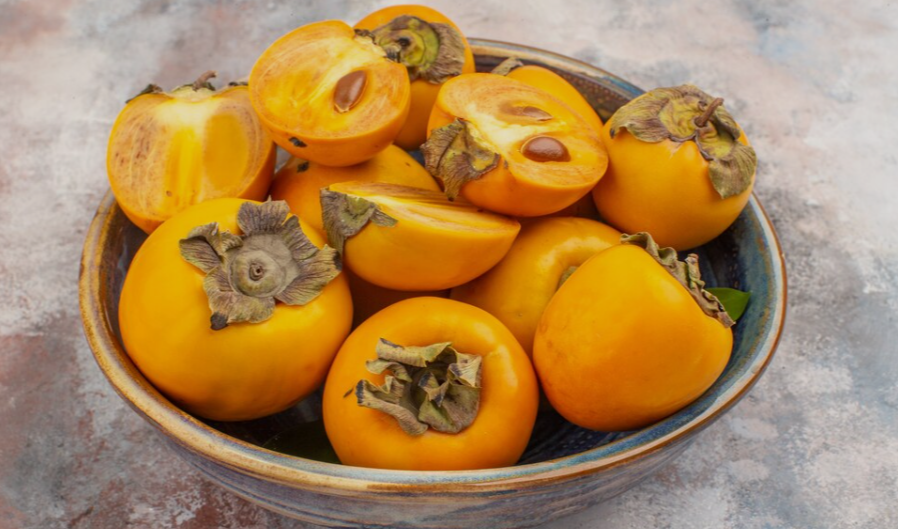
Orange colored fruits get their color from carotenoids, a family of pigments that the human body can turn into vitamin A. Unlike the red and purple pigments in berries, carotenoids dissolve in fat and not in water. They do not bleed into juice or batter, and they survive cooking almost unchanged.
Carotenoids usually color the flesh as well as the skin. A mango, an apricot, and a cantaloupe are orange all the way through, while a plum or a grape is colored only on the outside. That is why orange fruits tend to be good sources of vitamin A.
Orange is a less reliable ripeness signal than most shoppers assume. In citrus, rind color is triggered by cool nights and has little to do with sweetness. In persimmons, a fully orange fruit can still be too astringent to eat.
This list of 50 fruits covers citrus, orchard fruits, melons, tropical fruits, and garden crops that are fruits in the botanical sense. Each description looks at the flavor and states plainly whether the orange color can be trusted. Growing regions and seasons refer to the United States unless noted.
1. Navel Orange
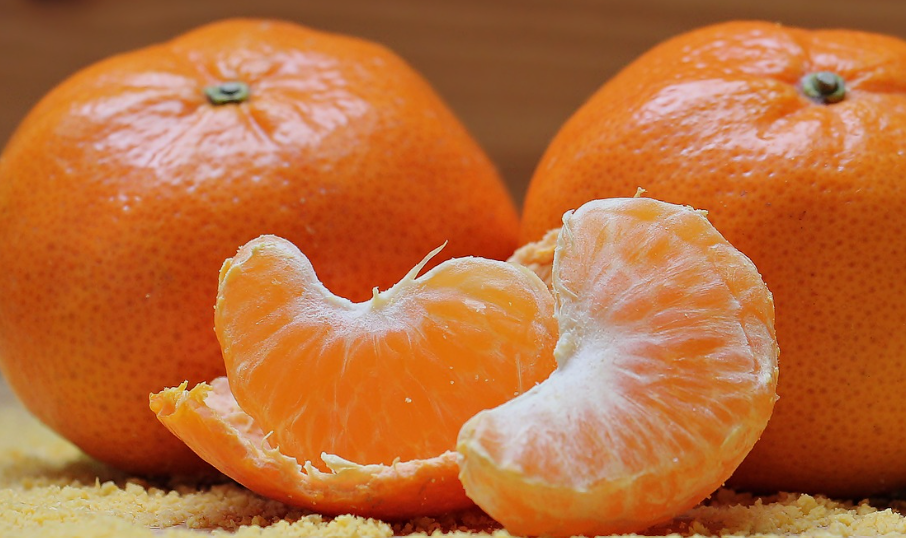
Navel orange is the standard eating orange, seedless, easy to peel, and sweet. It arose as a mutation in Brazil in the early 1800s, and California’s industry grew from 2 trees planted in Riverside in 1873. The navel at one end is a tiny, undeveloped second fruit.
Because it has no seeds, every navel orange tree is a grafted copy of that original. The fruit is in season from November to May. Its rind color depends on cool nights, so a deep orange rind does not guarantee a sweeter fruit.
2. Valencia Orange
Valencia is the main juice orange and the only major orange that ripens in summer. It has a thin rind, a few seeds, and plenty of sweet juice. Florida and California grow most of the crop.
This variety shows clearly that color and ripeness are separate. Ripe Valencias left on the tree in warm weather take green pigment back into the rind and turn greenish again. A green-tinged summer Valencia is fully sweet.
3. Seville Orange
Seville orange, or sour orange, is too bitter and acidic to eat fresh. Its thick, aromatic rind and high pectin make it the classic fruit for marmalade. The juice is also used in Cuban and Yucatan marinades.
The rind is a rich, deep orange, which proves that color says nothing about sweetness. The trees are common as ornamentals along streets in Arizona. The fruit is in season from December to February.
4. Temple Orange
Temple orange is a cross between a tangerine and an orange that originated in Jamaica. It became a Florida specialty in the early 1900s. The fruit is deep orange, rich, and spicy, with many seeds.
Its rind is slightly pebbled and peels more easily than an orange but less easily than a tangerine. The season is short, from January to March. A heavy fruit with a deep red-orange rind is the best choice.
5. Clementine
Clementine is a small, sweet, seedless mandarin first recorded in Algeria around 1902. It peels in seconds and separates into neat segments. California fruit is sold from November to January, often under brand names.
The fruit stays seedless only when bees do not carry in pollen from other citrus. Growers therefore keep their groves isolated or net the trees during bloom. Ripe clementines are glossy and deep orange and feel heavy for their size.
6. Satsuma
Satsuma is a Japanese mandarin with a loose, baggy rind that almost falls off. The flesh is seedless, tender, and low in acid. Most canned mandarin segments are satsumas.
This is the most cold-hardy sweet citrus, and it is grown along the Gulf Coast as well as in California. In the warm Gulf states it is often fully ripe while the rind is still partly green. Fruit there is harvested in October and November.
7. Dancy Tangerine
Dancy is the original American tangerine, a variety selected in Florida in 1867. It is small, deep orange-red, and richly flavored, with a spicy note and many seeds. The word tangerine comes from the port of Tangier in Morocco.
For decades it was the traditional fruit in Christmas stockings. Seedless mandarins have since pushed it out of most stores. It ripens in December and January and is best when the rind is dark and slightly loose.
8. Murcott
Murcott, also sold as honey tangerine, is a cross of tangerine and orange from Florida. It is one of the sweetest citrus fruits, with deep orange flesh and many seeds. The rind is thin and clings tightly.
It ripens late, from January to March. The rind is often yellowish-orange and blemished even on excellent fruit. Weight is the better guide, since a heavy Murcott is full of juice.
9. Minneola Tangelo
Minneola is a cross of grapefruit and tangerine released by federal breeders in Florida in 1931. It is easy to recognize by the knob at its stem end. The flesh is very juicy, with a bold, tart-sweet flavor.
The rind is a deep red-orange and peels fairly easily. The fruit is in season in January and February. It is also sold under the name Honeybell.
10. Sumo Citrus
Sumo Citrus is the American brand name of a large Japanese mandarin first bred in 1972. It has a bumpy, loose rind and a distinctive topknot. The flesh is seedless, very sweet, and low in acid.
It has been grown in California’s Central Valley since 2011 and is sold from January to April. The rough, puffy rind looks past its prime but is normal for the variety. The fruit bruises easily and is picked and packed by hand.
11. Kumquat
Kumquat is a grape-sized citrus that is eaten whole, peel and all. The arrangement is the reverse of other citrus, with a sweet rind and sour flesh. The oval ‘Nagami’ is the most common variety.
Ripe fruit is fully orange with no green and slightly soft. Rolling it between the fingers first releases the rind oils and blends the flavors. Florida and California harvest kumquats from November to March.
12. Calamondin
Calamondin is a tiny, round citrus about 1 inch wide with very sour juice and a thin, edible rind. It is essential in Filipino cooking, where it is called calamansi. In the United States it is best known as an ornamental houseplant.
Cooks in the Philippines usually use the fruit while it is green. It turns orange when fully ripe, and the juice becomes slightly less sharp. The tree tolerates brief cold to about 20 degrees.
13. Rangpur
Rangpur looks like a small mandarin, with reddish-orange rind and flesh. It is a lemon and mandarin hybrid from India and is as sour as a lime. It is often called Rangpur lime for that reason.
This fruit is the best example of orange color misleading the eater. It is used like a lime in drinks and marinades. The tree is hardy, productive, and often grown as an ornamental in California.
14. Apricot
Apricot is a small stone fruit with velvety, golden-orange skin and soft, sweet-tart flesh. It is among the richest fruit sources of beta-carotene. California grows most of the American crop, and the season is short, from May to July.
An apricot softens after picking but does not get any sweeter. Fruit picked firm for shipping is often bland for that reason. The best ones are deep orange with no green at the stem and smell fragrant.
15. Aprium
Aprium is a hybrid that is mostly apricot with some plum in its background. It looks like a large apricot with lightly fuzzy, bright orange skin. The flesh is sweeter and juicier than an apricot, with a hint of plum.
It was developed by a family of California fruit breeders in the 1980s. It ripens early, in May and June. Like an apricot, it should be deep orange and slightly soft at the store, since it will not sweeten later.
16. Loquat
Loquat is a small, oval fruit with downy, yellow-orange skin and a flavor between apricot and citrus. It grows in clusters on an evergreen tree common in California and the Gulf states. Each fruit holds a few large, glossy seeds.
The tree flowers in fall, so the fruit ripens in early spring, ahead of other orchard fruit. Loquats do not ripen off the tree. They should be picked only when fully orange and slightly soft.
17. Fuyu Persimmon
Fuyu is a squat, tomato-shaped persimmon that can be eaten while still crisp, like an apple. It is sweet and mild, with a hint of cinnamon. California grows nearly all of the domestic crop, sold from October to December.
For this variety, orange color is a reliable sign. A Fuyu is ready as soon as it turns fully orange, even though it is firm. It contains no tannins at that stage, so there is no astringency.
18. Hachiya Persimmon
Hachiya is a large, acorn-shaped persimmon with deep orange-red skin. When ripe, the flesh is a sweet, smooth jelly that is spooned out or baked into puddings and cookies. It is also peeled and dried whole.
This fruit is the classic case of orange not meaning ripe. Growers note that Hachiya are astringent, so they must be completely soft to be eaten. A firm, fully orange Hachiya will dry out the whole mouth.
19. American Persimmon
American persimmon is a native tree of the eastern and central states with fruit only 1 to 2 inches wide. The ripe flesh is very sweet, rich, and soft. It is the basis of the persimmon pudding traditional in Indiana.
The fruit turns orange in early fall but stays intensely astringent until it is soft and wrinkled. Ripe fruit usually drops from the tree. Frost is not actually required, despite the common belief.
20. Cantaloupe
Cantaloupe is the netted melon with sweet, musky, orange flesh that is rich in beta-carotene. California and Arizona grow most of the supply. It does not get sweeter after harvest, although it softens.
The flesh is hidden, so the rind and stem end are the guides. A ripe melon has a smooth, round dent where the stem pulled away cleanly, and the rind under the netting has turned from green to tan. The blossom end smells sweet.
21. Charentais Melon
Charentais is a small French melon of 2 to 3 pounds with smooth, gray-green skin and dark green stripes. The flesh is deep orange, dense, and intensely fragrant. Many cooks consider it the finest-flavored melon.
Unlike cantaloupe, it does not separate from the vine when ripe. It is ready when the skin takes on a creamy yellow cast and the leaf nearest the fruit fades. It is very perishable and is sold mostly at farmers markets.
22. Crenshaw Melon
Crenshaw is a large, teardrop-shaped melon weighing 8 to 10 pounds. It has salmon-orange flesh that is very sweet, juicy, and slightly spicy. California grows it for late summer and fall.
The rind turns from dark green to golden yellow at ripeness and feels slightly waxy. The blossom end gives under the thumb and smells strongly sweet. The soft rind bruises easily, so the melons do not travel well.
23. Orangeglo Watermelon
Orangeglo is a watermelon with bright orange flesh, introduced by a Texas seed company in the 1960s. It is very sweet, with a tropical, almost mango-like flavor. The oblong melons weigh 20 to 30 pounds.
The orange comes from carotenoids, where red watermelons contain lycopene. The striped rind looks ordinary and gives no hint of the color inside. Ripeness is judged by a creamy yellow ground spot and a dried tendril near the stem.
24. Kent Mango
Kent is a large, oval mango that originated in Florida in the 1940s. Its flesh is deep orange, juicy, and nearly free of fiber. Many growers rate it the best eating quality among the common commercial varieties.
The skin stays mostly dark green with a red blush even when the fruit is ripe, so color is of little use. A ripe Kent gives to gentle pressure and smells sweet at the stem. Most are imported from Mexico, Ecuador, and Peru.
25. Alphonso Mango
Alphonso is the most celebrated mango of India, with saffron-orange flesh that is rich, creamy, and aromatic. The fruit is medium-sized and oval. Its season is short, from April to June.
Fresh Indian mangoes were barred from the United States until 2007. The skin turns golden yellow with an orange tinge when ripe and gives off a strong perfume. It is sold at Indian grocers by the box at a high price.
26. Papaya
The large Maradol papaya from Mexico has salmon-orange flesh with a soft, buttery texture. A single fruit can weigh 3 to 5 pounds. Mexico supplies most of the papayas eaten in the United States.
The skin changes from green to yellow-orange as the fruit ripens, and the change continues on the counter. A papaya that is mostly yellow and yields to light pressure is ready. A squeeze of lime balances its musky sweetness.
27. Sweet Granadilla
Sweet granadilla is a relative of passion fruit with a hard, brittle, orange shell flecked with white. Inside is clear, gray-white jelly around crunchy black seeds. The taste is sweet and floral, with none of the sourness of passion fruit.
The shell is cracked open by hand and the pulp is eaten with a spoon. Ripe fruit has a bright orange shell and feels heavy. It is imported from Colombia and Peru.
28. Naranjilla
Naranjilla, which means little orange, is a round, fuzzy, bright orange fruit from the Andes. The surprise is inside, where the pulp is green and sharply acidic. The flavor is often described as rhubarb with lime.
It is a relative of the tomato and is used almost entirely for juice. The fruit is picked when fully orange, and the fuzz is rubbed off before use. In the United States it is sold as frozen pulp, often labeled lulo.
29. Kiwano
Kiwano, or horned melon, has a bright orange rind covered in blunt spikes. The inside is lime-green jelly full of soft seeds, with a flavor like cucumber, banana, and lime. It is grown in California and New Zealand.
The rind turns from green to yellow to vivid orange at full ripeness. It keeps for months at room temperature and should not be refrigerated. The pulp is scooped out and used in drinks and fruit salads.
30. Lucuma
Lucuma is a Peruvian fruit with green-bronze skin and dry, mealy, yellow-orange flesh. It tastes like maple, caramel, and sweet potato. It is the most popular ice cream flavor in Peru.
The flesh has the texture of a hard-boiled egg yolk and is seldom eaten plain. A ripe fruit softens and its skin begins to split. American shoppers find it as powder or frozen pulp.
31. Mamey Apple
Mamey apple is a large, round Caribbean fruit with thick, rough, brown skin. The flesh is firm and golden orange, with a flavor much like apricot. It is unrelated to the mamey sapote despite the similar name.
The brown skin does not change, so growers scratch it lightly. Yellow-orange under the scratch means ripe, and green means wait. The fruit is eaten fresh or stewed and is common in Puerto Rico.
32. Peach Palm Fruit
Peach palm fruit grows in heavy clusters on a spiny palm in Central and South America. Each orange-red fruit is about 2 inches long, with dry, starchy flesh. Cooked, it tastes like a cross between chestnut and sweet potato.
The fruit cannot be eaten raw and is boiled in salted water for an hour or more. It is a popular street food in Costa Rica. In the United States it is sold in jars, packed in brine.
33. Achacha
Achacha is an egg-shaped fruit from the Bolivian Amazon with a tough, orange rind. The white pulp inside is tangy and sweet, like a lemony mangosteen. It is a relative of mangosteen.
The fruit is picked fully orange, since it does not ripen further once harvested. The rind is pierced with a thumbnail and pulled apart. It is farmed mainly in Bolivia and Australia and is rare in American stores.
34. Sea Buckthorn
Sea buckthorn is a thorny, silver-leaved shrub with branches crowded by small orange berries. The juice is extremely sour, with a flavor like tart citrus and passion fruit. It is high in both vitamin C and carotenoids.
The berries reach full color in August and September and hold on through winter. They cling so tightly that growers cut whole branches and freeze them to knock the fruit off. A few farms on the northern plains grow it.
35. Rowan Berry
Rowan berry is the fruit of the mountain ash, a small tree of northern forests and city streets. The berries hang in heavy, flat clusters of bright orange to orange-red. Raw, they are bitter and can upset the stomach.
Cooking breaks down the bitter compound, and the berries make a tart jelly served with game. They are best gathered after the first frost. Full color arrives in late summer, weeks before the fruit is good to use.
36. Chinese Lantern
Chinese lantern is a garden perennial grown for the papery, bright orange husks that enclose its fruit. The husk is the showy part, and the true fruit is a small orange-red berry inside. Stems of the lanterns are dried for fall arrangements.
The fully ripe berry is edible but bland and slightly bitter. Unripe berries and the rest of the plant are toxic, so it is not grown for food. The plant spreads aggressively by underground runners.
37. American Bittersweet
American bittersweet is a native woody vine with clusters of orange capsules that split to show scarlet seeds. The fruiting stems are a traditional material for fall wreaths. The display lasts from October into winter.
The fruit is toxic to people and is not eaten. A similar Asian species has become a serious invasive vine across the eastern states. The native bears its fruit only at the branch tips, while the invasive one carries fruit all along the stem.
38. Jerusalem Cherry
Jerusalem cherry is a small houseplant sold in winter for its round, glossy, orange-red berries. The fruits look like cherry tomatoes, and the plant is in fact a tomato relative. It keeps its berries for months indoors.
The berries are poisonous and must not be eaten. They are a known hazard for small children and pets because they look so appetizing. The plant is best kept out of reach or out of the house.
39. Pumpkin
Pumpkin is the best-known orange fruit of fall, and botanically speaking pumpkins are fruit even though they are treated as vegetables. Illinois grows far more than any other state, mostly for canning. The pumpkins used for canning are tan, not orange, and look more like large squash.
A carving pumpkin is ready when it is a deep, solid orange and the rind resists a fingernail. The stem should be hard, dry, and firmly attached. A pumpkin picked with its stem lasts much longer than one without.
40. Butternut Squash
Butternut squash has smooth tan skin and deep orange flesh with a small seed cavity. It was developed in Massachusetts in the 1940s. The flesh is sweet, nutty, and smooth when cooked.
The orange is hidden, so the rind is the guide. A mature squash is an even tan with no green streaks, and the rind is too hard to dent. Its sweetness increases over several weeks of storage as starch turns to sugar.
41. Red Kuri Squash
Red kuri is a teardrop-shaped Japanese winter squash with a deep orange-red rind. It weighs 3 to 5 pounds and has smooth, dry flesh. The name refers to its chestnut-like flavor.
The thin skin softens when cooked and can be eaten. A ripe squash has a rich, even color and a dry, corky stem. It keeps for several months in a cool room.
42. Sunshine Kabocha
Sunshine is a kabocha squash with a bright scarlet-orange rind, an All-America Selections winner in 2004. The flesh is deep orange, sweet, and dry, with a flaky texture. Each squash weighs 3 to 5 pounds.
Like other winter squash, it is harvested when the rind is hard and the stem has dried. A few weeks of curing improve both flavor and texture. Its vivid rind makes it one of the easiest squash to judge by color.
43. Orange Bell Pepper
Orange bell pepper is the fully ripe stage of varieties bred to finish at orange instead of red. It is one of the sweetest and fruitiest bell peppers. It also holds more of the carotenoid zeaxanthin than almost any other common produce item.
Every bell pepper begins green, and the orange stage takes 2 to 3 weeks longer to reach. Here the color is a true ripeness signal. A good pepper is glossy, firm, and evenly colored.
44. Habanero
Habanero is a small, lantern-shaped hot pepper that most often ripens to bright orange. It measures 100,000 to 350,000 Scoville heat units. Beneath the heat is a fruity aroma often compared to apricot.
The pods turn from green to orange over about 2 weeks, and both heat and flavor peak at full color. Mexico’s Yucatan Peninsula is the main growing region. Gloves are a sensible precaution when cutting them.
45. Aji Amarillo
Aji amarillo is the signature chili of Peruvian cooking, a slender pepper 4 to 5 inches long. The name means yellow chili, yet the ripe pod is a deep orange. It has moderate heat, at 30,000 to 50,000 Scoville units, and a fruity, berry-like flavor.
The name makes sense in the kitchen, because the pepper turns sauces a bright yellow when cooked. Pods are harvested once they are fully orange. In the United States it is sold mainly as a paste or frozen.
46. Datil Pepper
Datil pepper is a regional specialty of St. Augustine, Florida, where it has been grown for generations. It has very hot, small blunt fruits that ripen to a bright yellow-orange. The heat matches a habanero, at 100,000 to 300,000 Scoville units.
The flavor is sweeter and fruitier than a habanero’s. Local tradition credits settlers from the island of Minorca with bringing the pepper in the 1700s. Most of the crop goes into bottled sauces, relishes, and jellies.
47. Sungold Tomato
Sungold is a cherry tomato bred in Japan and introduced in 1992. It ripens to a bright tangerine orange. Its sugar content is among the highest of any tomato, with a fruity, almost tropical taste.
The fruit turns gold several days before it is truly ripe, and at that stage it is still tart. Deep orange is the color to wait for. The thin skin splits after rain, which is why this variety is seldom sold in stores.
48. Jaune Flamme Tomato
Jaune Flamme is a French heirloom tomato about the size and color of an apricot. The skin is deep orange, and the flesh inside is often blushed with red. The flavor is tangy and sweet.
The fruits weigh 2 to 3 ounces and ripen early in clusters. They are ready when the orange is deep and even and the fruit gives slightly. The color holds well when the tomatoes are roasted or dried.
49. Kellogg’s Breakfast Tomato
Kellogg’s Breakfast is a large orange beefsteak tomato that often weighs 1 to 2 pounds. It is an heirloom from West Virginia, named for the Michigan gardener who preserved it. The flesh is the color of orange juice all the way through.
Orange tomatoes carry carotenoids in place of the red pigment lycopene. The flavor is sweet and mild, and the fruit is meaty with few seeds. It ripens late, about 85 days after transplanting.
50. Turkish Orange Eggplant
Turkish Orange is a small, round eggplant, 2 to 3 inches wide, that ripens to bright orange-red. The fruits look like small tomatoes on the plant. It is as ornamental as it is edible.
This fruit reverses the usual rule. It tastes best while still green with pale stripes or just starting to color, when the flesh is sweet. Fully orange fruit is seedy and bitter.
Key Takeaways:
- Orange-colored fruits come in many shapes, sizes, textures, and flavors, ranging from sweet and juicy to mildly acidic and tangy.
- Many orange fruits are good sources of vitamin C, carotenoids, fiber, and other plant compounds.
- The orange color in many fruits comes from carotenoid pigments, including beta-carotene, although the exact pigments vary between species.
- Orange fruits grow in a wide variety of climates, including tropical, subtropical, and temperate regions.
- Popular examples include oranges, papayas, apricots, peaches, persimmons, cantaloupes, and loquats.
- Orange-colored fruits can be enjoyed fresh or used in juices, smoothies, salads, desserts, sauces, jams, and other dishes.