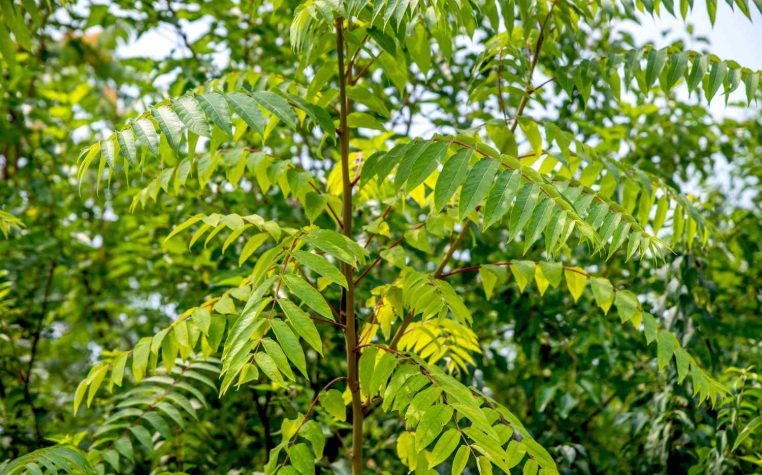
Invasive trees in Michigan follow much the same pattern as the state’s invasive shrubs and vines, since nearly every species on this list arrived as a deliberate introduction, prized at the time for fast growth, ornamental value, or usefulness as a windbreak or erosion-control planting. According to the Michigan Natural Features Inventory, a field guide developed at Michigan State University specifically for early detection efforts, black alder, black locust, Norway maple, Russian olive, and tree of heaven all rank among the state’s highest-priority invasive tree species, each capable of displacing native forest composition once established.
That displacement happens through a few consistently repeated mechanisms across this list: dense, allelopathic root systems that chemically suppress nearby native seedlings, extensive cloning through root sprouts that lets a single tree spread outward without ever producing a seed, and, in several cases, genuinely prolific seed production carried well beyond the original planting by wind, water, or birds. A tree that displays even one of these traits is difficult to manage, and several species on this list display all 3 at once.
Distinguishing an invasive tree from a native lookalike matters considerably for landowners deciding what to leave standing, and Michigan State University’s own tree identification guide includes several of these non-native species directly alongside native maples, elms, and poplars specifically because they’re now common enough across the state to require the same identification attention as anything truly native. Michigan shares this particular set of invasive tree problems with much of the broader Upper Midwest, and according to University of Minnesota Extension, species like Amur maple, Norway maple, Russian olive, Siberian elm, black locust, and white mulberry are all commonly reported as invasive woody plants throughout the neighboring region as well.
These trees span hardwood forest understories, urban street plantings, and disturbed roadside corridors across the state. What follows covers 16 invasive trees in Michigan, along with where each one grows and the data behind its spread.
Tree of Heaven
Tree of heaven produces large, compound leaves and grows remarkably fast even by invasive tree standards, with root sprouts capable of reaching several feet in their very first year alone. It was originally introduced to North America as an urban shade tree valued for tolerating poor soil and air pollution, qualities that later allowed it to spread far beyond any deliberate planting.
It grows throughout much of southern Michigan, particularly along roadsides, rail corridors, and disturbed urban lots, and cutting the trunk alone typically triggers even more vigorous root sprouting rather than killing the tree. It also serves as the preferred host plant for the invasive spotted lanternfly, adding a second layer of concern beyond the tree’s own aggressive spread.
Black Locust
Black locust produces fragrant white flower clusters each spring and fern-like compound leaves on a fast-growing tree that spreads aggressively through root suckers, allowing a single tree to form an entire grove without any seed dispersal at all. Although native to a limited region of the central and southern Appalachians, it’s considered invasive well outside that original range, including much of Michigan, where it was widely planted for erosion control and fence posts.
It grows throughout much of the Lower Peninsula, particularly on disturbed, sandy, or poor soils where its nitrogen-fixing roots give it a competitive edge over native trees. Its extensive cloning habit and sharp thorns make mechanical removal a genuinely difficult, multi-year undertaking once a grove is established.
Norway Maple
Norway maple closely resembles the native sugar maple at a glance, distinguished most reliably by the milky sap that oozes from a broken leaf stem, a trait sugar maple entirely lacks. It was planted extensively as a street and shade tree throughout Michigan for decades before its invasive tendencies in natural forest settings became fully understood.
It grows throughout much of southern and central Michigan, casting a notably dense shade that suppresses the growth of native wildflowers and tree seedlings beneath its canopy. Its shallow, aggressive root system also makes it a poor lawn companion, frequently outcompeting grass for both water and nutrients.
Russian Olive
Russian olive produces narrow, silvery-gray leaves and small, hard, olive-shaped fruit covered in silvery scales, closely related to the shrubbier autumn olive but distinguished by longer, narrower foliage that’s silver on both sides. According to the Michigan Natural Features Inventory, it reproduces both by seed and by root sprouting, and its fruit is eaten and dispersed by numerous bird species that help carry it well beyond its original planting site.
It grows throughout much of Michigan, particularly along riverbanks, floodplains, and disturbed open ground where it forms dense stands that crowd out native streamside vegetation. It begins fruiting within just 3 to 5 years of establishment, giving even a young tree the ability to start spreading quickly.
Black Alder
Black alder, also called European alder, forms a dense, often multi-stemmed thicket along wet ground, and according to the Michigan Natural Features Inventory, it’s native to Eurasia and readily displaces native species by closing off the open, sunny wetland habitat many native plants depend on. It was historically planted in North America for erosion control along streambanks and disturbed wet sites.
It grows throughout scattered wetland and streamside locations in Michigan, tolerating consistently saturated soil that few other invasive trees can survive in. Its nitrogen-fixing root nodules, similar to those found in autumn olive and Russian olive, let it thrive in nutrient-poor wet soils where native trees often struggle.
Amur Maple
Amur maple produces small, 3-lobed leaves that turn a vivid red each fall, a trait that made it a popular small ornamental tree for Michigan yards long before its seeding behavior into adjacent natural areas became a concern. Its winged seed pairs are dispersed efficiently by wind, allowing a single planted tree to seed a considerable surrounding area.
It grows in scattered naturalized populations throughout much of Michigan, particularly along forest edges near older residential plantings. Its dense, multi-stemmed form and tolerance for a wide range of soil and light conditions let it establish readily in disturbed woodland understories.
Goldenraintree
Goldenraintree produces showy clusters of small yellow flowers in summer, followed by distinctive papery, lantern-shaped seed pods that persist into fall. It was widely planted as an ornamental street and yard tree throughout the state before its capacity to naturalize in nearby disturbed ground became apparent.
It grows in scattered naturalized populations throughout southern Michigan, typically escaping from older residential and urban plantings into adjacent vacant lots and forest edges. Its abundant seed production and tolerance for poor, compacted soil have allowed it to establish in exactly the kind of disturbed urban ground few native trees can colonize.
Amur Corktree
Amur corktree produces distinctively corky, deeply furrowed bark and compound leaves that release a citrus-like scent when crushed, a combination that made it a popular ornamental shade tree before its invasive potential was recognized. Female trees produce abundant black fruit that birds readily eat and disperse into surrounding natural areas.
It grows in scattered populations throughout parts of Michigan, particularly in urban and suburban settings where it was historically planted before nurseries began shifting toward male-only, fruitless cultivars. Its thick, fire-resistant bark also makes it notably difficult to control using prescribed burning, a technique otherwise effective against several other invasive woody species.
White Poplar
White poplar produces leaves with a distinctive silvery-white, felted underside that flashes visibly whenever the wind turns the foliage, a striking ornamental trait that helped popularize the tree before its aggressive root-suckering habit became a widely recognized problem. A single tree can send up new shoots many feet from the original trunk, gradually forming an entire grove of genetically identical clones.
It grows throughout scattered locations in Michigan, particularly on disturbed, sandy soils near old homesteads and roadsides where it was often deliberately planted. Its extensive root suckering makes it exceptionally difficult to remove completely, since cutting the visible trunk does nothing to stop new shoots from emerging nearby.
Siberian Elm
Siberian elm produces small, dark green leaves and grows remarkably fast, a trait that made it a popular substitute for American elm after Dutch elm disease devastated that native species throughout Michigan. Its wood is notably brittle, and mature trees are prone to shedding large limbs during storms, a maintenance liability beyond its invasive seeding behavior.
It grows throughout much of the state, particularly in disturbed urban lots and fence rows where its wind-dispersed seeds readily establish. Its rapid growth rate, while initially appealing to homeowners seeking quick shade, has made it one of the more widely naturalized non-native trees found in disturbed Michigan landscapes today.
Callery Pear
Callery pear, widely sold under ornamental cultivar names, produces abundant white spring flowers followed by small, hard fruit that birds readily eat and disperse into surrounding natural areas. Its thorny, fast-growing seedlings form a genuinely different, considerably less tidy plant in the wild than the single-trunked ornamental form sold at nurseries.
It’s an increasingly documented concern throughout southern Michigan, prompting several states in the broader region to begin restricting its sale entirely. Its seedlings can form dense, thorny thickets in old fields and forest edges within just a few years of the first birds carrying fruit away from a planted ornamental tree.
White Mulberry
White mulberry produces variably shaped leaves, some smooth-edged and others deeply lobed even on the same branch, along with sweet berries that range from white to deep purple depending on the individual tree. It was originally introduced to North America in a failed attempt to establish a domestic silk industry, since its leaves are the preferred food of silkworms.
It grows throughout much of Michigan, particularly in urban and disturbed areas where birds readily disperse its seeds after eating the fruit. It also hybridizes readily with the native red mulberry, a genuine conservation concern since that cross-breeding threatens to genetically dilute the already less common native species.
Crack Willow
Crack willow gets its common name from the audible snap its brittle branches make when broken, a trait that ironically helps the tree spread, since a fallen branch landing in wet soil or shallow water can root and grow into an entirely new tree. It was introduced from Europe and Asia and has since become naturalized throughout many of the same wet habitats favored by native willow species.
It grows along streambanks, ditches, and wetland margins throughout Michigan, often outcompeting native willows in the same habitat. Its tendency to drop large limbs into waterways during storms can also alter stream flow and contribute to erosion along the banks where it grows.
Weeping Willow
Weeping willow, prized for its graceful, cascading branches, was widely planted as an ornamental shade tree throughout Michigan yards and parks long before its tendency to hybridize with native willow species raised conservation concerns. Its shallow, aggressive root system is also notorious for seeking out and infiltrating nearby sewer lines and septic systems.
It grows throughout much of the state, particularly near ponds and low-lying yards where its cascading form is prized, and its brittle wood makes it prone to storm damage similar to crack willow. Fallen branches root readily in moist soil, allowing the tree to spread vegetatively well beyond any deliberately planted specimen.
Scotch Pine
Scotch pine, widely planted throughout Michigan as a Christmas tree crop and windbreak species, has naturalized in sandy, open habitats across much of the state, competing with native jack pine and red pine for the same dry, sunny growing conditions. Its distinctive orange-tinged upper bark makes it one of the easier naturalized pines to identify at a glance.
It grows throughout scattered sandy, open sites statewide, particularly in areas with a history of pine plantation forestry or abandoned Christmas tree farms. Its ability to regenerate on its own in these open, disturbed habitats has allowed it to persist and spread well beyond its original planted rows.
European Mountain Ash
European mountain ash produces clusters of white spring flowers followed by bright orange-red berries that persist into winter, a display that made it a popular ornamental tree throughout northern Michigan yards and parks. Birds readily eat and disperse its berries into adjacent forest, where seedlings can establish in the understory alongside native tree species.
It grows throughout scattered locations in the northern Lower Peninsula and Upper Peninsula, favoring the same cool, moist forest conditions found across much of that region. Its ability to naturalize into relatively undisturbed forest understory, rather than just disturbed edges, sets it apart from several other invasive trees on this list that rely more heavily on already-disturbed ground.
Things to Remember
Invasive trees in Michigan can be difficult to recognize because some resemble familiar native species. Learning to identify them by their leaves, bark, flowers, fruits, and growth habits is an important first step in understanding what is growing in your landscape or nearby natural areas.
Not every nonnative tree is invasive, and the impact of a species can vary by location. If you suspect an invasive tree on your property, accurate identification is important before removing or treating it. Michigan’s invasive-species resources can help confirm species and provide guidance on appropriate management.