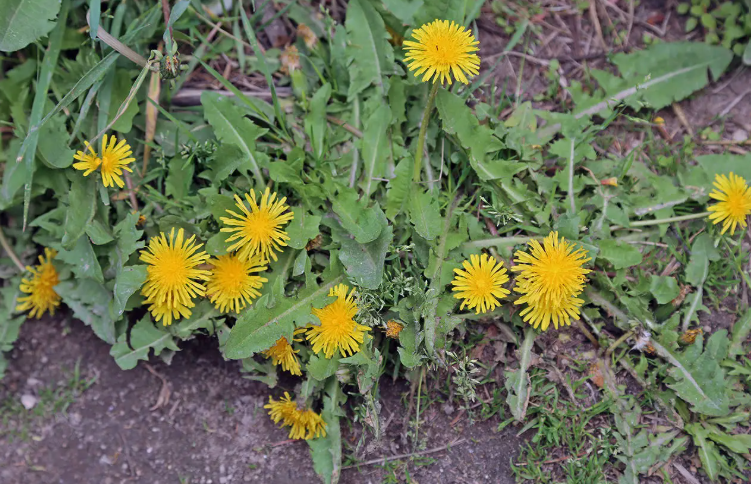
Weeds that look like dandelions trip up even experienced gardeners, since the combination of a low rosette of leaves, a bright yellow flower head, and a fluffy white seed puff turns out to be one of the most common survival strategies in the entire sunflower family. That shared appearance isn’t a coincidence: yellow flower heads attract a wide range of generalist pollinators, and the parachute-like seed structure, technically called a pappus, is simply an efficient way to disperse seed on the wind, so dozens of unrelated species within the same plant family have independently converged on nearly the same look.
Telling these plants apart from an actual dandelion matters more than it might seem, since some of these look-alikes are far more aggressive spreaders, some are toxic to livestock, and a few are regulated noxious weeds in multiple states specifically because they’re so often mistaken for a common, harmless dandelion until an infestation is already well established. The differences usually come down to small details: whether the flower stem branches or stays single, whether the leaves carry hairs or bristles, and whether more than one flower head appears per stem.
Most of these plants share a European or Asian origin, having arrived in North America through contaminated seed, deliberate introduction as food or medicinal plants, or simple accidental transport, and many have since spread across the entire continent. A handful produce seed heads considerably larger and showier than any true dandelion, while others stay so visually similar that positive identification requires a close look at the stem or leaf surface.
What follows covers 16 weeds commonly mistaken for dandelions, along with where each one grows, its typical size, and the data that helps separate it from the real thing.
Catsear
Catsear, also called false dandelion, is native to Europe and now widespread across North America, typically found in lawns, pastures, roadsides, and other disturbed ground. According to University of California’s Statewide Integrated Pest Management Program, it’s distinguished from true dandelion by its branched flower stems, since dandelions produce only a single unbranched stalk per flower, along with coarse, hairy leaves rather than the smooth, hairless foliage typical of dandelion. A single plant can produce up to 6,000 seeds.
It grows throughout most of the United States, particularly thriving in overgrazed pastures and compacted lawns where it tolerates conditions that stress out finer turfgrass species.
Common Hawkweed
Common hawkweed, also called meadow hawkweed or yellow hawkweed, is native to northern, central, and eastern Europe, particularly abundant in the foothills of the Alps, and was introduced to North America in 1828 as both an herbal remedy and an ornamental. Unlike dandelion, it produces multiple small flower heads clustered atop a single hairy stem rather than one large flower on a bare stalk, and it spreads aggressively through both seed and creeping rhizomes. A single flower head can produce between 12 and 50 tiny seeds, and seeds remain viable in the soil for up to 7 years.
It grows from Quebec to Ontario and south to Georgia and Tennessee, with especially dense infestations concentrated in northern Idaho, northeastern Washington, and northwestern Montana.
Orange Hawkweed
Orange hawkweed, also called devil’s paintbrush, is native to the mountainous regions of central and southern Europe, typically found colonizing meadows, roadsides, and disturbed forest clearings. According to Montana State University Extension, its reddish-orange flowers immediately distinguish it from any native look-alike species, since no native hawkweed in North America produces orange blooms. It spreads by seed, rhizomes, and above-ground stolons, and a single flowering season can produce enough seed to rapidly form dense, monoculture-like patches.
It grows across the northeastern United States, the Pacific Northwest, and Alaska, where it displaces grass and forb species so effectively that dense infestations can significantly reduce hay and pasture production.
Mouse-ear Hawkweed
Mouse-ear hawkweed is native to Europe, typically found in dry, sandy, or gravelly soils across meadows, pastures, and disturbed open ground. It’s the hawkweed species most easily confused with dandelion at a glance, since it typically produces just a single yellow flower head atop each leafless stalk, unlike the multi-headed clusters of its hawkweed relatives. Its rounded leaves, covered in fine gray hairs on the underside, spread into a low mat via creeping stolons that root at each leaf node.
It grows throughout the northern United States and Canada, favoring poor, well-drained soils where it can outcompete weaker turf and pasture grasses.
Common Sowthistle
Common sowthistle, also called annual sowthistle, is native to Europe and now naturalized worldwide, typically found in agricultural fields, gardens, and disturbed ground across a wide climatic range. Its pale yellow flower heads closely resemble dandelion at a distance, but the plant produces multiple branching flower stems reaching up to 4 feet tall, considerably taller than any true dandelion. Its clasping, spiny-looking (though not truly sharp) leaves and the milky sap released when the stem is broken help confirm identification.
It grows across most of the United States as one of the most common weeds of cultivated fields, capable of completing its life cycle and setting seed year-round in mild climates.
Perennial Sowthistle
Perennial sowthistle is native to Europe and western Asia, typically found in cultivated fields, pastures, and disturbed ground, often in wetter sites than its annual relative prefers. Unlike common sowthistle, it spreads aggressively through creeping underground roots in addition to seed, forming persistent colonies that are considerably harder to eradicate than annual weeds. A mature plant can reach 3 to 5 feet tall, with large yellow flower heads considerably bigger than those of true dandelion.
It grows throughout the northern United States and Canada, where its perennial root system makes it a persistent problem in row crops and reduced-tillage farming systems.
Smooth Hawksbeard
Smooth hawksbeard is native to Europe and western Asia, typically found colonizing lawns, roadsides, and disturbed ground across a wide temperate range. Its small, dandelion-like yellow flower heads appear in loose, branching clusters rather than singly, and its smooth, hairless leaves distinguish it from the roughly hairy foliage of catsear. A mature plant typically reaches 1 to 3 feet tall, completing its life cycle as a winter or summer annual depending on climate.
It grows throughout much of the United States, particularly common in irrigated lawns and turf, where its low, spreading rosette can persist through repeated mowing.
Beaked Hawksbeard
Beaked hawksbeard, also called narrowleaf hawksbeard, is native to Europe and Asia, typically found in disturbed fields, roadsides, and rangeland across a broad climatic range. Its seeds carry a distinctive elongated beak between the seed body and the fluffy pappus, a structural difference from true dandelion seed that requires close inspection to notice. A mature plant typically reaches 1 to 3 feet tall, with numerous small flower heads produced on branching stems throughout summer.
It grows extensively across the western United States, where it has become a significant weed in cereal grain crops and can be difficult to control with herbicides that also target true dandelion.
Autumn Hawkbit
Autumn hawkbit, also called fall dandelion, is native to Europe, typically found in lawns, pastures, and meadows across cool-temperate climates. It flowers considerably later in the season than true dandelion, often continuing to bloom into autumn after most dandelions have finished for the year, which is how it earned its common name. A mature plant reaches 6 to 24 inches tall, with wiry, branching flower stems bearing several small yellow flower heads rather than the single large bloom typical of dandelion.
It grows throughout the northeastern and north-central United States and southern Canada, often persisting in lawns well past the point in the season when true dandelions have gone dormant.
Rough Hawkbit
Rough hawkbit is native to Europe, typically found in dry grasslands, meadows, and pastures on well-drained, often chalky or sandy soils. Its leaves are covered in coarse, forked hairs that give the foliage a distinctly rough texture compared to the smooth leaves of true dandelion, and its flower stems typically branch to produce two or more flower heads per plant. A mature plant reaches 6 to 18 inches tall, favoring drier, poorer soils than most other dandelion look-alikes on this list.
It grows in scattered populations across the northeastern United States and parts of Canada, generally less widespread than its close relative autumn hawkbit.
Yellow Salsify
Yellow salsify, also called western salsify or goatsbeard, is native to Europe and western Asia, and according to Montana State University Extension, it produces a distinctive flower with 10 or more narrow bracts that extend visibly beyond the yellow petals, a feature no true dandelion shares. Its seed head matures into an enormous, softball-sized puffball considerably larger than any dandelion clock, and a single plant can produce up to 14 flowering stems bearing 20 to 120 seeds apiece. The plant is monocarpic, meaning it flowers once, sets seed, and dies, typically after 2 to 4 years of growth.
It grows across most of North America in rangelands, pastures, and roadsides, with wind-dispersed seed capable of traveling up to an eighth of a mile from the parent plant.
Meadow Salsify
Meadow salsify closely resembles yellow salsify and shares much of the same European native range, but is distinguished by bracts that do not extend beyond the flower petals and a flower stalk that lacks the swollen, hollow shape found just beneath yellow salsify’s bloom. Like its close relative, it produces an oversized, showy seed head considerably larger than a true dandelion’s, and the plant similarly dies after flowering and setting seed. A mature plant typically reaches 1 to 3 feet tall.
It grows across much of North America alongside yellow salsify, often found growing in the same disturbed rangeland, roadside, and pasture habitats.
Coltsfoot
Coltsfoot is native to Europe and parts of northern Africa and Asia, and according to Ohio State University’s CFAES Weedguide, its most distinctive trait is that its bright yellow, dandelion-like flowers emerge in early spring well before its heart-shaped leaves appear, a growth pattern reflected in its old folk name “son-before-father.” Its fluffy white seed heads closely resemble a dandelion clock, and wind-dispersed seeds have been documented traveling up to 8 miles from the parent plant. It spreads aggressively through underground rhizomes in addition to seed, forming large colonies over time.
It grows throughout the northeastern United States and eastern Canada, typically found along stream banks, roadsides, and other disturbed, moist ground.
Nipplewort
Nipplewort is native to Europe and temperate Asia, typically found in shaded, disturbed ground including woodland edges, hedgerows, and waste areas. Its flower heads are notably smaller than true dandelion, often under half an inch across, and the plant branches extensively to produce dozens of small blooms rather than dandelion’s single large flower. A mature plant typically reaches 1 to 3 feet tall, tolerating shadier conditions than most other dandelion look-alikes prefer.
It grows across the northeastern and midwestern United States and parts of Canada, generally favoring shadier, moister habitats than the sun-loving hawkweeds and hawksbeards on this list.
Bristly Oxtongue
Bristly oxtongue is native to Europe, typically found in disturbed fields, roadsides, and waste ground across a warm-temperate range. Its leaves are covered in stiff, wart-like hairs each tipped with a small hooked bristle, giving the foliage a rough, bumpy texture entirely unlike the smooth leaves of true dandelion. A mature plant can reach 1 to 4 feet tall, with numerous branching stems bearing small yellow flower heads throughout summer and fall.
It grows primarily across California and the milder coastal regions of the United States, thriving in disturbed agricultural and roadside habitats.
Wall Lettuce
Wall lettuce is native to Europe, typically found in shaded woodlands, along stone walls, and in other partially shaded disturbed habitats. Its flower heads are considerably smaller than dandelion, often under half an inch across, produced in loose, airy clusters atop tall, branching stems that can reach 3 feet. Its deeply lobed, arrow-shaped leaves look distinctly different from dandelion’s foliage even before the plant flowers, making misidentification less likely than with some other species on this list.
It grows throughout the northeastern United States and eastern Canada, typically found in shaded forest understories and along old stone walls and building foundations.
Key Takeaways
Many weeds that look like dandelions can be difficult to identify at first glance because they share the same yellow flower heads, basal rosettes, and fluffy seed structures. However, small details can make identification much easier. For example, common catsear has noticeably hairy leaves and branched, solid flowering stems, while true dandelions generally have deeply lobed, mostly hairless leaves and single flowers on hollow stems.
Other look-alikes, including chicory, sowthistles, hawksbeard, and hawkbit, can also resemble dandelions during part of their growth cycle. Looking at the leaves, stems, flower color, branching pattern, and seed heads together is much more reliable than identifying a plant from its flower alone.
Further References
- Penn State Extension — Noxious Weed: Catsear. Explains how to distinguish catsear, also called false dandelion, from true dandelion using its leaves, stems, flowers, and growth habit. Penn State Extension — Noxious Weed: Catsear
- University of California Agriculture and Natural Resources — Common Catsear. Provides detailed identification information, including the hairy leaves, branched flowering stems, yellow flowers, habitat, and reproduction of common catsear. UC IPM — Common Catsear
- Cornell University — Dandelion. Covers dandelion identification and discusses several similar species, including chicory, catsear, and sowthistles. Cornell University — Dandelion
- University of Minnesota Extension — Dandelions. Provides information about common dandelion characteristics and lists several plants that can be confused with it, including catsear, chicory, and perennial sowthistle. University of Minnesota Extension — Dandelions
- Oregon State University Extension — Weed and Vegetation Management Strategies. Includes identification information for hawksbeard and common catsear, both of which can produce yellow flower heads resembling dandelions. Oregon State University Extension — Weed and Vegetation Management Strategies