Trees that grow well in North Carolina benefit from one of the most botanically diverse states east of the Mississippi River, shaped by a landscape that rises from sea level along the Atlantic coastline to more than 6,600 feet atop Mount Mitchell, the highest peak in the eastern United States. This elevation range, combined with North Carolina’s position at the meeting point of northern and southern climate influences, allows the state to support more than 100 native tree species across three strikingly different regions: the ancient, biologically rich Blue Ridge Mountains in the west, the rolling hardwood forests of the Piedmont in the center, and the flat, water-shaped Coastal Plain stretching east to the Outer Banks.
The Great Smoky Mountains along North Carolina’s western border are frequently cited by botanists as having greater tree diversity than any other temperate forest region on Earth, a distinction tied to the area’s role as a refuge during past glacial periods. North Carolina’s official state tree, the longleaf pine, once covered an estimated 90 million acres across the southeastern United States before extensive logging and land conversion reduced this fire-adapted ecosystem to a small fraction of its historic range.
This list explores 50 trees, spanning high-elevation mountain conifers, Piedmont hardwoods, and coastal specialists, that grow well across North Carolina’s remarkably varied landscape.
Fraser Fir
The Fraser fir is found naturally only in the highest elevations of the southern Appalachian Mountains, typically above 5,000 feet, making North Carolina’s Roan Mountain and Great Smoky Mountains areas home to some of the only wild populations of this species anywhere in the world. This tree typically reaches a mature height of 40 to 55 feet in its natural high-elevation habitat, though cultivated specimens grown for the Christmas tree industry are usually harvested well before reaching full size.
North Carolina is the leading producer of Fraser fir Christmas trees in the United States, with Ashe and Avery counties forming the heart of a commercial industry that supplies trees across much of the country each holiday season. This tree’s strong needle retention and pleasant fragrance have made it one of the most popular Christmas tree species grown anywhere in North America, and it remains a defining plant of North Carolina’s highest mountain peaks.
Eastern Hemlock
The Eastern hemlock is a slow-growing evergreen conifer found throughout North Carolina’s mountain coves and stream valleys, typically reaching a mature height of 60 to 70 feet in the cool, moist ravines it favors throughout the Blue Ridge and Great Smoky Mountains regions. This tree can live for more than 500 years and historically formed extensive old-growth stands that provided critical shade for the state’s coldwater mountain streams.
Eastern hemlock currently faces a severe threat from the hemlock woolly adelgid, an invasive insect that has devastated hemlock populations throughout western North Carolina since its arrival in the region in the 1990s. This tree’s decline has become a significant conservation concern, prompting extensive treatment efforts to protect some of the state’s remaining old-growth hemlock groves found within Great Smoky Mountains National Park.
Red Spruce
The red spruce grows at the highest elevations of North Carolina’s Blue Ridge Mountains, typically found above 4,500 feet, where it forms a distinctive high-altitude forest type alongside Fraser fir known as the southern Appalachian spruce-fir forest. This tree can reach a mature height of 60 to 80 feet and thrives in the consistently cool, moist conditions found atop peaks like Mount Mitchell and Roan Mountain.
Red spruce populations in North Carolina represent some of the southernmost natural occurrences of this species anywhere in North America, existing as isolated island populations left behind after the last glacial period. This tree’s dense, dark green needles and preference for the coolest, highest habitats make it an important indicator species for tracking the health of North Carolina’s rare high-elevation forest ecosystems.
American Beech
The American beech is a slow-growing, long-lived native tree found throughout North Carolina’s mountain and Piedmont hardwood forests, typically reaching a mature height of 50 to 70 feet and capable of living for more than 300 years under favorable conditions. This tree is easily recognized by its smooth, light gray bark, which remains notably smooth even as the tree ages, unlike the furrowed bark typical of most other large hardwoods found in the state.
American beech produces nutritious beechnuts that serve as an important food source for black bears, wild turkey, and numerous other wildlife species throughout North Carolina’s forests. This tree’s tendency to retain dried, tan-colored leaves through much of the winter makes it one of the more easily identifiable native trees found across the state’s dormant winter landscape.
Sugar Maple
The sugar maple is found throughout North Carolina’s mountain region, typically reaching a mature height of 60 to 80 feet and producing some of the most vivid orange and red fall foliage found anywhere in the southern Appalachians. This tree thrives in the cooler temperatures and richer soils found at higher elevations throughout western North Carolina, generally becoming less common as elevation decreases toward the Piedmont.
Sugar maple’s brilliant fall color display draws significant seasonal tourism to North Carolina’s mountain communities each October, particularly along scenic routes like the Blue Ridge Parkway. This tree’s dense, hard wood has also been historically valued for furniture and flooring production throughout the western part of the state.
Yellow Birch
The yellow birch grows throughout North Carolina’s cooler mountain coves and higher elevation forests, typically reaching a mature height of 60 to 80 feet and easily recognized by its distinctive yellowish-bronze, curling bark. This tree often germinates on top of moss-covered rocks or fallen nurse logs, eventually sending roots down around the original growing surface as the tree matures over many decades.
Yellow birch is an important component of North Carolina’s southern Appalachian cove hardwood forests, typically growing alongside sugar maple, American beech, and various native oak species. This tree’s slow growth and long lifespan, sometimes exceeding 150 years, make it a valuable indicator of forest maturity throughout the state’s western mountain region.
Yellow Buckeye
The yellow buckeye is a native tree found in North Carolina’s rich mountain cove forests, typically reaching a mature height of 60 to 80 feet and producing showy clusters of pale yellow flowers each spring. This tree favors the deep, moist, fertile soils found in North Carolina’s high-elevation cove forests, often growing alongside other rich-site species like yellow birch and American basswood.
Yellow buckeye produces distinctive smooth, shiny brown seeds contained within a leathery husk, though the seeds themselves are toxic if consumed without proper preparation. This tree’s palmately compound leaves and early, showy spring flowers make it one of the more visually distinctive native trees found throughout North Carolina’s southern Appalachian mountain forests.
American Chestnut
The American chestnut was once one of the most dominant and important native trees in North Carolina’s mountain forests, historically making up as much as 25 percent of the overstory in some western North Carolina hardwood stands before a devastating blight arrived from Asia in the early 1900s. This tree could reach a mature height of 80 to 100 feet and produced abundant, nutritious nuts that were a critical food source for wildlife and rural mountain communities throughout the region.
The chestnut blight, first detected in New York in 1904, spread rapidly southward and had eliminated the vast majority of mature American chestnuts throughout North Carolina’s mountains by the mid-20th century. This tree persists today mainly as blight-resistant root sprouts that rarely reach reproductive maturity, though ongoing breeding and restoration programs continue working to reintroduce blight-resistant chestnut populations throughout the species’ historic North Carolina range.
Table Mountain Pine
The Table Mountain pine is a fire-adapted conifer found on exposed, rocky ridges throughout North Carolina’s mountain region, typically reaching a mature height of 20 to 40 feet in the harsh, thin-soil habitats it favors. This tree produces notably heavy, spiny cones that often remain closed and attached to the branches for years, requiring the heat of fire to open and release their seeds.
Table Mountain pine has a relatively limited range, found primarily along the exposed ridgelines of the southern and central Appalachian Mountains, with North Carolina hosting a significant portion of its total population. This tree’s twisted, irregular growth form and preference for the poorest, rockiest mountain soils make it a distinctive component of North Carolina’s high-elevation ridge forests.
Carolina Hemlock
The Carolina hemlock is a rare conifer with a notably limited range centered on the southern Appalachian Mountains, with North Carolina hosting some of the most significant populations of this species found anywhere in its range. This tree typically reaches a mature height of 45 to 60 feet and tends to favor drier, rockier sites than its more widespread relative, the Eastern hemlock, often growing on exposed cliffs and ridges throughout the western part of the state.
Carolina hemlock, like Eastern hemlock, faces significant threats from the invasive hemlock woolly adelgid, adding urgency to conservation efforts aimed at protecting the state’s remaining populations. This tree’s more open, airy branching pattern and denser needle arrangement help distinguish it from the Eastern hemlock found throughout many of the same North Carolina mountain forests.
American Mountain Ash
The American mountain ash is a small native tree found at the highest elevations of North Carolina’s Blue Ridge Mountains, typically reaching a mature height of 20 to 30 feet in the harsh, exposed conditions found near mountain summits. This tree produces clusters of white flowers in late spring followed by bright orange-red berry clusters that persist into winter, providing a valuable food source for birds during the colder months.
American mountain ash is notably cold hardy, tolerating the harsh winter conditions found atop peaks like Mount Mitchell and Grandfather Mountain with relatively little difficulty. This tree’s compact size and colorful fall berry display have made it a distinctive and recognizable feature of North Carolina’s highest mountain landscapes.
Serviceberry
The serviceberry is a small native tree found throughout North Carolina’s mountain and Piedmont forests, typically reaching a mature height of 15 to 25 feet with clusters of white flowers in early spring followed by small, sweet, blueberry-like fruit in early summer. This tree is often among the first native species to bloom each spring throughout the state, historically giving rise to its common name, since the flowering coincided with the return of circuit-riding preachers able to travel again after winter thaws in the mountain region.
Serviceberry fruit is highly attractive to birds and was historically an important food source gathered by Indigenous communities and early settlers throughout North Carolina’s mountains. This tree also produces excellent orange to red fall color, adding a third season of visual interest beyond its spring flowers and summer fruit.
Black Cherry
The black cherry is one of North Carolina’s most commercially valuable native hardwood species, found throughout the state’s mountain and Piedmont forests, typically reaching a mature height of 50 to 80 feet. This tree produces small white flowers in spring, followed by dark purple-black fruit that provides an important food source for numerous bird species throughout North Carolina’s forests.
Black cherry grows relatively quickly for a hardwood species, often reaching substantial size within 60 to 80 years under good forest conditions found throughout the western part of the state. This tree’s rich, reddish-brown wood, which darkens attractively with age, has made North Carolina-grown black cherry particularly valuable in the furniture and woodworking industries centered around the state’s Piedmont region.
Tuliptree
The tuliptree, sometimes called yellow poplar, is one of the tallest native hardwood species found in North Carolina, capable of reaching a mature height of 100 to 150 feet, with some old-growth specimens in the Great Smoky Mountains ranking among the tallest hardwood trees in eastern North America.
This tree produces distinctive tulip-shaped flowers in late spring, typically high in the canopy and easily overlooked despite their attractive yellow-green and orange coloration. Tuliptree grows remarkably fast for a large hardwood, often exceeding 3 feet of height per year during its early decades of growth, making it one of the quickest native trees to reach substantial size throughout the state. This tree’s tall, straight trunk and minimal lower branching have made it historically valuable for lumber production throughout North Carolina’s mountain and Piedmont forest regions.
White Oak
The white oak is considered one of the most valuable native hardwood species in North Carolina, found throughout the state’s mountain and Piedmont forests, typically reaching a mature height of 60 to 100 feet and capable of living for more than 400 years. This tree produces relatively sweet acorns compared to many other oak species, an important food source for deer, turkey, squirrels, and numerous other wildlife species throughout North Carolina’s forests.
White oak grows notably slowly, often taking 50 years or more to reach significant size, but this slow growth produces exceptionally strong, durable wood that has long been prized for furniture and barrel making throughout the state. This tree’s rounded, spreading crown and light gray, scaly bark make it easily distinguishable from North Carolina’s other common native oak species.
Northern Red Oak
The northern red oak is one of North Carolina’s fastest-growing native oak species, typically found in the state’s mountain and upper Piedmont regions, reaching a mature height of 60 to 90 feet. This tree produces attractive dark red fall foliage and grows considerably faster than white oak, often reaching commercial timber size in significantly less time throughout North Carolina’s productive mountain forest soils.
Northern red oak is highly valued commercially, supporting a meaningful portion of the state’s hardwood forest products industry, particularly in the western counties where the species is most abundant. This tree’s relatively straight, tall trunk and strong, attractive wood grain have made it a particularly important species for both furniture manufacturing and cabinetry throughout North Carolina.
Chestnut Oak
The chestnut oak is especially well adapted to North Carolina’s rocky ridgetops and steep, well-drained mountain slopes, typically reaching a mature height of 60 to 70 feet across much of the state’s Blue Ridge terrain. This tree produces distinctive deeply ridged, dark gray bark, considerably thicker than that of most other North Carolina oak species, providing strong resistance to periodic wildfire in the drier ridge forests it favors.
Chestnut oak acorns are notably large and relatively low in tannin compared to other oak species, making them an especially valuable and preferred food source for black bears, deer, and turkey throughout the state’s mountain regions. This tree’s ability to thrive in North Carolina’s thinnest, rockiest ridge soils has made it one of the dominant species along many of the state’s most prominent Blue Ridge ridgelines.
Loblolly Pine
The loblolly pine is one of the most commercially important tree species in North Carolina, dominating much of the state’s Piedmont and Coastal Plain forests, typically reaching a mature height of 90 to 110 feet. This tree grows remarkably fast, often exceeding 2 feet of height per year, making it the backbone of North Carolina’s extensive commercial pine plantation industry throughout the central and eastern parts of the state.
Loblolly pine supports a significant share of the state’s forest products economy, with North Carolina ranking among the top states in the nation for pine timber and pulpwood production. This tree’s rapid growth and strong adaptability to a wide range of soil conditions have made it the most widely planted timber species throughout North Carolina’s Piedmont and Coastal Plain regions.
Shortleaf Pine
The shortleaf pine is a native conifer found throughout North Carolina’s Piedmont and lower mountain foothill regions, typically reaching a mature height of 80 to 100 feet with a notably straight, tall trunk. This tree is unique among southeastern pines for its ability to resprout from its base after fire or significant damage, an unusual adaptation among conifer species that helps it persist through periodic disturbance.
Shortleaf pine has declined significantly throughout North Carolina over the past century due to fire suppression and conversion to other land uses, prompting increased conservation and restoration interest from state forestry agencies. This tree’s fine-grained, strong wood has historically been valued for construction lumber throughout the Piedmont region where it remains most common today.
Virginia Pine
The Virginia pine is a smaller, fast-growing conifer commonly found throughout North Carolina’s Piedmont region, particularly on poor, eroded, or previously cleared agricultural land, typically reaching a mature height of 40 to 70 feet. This tree is notably tolerant of poor, clay-heavy soils, often serving as one of the first tree species to naturally colonize abandoned Piedmont farmland throughout the state.
Virginia pine grows relatively quickly but has a shorter overall lifespan compared to many other North Carolina pine species, typically living 65 to 90 years under average forest conditions. This tree’s twisted branches and irregular growth form, along with its tolerance for poor sites, have also made it a popular choice for North Carolina’s Christmas tree farms located outside the higher elevation Fraser fir growing region.
Eastern Redbud
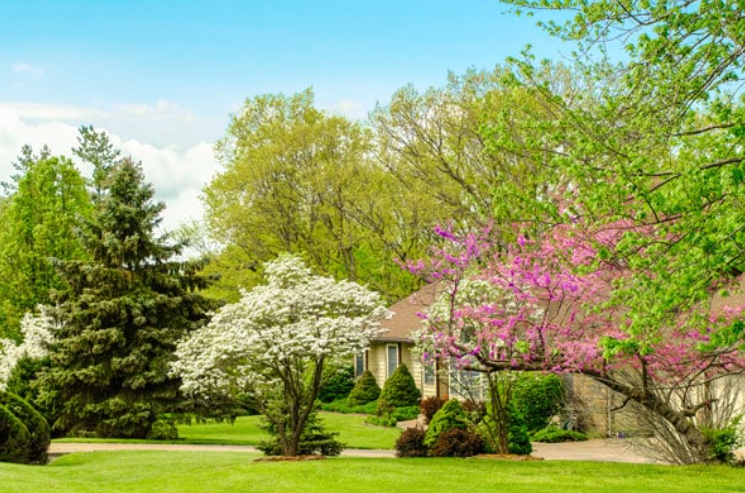
The Eastern redbud is a small native ornamental tree found throughout North Carolina’s forest edges and understory, producing a striking display of magenta-pink flowers directly along its bare branches each spring before the leaves emerge. This tree typically reaches a mature height of 20 to 30 feet and grows successfully across all three of the state’s major regions, from the mountains through the Piedmont and into parts of the Coastal Plain.
Eastern redbud features attractive heart-shaped leaves that turn a pleasant yellow color each fall, adding a second season of visual interest beyond its notable spring bloom period. This tree’s relatively compact size and vivid early spring color have made it one of the most popular native ornamental trees planted throughout North Carolina’s residential landscapes.
Flowering Dogwood
The flowering dogwood holds special significance in North Carolina, having been designated the official state flower, and produces a spectacular display of white or pink bracts each spring, typically reaching a mature height of 15 to 30 feet. This tree naturally grows as an understory species throughout much of North Carolina’s hardwood forests, thriving in the dappled shade found beneath larger canopy trees across the mountains and Piedmont.
Flowering dogwood has faced significant challenges from dogwood anthracnose, a fungal disease that reduced wild populations throughout parts of the state since the 1970s, though resistant cultivars remain widely available for landscape planting. This tree’s bright red fall berries provide an important food source for migrating birds, and its attractive layered branching structure adds visual interest to the North Carolina landscape throughout every season.
Willow Oak
The willow oak is a fast-growing native tree found throughout North Carolina’s Piedmont and Coastal Plain regions, typically reaching a mature height of 60 to 100 feet and easily identified by its narrow, willow-like leaves that distinguish it from most other native oak species. This tree tolerates wetter, poorly drained soils considerably better than many other oaks, making it a common sight throughout the state’s low-lying bottomland forests.
Willow oak has become one of the most widely planted street and shade trees throughout North Carolina’s cities, valued for its relatively fast growth and attractive, uniform canopy shape. This tree’s small, easily managed acorns and adaptability to urban growing conditions have made it a particularly popular choice for municipal plantings throughout Charlotte, Raleigh, and other major North Carolina cities.
Water Oak
The water oak is a common native tree found throughout North Carolina’s Piedmont and Coastal Plain regions, typically reaching a mature height of 50 to 80 feet and thriving in the moist, poorly drained soils common across much of the eastern part of the state. This tree grows relatively quickly compared to many other oak species, though it also tends to have a somewhat shorter overall lifespan, typically 60 to 80 years under average growing conditions.
Water oak produces small, rounded acorns that provide an important food source for wildlife throughout North Carolina’s bottomland and mixed pine-hardwood forests. This tree’s semi-evergreen habit in the milder parts of the state, retaining some leaves through much of the winter in the Coastal Plain, distinguishes it from most other native oaks found in North Carolina’s cooler mountain and Piedmont regions.
Post Oak
The post oak is a slow-growing, drought-tolerant native tree found throughout North Carolina’s drier Piedmont ridges and Coastal Plain sandhills, typically reaching a mature height of 40 to 50 feet. This tree is exceptionally tolerant of poor, dry, compacted soils, often thriving in sites where few other large hardwood species can successfully establish and grow.
Post oak grows notably slowly, sometimes taking more than a century to reach full maturity, but this slow growth is associated with considerable longevity, with some specimens living for more than 300 years. This tree’s distinctive cross-shaped leaf pattern and preference for North Carolina’s driest, most challenging growing sites make it an important component of the state’s oak-hickory forest communities.
Black Walnut
The black walnut is a valuable native hardwood found throughout North Carolina’s mountain and Piedmont regions, typically reaching a mature height of 50 to 75 feet and prized for both its dark, richly grained wood and its large, edible nuts. This tree produces a natural chemical called juglone, released through its roots and fallen leaves, which can inhibit the growth of many other plant species growing nearby, an adaptation that reduces competition for resources.
Black walnut grows best in North Carolina’s deep, fertile bottomland soils, particularly throughout the Piedmont river valleys and mountain coves where soil quality supports its demanding growth requirements. This tree’s wood remains among the most valuable hardwood timber species harvested in North Carolina, commanding premium prices for furniture, veneer, and gunstock production.
Sweetgum
The sweetgum is found throughout North Carolina’s Piedmont and Coastal Plain regions, typically reaching a mature height of 60 to 75 feet and valued for its exceptional, multicolored fall foliage display. This tree’s star-shaped leaves turn vivid shades of yellow, orange, red, and purple in autumn, often displaying several of these colors simultaneously on the same tree throughout the state’s central and eastern forests.
Sweetgum produces distinctive spiky seed pods, sometimes called gumballs, which persist on the tree through much of the winter and are considered by some homeowners to be a landscape maintenance drawback due to the litter they create. This tree’s attractive corky bark ridges, which develop along young branches, provide additional winter visual interest beyond the species’ notable fall color display throughout North Carolina’s lower elevation forests.
American Sycamore
The American sycamore is one of the largest native trees found in North Carolina by trunk diameter, commonly growing along the state’s rivers and floodplains throughout the Piedmont and mountains, typically reaching a mature height of 75 to 100 feet. This tree is easily identified by its mottled, peeling bark, which reveals patches of white, gray, and tan as older bark sheds away from the trunk and branches throughout the growing season.
American sycamore tolerates periodic flooding exceptionally well, making it one of the dominant large trees found along the Catawba, Yadkin, and French Broad river corridors. This tree’s massive trunk diameter, which can exceed 10 feet in old, undisturbed specimens, makes it one of the most visually impressive native trees found anywhere in North Carolina.
River Birch
The river birch is a fast-growing native tree found along North Carolina’s streams, rivers, and floodplain areas throughout the Piedmont and Coastal Plain, typically reaching a mature height of 40 to 70 feet and valued for its attractive, peeling, cinnamon-colored bark. This tree tolerates wet, poorly drained soils considerably better than most other birch species, making it particularly well suited to the floodplain habitats found throughout much of eastern North Carolina.
River birch is notably more resistant to the bronze birch borer, a damaging pest, compared to some other birch species, contributing to its continued popularity as both a native forest tree and a common landscape planting throughout the state. This tree’s multi-stemmed growth habit and attractive exfoliating bark provide year-round textural interest, particularly valuable throughout North Carolina’s mild winter months.
Eastern Red Cedar
The Eastern red cedar, technically a juniper species rather than a true cedar, is one of the most widespread native conifers found throughout North Carolina, typically reaching a mature height of 30 to 50 feet and thriving in a remarkably wide range of soil and moisture conditions. This tree is often among the first woody species to colonize abandoned farmland and disturbed sites throughout the state’s Piedmont region, playing an important early role in North Carolina’s forest succession process.
Eastern red cedar produces small, bluish, berry-like cones that provide an important winter food source for numerous bird species, particularly cedar waxwings, which take their name from their fondness for this tree’s fruit. This tree’s dense, aromatic, rot-resistant wood has been historically valued for fence posts and cedar chests throughout North Carolina’s rural communities.
Black Locust
The black locust is a fast-growing native tree found throughout much of North Carolina, particularly common on disturbed sites, reclaimed land, and forest edges throughout the mountains and Piedmont, typically reaching a mature height of 40 to 60 feet. This tree produces fragrant white flower clusters in late spring that provide an important early-season nectar source for bees across the state.
Black locust has a unique ability to fix atmospheric nitrogen through a symbiotic relationship with soil bacteria, allowing it to thrive in poor, nutrient-depleted soils where many other trees struggle to establish. This tree’s extremely dense, rot-resistant wood has made it historically valuable for fence posts and other applications requiring long-term ground contact durability throughout North Carolina’s rural landscape.
Sourwood
The sourwood is a smaller native tree found throughout North Carolina’s mountains and Piedmont, known for its drooping clusters of small, fragrant white flowers that bloom in mid to late summer, typically reaching a mature height of 25 to 40 feet. This tree produces some of the most vivid and reliable fall color of any native North Carolina tree, with leaves turning brilliant shades of red and burgundy earlier in the season than most other hardwood species.
Sourwood gets its common name from the sour, acidic taste of its leaves, a distinguishing characteristic that has been used historically for identification purposes. This tree’s honey, produced by bees that forage heavily on its summer flowers, is particularly prized throughout western North Carolina, where sourwood grows in sufficient quantity to support a notable regional honey industry.
Longleaf Pine
The longleaf pine is the official state tree of North Carolina and once dominated an estimated 90 million acres across the southeastern United States, though extensive logging and land conversion have reduced this fire-dependent ecosystem to a small fraction of its historic range. This tree can reach a mature height of 80 to 100 feet and can live for more than 300 years, with a distinctive early growth stage called the grass stage, during which young trees resemble a clump of grass for several years before beginning rapid vertical growth.
Longleaf pine is remarkably fire adapted, requiring periodic low-intensity fire to clear competing vegetation and maintain the open, park-like forest structure the species depends on. This tree’s restoration has become a significant conservation priority throughout North Carolina’s Sandhills and Coastal Plain regions, supporting numerous rare and threatened wildlife species that depend on healthy longleaf pine ecosystems.
Bald Cypress
The bald cypress is a distinctive native conifer found throughout North Carolina’s coastal swamps, rivers, and wetlands, typically reaching a mature height of 60 to 100 feet and capable of living for more than 1,000 years in undisturbed old-growth conditions. This tree is unusual among conifers for being deciduous, dropping its needle-like foliage each fall after displaying attractive coppery-orange color.
Bald cypress produces distinctive knobby root growths called knees that protrude above the water surface in swampy habitat, though their exact biological function remains a subject of ongoing scientific discussion. This tree’s tolerance for standing water and periodic flooding makes it one of the dominant large trees found throughout North Carolina’s coastal river swamps and Merchants Millpond-type wetland ecosystems.
Southern Live Oak
The Southern live oak is found along North Carolina’s southeastern coastal region, typically reaching a mature height of 40 to 80 feet with a canopy spread that can exceed the tree’s height, creating the massive, sprawling silhouette the species is famous for. This evergreen oak is remarkably long-lived, with some specimens along the North Carolina coast estimated to be several hundred years old, having survived numerous hurricanes and coastal storms over their lifetimes.
Southern live oak is highly resistant to salt spray and coastal wind, adaptations that make it particularly well suited to the harsh growing conditions found along North Carolina’s barrier islands and coastal communities. This tree’s massive, twisting branches, often draped with Spanish moss in the state’s southeastern coastal counties, have made it an iconic symbol of North Carolina’s coastal landscape.
Water Tupelo
The water tupelo is a native tree found in North Carolina’s coastal swamps and river bottoms, typically reaching a mature height of 80 to 100 feet and often growing directly in standing water throughout much of the year. This tree develops a distinctive swollen, buttressed trunk base, an adaptation that helps provide additional stability in the soft, waterlogged soils of its swamp habitat.
Water tupelo often grows alongside bald cypress throughout North Carolina’s coastal river swamps, together forming some of the state’s most ecologically significant wetland forest communities. This tree’s flowers provide an important nectar source for honeybees, and tupelo honey produced in parts of the southeastern coastal plain is particularly prized for its light color and delayed crystallization.
Black Tupelo
The black tupelo, also called blackgum, is a native tree found throughout North Carolina’s forests from the mountains to the coast, typically reaching a mature height of 30 to 50 feet and known for producing some of the earliest and most reliable fall color of any tree species in the state. This tree’s leaves often begin turning a deep, glossy red in late August or early September, well before most other North Carolina hardwoods begin their seasonal color change.
Black tupelo produces small, dark blue fruit that is highly attractive to birds, particularly during fall migration when the tree’s fruiting coincides with peak bird movement through the state. This tree’s tolerance for both wet and dry soil conditions allows it to grow successfully across all three of North Carolina’s major regions, from mountain coves to coastal wetlands.
Loblolly Bay
The loblolly bay is an evergreen tree native to North Carolina’s Coastal Plain wetlands, typically reaching a mature height of 30 to 50 feet and producing large, camellia-like white flowers throughout the summer months. This tree favors the acidic, poorly drained soils found in North Carolina’s pocosin wetlands, a distinctive shrub-bog ecosystem largely restricted to the southeastern Coastal Plain region.
Loblolly bay is considered a characteristic species of these pocosin habitats, growing alongside other specialized wetland plants adapted to the area’s unique combination of acidic peat soils and periodic fire disturbance. This tree’s glossy, leathery evergreen leaves and attractive summer flowers have made it an increasingly popular choice for native plant landscaping throughout eastern North Carolina.
Atlantic White Cedar
The Atlantic white cedar is a rare native conifer found in North Carolina’s coastal pocosin wetlands and swamp forests, typically reaching a mature height of 50 to 80 feet in the acidic, saturated soils it favors. This tree has experienced significant population declines throughout its range due to historic logging and wetland drainage, with North Carolina hosting some of the more significant remaining populations of this increasingly uncommon species.
Atlantic white cedar wood is notably rot resistant and lightweight, historically valued for boat building and shingle production throughout the state’s coastal communities. This tree’s dense, aromatic foliage and preference for North Carolina’s specialized coastal wetland habitats make it an important target for ongoing conservation and restoration efforts throughout the eastern part of the state.
Sweetbay Magnolia
The sweetbay magnolia is a native evergreen to semi-evergreen tree found throughout North Carolina’s Coastal Plain wetlands, typically reaching a mature height of 30 to 50 feet and producing fragrant, creamy white flowers throughout the summer months. This tree favors moist to wet soils, commonly found growing along the edges of pocosins, swamps, and other wetland habitats throughout the eastern part of the state.
Sweetbay magnolia flowers have a distinctive lemony fragrance, somewhat lighter and more subtle than the heavier scent produced by the related Southern magnolia. This tree’s silvery-white leaf undersides create an attractive shimmering effect when the foliage moves in coastal breezes, adding ornamental value beyond its notable summer flower display.
Southern Magnolia
The Southern magnolia is one of the most iconic native trees found throughout North Carolina’s Piedmont and Coastal Plain regions, typically reaching a mature height of 60 to 80 feet with large, glossy evergreen leaves and enormous, fragrant white flowers. This tree produces flowers that can measure up to 12 inches across, blooming primarily through the late spring and summer months throughout the state’s warmer regions.
Southern magnolia requires more consistent moisture than many drought-tolerant natives, generally performing best with adequate rainfall or occasional supplemental irrigation during dry summer periods. This tree’s dense, evergreen canopy and dramatic flowering display have made it a beloved specimen tree for historic homes and public parks throughout North Carolina’s Piedmont and coastal cities.
Pond Pine
The pond pine is a distinctive native conifer found throughout North Carolina’s Coastal Plain pocosin wetlands, typically reaching a mature height of 40 to 70 feet and specifically adapted to the wet, acidic, poorly drained soils common throughout the region. This tree, like the longleaf pine, is fire adapted, and it can resprout new branches directly from its trunk following fire damage, an unusual survival strategy among conifer species.
Pond pine cones remain tightly closed for years in many populations, only opening to release seed following the heat of a fire moving through the surrounding pocosin vegetation. This tree’s twisted, irregular growth form and strong association with North Carolina’s coastal wetland fire ecology make it an important indicator species for the health of the state’s remaining pocosin habitats.
Cabbage Palmetto
The cabbage palmetto reaches the northern limit of its natural range along North Carolina’s southeastern coastal counties, typically found in maritime forests near the South Carolina border, where it can reach a mature height of 40 to 50 feet. This tree is notably slow growing, particularly in its early years, when it may spend a decade or more developing an underground stem before beginning visible vertical trunk growth above the surface.
Cabbage palmetto tolerates salt spray and sandy coastal soils exceptionally well, adaptations that suit it to the harsh growing conditions found along North Carolina’s southernmost barrier islands and maritime forests. This tree’s presence in North Carolina represents a notable northern outlier for a species otherwise associated primarily with Florida and the Deep South coastal landscape.
American Holly
The American holly is one of the few broadleaf evergreen trees native to North Carolina found across the mountains, Piedmont, and coastal regions, typically reaching a mature height of 30 to 50 feet with distinctive spiny, glossy dark green leaves. This tree produces bright red berries on female trees each winter, providing an important food source for birds during the coldest months when other food options become scarce throughout the state.
American holly requires a male tree growing nearby for successful pollination and berry production, an important consideration for anyone planting this species for its ornamental winter fruit display. This tree’s evergreen foliage and colorful winter berries have made it a traditional choice for holiday decorating throughout North Carolina for well over a century.
Crape Myrtle
The crape myrtle is an extremely popular small ornamental tree throughout North Carolina, particularly common in the Piedmont and Coastal Plain regions, where its heat tolerance allows it to bloom vibrantly through the hottest summer months. This tree typically reaches a mature height of 15 to 25 feet and produces long-lasting flower clusters in shades of pink, red, purple, or white that persist from early summer well into fall.
Crape myrtle also displays attractive exfoliating bark and vivid orange to red fall color, providing multi-season visual interest beyond its notable summer bloom period. This tree’s strong heat and drought tolerance, once established, have made it one of the most commonly planted ornamental trees throughout North Carolina’s Piedmont and coastal residential landscapes.
Southern Red Oak
The Southern red oak, sometimes called Spanish oak, is a native tree found throughout North Carolina’s Piedmont and Coastal Plain regions, typically reaching a mature height of 60 to 80 feet and thriving in the drier, sandier soils common across much of the central and eastern part of the state. This tree features distinctively deep, irregularly lobed leaves with a notably narrow terminal lobe, helping distinguish it from other red oak group species found throughout North Carolina.
Southern red oak tolerates drought and poor soil conditions considerably better than many other oak species, making it well adapted to the drier upland sites found throughout the state’s Sandhills region. This tree’s strong, attractive wood has been historically valued for furniture and flooring production throughout North Carolina’s Piedmont hardwood industry.
Eastern White Pine
The Eastern white pine is found throughout North Carolina’s mountain region, typically reaching a mature height of 80 to 100 feet and easily identified by its soft, blue-green needles arranged in distinctive bundles of five. This tree grows relatively quickly for a conifer, often exceeding 2 feet of height per year under favorable mountain growing conditions, and can live for more than 200 years in undisturbed forest settings.
Eastern white pine’s straight, tall trunk made it historically valuable for ship masts during the colonial period, and the species remains one of the most commonly planted ornamental and timber conifers throughout western North Carolina today. This tree’s soft texture and relatively fast growth have also made it a popular Christmas tree species grown at lower elevations throughout the mountain region, complementing the higher-elevation Fraser fir industry.
Yoshino Cherry
The Yoshino cherry, though native to Japan, has become one of the most beloved flowering ornamental trees planted throughout North Carolina’s Piedmont cities, producing a spectacular display of pale pink to white blossoms each spring, typically reaching a mature height of 30 to 40 feet. This tree blooms relatively early in spring, often in late March throughout much of the state, creating dramatic seasonal displays along streets and in public parks throughout North Carolina’s urban areas.
Yoshino cherry tolerates the state’s varied Piedmont soils reasonably well, though it benefits from good drainage and full sun exposure to produce its best flowering performance. This tree’s relatively brief but visually stunning bloom period has made destinations with large plantings increasingly popular seasonal attractions throughout North Carolina’s larger cities each spring.
Ginkgo
The ginkgo is a highly resilient ornamental shade tree widely planted throughout North Carolina’s urban areas, typically reaching a mature height of 40 to 50 feet and valued for its unique, fan-shaped leaves that turn a brilliant, uniform gold each fall. This tree is highly tolerant of urban pollution, compacted soil, and varied soil conditions, making it particularly well suited to street tree plantings throughout North Carolina’s more developed cities.
Ginkgo grows relatively slowly compared to many other large shade trees, often taking 20 years or more to reach substantial landscape size, but rewards patience with a lifespan that can exceed several centuries. This tree is considered a living fossil, with a lineage tracing back more than 200 million years, making it one of the oldest tree species still commonly planted in North Carolina’s cities today.
Shagbark Hickory
The shagbark hickory is found throughout North Carolina’s mountain and Piedmont forests, easily identified by its distinctive gray bark, which peels away from the trunk in long, curling strips, giving mature trees a notably shaggy, textured appearance. This tree typically reaches a mature height of 60 to 80 feet and produces sweet, edible nuts that were historically an important food source for both Indigenous communities and early North Carolina settlers.
Shagbark hickory grows relatively slowly, often taking several decades to reach significant size, and can live for more than 300 years in undisturbed forest settings throughout the state’s western and central regions. This tree’s extremely hard, dense wood has also been historically valued for tool handles and smoking wood, prized for the distinctive flavor it imparts to meats prepared over hickory smoke throughout North Carolina’s barbecue tradition.