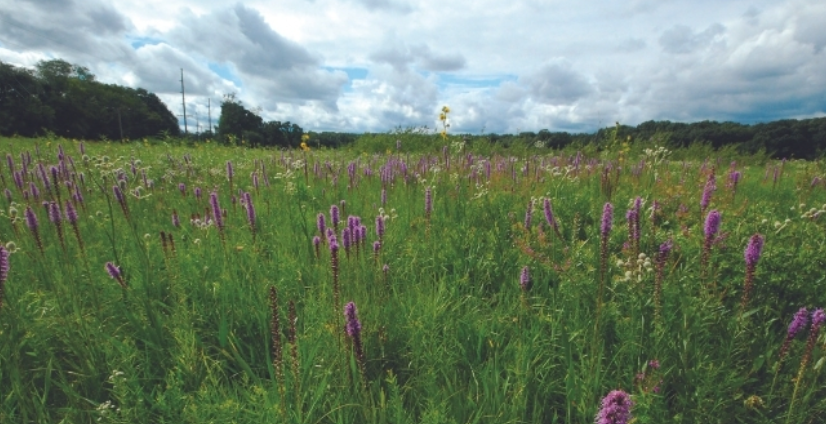
Prairies once covered an estimated 170 million acres of North America, stretching in a vast, largely unbroken band from the Rocky Mountains east to Indiana and from the Canadian prairie provinces south into Texas, making grassland one of the continent’s largest and most significant ecosystems before agricultural conversion dramatically reduced its extent.
Despite their reputation as flat, uniform expanses of grass, prairies are shaped by a surprisingly complex combination of rainfall, soil type, underlying geology, and fire history, producing distinct prairie types that can look and function quite differently from one another even when located just a few hundred miles apart.
Less than 4 percent of North America’s original tallgrass prairie remains intact today, making surviving prairie remnants some of the rarest and most threatened habitat types on the continent, rarer in some regions than old-growth rainforest. Prairies are also defined significantly by what lies beneath the surface rather than above it, since many prairie grass and wildflower species invest the majority of their biomass in extensive root systems that can reach 10 feet or more underground, an adaptation that allows prairie plants to survive fire, drought, and grazing pressure that would destroy most other plant communities.
This list explores 15 types of prairies, distinguished by rainfall, soil, geography, and plant composition, that together make up one of the most ecologically important and historically underappreciated landscapes in North America.
Tallgrass Prairie
The tallgrass prairie historically covered the wettest, easternmost portion of North America’s grassland region, stretching from Indiana and Illinois west through Iowa and into parts of Kansas and Nebraska, typically receiving between 30 and 40 inches of annual rainfall. This prairie type is named for its towering dominant grasses, particularly big bluestem, which can reach heights of 6 to 8 feet by late summer, tall enough that early settlers famously described being able to tie stalks together over the heads of a person riding on horseback.
Tallgrass prairie soils rank among the most fertile in the world, a quality that made this prairie type the primary target for conversion to row-crop agriculture beginning in the mid-1800s and explains why less than 4 percent of the original tallgrass prairie ecosystem survives today. The Flint Hills region of Kansas contains the largest remaining contiguous expanse of tallgrass prairie in North America, preserved largely because the area’s thin, rocky soil resisted the plow that eliminated tallgrass prairie across most of its former range.
Mixed-Grass Prairie
The mixed-grass prairie forms a broad transitional band between the tall, moisture-loving grasses found farther east and the short, drought-adapted grasses found farther west, typically receiving between 15 and 25 inches of annual rainfall across the central Great Plains. This prairie type gets its name from the way tall grass species and short grass species grow together within the same landscape, with the relative proportion of each shifting from year to year depending on how much precipitation a given growing season receives.
Mixed-grass prairie plant communities are considered unusually dynamic compared to other prairie types, since a series of wet years can allow taller species to temporarily dominate before a subsequent drought cycle shifts the balance back toward shorter, more drought-tolerant grasses. This prairie type historically supported enormous bison herds, and states like Nebraska, South Dakota, and Oklahoma still contain some of the largest surviving expanses of mixed-grass prairie found anywhere in North America.
Shortgrass Prairie
The shortgrass prairie occupies the driest portion of North America’s grassland region, extending across the High Plains of eastern Colorado, western Kansas, and the Texas Panhandle, typically receiving less than 15 inches of annual rainfall. This prairie type is dominated by low-growing, sod-forming grasses such as blue grama and buffalo grass, which rarely exceed a few inches in height and form a dense, tightly interwoven root mat rather than growing as individual tufted plants.
Shortgrass prairie soils and vegetation are remarkably resilient to grazing pressure, having evolved under intense pressure from massive historic bison herds that once numbered in the tens of millions across the Great Plains. This prairie type remains more intact today than tallgrass or mixed-grass prairie in many areas, largely because its low rainfall makes the land less suitable for row-crop agriculture, though it now supports extensive cattle ranching operations across much of its historic range.
Sand Prairie
The sand prairie develops on deep, well-drained sandy soils, typically found along ancient river terraces, ridges left behind by retreating glaciers, or old sand dune formations scattered throughout the Midwest and Great Plains. This prairie type supports a distinctive plant community adapted to rapid water drainage and low soil fertility, including specialized grasses like little bluestem and prairie sandreed alongside wildflowers capable of tolerating the intense heat that sandy soil surfaces can reach during summer afternoons.
Sand prairie plants often develop unusually deep or extensive root systems compared to their counterparts on richer soils, an adaptation necessary to reach the water table beneath the fast-draining sand. This prairie type frequently harbors rare and specialized wildlife, including certain butterfly and tiger beetle species that depend specifically on the open, sparsely vegetated patches of bare sand found within a healthy sand prairie ecosystem.
Gravel Hill Prairie
The gravel hill prairie, sometimes called a loess hill prairie in reference to the fine, wind-deposited soil that forms many of these landscapes, develops on steep, well-drained slopes and bluffs typically found along major river valleys throughout the Midwest. This prairie type occurs on terrain too steep and erosion-prone for practical cultivation, which has allowed many gravel and loess hill prairies to survive as isolated remnants even in regions where surrounding flatland prairie was converted to farmland more than a century ago.
Gravel hill prairies typically face south or west, exposing them to intense sun and wind that create unusually dry, harsh growing conditions compared to the surrounding landscape, conditions that favor drought-adapted plant species more commonly associated with prairies much farther west. The loess hill prairies found along the Missouri River in western Iowa are considered a particularly significant example of this prairie type, supporting plant species more typically found hundreds of miles away on the Great Plains proper.
Wet Prairie
The wet prairie develops in low-lying areas with poor drainage, seasonally saturated soil, or a consistently high water table, typically found in shallow depressions, old glacial lake basins, and floodplain terraces throughout the historic tallgrass and mixed-grass prairie region. This prairie type supports moisture-loving grasses and wildflowers considerably different from those found in drier prairie types, including species like prairie cordgrass, which can grow more than 6 feet tall in the saturated soil conditions this prairie type provides.
Wet prairies historically played an important hydrological role, temporarily storing floodwater and slowly releasing it back into the water table, a function that has drawn increasing attention from conservation and restoration efforts in recent decades. This prairie type proved particularly attractive for agricultural drainage during the 1800s and 1900s, since the same rich, waterlogged soils that supported dense wet prairie vegetation also became highly productive once drained and converted to farmland, making wet prairie one of the most heavily lost prairie types in North America.
Mesic Prairie
The mesic prairie occupies a middle ground between the saturated conditions of wet prairie and the notably dry conditions found in dry prairie, typically developing on gently rolling terrain with well-drained but consistently moist soil. This prairie type is often considered the classic tallgrass prairie community, supporting the greatest overall diversity of grass and wildflower species of any prairie moisture type, sometimes exceeding 200 plant species within a single high-quality remnant.
Mesic prairie soils tend to be deep, dark, and exceptionally fertile, a combination that made this prairie type especially attractive for conversion to agriculture and explains why so little mesic prairie survives intact today compared to its once-widespread historic extent. This prairie type reaches peak bloom later in the growing season than many other prairie types, with a dramatic late-summer display of purple, yellow, and white wildflowers that peaks alongside the tallgrass species that dominate the mesic prairie canopy.
Dry Prairie
The dry prairie develops on thin, rocky, or steeply sloped soils that drain quickly and retain little moisture, conditions found throughout ridge tops, south-facing slopes, and shallow-soil areas scattered across the broader tallgrass and mixed-grass prairie region. This prairie type supports shorter, more drought-tolerant grasses and wildflowers compared to mesic prairie, often including species like little bluestem and prairie dropseed that can tolerate extended dry periods without significant dieback.
Dry prairie plant communities frequently include specialized wildflowers with waxy or hairy leaf surfaces, adaptations that help reduce water loss during the intense heat and direct sun exposure typical of these thin-soil sites. This prairie type’s poor agricultural potential has made it one of the more frequently preserved prairie types, since the same rocky, shallow soil that limits plant growth also made large areas of dry prairie unprofitable to convert to row-crop farming.
Blackland Prairie
The Blackland Prairie historically covered a broad band running through central Texas and into parts of Alabama and Mississippi, named for its distinctive dark, clay-rich soil formed over underlying chalk and limestone deposits. This prairie type’s heavy clay soil expands significantly when wet and contracts and cracks deeply when dry, a shrink-swell characteristic that creates challenging growing conditions favoring deep-rooted prairie grasses over most woody plant species.
Blackland Prairie soil proved to be exceptionally fertile once cleared and plowed, and the Texas Blackland Prairie in particular became one of the most agriculturally productive and consequently most thoroughly converted prairie regions in North America, with well under 1 percent of the original ecosystem remaining intact today. This prairie type historically supported a somewhat different plant community than tallgrass prairie farther north, including species better adapted to the region’s hot, humid summers and generally milder winters.
Palouse Prairie
The Palouse Prairie historically covered rolling hill country across eastern Washington, northern Idaho, and parts of Oregon, an area shaped by deep, wind-deposited loess soil that in places exceeds 200 feet in depth, among the thickest loess soil deposits found anywhere on Earth. This prairie type developed under a distinctive Pacific Northwest climate pattern featuring relatively wet winters and dry summers, supporting bunchgrass species like Idaho fescue and bluebunch wheatgrass rather than the sod-forming grasses more typical of Great Plains prairie types.
Palouse Prairie soil proved to be exceptionally productive for wheat cultivation once the region was settled, and the area today remains one of the most productive dryland wheat farming regions in the United States, a transformation that eliminated an estimated 99 percent of the original Palouse Prairie ecosystem. This prairie type’s rolling, dune-like hill topography, a direct result of its deep loess soil, gives the region a visually distinctive rippled landscape that remains recognizable even where the native prairie vegetation itself has long since been replaced by cultivated wheat fields.
Coastal Prairie
The coastal prairie developed along the Gulf Coast region stretching from southwestern Louisiana through southeastern Texas, historically covering nearly 9 million acres of flat to gently rolling terrain within a relatively short distance of the Gulf of Mexico shoreline. This prairie type receives considerably more rainfall than most other North American prairie types, often exceeding 40 inches annually, yet still supported grassland rather than forest due to a combination of poorly drained clay soils, periodic fire, and historic grazing pressure from bison and other large herbivores.
Coastal prairie plant communities include a number of specialized species adapted to the region’s humid, mild climate, and the ecosystem historically provided critical habitat for species like the Attwater’s prairie chicken, a bird now critically endangered following the loss of more than 99 percent of the coastal prairie ecosystem it depends on. This prairie type has become one of the most imperiled grassland ecosystems in North America, with only scattered remnants surviving amid the extensive rice farming, cattle ranching, and urban development that have transformed the region since the late 1800s.
Serpentine Prairie
The serpentine prairie develops on outcrops of serpentine rock, an unusual geological formation containing high concentrations of magnesium and heavy metals combined with low levels of calcium and other nutrients most plants require for healthy growth. This prairie type is found in scattered, often small patches across parts of California, the Appalachian region, and a handful of other locations where serpentine rock reaches the surface, creating soil conditions too chemically challenging for most common plant species to tolerate.
Serpentine prairie plant communities are highly specialized, often including rare or endemic species found nowhere else, since the unusual soil chemistry effectively excludes competition from more common grassland and forest species that dominate the surrounding landscape. This prairie type’s naturally low fertility and toxic soil chemistry have provided an unusual form of protection from agricultural conversion, since serpentine soil is generally too poor to support profitable farming, allowing many serpentine prairie remnants to persist even in otherwise heavily developed regions.
Prairie Pothole Region
The Prairie Pothole Region stretches across the northern Great Plains from Iowa and Minnesota through the Dakotas and into the Canadian prairie provinces, characterized by thousands of small, shallow wetland depressions, or potholes, scattered across the landscape and formed by melting ice blocks left behind as glaciers retreated roughly 10,000 to 12,000 years ago. This prairie type is considered one of the most important waterfowl breeding habitats in North America, with the region’s dense concentration of small wetlands surrounded by grassland producing an estimated 50 to 80 percent of the continent’s duck population in a typical year.
Prairie Pothole Region wetlands vary considerably in size and permanence, ranging from small depressions that hold water only briefly each spring to larger, more permanent ponds that support fish and a wider range of aquatic wildlife throughout the year. This prairie type has experienced substantial wetland loss due to agricultural drainage, and ongoing conservation programs continue working to protect and restore the region’s remaining potholes given their outsized importance to North American waterfowl populations.
Fescue Prairie
The fescue prairie occupies the northernmost extent of North America’s grassland region, found primarily across the aspen parkland transition zone of the Canadian prairie provinces, particularly Alberta and Saskatchewan, where cooler temperatures and a shorter growing season shape a distinctive grassland community. This prairie type is named for its dominant grass species, rough fescue, a cool-season bunchgrass well adapted to the region’s cold winters and relatively brief summer growing period.
Fescue prairie historically formed a transitional zone between the mixed-grass prairie found farther south and the boreal forest found farther north, creating a patchwork landscape of grassland interspersed with aspen groves. This prairie type has been extensively converted to agriculture since the early 1900s, and Canadian conservation organizations now consider fescue prairie one of the most endangered grassland ecosystems in North America, with only a small fraction of its original extent remaining in a relatively undisturbed condition.
Desert Grassland
The desert grassland, sometimes called semi-desert prairie, occupies the transition zone between true prairie and desert habitat, typically found across parts of southeastern Arizona, southern New Mexico, and northern Mexico, where annual rainfall generally falls below 12 inches. This prairie type supports a sparse but distinctive plant community dominated by drought-adapted grasses like black grama and tobosa grass, interspersed with scattered desert shrubs and cacti that increase in density as conditions become progressively drier.
Desert grassland has experienced significant change over the past century, with many areas shifting toward denser shrub cover due to a combination of historic overgrazing, fire suppression, and shifting climate patterns that have allowed woody desert plants to expand into what was once more open grassland. This prairie type supports a number of specialized wildlife species adapted to its arid, open conditions, including several grassland bird species that have experienced steep population declines as desert grassland habitat has become increasingly fragmented and altered across its historic range.