Types of Plums: Popular Varieties, Origins, and What Makes Each Unique
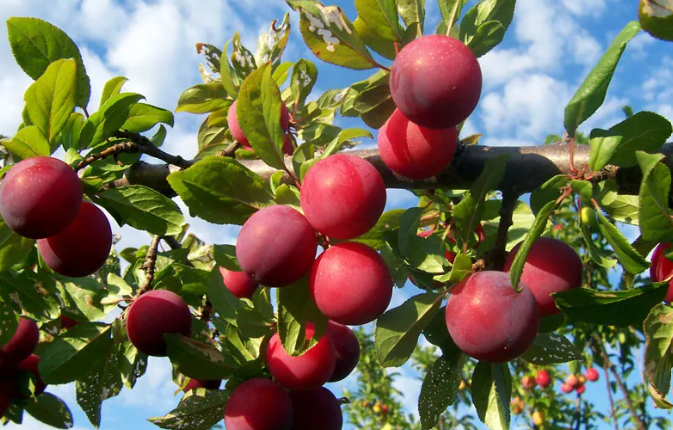
Plums are among the most diverse stone fruits grown in temperate and subtropical regions. Although many people picture a dark-purple fruit when they hear the word plum, plums can also be yellow, green, red, almost black, or even mottled. Their flesh may be yellow, amber, greenish, orange, pink, or deep red, while the fruit itself can range from small and oval to exceptionally large and heart-shaped.
Botanically, the word plum covers several species and their cultivated hybrids, rather than one single uniform fruit. The two most commercially important groups are European plums (Prunus domestica) and Japanese-type plums (Prunus salicina and related hybrids). Japanese plum production has particularly influenced the modern fresh-fruit market, while European plums remain important for fresh eating, cooking, drying, and prune production.
There is also a fascinating geographical story behind these fruits. Japanese-type plums actually originated from China and were later domesticated in Japan, while many modern American cultivars were developed from imported Japanese plum material. California subsequently became a major center of plum breeding and production.
The scale of plum production is substantial. Global production of plums and sloes was about 12.5 million tonnes in 2023, with China accounting for roughly 55% of the total. California, meanwhile, produces the overwhelming majority of fresh plums grown commercially in the United States.
One terminology point is worth making before looking at the varieties: technically, many names commonly described as “types of plums” are cultivars. A cultivar is a named cultivated selection maintained through propagation rather than simply a naturally occurring variety.
1. Santa Rosa Plum
Origin: California, United States
Type: Japanese plum (Prunus salicina) hybrid
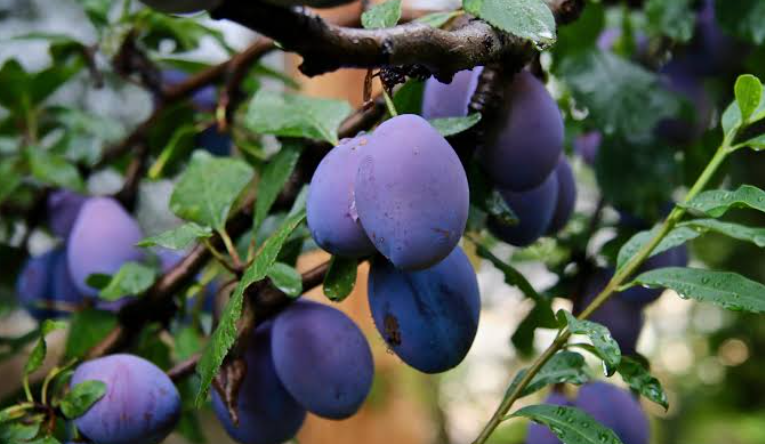
Santa Rosa is one of the most influential Japanese-type plums ever developed. It was bred by Luther Burbank in California and introduced in 1906. The fruit typically has reddish-purple skin, juicy flesh and a strong, characteristic plum flavor. It became an important parent and pollinizer for numerous later cultivars. Genetic studies also show how deeply Santa Rosa is embedded in the ancestry of modern Japanese-type plums.
2. Satsuma Plum
Origin: Satsuma, Japan
Type: Japanese plum
Satsuma is particularly recognizable for its deep-red flesh. Its history is unusual: a tree was sent from Yokohama to Luther Burbank in California in 1885, and Burbank named it the “Blood Plum of Satsuma” after the Japanese province. The fruit is generally medium-sized, juicy and richly flavored.
3. Shiro Plum
Origin: Japan
Type: Japanese plum
Shiro is an early-season plum distinguished by its round shape and yellow to light-green skin. Its yellow flesh is mild and sweet, making it useful for eating fresh as well as cooking and preserving. It has been grown since at least the late nineteenth century and is also valued as a pollinizer for several Japanese plum cultivars.
4. Methley Plum
Origin: United States, with Japanese-type ancestry
Type: Japanese plum
Methley is an early-ripening plum with purple skin, reddish flesh and a juicy texture. It is particularly notable because it is partially to largely self-fruitful and can also serve as a useful pollen source for other Japanese plums. It has been grown in the southern United States for many decades.
5. Mariposa Plum
Origin: California, United States
Type: Japanese plum
Mariposa produces attractive red-fleshed fruit and is associated with the California plum-breeding tradition. The cultivar was developed in the 1930s and has been especially useful in warmer growing regions. Its large fruit and strongly colored flesh make it popular with people who want a plum that looks dramatically different when cut open.
6. Burbank Plum
Origin: California, United States; derived from Japanese material
Burbank was selected by Luther Burbank from Japanese plum material. The original seed came from Japan in the nineteenth century. Burbank’s work with this material helped establish the foundation of the modern Japanese-type plum industry in the United States. The fruit is generally attractive, sweet and suitable for fresh eating.
7. Wickson Plum
Origin: California, United States
Type: Japanese-type hybrid
Wickson was developed by Luther Burbank from Burbank × Kelsey. It was released in 1892 and is known for its large, heart-shaped fruit and unusual yellowish coloration. Historical genetic research has identified Wickson as an important cultivar in the ancestry of several other plum types.
8. Elephant Heart Plum
Origin: California, United States
Type: Japanese-type hybrid
Elephant Heart was developed by Luther Burbank and is famous for its large fruit and dark red flesh. Unlike many plums with pale yellow interiors, Elephant Heart can have a striking reddish interior when fully ripe. It is useful for fresh eating and canning.
9. Beauty Plum
Origin: California, United States
Type: Japanese plum
Beauty is an early plum that produces heart-shaped fruit. Its skin can develop green to reddish tones while the flesh becomes amber. It ripens early and is valued primarily as a fresh-eating plum. Because the fruit does not store especially well, it is better suited to eating soon after harvest.
10. Black Amber Plum
Origin: Fresno, California, United States
Type: Japanese plum
Black Amber is a relatively modern cultivar compared with historic plums such as Burbank. It resulted from a cross between Friar and Queen Rosa and was released in 1980. The fruit has very dark purple-blue skin and yellow flesh, creating a strong contrast when cut open.
11. Friar Plum
Origin: Fresno, California, United States
Type: Japanese plum
Friar was developed from Gaviota × Nubiana and released in 1968. It produces large, dark-skinned fruit with pale flesh and is a relatively late-ripening cultivar. It represents the sophisticated breeding work that emerged from California’s commercial plum industry during the twentieth century.
12. Angeleno Plum
Origin: California, United States
Type: Japanese plum
Angeleno is a large, late-season plum with attractive dark-red skin and pale yellow flesh. It originated from open-pollinated seedlings associated with Queen Ann and was released in California in the twentieth century. The fruit’s firm texture gives it good commercial handling qualities.
13. Black Diamond Plum
Origin: England
Type: Japanese-type plum
Black Diamond is associated with the later generation of Japanese-type plum breeding. It was developed from Angeleno × open pollination. The cultivar demonstrates how Japanese plum genetics spread far beyond Japan and California, becoming the raw material for breeding programs in other countries.
14. Queen Rosa Plum
Origin: California, United States
Type: Japanese-type hybrid
Queen Rosa is part of the complex ancestry of several modern Japanese-type plums. It was produced from Santa Rosa × Queen Ann. Its importance is therefore not limited to the fruit itself; it is also valuable from a breeding-history perspective.
15. Queen Ann Plum
Origin: California, United States
Type: Japanese-type hybrid
Queen Ann resulted from Gaviota × El Dorado, two cultivars associated with Luther Burbank’s breeding tradition. It produces relatively large fruit and has contributed genetic material to later cultivars, including Queen Rosa and some modern commercial plums.
16. Red Heart Plum
Origin: California, United States
Type: Japanese-type hybrid
Red Heart came from Duarte × Wickson. It produces large fruit with reddish skin and reddish flesh. Its ancestry illustrates how early Burbank cultivars continued to serve as building blocks for subsequent generations of plum breeding.
17. Hollywood Plum
Origin: United States
Type: Japanese plum
Hollywood is known for its attractive reddish-purple skin and red flesh. It is a midseason plum and has been used both as a fruit cultivar and in breeding. Its strongly colored flesh makes it particularly distinctive among Japanese-type plums.
18. El Dorado Plum
Origin: California, United States
Type: Japanese-type plum
El Dorado is an older California plum associated with the Burbank breeding era. It produces large, oblong fruit with purple skin and amber flesh. It also became part of the ancestry of later cultivars, including Queen Ann.
19. Ozark Premier Plum
Origin: United States
Type: Japanese-American hybrid
Ozark Premier is valued for its bright red skin, yellow flesh and relatively early harvest. The flesh has a somewhat tart character compared with very sweet dessert plums. It is also used in pollination combinations with other Japanese-type cultivars.
20. Gracious Plum
Origin: North Dakota, United States
Type: Japanese-American hybrid
Gracious was developed at the Northern Great Plains Experiment Station. It is a cross between Japanese and American plum types, producing yellow-orange fruit with firm, sweet and juicy flesh. Its ancestry gives it characteristics that differ from standard Japanese plums.
21. Zaohuang Plum
Origin: Anhui, China
Type: Japanese plum (Prunus salicina)
Zaohuang is a Chinese plum characterized by yellowish skin and flesh. It is one of numerous local Chinese P. salicina cultivars that demonstrate the enormous diversity within the species from which many Japanese-type commercial plums ultimately descend.
22. Xigua Plum
Origin: Fujian, China
Type: Japanese plum
Xigua is a Chinese plum with small fruit and purple skin and flesh. It is reported to mature early and produce high yields. Its existence highlights how different Chinese plum populations can be from the familiar California cultivars found in Western supermarkets.
23. Zaoheiguan Plum
Origin: Fujian, China
Type: Japanese plum
Zaoheiguan is notable for relatively large fruit, dark skin and red flesh. It is one of the Chinese cultivars documented in genetic-diversity research on Prunus salicina.
24. Zaonai Plum
Origin: Fujian, China
Type: Japanese plum
Zaonai produces large fruit with light-green skin and yellow flesh. It belongs to a group of local Chinese plum resources that are important for understanding the genetic diversity available for future breeding.
25. Qingnai Plum
Origin: Fujian, China
Type: Japanese plum
Qingnai is another Chinese P. salicina cultivar. Its fruit can be large, with greenish-yellow skin and light-yellow flesh. It ripens later than some of the very early Chinese selections.
26. Oishi Wase Plum
Origin: Japan
Type: Japanese plum
Oishi Wase is an early Japanese plum with relatively small fruit. The skin can combine green-yellow and reddish coloration, while the flesh is red. It has also been reported to have useful cold and drought tolerance.
27. Taiyo Plum
Origin: Japan
Type: Japanese plum
Taiyo is a Japanese cultivar that produces medium-sized purple fruit. It is representative of the continuing Japanese breeding tradition that developed after Prunus salicina was introduced and cultivated in Japan.
28. Akihime Plum
Origin: Japan
Type: Japanese plum
Akihime is a Japanese cultivar producing relatively large purple fruit with yellow flesh. It is a later-season plum and has been included in scientific evaluations of Japanese plum genetic diversity.
29. Formosa Plum
Origin: United States
Type: Japanese plum
Formosa is an older Japanese-type cultivar associated with American plum cultivation. Its exact parentage is not clearly documented in all modern references, which is a useful reminder that the ancestry of some historic cultivars is less certain than that of newer named crosses.
30. Early Golden Plum
Origin: Canada
Type: Japanese-type plum
Early Golden is associated with a chance seedling of either Burbank or Shiro. It produces early-season golden fruit and illustrates how chance seedlings have sometimes become valuable named cultivars in fruit production.
European and European-Type Plums
European plums form a separate and very important branch of plum history. Many belong to Prunus domestica, a species whose exact original formation remains complicated. European plum cultivars include dessert plums, cooking plums, damsons, greengages and prune types.
Unlike Japanese-type plums, many European cultivars are well suited to drying because their fruit characteristics allow the flesh to concentrate sugars as moisture is removed.
31. Stanley Plum
Origin: New York, United States
Type: European plum
Stanley is one of the best-known European plum cultivars. It produces medium-sized, dark-blue, oval fruit with yellow flesh and is particularly valued for drying into prunes. Stanley is self-fruitful and has become an important cultivar in commercial and home orchards.
32. Italian Prune Plum
Origin: Europe, traditionally associated with Italy
Type: European plum
Italian Prune is a classic European plum used for both fresh eating and drying. Its dark-purple skin and firm flesh make it particularly suitable for producing prunes. It is sometimes called Fellenberg in horticultural references.
33. Green Gage Plum
Origin: France
Type: European plum
Green Gage is one of the classic dessert plums. Its green skin can remain green even when the fruit is ripe, which makes judging maturity by color alone misleading. The flesh is sweet and richly flavored, with a texture prized for fresh eating and preserves.
34. Mirabelle de Nancy
Origin: Lorraine, France
Type: Mirabelle plum
Mirabelle de Nancy is a small, golden-yellow plum associated with northeastern France. Mirabelle plums are especially important in Lorraine, where they have become closely associated with regional food traditions. The small fruit is excellent for preserves, desserts and other culinary uses.
35. Mirabelle de Metz
Origin: Metz region, France
Type: Mirabelle plum
Mirabelle de Metz is another traditional French mirabelle. Its small golden fruit has a concentrated sweet flavor that makes it particularly useful for cooking and preserving. It is one of the cultivars included in modern European plum pollination guides.
36. Damson
Origin: Europe; ancient European plum group
Type: Damson plum
Damsons are small European plums generally characterized by blue, purple or almost black skin and strongly flavored flesh. Their tartness makes them especially useful for jams, sauces and preserves rather than simply eating out of hand.
37. Shropshire Prune
Origin: England
Type: European plum
Shropshire Prune, also called Bluefre in some horticultural contexts, is an old European plum associated with English growing traditions. It produces dark fruit with distinctive flavor and is particularly useful for processing and preserving. Ontario horticultural information lists Bluefre as a productive, self-fruitful cultivar.
38. Bluefre Plum
Origin: Europe
Type: European plum
Bluefre is a dark-fruited European plum valued for processing. It is self-fruitful and productive, and the fruit hangs well on the tree. The cultivar has also been investigated for suitability for mechanical harvesting.
39. Valor Plum
Origin: Canada
Type: European plum
Valor was developed for commercial production and produces medium-to-large violet-blue fruit with yellowish flesh. Compared with some traditional European cultivars, Valor is notable for its productivity and relatively good fresh-market quality.
40. President Plum
Origin: England
Type: European plum
President is a large, late-season European plum with dark skin and firm flesh. Its fruit is suitable for fresh eating and processing. The cultivar is also notable for comparatively good resistance to black knot compared with several other European plum cultivars in some evaluations.
41. Victoria Plum
Origin: England
Type: European plum
Victoria is perhaps one of Britain’s most recognizable garden plums. It produces oval fruit with reddish-purple skin and yellow flesh. The fruit is useful both fresh and cooked, which explains its enduring popularity in home gardens.
42. Czar Plum
Origin: England
Type: European plum
Czar is an old English plum traditionally grown for culinary purposes. Its fruit tends toward dark purple coloration and yellow flesh. It is particularly useful in pies, preserves and other cooked dishes.
43. Coe’s Golden Drop
Origin: England
Type: European plum
Coe’s Golden Drop is an old English plum distinguished by its large, elongated golden-yellow fruit. It is considered a classic dessert and preserving plum. Its unusual color makes it easy to distinguish from the dark-skinned European prune types.
44. Belle de Louvain
Origin: Belgium
Type: European plum
Belle de Louvain is a large European plum associated with Belgium. The fruit has dark coloration and firm flesh and can be used for both fresh eating and cooking. It is a useful example of how European plum breeding produced cultivars suited to both orchard and kitchen use.
45. Empress Plum
Origin: United States/European plum breeding tradition
Type: European plum
Empress is a large, late-maturing plum with firm flesh. It is commonly regarded as a fresh-market European plum and has also been included among cultivars grown commercially in North America.
46. Bluebyrd Plum
Origin: North American European-plum breeding
Type: European plum
Bluebyrd is a modern European-type cultivar producing dark-blue fruit with amber flesh. Its firm fruit can be useful where growers need a plum that handles harvesting and transport better than softer dessert varieties.
47. Italian Early Plum
Origin: Europe
Type: European plum
Italian Early is an earlier relative of the traditional Italian/Fellenberg plum group. It was developed to provide European-plum characteristics at an earlier point in the harvest season. Such early cultivars help orchards extend the period over which European plums can be harvested.
48. Vanette Plum
Origin: Canada
Type: European plum
Vanette was developed from Early Rivers × Stanley. It produces medium-to-large purple-blue fruit with firm flesh and is a useful example of deliberate European plum breeding for fruit quality and production.
49. Valerie Plum
Origin: Canada
Type: European plum
Valerie was developed from a Valor × California Blue seedling. It produces medium-to-large violet-blue fruit with yellow-green flesh. The cultivar was selected partly for its attractive fruit quality and earlier ripening compared with several traditional European plums.
50. Victory Plum
Origin: Canada
Type: European plum
Victory produces large, attractive, heart-shaped fruit with dark violet-blue skin and yellow-green flesh. It is a productive cultivar intended primarily for fresh-market use.
51. Vision Plum
Origin: Canada
Type: European plum
Vision is a late-season European plum with large, oblong, dark-blue fruit. Its freestone flesh and high fruit quality make it particularly interesting for fresh consumption. Ontario trials place it among the later-ripening cultivars.
52. Vibrant Plum
Origin: Canada
Type: European plum
Vibrant is an early European plum cultivar with violet-blue skin and amber-colored flesh. It was developed as part of Canadian plum breeding and is notable for its relatively early harvest compared with later European cultivars.
53. Violette Plum
Origin: Canada
Type: European plum
Violette produces large, oblong fruit with bluish-black skin and yellow-green flesh. It is a midseason cultivar and has been noted for its antioxidant content as well as its fruit quality.
54. Verity Plum
Origin: Canada
Type: European plum
Verity belongs to the Canadian breeding group of European plums. It was selected for orchard performance and fruit quality and is one of a number of cultivars developed to broaden the harvest window beyond traditional Stanley and Italian types.
55. Voyageur Plum
Origin: Canada
Type: European plum
Voyageur is another Canadian European-plum cultivar. Its dark fruit and good firmness make it useful for fresh markets. It belongs to the group of newer cultivars bred partly to improve upon the characteristics of older European standards.
Additional Plum Types From Around the World
The final group demonstrates how broad the word “plum” can become when local cultivars and specialized breeding material are considered.
56. Chuk Plum
Origin: Russia
Type: Japanese plum–cherry plum hybrid
Chuk is an interspecific hybrid involving Prunus salicina and Prunus cerasifera. It was produced from the Russian breeding combination Skoroplodnaya × Otlichnitsa. Such hybrids are interesting because they combine genetic material from two different plum groups.
57. Desertnaya Rannaya Plum
Origin: Ukraine
Type: Japanese plum hybrid
Desertnaya Rannaya was developed from Wickson × Prunus cerasifera Tavricheskaya. Its pedigree shows how cultivars developed in California became breeding parents in Eastern European programs.
58. Dofi Sandra Plum
Origin: Italy
Type: Japanese-type plum
Dofi Sandra is an Italian cultivar developed from Black Gold × Burmosa. It belongs to the more modern generation of Japanese-type plum breeding rather than the classic nineteenth-century cultivars.
59. Naidyona Plum
Origin: Eastern Europe
Type: Japanese plum
Naidyona is a Japanese-type plum included in European germplasm collections and scientific evaluations. Its presence in European breeding collections illustrates how Prunus salicina cultivars have traveled extensively from their East Asian origins.
60. Yevraziya Plum
Origin: Eastern Europe/Russia
Type: Plum hybrid
Yevraziya is an unusual cultivar because its genetic background is more complex than that of a straightforward Japanese plum. It has been included in European collections and identified as a highly polyploid cultivar in scientific research.
How These 60 Plums Differ
Looking at these cultivars side by side reveals why there is no single “typical” plum. Their differences can be organized into several practical categories.
Skin color
Plums may have green, yellow, red, purple, blue, violet or nearly black skin. Some, such as Green Gage, can remain green even when ripe, while Satsuma is famous for its red flesh and dark red exterior.
Flesh color
Flesh is equally diverse. Yellow and amber flesh is common, but cultivars such as Satsuma, Mariposa and Elephant Heart can produce striking red or reddish interiors. Genetic research on Japanese-type plums documents substantial variation in both skin and flesh pigmentation.
Freestone versus clingstone
Another important distinction is the relationship between the flesh and the stone. Freestone plums release the pit relatively easily, making them convenient for eating and processing. Clingstone plums hold the flesh more tightly to the stone.
For example, Stanley and Friar are generally freestone, while some cultivars such as Santa Rosa are clingstone or partially clingstone.
Taste
Taste can range from intensely sweet to distinctly tart. Dessert cultivars such as Green Gage are prized for rich sweetness, while Damsons have a sharper flavor that works particularly well in preserves.
Harvest season
Plums also provide a surprisingly long harvest window. Japanese cultivars commonly mature earlier, while many European cultivars ripen later. California horticultural guidance notes that both major commercial groups generally require roughly 140–170 days to mature a crop, although the actual harvest date varies considerably by cultivar and climate.
Japanese Plums vs. European Plums
| Characteristic | Japanese-type plums | European plums |
|---|---|---|
| Main species | Prunus salicina and hybrids | Prunus domestica |
| Historical origin | China, later domesticated in Japan | Europe/West Asia; complex ancient ancestry |
| Typical fruit | Large, juicy and colorful | Often firmer and more elongated |
| Fresh market | Extremely important | Important but also heavily used for processing |
| Harvest | Generally earlier | Often later |
| Common colors | Red, purple, yellow, green | Blue, purple, green, yellow |
| Examples | Santa Rosa, Satsuma, Shiro | Stanley, Victoria, Green Gage |
| Drying | Some varieties less suitable | Many cultivars excellent for drying |
Japanese-type plums originated in China and were later domesticated in Japan, despite the widespread English name “Japanese plum.” California eventually became a major center for commercial production and breeding.
Why There Are So Many Plum Varieties
The huge number of plum cultivars is not accidental. Breeders have selected plums for different combinations of fruit size, sweetness, skin color, flesh color, firmness, harvest date, productivity, disease tolerance, pollination behavior and suitability for shipping or processing.
Luther Burbank was especially influential. His work with Japanese plum material imported into California produced or contributed to numerous cultivars that later became ancestors of other commercially important plums. Research into Japanese-type plum genetics has found Santa Rosa, Eldorado and Gaviota among important founding cultivars in California, while Methley, Santa Rosa and Mariposa were particularly important in the southeastern United States.
Modern breeding has continued that process. Cultivars such as Black Amber, Friar and Angeleno demonstrate how twentieth-century breeders created new fruit types from earlier generations.
Interesting Facts About Plums
- Plums are stone fruits. Their fleshy edible portion surrounds a single hard stone containing the seed.
- There are two major commercial plum groups: European plums and Japanese-type plums.
- Japanese plums are not originally Japanese. Their species, Prunus salicina, originated in China and was later domesticated in Japan.
- China dominates world production. In 2023, China accounted for approximately 55% of global plum-and-sloe production.
- California is a major plum center. About 95% of U.S. domestic fresh plums were grown in California according to UC Agriculture and Natural Resources data.
- Plums can have red flesh. Satsuma, Mariposa, Elephant Heart and several other cultivars demonstrate that plum flesh is not necessarily yellow or amber.
- Some plum names describe a whole group. Damsons, greengages and mirabelles are groups of European plums rather than simply one universally identical cultivar.
- Pollination can be cultivar-specific. Many Japanese plums benefit from another compatible Japanese cultivar flowering at the same time, while numerous European cultivars are self-fruitful. Japanese and European plums generally should not be assumed to pollinate one another.
Final Thoughts
The world of plums is considerably larger than the familiar purple fruit found in a supermarket. The 60 cultivars above range from ancient European types and traditional French mirabelles to Chinese Prunus salicina selections and modern hybrids created in California, Canada, Russia and Italy.
Perhaps the most interesting feature of plum history is how interconnected these cultivars are. A plum originating in China could be cultivated in Japan, transported to California, selected by a breeder such as Luther Burbank, crossed with another cultivar, and eventually become the ancestor of a plum developed decades later on another continent.
That history explains why modern plums can look and taste so different from one another. Some are tiny and golden, some enormous and heart-shaped, some almost black on the outside but bright red inside, while others are specifically bred for drying into prunes. With more than a century of deliberate breeding layered onto centuries of cultivation, plums have become one of the most diverse groups of temperate fruit trees in the world.