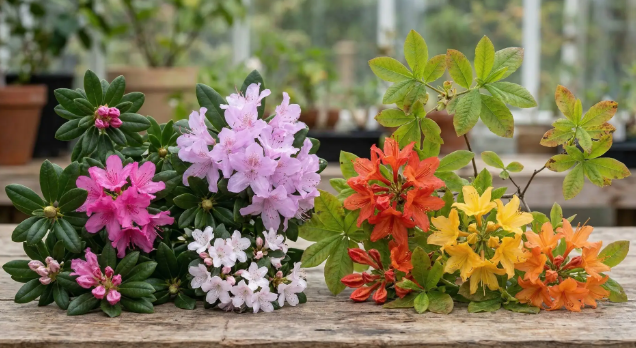
Azaleas can make a garden look spectacular when they are in bloom.
For a few weeks, a healthy plant can become almost completely covered with flowers, leaving little room for the foliage to be seen. Depending on the variety, the blooms may be white, pink, red, purple, orange, or combinations of several colors.
Yet azaleas have a reputation for being difficult.
The problem is that they don’t tolerate every soil or growing condition equally well. A plant placed in alkaline soil, exposed to intense afternoon heat, or watered poorly may struggle even when everything else in the garden appears healthy.
The good news is that azaleas aren’t necessarily difficult plants.
They are specific plants.
Once you understand what their roots need, where they prefer to grow, and how to manage moisture, azalea care becomes much more predictable.
The goal isn’t to constantly pamper an azalea. It is to create the conditions where its shallow root system can remain healthy, cool, and adequately supplied with moisture.
What Makes Azaleas Different?
Azaleas belong to the rhododendron group and are closely related to rhododendrons.
They are generally grown as flowering shrubs and are especially valued for their spectacular spring displays, although some varieties can flower at other times of the year.
Azaleas vary considerably in size and growth habit.
Some remain compact enough for containers and small gardens, while others eventually become substantial landscape shrubs.
Their flowers can be:
- White
- Pink
- Red
- Purple
- Orange
- Yellow
- Bi-colored
Some varieties have simple flowers, while others produce elaborate, double or hose-in-hose blooms.
There are also deciduous azaleas that lose their leaves in winter and evergreen types that retain much of their foliage throughout the year.
This diversity means you should choose an azalea according to your climate and the space available rather than simply choosing the flower color you like most.
Also Read: Different Types of Azaleas You can Grow
Choose the Right Location First
The location you choose can determine how well an azalea performs for years.
Most azaleas appreciate bright light with some protection from intense afternoon sun.
Morning sunlight is particularly useful.
It provides enough energy for healthy growth and flowering without exposing the plant to the strongest heat of the day.
In cooler climates, some azaleas can tolerate considerable sun.
In hot climates, however, afternoon shade can make a major difference.
A position beneath high trees, beside a building that provides afternoon protection, or on the eastern side of a garden can work well.
Avoid deep shade.
An azalea receiving almost no direct or filtered light may produce plenty of leaves but relatively few flowers.
The ideal situation is therefore not simply “shade.”
Think bright, filtered light with protection from excessive heat.
Consider the Mature Size
Azaleas are often sold as small nursery plants.
That can be misleading.
A compact plant in a garden center may eventually become a much larger shrub.
Before planting, check the mature size of the particular variety.
Consider:
- Height
- Width
- Growth habit
- Flowering season
- Evergreen or deciduous behavior
Don’t plant an azalea in a location where it will eventually have to be repeatedly cut back simply to keep it from blocking a walkway or window.
A plant allowed to develop naturally usually looks better than one constantly being forced into an inappropriate space.
Azaleas Need Acidic Soil
This is perhaps the most important soil lesson when growing azaleas.
Azaleas prefer acidic soil.
In strongly alkaline soil, certain nutrients become less available to the roots even when those nutrients are physically present.
The result can be yellowing leaves, weak growth, and poor flowering.
Before planting, it is useful to know the approximate pH of your soil.
If your soil is naturally alkaline, simply adding fertilizer may not solve the problem.
The underlying issue is the soil chemistry.
Organic matter such as composted materials suitable for acid-loving plants can improve soil structure, while specific soil amendments may be needed when pH is significantly outside the plant’s preferred range.
Don’t blindly add large quantities of an acidifying product.
Test first.
Then amend according to the soil conditions.
Drainage Is Just as Important as Acidity
Azaleas like moisture, but they don’t like sitting in water.
Their roots are relatively shallow and can suffer when the soil remains saturated.
A good azalea planting site should hold enough moisture to prevent the roots from drying out while allowing excess water to drain away.
If your garden has heavy clay or poor drainage, consider planting azaleas in a raised bed or elevated position.
This is particularly important in areas that receive heavy rainfall.
A plant growing in acidic but permanently waterlogged soil is still likely to struggle.
Healthy roots need both moisture and oxygen.
Don’t Plant Azaleas Too Deeply
Azaleas have relatively shallow root systems.
When planting, position the root ball so that it sits at approximately the same level as it was growing in its container, or slightly above the surrounding soil in heavy or poorly drained ground.
Avoid burying the crown deeply.
After planting, water thoroughly to settle the soil around the roots.
If the soil settles significantly, don’t simply pile more soil over the top of the plant.
Keep the root zone relatively shallow and well aerated.
Watering Azaleas
Watering is one of the most important parts of azalea care.
Newly planted azaleas need regular moisture while their roots establish.
Once established, many azaleas become considerably more resilient, but they still prefer consistent moisture.
The goal is to avoid the two extremes:
bone-dry soil and constantly saturated soil.
Check the soil around the root zone.
If it has begun to dry, water thoroughly.
During hot, dry periods, plants may need more frequent watering.
During cool, rainy periods, they may need very little additional water.
This is why a fixed watering schedule isn’t ideal.
The plant doesn’t know what day of the week it is.
It responds to soil moisture and weather.
Water the Root Zone Deeply
When you water an azalea, aim the water toward the soil rather than repeatedly wetting the flowers and foliage.
Deep watering encourages moisture to penetrate the root zone.
A soaker hose or drip irrigation system can be particularly useful for established landscape plantings.
Container-grown azaleas require closer monitoring because containers can dry out much faster.
At the same time, make sure excess water can escape through the drainage holes.
Mulch Is One of the Best Things You Can Give an Azalea
A good layer of organic mulch can make azalea care considerably easier.
Mulch helps:
- Retain soil moisture
- Keep roots cooler
- Reduce weed competition
- Improve soil structure as it decomposes
- Reduce temperature fluctuations
Pine bark, pine needles, shredded leaves, and suitable organic compost can work well.
Spread the mulch over the root zone but don’t pile it directly against the stems.
Leave a small gap around the base.
Azaleas have shallow roots, so the mulch should protect those roots without suffocating the crown.
Fertilizing Azaleas
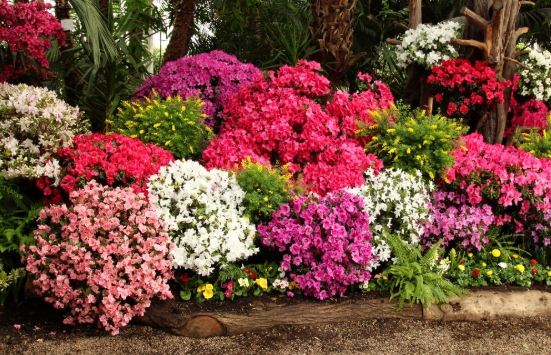
Azaleas generally don’t require heavy feeding.
If the soil is acidic and reasonably fertile, a light application of fertilizer formulated for acid-loving plants may be enough.
The best time to fertilize is generally during active growth, following the recommendations for your particular variety and fertilizer.
Avoid heavy fertilization late in the growing season.
You don’t want to encourage a flush of tender growth just as the plant is approaching colder conditions.
And don’t assume that poor flowering automatically means the plant needs more fertilizer.
Check light, soil pH, watering, and pruning first.
Why Are My Azalea Leaves Turning Yellow?
Yellow leaves can have many causes.
One common possibility is iron chlorosis, particularly when the soil is too alkaline.
The plant may contain iron in the soil, but the roots cannot access it efficiently under unsuitable pH conditions.
Other possibilities include:
- Overwatering
- Poor drainage
- Root damage
- Drought stress
- Nutrient imbalance
- Natural aging of older leaves
Look at the pattern.
If the youngest leaves are yellow while the veins remain relatively green, nutrient availability may be involved.
If the entire plant is declining and the soil stays wet, root problems become more likely.
The lesson is simple:
Yellow leaves are a symptom, not a diagnosis.
Find the underlying cause before adding fertilizer.
Pruning Azaleas
Azaleas don’t require heavy annual pruning.
In fact, excessive pruning can remove the flower buds that would have produced next season’s display.
The safest approach is usually to prune selectively.
Remove:
- Dead branches
- Damaged branches
- Diseased growth
- Crossing branches
- Growth that is clearly interfering with the plant’s shape
If you need to significantly reshape an azalea, timing becomes important.
Many azaleas set their flower buds for the following season relatively soon after flowering.
Therefore, heavy pruning too late in the season can remove those developing buds.
For most spring-flowering varieties, pruning shortly after flowering is generally the safest time for substantial shaping.
Deadheading Azaleas
Removing faded flowers can make the plant look cleaner and may prevent some energy from going toward seed production.
However, meticulous deadheading isn’t essential for every azalea.
If you have a large landscape planting, you may decide that the time required isn’t worth it.
For individual specimens or container plants, removing spent flowers can be worthwhile.
Be gentle.
New growth and developing buds can be close to the old flowers.
How to Encourage More Azalea Flowers
A spectacular azalea display begins long before the flowers open.
If flowering is disappointing, examine the fundamentals.
Give the plant sufficient light
Too much shade can reduce flowering.
Maintain appropriate soil acidity
Incorrect pH can interfere with nutrient availability and overall growth.
Avoid excessive nitrogen
Too much nitrogen can encourage foliage rather than flowers.
Keep moisture consistent
Severe drought can stress the plant and affect flower development.
Prune at the right time
Late pruning can remove next year’s flower buds.
Avoid unnecessary disturbance
Established azaleas don’t appreciate repeated transplanting.
The biggest improvements usually come from correcting environmental problems rather than adding more fertilizer.
Growing Azaleas in Containers
Compact azalea varieties can make beautiful container plants.
Container growing has one major advantage: you can control the growing medium.
Use a well-drained potting mix formulated for acid-loving plants.
Choose a container with drainage holes.
Don’t put an azalea into an enormous pot simply because you want it to grow faster.
A container that is too large can retain excessive moisture around a relatively small root system.
As the plant grows, move it into a slightly larger container when necessary.
Container azaleas need closer attention to watering because their limited root volume can dry quickly.
Azaleas in Hot Climates
Growing azaleas in hot regions can require more careful site selection.
The biggest challenges are often:
- Excessive afternoon heat
- Dry soil
- Intense sunlight
- Low humidity
- Poorly adapted varieties
Choose varieties suited to your local climate.
Provide protection from the strongest afternoon sun.
Mulch the root zone.
Monitor moisture during periods of extreme heat.
A plant that receives gentle morning sunlight and afternoon protection may perform much better than one exposed to full-day heat.
Common Azalea Pests
Azaleas can be affected by several insects.
Depending on your region, problems may include:
- Aphids
- Lace bugs
- Spider mites
- Scale insects
- Caterpillars
Inspect the undersides of leaves regularly.
Lace bugs, for example, can cause pale or stippled foliage.
Spider mites may become more problematic under hot, dry conditions.
Don’t automatically spray at the first sign of an insect.
A small pest population may be controlled naturally by predators.
If treatment becomes necessary, identify the pest first and use an appropriate control method according to its instructions.
Common Azalea Diseases
Azaleas can also experience fungal and other diseases, particularly when growing conditions are unfavorable.
Root problems are often associated with poor drainage.
Leaf and flower diseases can become more likely when plants are crowded and foliage remains wet for prolonged periods.
Good prevention starts with the basics:
Space plants appropriately.
Avoid constantly wet foliage.
Improve drainage.
Remove diseased plant material.
Keep the planting area reasonably clean.
Don’t wait for a disease to become severe before correcting the environment.
Protect Azaleas From Harsh Weather
Azalea flowers can be damaged by late frosts.
A plant may appear perfectly healthy, only for an unexpected cold spell to damage developing buds.
There’s not much you can do about every weather event, but selecting a suitable planting location can help.
Avoid extremely exposed sites where cold air settles.
In colder climates, choosing varieties adapted to the local conditions is especially important.
A healthy plant is also better prepared to recover from occasional environmental stress.
Propagating Azaleas
Azaleas can be propagated in several ways, although the easiest method for many gardeners is purchasing a healthy nursery plant.
Some varieties can be propagated from cuttings.
This is useful if you have a particularly attractive plant and want to produce additional specimens with the same characteristics.
Growing azaleas from seed is also possible, but seedlings may differ considerably from the parent plant.
For gardeners interested in breeding, this variation can be exciting.
For someone who wants an identical copy of a favorite azalea, vegetative propagation is generally more appropriate.
Winter Care
Winter requirements depend on the type of azalea and the climate.
Deciduous varieties naturally lose their leaves.
Evergreen varieties may retain much of their foliage, although some leaves can change color or drop during colder periods.
Before winter arrives, make sure the root zone has adequate moisture, particularly if the season is expected to be dry.
Mulch can help protect shallow roots from temperature fluctuations.
Avoid excessive winter watering when the soil is already saturated.
The objective is to protect the roots without creating waterlogged conditions.
A Simple Azalea Care Routine
Azalea care becomes much easier when reduced to a few regular habits.
Check the soil moisture.
Don’t allow newly planted specimens to dry out severely.
Watch the light.
Make sure surrounding trees or shrubs haven’t gradually shaded the plant.
Maintain mulch.
Keep the root zone cool and evenly moist.
Inspect leaves.
Look for yellowing, spots, insects, or unusual growth.
Prune after flowering when necessary.
Avoid unnecessary late-season pruning.
Feed moderately.
Use fertilizer appropriate for acid-loving plants only when needed.
Keep the area clean.
Remove diseased leaves and fallen debris.
These simple practices can prevent many of the problems associated with azaleas.
The Most Important Azalea Lesson
Perhaps the most useful thing to understand about azaleas is that their roots are shallow, sensitive, and highly dependent on the surrounding soil environment.
This explains many aspects of their care.
They benefit from mulch because their roots are close to the surface.
They suffer when soil dries completely.
They dislike waterlogged ground because their shallow roots still need oxygen.
They respond poorly to deep planting.
And they can struggle in unsuitable soil pH because their roots depend on a particular chemical environment for nutrient availability.
Once you understand the root system, many azalea-care recommendations stop looking like arbitrary rules.
They become logical consequences of how the plant grows.
Lessons Learnt From Growing Azaleas
Growing azaleas teaches a valuable lesson that applies to almost every garden plant: the best care begins with choosing the right environment rather than trying to correct the wrong environment later.
If an azalea is planted in unsuitable soil, constantly exposed to intense heat, or kept too wet, fertilizer isn’t going to magically fix it.
The location comes first.
The soil comes second.
Then watering, feeding, and pruning become much easier.
Azaleas also teach patience.
A newly planted shrub may need time to establish before it produces the spectacular flowering display you imagined. Digging it up and moving it every time growth seems slow can create more problems than it solves.
Another lesson is that more is not always better.
More water can damage the roots.
More fertilizer can produce excessive foliage.
More pruning can remove future flowers.
More sunlight can scorch the leaves.
Good gardening is often about finding the middle ground.
Finally, azaleas teach you to look beneath the obvious symptom.
Yellow leaves may not mean the plant needs fertilizer. Poor flowering may not mean it needs feeding. Wilting may not mean the soil is dry.
Look at the soil.
Look at the roots.
Look at the light.
Look at the recent weather.
Then decide what the plant actually needs.
Once you learn to do that, azaleas become much less mysterious.
Give them acidic, well-drained soil, consistent moisture, appropriate light, protection from excessive heat, and thoughtful pruning. In return, they can become one of the most spectacular flowering shrubs in the garden—often transforming an otherwise ordinary spring landscape into a wall of color.