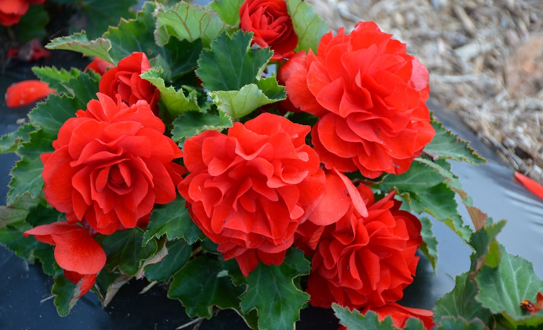
Begonias are remarkably versatile flowering plants. They can brighten a shaded garden, fill containers with color, spill from hanging baskets, or provide long-lasting flowers indoors.
But begonias are also plants that can punish the wrong watering habits.
Give them too much water and their roots may suffer. Give them too little and their leaves can wilt quickly. Put them in harsh afternoon sunlight and the foliage may scorch, while placing certain varieties in excessively deep shade can result in weak growth and fewer flowers.
The secret to growing begonias isn’t complicated.
It is about finding the balance between light, moisture, airflow, and temperature.
There are thousands of begonias and many different growing forms, so their exact requirements vary. However, the principles below apply to many of the begonias commonly grown for flowers and ornamental foliage.
What Makes Begonias Different?
Begonias belong to the genus Begonia, a huge group containing plants with remarkably different appearances and growth habits.
Some are grown primarily for their flowers, while others are prized for their foliage.
Depending on the type, begonias can have:
- Pink, red, white, orange, or yellow flowers
- Green, bronze, silver, or patterned foliage
- Upright growth
- Trailing stems
- Compact growth
- Large, decorative leaves
Common garden types include wax begonias, tuberous begonias, cane begonias, and several hybrid groups.
This diversity is important because not every begonia should be treated in exactly the same way.
A tuberous begonia, for example, may have a different seasonal cycle from a wax begonia.
Before planting, identify the type whenever possible.
That small step can prevent many care problems later.
Also Read: Different Types of Begonias You Can Grow
Find the Right Amount of Light
Most begonias prefer bright light without prolonged exposure to intense, direct afternoon sun.
Morning sunlight followed by afternoon shade can be ideal.
This is particularly important in hot climates.
Too much direct sunlight can cause:
- Scorched leaves
- Bleached foliage
- Wilting
- Brown leaf edges
- Reduced flower quality
But don’t interpret “shade-loving” as “no light.”
Begonias still need light to produce energy.
A plant growing in extremely dark shade may become stretched, weak, and less productive.
If a begonia is producing lots of foliage but very few flowers, insufficient light may be part of the problem.
The ideal location often provides bright filtered light rather than deep darkness.
Protect Begonias From Harsh Afternoon Heat
Begonias generally prefer moderate temperatures.
In very hot areas, intense afternoon sunlight can be particularly damaging.
A location beneath a lightly shaded tree, beside a covered patio, or where the plant receives gentle morning sunlight can provide better conditions.
Container-grown begonias have an advantage here.
You can move them when seasonal sunlight changes.
A position that is perfect in spring may become too hot when the summer sun moves higher in the sky.
Pay attention to the plant rather than assuming that one location will remain ideal throughout the year.
Use Well-Drained Soil
One of the most important rules for growing begonias is to avoid constantly wet soil.
Begonias appreciate moisture, but their roots also need oxygen.
A suitable growing medium should retain some moisture while allowing excess water to drain quickly.
For containers, use a quality potting mix rather than heavy garden soil.
Adding organic matter can improve garden soil structure.
If your garden soil becomes waterlogged after rain, consider growing begonias in raised beds or containers.
Good drainage is particularly important because root problems can develop before the gardener realizes that anything is wrong.
Watering Begonias
Begonias prefer consistent moisture, but that doesn’t mean watering them every day.
Check the growing medium first.
If the upper layer has begun to dry, water thoroughly.
Then allow excess water to drain.
During hot weather, container-grown plants may need watering more frequently because their limited soil volume dries quickly.
During cool or cloudy periods, they may require much less.
This is why watering by calendar can be misleading.
A better rule is:
Water according to the plant and the soil, not the date.
Avoid Wetting the Leaves Unnecessarily
When watering begonias, direct water toward the base of the plant.
Wet foliage combined with poor airflow can create favorable conditions for fungal and bacterial problems.
Morning watering is generally preferable to late-evening watering because leaves have more time to dry.
If you grow begonias closely together, make sure air can move between plants.
Good airflow is one of the simplest forms of disease prevention.
Mulching Begonias
Outdoor begonias can benefit from a thin layer of organic mulch.
Mulch helps maintain soil moisture and reduces competition from weeds.
Suitable materials include:
- Compost
- Shredded leaves
- Fine bark
- Straw
Don’t pile mulch against the stems.
A small gap around the base keeps the crown better ventilated and reduces excessive moisture around the plant.
In containers, a light surface mulch can also reduce moisture loss, although the potting mix should still be allowed to drain properly.
Fertilizing Begonias
Begonias are capable of producing large amounts of flowers, so they benefit from adequate nutrition during active growth.
A balanced fertilizer or a fertilizer formulated for flowering plants can be used according to the product instructions.
Container-grown begonias may require more regular feeding because nutrients can be lost through repeated watering.
However, avoid excessive fertilizer.
Too much fertilizer can cause rapid leafy growth while creating other problems, including salt accumulation in containers.
If the plant already has healthy foliage and is flowering well, more fertilizer isn’t necessarily better.
How to Encourage More Begonia Flowers
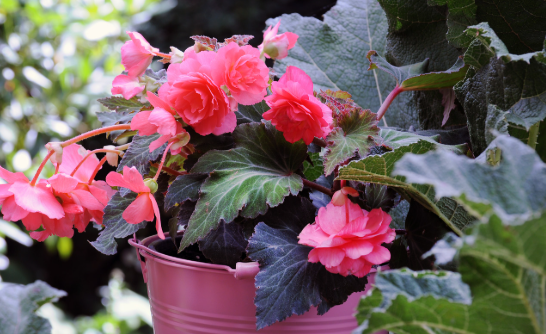
If your begonia is growing well but flowering poorly, look at the growing conditions before increasing fertilizer.
Give it enough light
Bright indirect light or gentle morning sun is often better than deep shade.
Keep moisture consistent
Repeated drought followed by heavy watering can stress the plant.
Avoid excessive nitrogen
Too much nitrogen encourages leaves rather than flowers.
Remove spent flowers
Deadheading can keep the plant looking tidy and may encourage continued flowering in some types.
Maintain good airflow
Healthy foliage supports stronger overall growth.
A productive begonia is usually the result of several small factors working together rather than one special fertilizer or trick.
Deadheading Begonias
Removing faded flowers is optional, but it can improve the plant’s appearance.
Pinch or cut off spent flowers and damaged plant material.
This is particularly useful in containers where you want the plant to remain neat.
Be gentle with stems because some begonia varieties can be brittle.
If you’re growing a type that produces seeds and you want to collect them, allow selected flowers to remain and mature.
Otherwise, removing old blooms keeps the plant focused on continued growth and flowering.
Pruning Begonias
Pruning requirements vary according to the type of begonia.
Compact bedding begonias often need little pruning.
Trailing types may occasionally need their stems shortened to maintain a fuller shape.
Cane begonias can become tall and leggy and may benefit from selective pruning to encourage branching.
Remove dead, damaged, or diseased growth whenever necessary.
Avoid removing large amounts of healthy foliage at once unless you know the particular begonia responds well to hard pruning.
When in doubt, prune gradually.
Growing Begonias in Containers
Begonias are among the easiest flowering plants to grow in containers.
Containers allow you to control:
- Soil quality
- Drainage
- Light exposure
- Watering
- Plant placement
Choose a container with drainage holes.
Don’t use an enormous pot for a tiny plant.
A very large container holds more wet soil around a small root system, increasing the risk of overwatering.
As the plant grows, it can be moved into a slightly larger container.
Hanging baskets are particularly attractive for trailing begonia varieties.
Growing Begonias Indoors
Some begonias make excellent houseplants.
Place indoor begonias in bright, indirect light.
A position near an east-facing window can provide gentle morning sunlight, while a bright room away from harsh direct sun can also work.
Indoor air can be relatively dry, particularly when heating or air conditioning is running.
However, increasing humidity by constantly misting the leaves isn’t always the best solution.
Instead, improve general humidity around the plant using appropriate methods while maintaining good airflow.
Most importantly, don’t compensate for dry air by overwatering the soil.
Common Begonia Problems
Yellow leaves
Yellowing can have several causes.
Overwatering is one of the first things to investigate.
Poor drainage can also lead to root problems.
Older leaves may naturally yellow as they age.
Look at the entire plant before deciding what is wrong.
Brown leaf edges
Brown edges can result from:
- Dry soil
- Low humidity
- Excessive sunlight
- Heat stress
- Fertilizer buildup
Check the plant’s environment rather than assuming it needs more water.
Leggy growth
Long, weak stems often indicate insufficient light.
Move the plant to a brighter location with suitable protection from intense sun.
Bud drop
Begonias may drop buds when exposed to sudden environmental changes.
Temperature extremes, drought, overwatering, or relocation can all cause stress.
Try to keep growing conditions relatively stable.
Watch for Pests
Begonias can occasionally attract aphids, thrips, whiteflies, mites, and other small pests.
Inspect the undersides of leaves and the growing tips regularly.
Early detection makes pest management much easier.
Don’t automatically spray a healthy plant simply because you see an insect.
Some insects are harmless, and beneficial predators may already be controlling the population.
If an infestation becomes significant, use a control method appropriate for the plant and follow the product directions carefully.
Preventing Begonia Diseases
Many begonia diseases become more likely when plants are overcrowded, poorly ventilated, or repeatedly exposed to excessive moisture.
Good prevention starts with the growing environment.
Give plants adequate spacing.
Water the soil rather than constantly wetting the foliage.
Remove dead or diseased leaves promptly.
Don’t allow fallen plant material to accumulate around the plant.
Use clean containers and fresh potting mix when repotting.
Most importantly, avoid keeping the roots permanently wet.
Healthy roots are the foundation of a healthy begonia.
Caring for Tuberous Begonias
Tuberous begonias deserve special attention because they grow from underground tubers and have a seasonal dormant period.
They are often grown for their large, spectacular flowers.
During active growth, they need appropriate moisture, good light, and protection from excessive heat.
As the growing season ends, the foliage naturally declines.
The plant can then enter dormancy.
In climates where freezing conditions occur, the tubers may need protection and storage according to local conditions and the specific variety.
Don’t treat a dormant tuber like a dying plant.
Dormancy is part of its natural life cycle.
Propagating Begonias
Begonias can be propagated in several ways, depending on the type.
Some can be grown from seed.
Others are commonly propagated through stem or leaf cuttings.
Propagation from cuttings is particularly useful when you want to reproduce a plant with desirable foliage or flowers.
Take healthy material from a vigorous plant and place it into a suitable propagation medium.
Maintain appropriate moisture and humidity while roots develop.
Once new growth is established, gradually acclimate the young plant to normal growing conditions.
Propagation is not only a way to create more plants.
It is also an excellent way to preserve a particularly attractive begonia that you don’t want to lose.
Winter Care for Begonias
Winter treatment depends heavily on the type of begonia and your climate.
In warm regions, some begonias can remain outdoors year-round.
In colder climates, many are grown as seasonal plants or moved indoors.
Before bringing outdoor begonias indoors, inspect them carefully for insects.
A pest-free plant is much easier to integrate into an indoor collection.
Reduce watering if growth slows substantially.
Don’t expect a plant receiving less light during winter to consume water at the same rate as it did during summer.
This is one of the most common causes of indoor begonia problems.
A Simple Begonia Care Routine
A good routine doesn’t need to be complicated.
Check the soil before watering.
Don’t water automatically.
Monitor sunlight.
Move containers if seasonal changes make the location too bright or too hot.
Remove dead flowers and damaged leaves.
This keeps plants tidy and improves air circulation.
Inspect regularly for pests.
Pay particular attention to new growth and the undersides of leaves.
Feed moderately during active growth.
Avoid excessive fertilizer.
Keep the growing area clean.
Remove fallen diseased leaves and old plant debris.
These simple habits prevent many problems before they become serious.
Lessons Learnt From Growing Begonias
Growing begonias teaches one of the most important lessons in gardening: balance is often more important than abundance.
More water doesn’t necessarily mean a healthier plant.
More fertilizer doesn’t necessarily mean more flowers.
More sunlight doesn’t necessarily mean better growth.
Begonias perform best when each resource is provided in the right amount.
They also teach you to pay attention to small changes.
A slight shift in leaf color, a few dropped buds, or a change in growth habit can tell you that something in the environment has changed.
Perhaps the soil is staying wet for too long.
Perhaps the plant has been moved into stronger sunlight.
Perhaps temperatures have suddenly increased.
Instead of immediately treating the symptom, look for the environmental cause.
Another lesson is that different plants within the same family can have very different personalities. A begonia that thrives in a shaded garden may not have the same requirements as a tuberous variety grown for enormous flowers.
Finally, begonias reward gardeners who observe rather than simply follow a rigid schedule.
Check the soil.
Look at the leaves.
Watch the weather.
Notice how the plant responds.
Once you learn to read those signals, begonia care becomes much simpler.
Give the plant bright but appropriate light, well-drained soil, consistent but moderate moisture, reasonable humidity, and good airflow. Then resist the temptation to constantly interfere.
The healthiest begonias are often not the ones receiving the most attention.
They are the ones growing in conditions that allow them to thrive naturally.