Hostas are often described as shade-loving plants, but that description doesn’t tell the whole story.
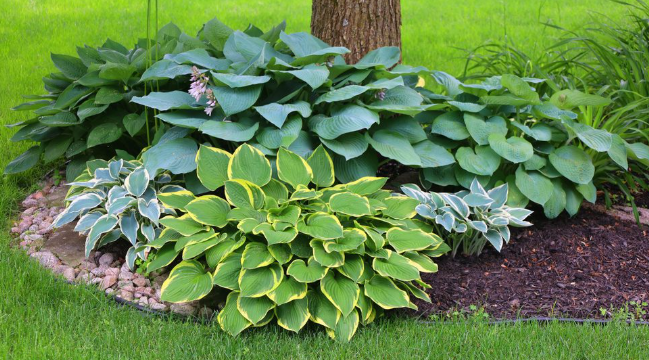
Their real attraction is not only their flowers. It is the foliage—the broad leaves, unusual textures, and changing shades of green, blue, yellow, and cream that can give a garden structure from spring through fall.
A healthy hosta can look remarkably good with surprisingly little attention. But it can also struggle when planted in completely dry shade, exposed to too much intense sunlight, or repeatedly damaged by slugs.
The trick is to understand what the plant is actually asking for.
Hostas prefer consistent moisture, fertile soil, and protection from harsh afternoon sun. Once those conditions are provided, they can become some of the easiest plants to maintain.
Here is how to grow and care for hostas successfully.
What Makes Hostas Different?
Hostas are herbaceous perennial plants grown primarily for their foliage.
They come in many sizes. Some remain small enough for containers and borders, while others eventually form large clumps several feet across.
Leaf shapes vary considerably too.
You can find hostas with:
- Heart-shaped leaves
- Long, narrow leaves
- Rounded leaves
- Corrugated leaves
- Blue-gray foliage
- Bright green foliage
- Yellow or gold foliage
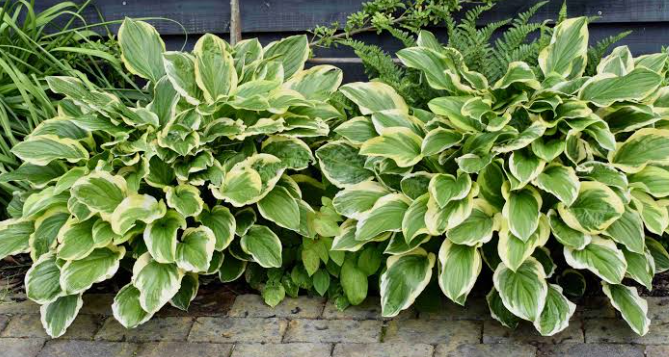
- Variegated leaves
Their flowers are usually secondary to their foliage, but they can still be attractive. Tall stalks rise above the leaves during summer and produce tubular flowers, often in shades of white, lavender, or pale purple.
This diversity is one reason hostas are so useful in garden design.
You can use small varieties to fill gaps in a border and larger varieties as substantial focal plants.
Also Read: Different Types of Hostas Plants You can Grow
Choose the Right Amount of Shade
Hostas are famous for tolerating shade, but they don’t all require exactly the same amount.
Many perform best with morning sunlight followed by afternoon shade.
This gives the leaves enough light for healthy growth while protecting them from the strongest heat of the day.
However, too little light can also cause problems.
A hosta growing in very deep shade may produce slower, weaker growth and fewer flowers.
Variety matters as well.
Blue-leaved hostas generally appreciate protection from intense sunlight because their waxy leaf coating can be damaged by excessive heat and sun.
Some yellow or gold-leaved varieties can actually develop better color with more sunlight.
The best approach is therefore not to ask, “Do hostas like shade?”
Ask instead:
How much light does this particular hosta need?
Protect Hostas From Harsh Afternoon Sun
One of the easiest ways to damage a hosta is to place it where it receives intense afternoon sunlight in a hot climate.
Sunscald can cause pale, bleached, or brown patches on leaves.
The plant may survive, but its foliage can lose much of its ornamental quality.
A location beneath the light canopy of a tree, beside a north- or east-facing wall, or in a partially shaded garden bed can work well.
Just remember that tree roots can compete with hostas for moisture.
Shade alone isn’t enough.
The soil must also retain adequate moisture.
Give Hostas Moist, Well-Drained Soil
Hostas enjoy moisture, but they don’t want to sit in stagnant water.
The ideal soil holds enough moisture to prevent repeated drought stress while allowing excess water to drain away.
Adding organic matter such as compost can improve soil structure and help maintain moisture.
This is particularly useful in sandy soil, which can dry quickly.
Heavy clay can also be improved with organic matter, although severe drainage problems may require more substantial changes to the planting site.
A good hosta soil should feel moist rather than muddy.
Watering Hostas
Watering is particularly important while hostas are becoming established.
Newly planted hostas should receive consistent moisture while their roots expand into the surrounding soil.
Once established, they become considerably more tolerant, but they still perform best when they don’t experience prolonged drought.
Large-leaved varieties can lose considerable water through their foliage during hot weather.
If the leaves begin drooping in the morning or appear unusually limp, check the soil.
Water deeply when necessary rather than giving the plant a quick splash every day.
Deep watering encourages roots to explore a larger volume of soil.
Mulching Makes Hosta Care Easier
A layer of organic mulch can be extremely useful around hostas.
It helps the soil retain moisture, reduces weed competition, and moderates temperature around the roots.
Shredded leaves, compost, pine bark, or other suitable organic materials can work well.
Don’t pile mulch directly against the crown.
Leave some space around the base of the plant so moisture doesn’t remain trapped against the emerging stems.
Mulch can also reduce the amount of time you need to spend watering during hot periods.
Fertilize Hostas Moderately
Hostas aren’t heavy feeders, but they appreciate fertile soil.
If you prepare the planting area with compost, you may need very little additional fertilizer.
Where soil fertility is poor, a balanced slow-release fertilizer can be applied during active growth according to the product instructions.
Avoid excessive feeding.
The goal isn’t to make the leaves grow as quickly as possible.
Overly lush growth can sometimes produce softer foliage that is more attractive to pests and more vulnerable to environmental stress.
Healthy, steady growth is more valuable than rapid growth.
Why Are My Hosta Leaves Turning Yellow?
Yellowing leaves don’t always indicate a nutrient deficiency.
Several different things can cause the color change.
Older leaves naturally yellow as the season progresses.
Too much direct sunlight can bleach foliage.
Water stress can cause leaves to deteriorate.
Constantly wet soil can damage roots.
And certain diseases or pests can also affect leaf color.
Look at the whole plant before deciding what is wrong.
If only a few of the oldest leaves are turning yellow near the end of the season, there may be nothing to fix.
If the entire plant is suddenly yellowing, investigate the soil moisture, sunlight, and root conditions.
The Biggest Hosta Problem: Slugs
For many gardeners, slugs are the main challenge.
Hosta leaves are soft, broad, and easy for slugs to feed on.
The damage often appears as irregular holes in the leaves.
You may notice the problem most clearly in the morning, particularly after wet weather.
There are several ways to reduce slug pressure.
Keep the area around hostas reasonably tidy.
Remove places where slugs can hide during the day.
Avoid creating constantly wet conditions.
Encourage natural predators where possible.
Regularly inspect plants, particularly after rain.
If slug pressure is severe, use a control method appropriate for your garden and follow its instructions carefully.
The most important point is to intervene early.
A few damaged leaves are much easier to manage than a plant that has been repeatedly eaten down.
Don’t Expect Perfect Leaves
This is a useful lesson with hostas.
Because their leaves are the main attraction, gardeners sometimes become obsessed with keeping every leaf flawless.
That’s unnecessary.
A few holes or blemishes don’t mean the plant is unhealthy.
In a living garden, leaves are food for insects and habitat for other organisms.
The goal should be to keep pest damage manageable, not to create an artificial environment in which every leaf looks manufactured.
Hostas and Flowering
Hosta flowers appear on tall stalks above the foliage, usually during summer.
Some varieties produce highly fragrant flowers, while others are grown almost entirely for their leaves.
If you enjoy the flowers, leave the stalks in place until flowering finishes.
If you prefer a cleaner foliage display, you can remove spent flower stalks afterward.
Removing flower stalks isn’t essential to keeping the plant healthy.
It’s mostly a matter of appearance.
Should You Cut Hosta Leaves?
Hostas naturally die back toward the end of the growing season.
The leaves may turn yellow and eventually collapse.
Don’t rush to remove healthy green foliage immediately after flowering.
The leaves are still producing energy that the plant stores in its underground structures for the following season.
Once the foliage has naturally declined, it can be removed.
Cutting away dead leaves also makes the planting area cleaner and can remove hiding places for some pests.
A good time to clean up is after the first significant frost has damaged the foliage.
Dividing Hostas
One of the easiest ways to produce more hostas is to divide established clumps.
As a hosta grows, it gradually produces more shoots from its crown and underground structures.
When the clump becomes too large for its space, it can be lifted and divided.
Spring, as new shoots are emerging, is often a convenient time to divide them because the plant is easier to handle and has an entire growing season ahead.
Dig around the clump and lift it carefully.
Separate sections containing healthy roots and shoots.
Replant the divisions at approximately the same depth at which they were previously growing.
Water thoroughly after planting.
Avoid making divisions unnecessarily tiny.
Larger divisions usually establish more quickly and provide a better initial display.
Growing Hostas in Containers
Hostas can be excellent container plants.
This is especially useful if you have a shaded patio, balcony, porch, or entrance where traditional garden beds aren’t available.
Choose a container large enough for the mature variety.
Make sure it has adequate drainage holes.
Use a quality potting mix rather than heavy garden soil.
Container-grown hostas may need more frequent watering because pots can dry out faster than the surrounding ground.
At the same time, don’t allow the pot to remain permanently saturated.
Compact hosta varieties are particularly convenient for containers.
Winter Care
Hostas are remarkably cold tolerant, and many varieties survive winter by becoming dormant.
The foliage dies back, leaving the plant’s underground crown and roots to survive until spring.
Once the leaves have completely collapsed, remove the old foliage if desired.
In very cold climates, a light layer of mulch can help protect the root zone from extreme temperature fluctuations.
Avoid creating a permanently wet layer over the crown.
The goal is insulation, not waterlogging.
As temperatures rise in spring, new shoots will emerge from the dormant plant.
One of the pleasures of growing hostas is watching those tightly curled shoots slowly unfold into the large leaves of the new season.
Common Hosta Problems
Besides slugs and snails, hostas can experience several other problems.
Leaf scorch
Brown or bleached leaf edges can result from excessive sunlight, drought, or heat.
Check both moisture and light exposure before assuming that fertilizer is needed.
Crown or root rot
Constantly wet soil can lead to serious root problems.
Poor drainage should be addressed rather than simply reducing watering temporarily.
Fungal leaf problems
Spots and discoloration can occur under prolonged humid conditions.
Good spacing, airflow, and appropriate watering can help reduce disease pressure.
Deer
In areas with deer, hostas can be extremely attractive feeding plants.
If deer are common in your garden, protecting the plants may be necessary.
A Simple Hosta Care Routine
Hostas don’t need complicated maintenance.
During spring:
Watch for new shoots.
Protect emerging growth from slugs and other pests.
Check moisture.
Don’t allow newly emerging plants to become severely dry.
During summer:
Water during dry weather.
Inspect leaves for slug damage.
Remove badly damaged foliage if necessary.
Enjoy the flowers.
During autumn:
Allow foliage to naturally decline.
Clean up dead leaves.
Remove diseased plant material.
During winter:
Leave the dormant crown undisturbed.
Use modest mulch if your climate requires additional protection.
That’s essentially the hosta maintenance cycle.
Lessons Learnt From Growing Hostas
Growing hostas teaches an important gardening lesson: the best results often come from working with a plant’s natural preferences rather than trying to force it to adapt to the wrong environment.
Hostas don’t need constant attention.
They need the right conditions.
Give them shade suited to their variety, soil that stays reasonably moist without becoming waterlogged, and enough space to develop naturally.
You also learn that a plant doesn’t have to flower constantly to be valuable.
Hostas can provide months of visual interest through foliage alone.
Another lesson is that small environmental changes can have a surprisingly large effect. Moving a hosta from harsh afternoon sun to gentler morning light may improve its appearance more than adding fertilizer ever could.
And perhaps the most practical lesson is to accept that perfection isn’t the goal.
A hosta with a few slug holes is still a healthy garden plant. A yellowing leaf at the end of the season is often simply part of its natural cycle. Not every imperfection requires intervention.
The best hosta gardens are usually the ones where the gardener has learned when to act—and when to leave the plant alone.
Give hostas the moisture, shade, soil, and space they naturally prefer, and they can quietly become some of the most dependable plants in the garden.